



Memory as resistance
 House of Anansi
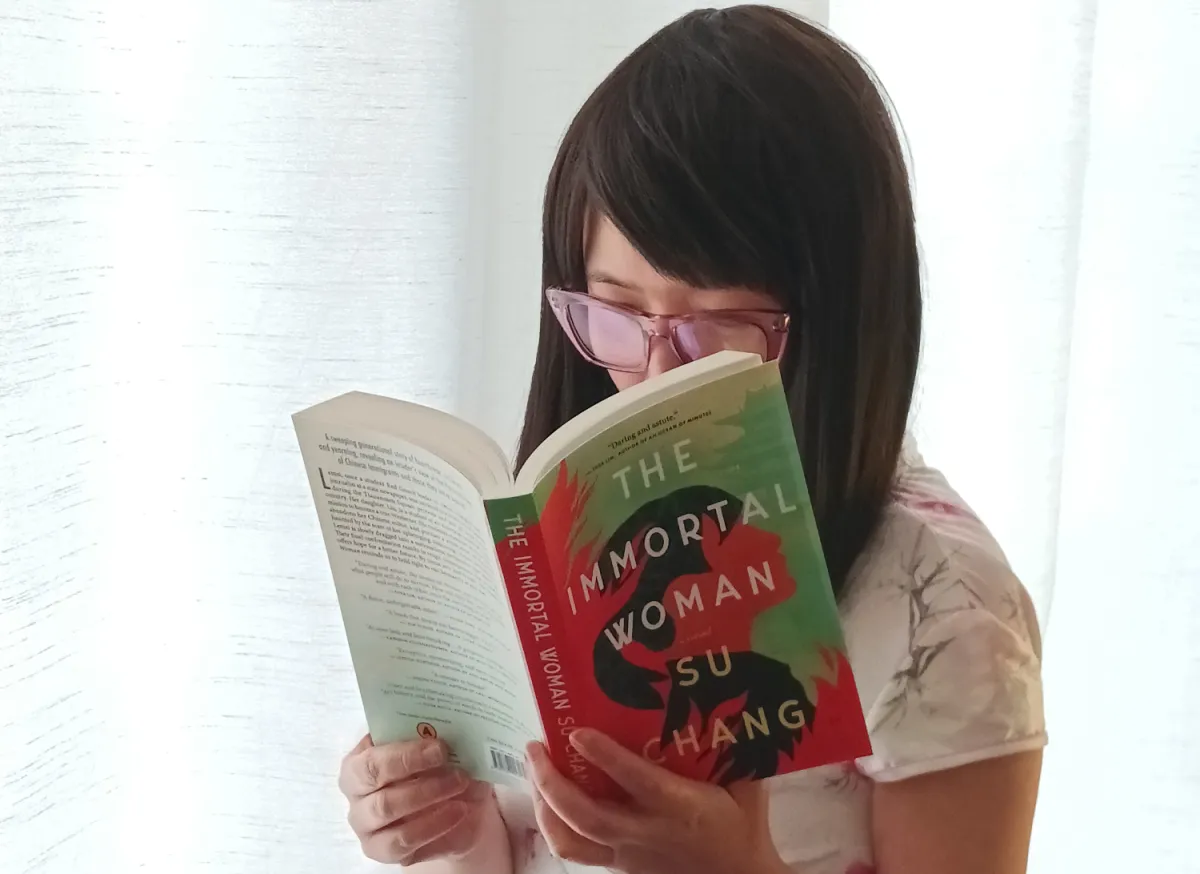
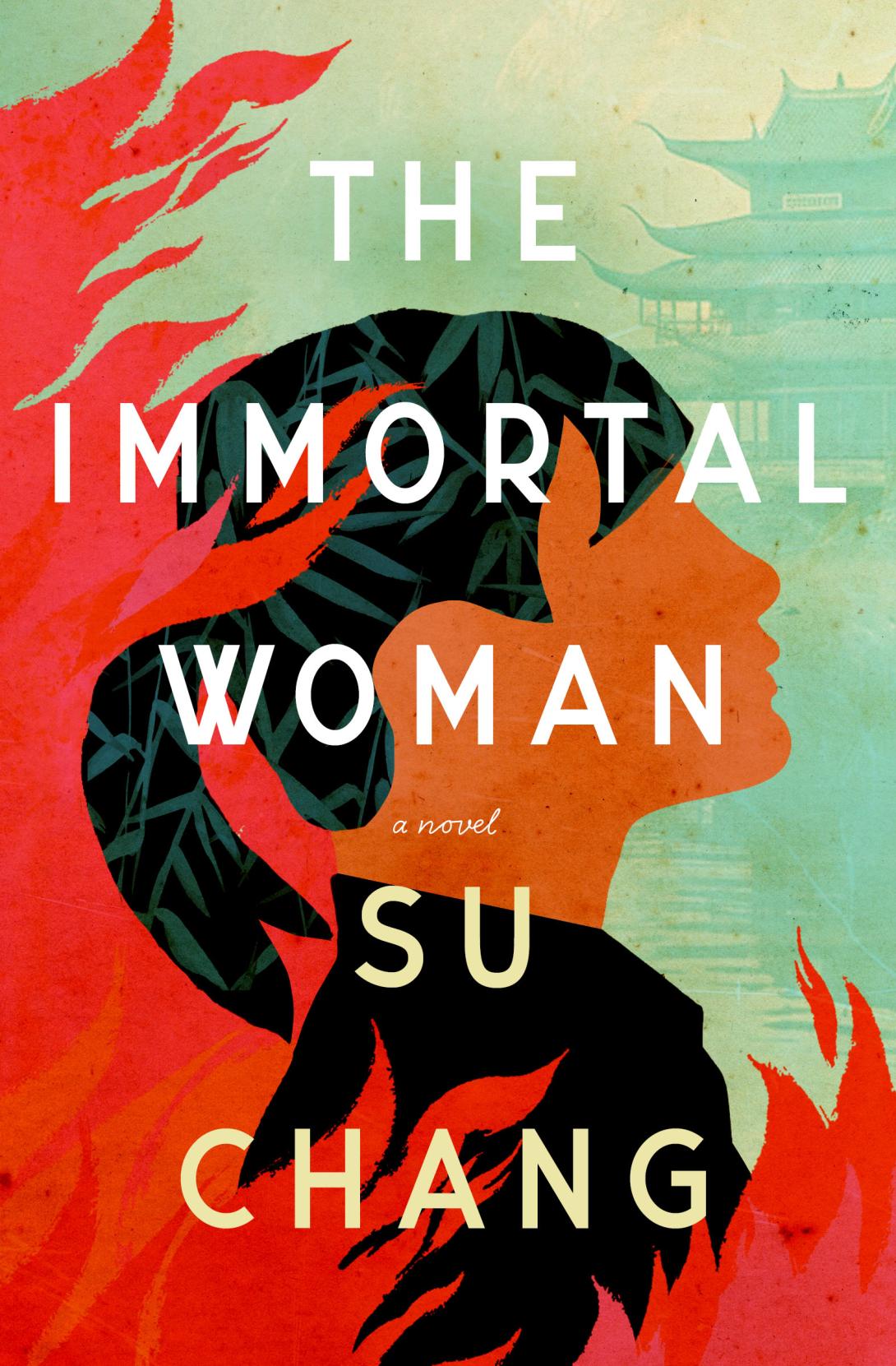
Su Chang | The Immortal Woman | House of Anansi | 384 pages | 15.95 EUR
One of the most perfidious strategies of authoritarian systems is not only to control history, but to actively rewrite it. Not through prohibition alone, but through the insidious poison of ideological amnesia. Anyone affected by this loses the ground beneath their feet: memory becomes a bargaining chip, truth an option. In such circumstances, literature is not a luxury, but an antidote. Because it insists. It disturbs. It reminds.
In her memoir Red Memory: The Afterlives of China's Cultural Revolution, British journalist Tania Branigan powerfully describes the extent to which the Chinese present remains indecipherable without an understanding of the Cultural Revolution. Her conclusions are as clear as they are disturbing: the party has established a narrative in which the problem was not power itself, but the population's "loss of control" - a narrative in which authoritarianism seems like a necessary corrective. Even more shocking is Branigan's reference to the intimate dimension of this violence: a revolution "led by the people themselves" that tore families apart and made complicity a collective experience. Perhaps the most disturbing thing about it is that today, many simply no longer want to talk about it.
I don't remember the Cultural Revolution personally, but I do vividly recall 1989. I was traveling in Wuhan and Beijing before and during the unrest - I talked to students and felt the tensions that ultimately erupted in the massacre on Tiananmen Square. It was not an abstract event, not a chapter in a history book, but the lived present. When I returned 25 years later, I was confronted with a different, equally intense reality: The older generation didn't want to remember, they avoided it, and the younger generation couldn't remember. This blank space, the collective silencing, the perfect rewriting of history still shakes me to this day.
This is exactly where Su Chang comes in with her debut novel The Immortal Woman. And perhaps it should be clarified from the outset: this is not a carefully balanced debut that aims to "please" in the sense of the popular realism that dominates literature worldwide, but rather a subtle yet powerful, sometimes exuberant, often painful attempt to express the unspeakable. And this applies not only to the year 1989 and the Cultural Revolution.
However, it is the scenes of the Cultural Revolution that etch themselves into the reader's memory like a trauma. Not only because the young heroine Lemei is affected by her father, a disgraced former executive, but because Chang, wielding her arsenal of linguistic tools like a scalpel, dares to create an incisive cross-section of society as a whole. In doing so, she more than confirms the comments in the Red Memory previously mentioned. When Lemei flees through the streets of Shanghai during the pogroms of the Cultural Revolution, finding herself in a mob that is publicly humiliating a woman, this is not a historical illustration, but a direct experience of collective disinhibition and violence: "an agitated mob were screaming obscenities ... a rosy-cheeked girl ... slashed open the woman's frumpy grey pants and used her bare, cotton-white thigh as a spittoon." This may be brutal, but it is above all precisely observed and therefore unbearable.
Chang does not write these scenes from a safe distance. Her own biographical background permeates the text: During the Cultural Revolution, Chang's father was a rather reluctant leader of the Red Guards at his school, but he did use his position to protect his teachers. This ambivalence - perpetrator and protector at the same time - is the moral core of the novel. There is no simple apportioning of blame here, only entanglements.
However, The Immortal Woman does not remain in the past, even if the "Immortal Woman" of the title is far more than a poetic image with historical connotations; she draws on motifs of the Daoist immortals, those Xian figures from classical Chinese literature and mythology who mediate between this world and the hereafter. They combine purity, spiritual autonomy, but also detachment from the world; an ideal that always remains ambivalent. When Lemei secretly admires the figure as a child - "a statue of the Immortal Woman cradling a lotus blossom and riding on cotton-white clouds" - it is initially a moment of intimacy, of hidden resistance to a reality that no longer knows transcendence. But Chang simultaneously subverts this symbolism: immortality here is not redemption, but rather the inability to forget. Traumas last for generations; they settle in bodies, in gestures, in muteness. The "Immortal Woman" thus becomes a paradoxical figure; not as a promise of salvation, but as a symbol of a story that cannot be closed and must therefore be retold again and again.
The novel interweaves the story with the different perspectives of several generations of women: Lemei's grandmother, mother and Lemei's daughter Lin, who migrates to North America as a student and, once there, almost has a breakdown due to completely different, but no less destructive tensions, just like the tragic story of Lemei's old childhood friend, who left the country much earlier due to increasing political marginalisation. Migration here unfolds almost consistently not as a liberation, but as a displacement of trauma.
In this novel, migration is therefore never just a change of location, but a loss of identity under intensified conditions. Lin comes to the USA with the promise of finally experiencing freedom, but soon finds that the diaspora is not a neutral space either. Another, internal Chinese civil war continues there: between those who see the West as decadent, weak and morally dead, and those who cannot or no longer wish to follow the official narrative from Beijing. Chang shows this particularly painfully in figures such as Dali, who transforms his humiliation in the West not into self-questioning but into nationalistic certainty. Disappointed conformity becomes defiance, insult becomes propaganda. When Lin is ultimately perceived by her own family as a "defector", a traitor, a "citizen of an enemy state", the political rift has finally become private. Migration does not simply save here; it exacerbates the question of where one belongs and whether belonging is still possible at all when language, origin, body, memory and loyalty are played off against each other.
Lin experiences a form of alienation that is deeply ingrained into the body: "she could no longer look at her flat features in the mirror ... without panic rising in her throat." This is not a blatant discourse on racism, but the quiet, inner disintegration of a self-image that grows into internalised racism and a longing for conformity. The idea of changing one's own face "Caucasian-style" is more than just a detail: it is a symptom of a global hierarchy that inscribes itself into bodies.
What makes this novel so special is its refusal to be disciplined , to keep its knowledge and intelligence in check. But therein lies its strength. As a debut, Chang allows herself a radicalism that more experienced authors have often long since abandoned. Nothing is "trimmed down" here, nothing is elegantly smoothed over. Everything seems important - and perhaps it is. Even the writing process itself.
In this respect, Chang follows authors such as Iryn Tushabe, whose novel Everything Is Fine Here also understands writing as an act of self-empowerment. Here, literature becomes catharsis, resistance, a form of survival.
At the end, Lin articulates what is perhaps the book's central line: "I wrote the story to make sense of you, of us. This is our history." And therein lies the urgency of this novel. History here is nothing closed, nothing objective. It is a battleground between memory and repression, between individual experience and political instrumentalisation. Anyone who wants to understand the depth of the ruptures that characterise today's China - and its diaspora - should read this book.
 Dongchun Films
Wang Xiaoshuai | So Long, My Son | 185 minutes | Dongchun Films
Perhaps this is the real hope for a holistically remembered future: that we don't just look for history in archives, but in stories, whether in books or in pictures. A comparison with a film such as So Long, My Son by Wang Xiaoshuai makes it clear how different - and yet related - forms of memory can be. While Chang often exposes the violence of history head-on, in eruptive images and intense dialogue sequences, Wang Xiaoshuai works with an almost opposite movement: the quiet, the time-stretched, the seemingly incidental. And yet at their core, both are the same. In "So Long, My Son", too, history is not background noise, but a force that inexorably inscribes itself into the most intimate structures of life - in families, in bodies, in relationships of guilt that can no longer be clearly resolved.
It is precisely this shift from the spectacular to the everyday that can be read productively between Chang's novel. Where The Immortal Woman eruptively exposes the violence of history, Wang shows the silent form: its continued existence in the unspectacular - in glances, gestures, in a silence that spans decades. It is as if Chang forces the trauma to speak, while Wang shows that it has long since spoken.
This is where Chang's title regains its actual, bitter precision. The "Immortal Woman" is not a figure of transcendence, not a promise of redemption, but the symbol of a condition: she is history that does not pass away. What is immortal here is not life, but the wound. What remains is not a catharsis, not a reconciliatory ending, but the realisation that memory is not an act that one performs, but a state from which one cannot escape.
+++
Further reading on China at Literatur.Review:
Understanding China (and ourselves) better
In „Les Lois et les Nombres - Essai sur les ressorts de la culture politique chinoise“, Romain Graziani explains where the roots of Chinese state thinking lie, what they mean and how they still shape our present day.
At the very bottom
In his autobiography „I deliver parcels in Beijing“, Hu Anyan offers a Kafkaesque vision of the precarious world of the Chinese platform economy.
Between trauma and dream: China's literary present
Fantasy, science fiction and poetry play an important role in China as advertising media for state nationalism and social media companies. But boys‘ love novels are seen as a threat to family policy and are prosecuted.
A dictator is only human...
...and that is probably the greatest insult to Xi Jinping. Eric Meyer (text) and Gianluca Costantini (illustrator) tell the story of Xi Jinping’s life in their graphic novel „Xi Jinping, the Emperor of Silence“.
Did you enjoy this article? If so, please support our work by making a one-off donation via PayPal, or by taking out a monthly or annual subscription.
Want to make sure you never miss an article from Literatur.Review again? Sign up for our newsletter here:.