



The possibility of a future
 House of Anansi
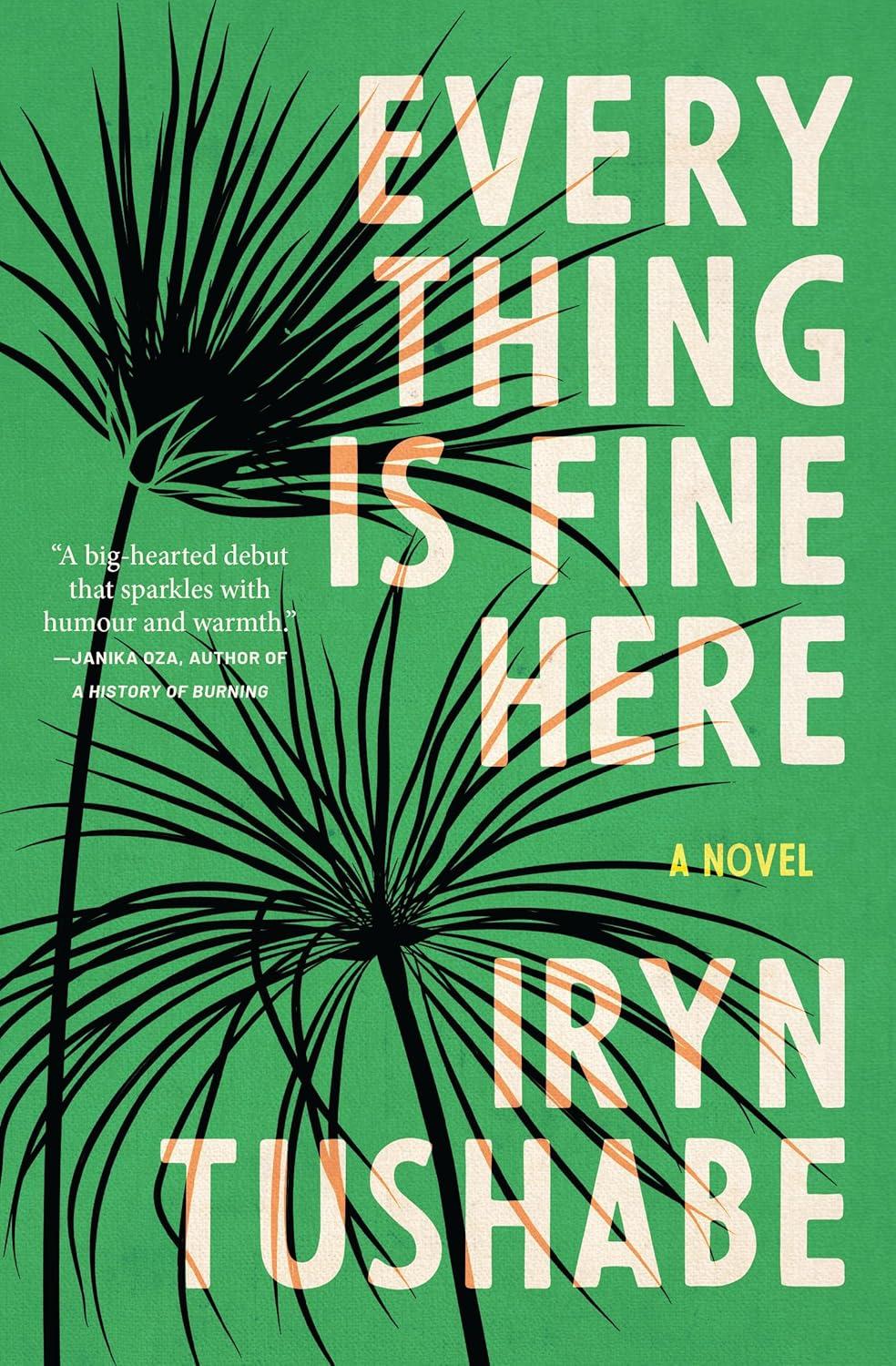
Iryn Tushabe | Everything Is Fine Here | House of Anansi Press | 328 pages | 15.95 EUR
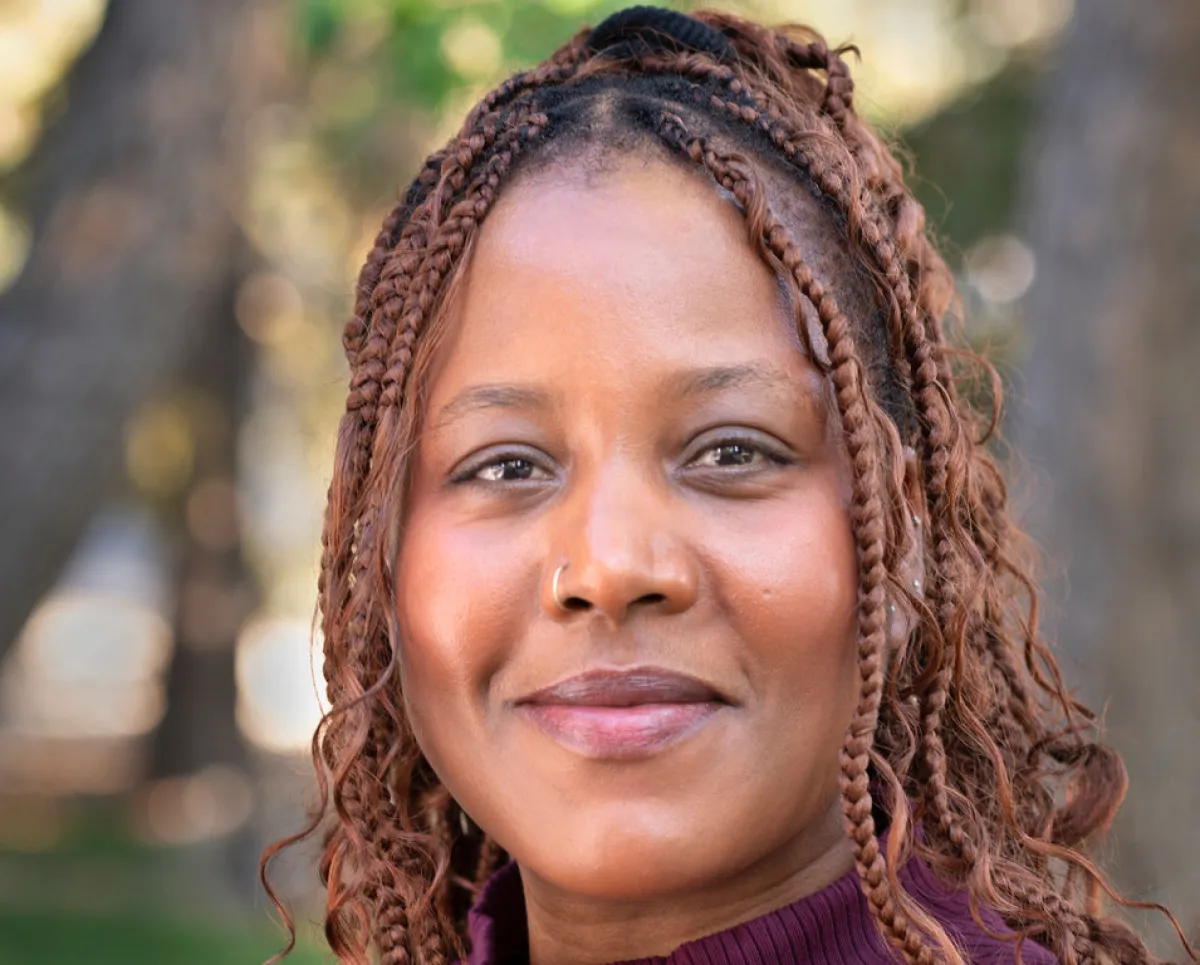
Iryn Tushabe is a Ugandan-Canadian author who has garnered a large international readership and is no longer considered a literary newcomer. Winner of the City of Regina Writing Award (2020, 2024) and the Journey Prize (2023), as well as a finalist for the Caine Prize for African Writing, her first novel Everything Is Fine Here marks not so much a beginning as a threshold: the transition from award-winning short prose to a more expansive form. Her literary background is unmistakably transnational, but her narrative remains firmly anchored in Ugandan experience: grounded, precise and devoid of any exoticism.
Stylistically - and in its affectionate, never folkloric evocation of everyday life in western Uganda, contrasted with the vibrant, politically charged Kampala - the novel is in the tradition of East African literature from the late 1970s to the early 2000s: those books from the East African Literature Bureau (later, the Kenya Literature Bureau) or Focus Books, which understood self-empowerment as an aesthetic practice. In her novel, Tushabe palpably connects with authors such as Joseph M. Luguya, Margret A Ogala or O. Wambakha - and she is aware of this lineage. When Aine, the younger sister and actual protagonist, almost chokes on water when she hears that Achen, the lesbian partner of her older sister Mbabazi, went to Oxford, exclaiming: "Okot p'Bitek went to Oxford", this is not name-dropping; it is literary awareness. The fact that she is an advocate of African Religions in Western Scholarship - and reads her grandfather's copy, so full of annotations that it is almost a dialogue between p'Bitek and the grandfather himself - is a poetic statement in itself. Here, writing is heritage. "So that's who gave you your writing brain- your grandfather." Literature is introduced here as a family tradition. And, of course, as a catalyst for potential resistance.
However, Everything Is Fine Here is not a nostalgic, traditional novel. It is a novel of our time - raw, political, vulnerable. Tushabe writes against Uganda's homophobia, which is also legally institutionalised. She shows how everyday life functions when desire is criminalised. A public kiss between Aine and Elia is met with jeers from boda boda drivers. Aine thinks soberly: if it were Achen and Mbabazi, "those same men would most likely beat the women with tire irons." Shortly before, a mob had stormed an LGBT office; the police confiscated condoms and beat up the activists. Tushabe describes it without melodrama - and therefore with maximum impact.
The tenderness with which she portrays lesbian love is all the more radical. "Your lover," says Aine. Mbabazi hisses: "Who even uses that word anymore?" - "Partner, then" - "In what line of business?" - "The business of life, I suppose." These exchanges are light, funny, intimate. They bring the political back into the private sphere. Later, in the "joyous racket" of Mbabazi's circle of friends - including "a radio DJ whose gender was hard to determine" - Aine realises that home is not a place, but a state of being. Mbabazi "zooming around like a firefly" is an image of freedom that Aine wants to preserve for her own future. Memory functions here as a refuge.
At the same time, the novel paints a vivid picture of corrupt politics. The mention of the "honourable Member of Parliament", who voted to abolish the age limit so that Museveni could continue to rule, is not merely decorative. It symbolises a structure in which power is self-perpetuating. Tushabe shows how political cynicism seeps into family life.
The scene of Aine's first sexual encounter, the classic "deflowering", is disarmingly matter-of-fact. "No amount of clenching helped ease the insistent pain." She swallows her cry. He groans: "That feels so good." She answers evasively: " It's so hot in here." There's no scandal, just demystification. Female socialisation and male self-assurance are dissected in a few, precise sentences.
Another of the novel's strengths is the analysis of charismatic churches. In a passage reminiscent of the understated clarity of Scholastique Mukasonga, who traces the historical roots of this religious indoctrination in her novel Sister Deborah, Tushabe describes how Pentecostalism permeates a Protestant girls' school; a social substructure - apostles in shiny shoes, prayers in tongues, schoolgirls falling to the ground in ecstasy. Aine's critical essay about this in the Ugandan daily newspaper Daily Monitor gets her into trouble. Her criticism of the religious spectacle is sanctioned.
This criticism becomes even harsher when Aine's uncle asserts that people fall "on their knees and cry to a god the white people invented and brought here to replace our own gods." Christianity is unmasked here as a colonial relic, not polemically, but as a bitter truth in family conversation. This also echoes Decolonizing the Mind: The Politics of Language in African Literature by Ngũgĩ wa Thiong'o. Even more so concerning language, which is also dealt with in this clever novel and, in keeping with Ngũgĩ wa Thiong'o's spirit, underscores the extent to which the regional Runyankole dialect of south-western Uganda, which is spoken here, plays a significant role. When Aine realises that "desert" has been translated as "forest" in the Runyankole-Rukiga Bible - "ihamba" - she understands the epistemic shift. Her father asks: "Do you know that more than half the students in university cannot write or read in their mother tongues?" The education system as an alienation machine. And yet the family enjoy English word play on their porch - the other side of the coin, perhaps:
"Hey, if a small novel is a novella," Achen said, "why isn't a nap a sleepella?"
"Or a small storm a stormella?" Aine said.
"A jog would be a runella." "An infatuation a lovella?"
Decolonisation here doesn't just mean isolation, but also the creative appropriation of the colonial legacy.
Tushabe doesn't shy away from other difficult topics either. Misogyny is presented in concrete, not abstract, terms: Mbabazi, top of her year in medicine, receives "indecent proposals" instead of jobs. Her employment in a reproductive clinic - poorly paid, threatened by anti-abortion mobs - is then both a risk and a liberation.
The stigma of depression is also confidently stripped of taboo. The character who wakes up in hospital several times after overdosing, "deeply disappointed" by the failure of her suicide attempt, suffers from an illness that "everyone around her was afraid to name". And for which supposedly the only treatment is prayers. Tushabe finds words for the unspeakable, which thus becomes firmly anchored in reality. Anyone who has visited one of the charismatic churches in Uganda and seen how depression is "cured" by an exorcism can only be grateful to Tushabe that she offers intracultural alternatives in her text.
But beyond critical tonality, Tushabe also succeeds time and again in creating tender moments, especially in her descriptions of local customs, such as the locust season and the delicacy of the senenaena, collected in the headlights of the Landcruiser to then be fried golden and eaten with joy. Or the legendary Ugandan fast food Rolex- chapati with omelette, cabbage, tomatoes and onions. These scenes are more than local colour. They are cultural textures. They ground the political in the culinary, in the smell of oil, in the crackling of roasted wings.
However, it is the writing of this novel itself that has the final say: "Her writing would free her." it says. Aine sees herself in her father's pavilion, surrounded by notebooks, and experiences literature as a catharsis, as a survival strategy. The uncle repeats: "Where many people walk, a new path will be cleared." And Mbabazi says: "Tell Mama that everything is fine here." This sentence is a defiant promise. Because, of course, not everything is fine. But in the assertion lies at least the possibility of resistance. And in this case, it lies in the writing process and this novel itself, a novel that knows tradition, that risks the present and imagines the future. A book that creates a strange, almost visionary glow between fireflies and hatchets, the possibility of a future.
Did you enjoy this text? If so, please support our work by making a one-off donation via PayPal, or by taking out a monthly or annual subscription.
Want to make sure you never miss an article from Literatur.Review again? Sign up for our newsletter here.