


Russian poems on the war against Ukraine
 Editions Points
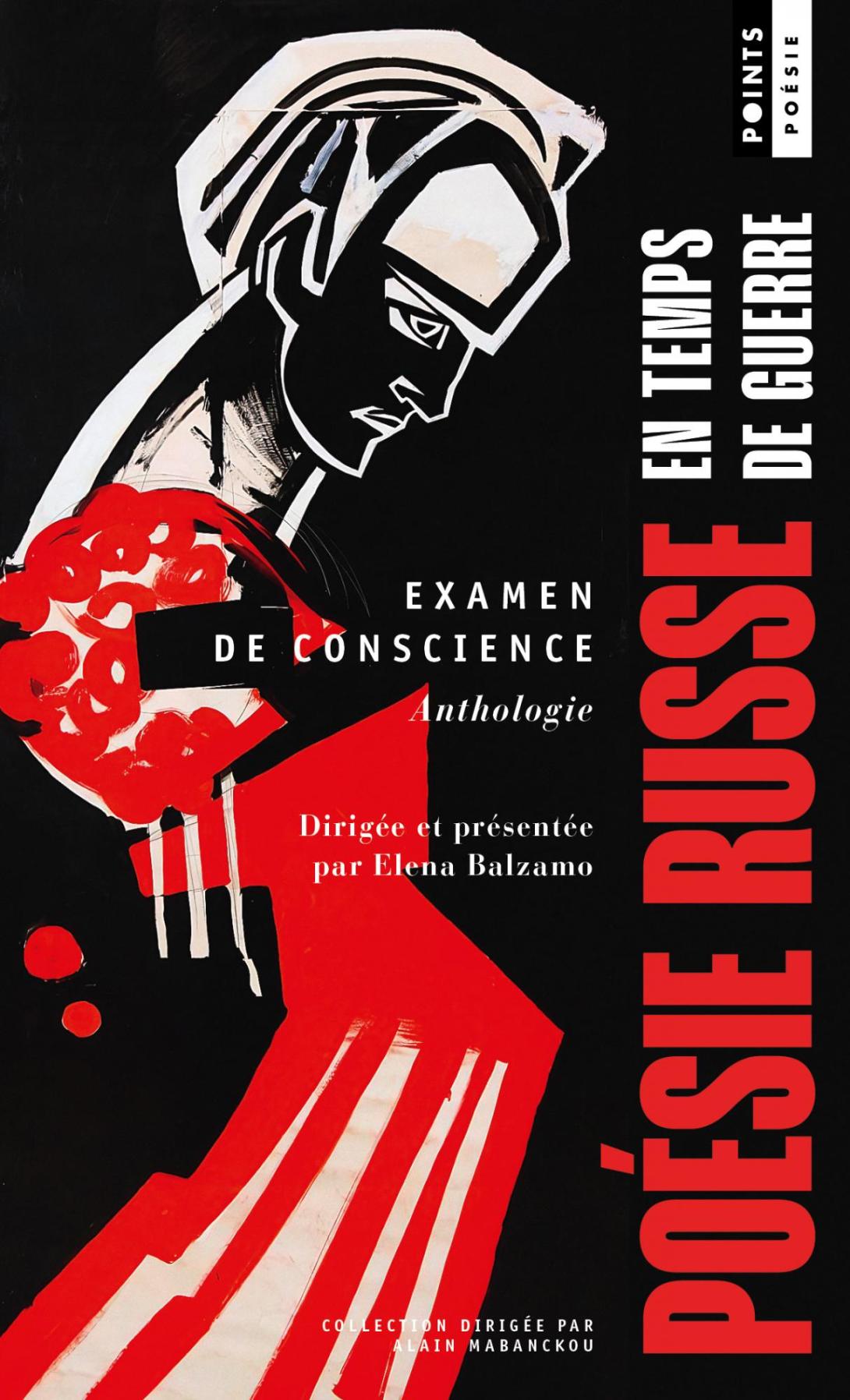
Elena Balzamo (ed.) | Examen de conscience - Poésie russe en temps de guerre | Editions Points | 208 pages | 11.95 EUR
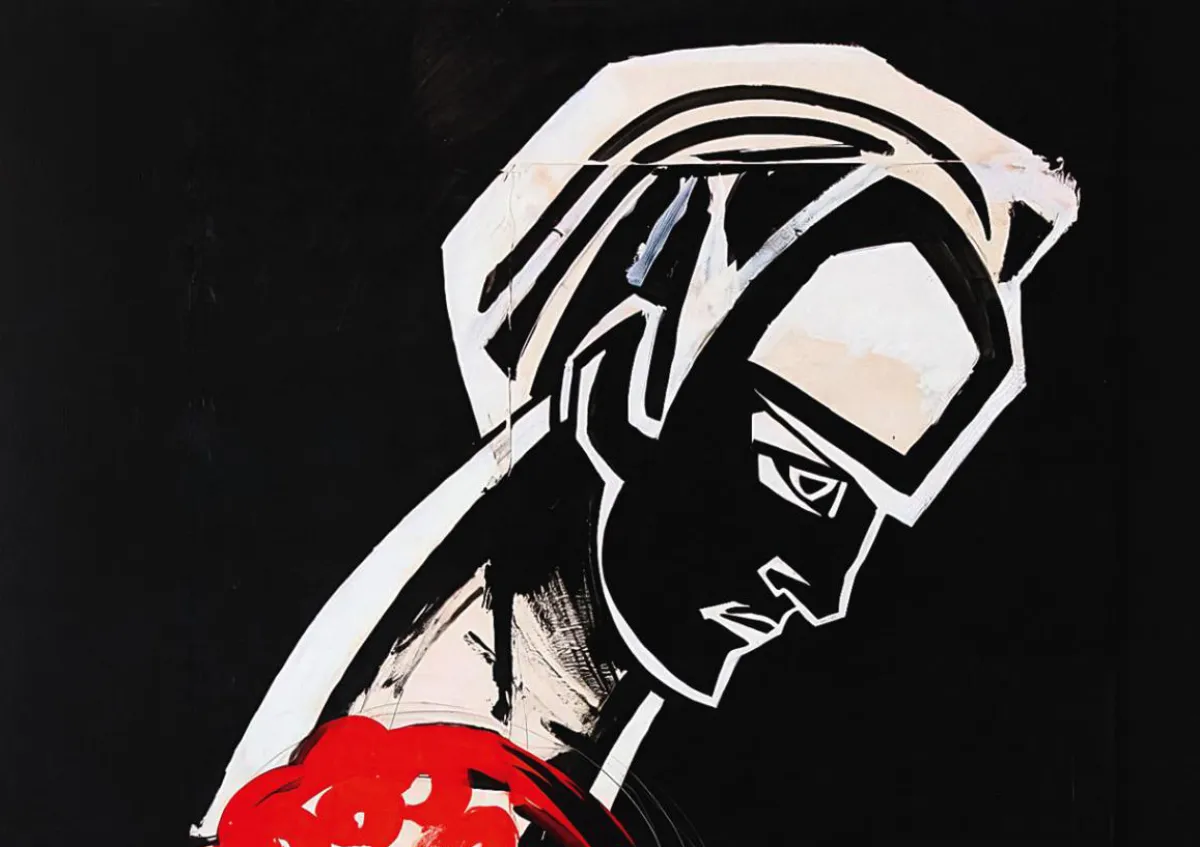
Travel educates. On a day trip to Paris to visit the retrospective of a great, living German painter, I had a long wait for my cheaper, and therefore later, train back to Brussels. To pass the time, I bought the latest edition of the daily newspaper "Le Monde". Lo and behold, in the literary supplement, there was a review of a volume of poetry by 16 Russian poets, recently published by Editions Points (Point Poésie). Back home, I immediately ordered the small paperback. It is a bilingual Russian-French anthology, edited by Elena Balzamo. The title: Examen de conscience - Poésie russe en temps de guerre (Examination of Conscience - Russian Poetry in Times of War). The French translations have been done by five translators.
Elena Balzamo writes a short but concise introduction. In Soviet times, poems circulated clandestinely held considerably sway in society. With the collapse of communism, they lost their once dominant position because overnight, artistic expression was given free rein. Since Putin's Russia launched a full-scale invasion of Ukraine in 2022, the quality of the poems - according to the editor - has improved enormously again. Many of the selected poems are based on, or refer to, older traditions.
The poets mainly come from Russia's major cities. Most are living in exile, some since before 2022, although the majority emigrated after February 24, 2022. Evguenia Berkovitch was sentenced to six years in prison in December 2024, and three poets still live in Moscow. The Russian president is trying to spare the major cities, or rather their inhabitants, from the effects of the war as much as possible, after the announcement of a partial mobilisation on 21 September 2022 led to hundreds of thousands fleeing the country. Many of them were young, well-educated people . Ever since, Putin has feared social protest more than the devil fears holy water.
This 'safe space' is evident in the poems. The title of the book "Examination of Conscience" says it all. The poems are rarely about the first-hand horror of a cruel war, but rather exploring how this point was reached and why so many in the West and in Ukraine failed to see what was coming until the last moment. A sense of guilt, but also an intense, though indirect, complicity in what Russians are inflicting on Ukrainians every day, can be found in many of the verses.
The poets are arranged chronologically according to their birth date. Viktor Essipor opens the series with four poems that slowly intensify. The first evokes beautiful nature, through which a fighter jet roars. In the second, spring begins, lovers hold hands, the small supermarket next door is open, everything seems normal. In the third, the air smells of blood, reminiscent of 1930, when Stalin's forced collectivisation of farmers began, resulting in millions of deaths in Ukraine. The fourth recounts the deaths of several historical rulers, a clear allusion to the inevitable end of Putin.
Vadim Jouk (died 2025) states that swords are no longer beaten into plowshares (an old slogan of the German peace movement of the 1980s), but that swords are forged from crosses, a clear reference to the warmongering role of the Russian Orthodox Church.
From Igor Irteniev comes this poem:
Another way for us?
In fact, there is no longer one.
We have quite managed
To reach absolute horror.To the point that cold sweat
pours down our foreheads;
Pol Pot seems an altar boy
in comparison.I could never have imagined this,
not even remotely,
I who have written so many bad verses
about the Russian regime.
Alexeï Gloukhovski writes about how the Russian elites treat their own soldiers:
Award after death
Mathematics is simple, in war.
One goes, another comes: a simple calculation.
That one kills - not remarkable. The women-mothers
will give birth to others, brand new.
Tomorrow there will be small, fresh soldiers again
to feed the wolves and ravens.
The "mathematicians" of the elite
note not a single loss in their ranks.
Scanning the battlefield at dawn,
they collect the dead remains,
decorating the absent after death,
finding for them roughly equal replacements.
Oh this mathematics -
nothing but a lying science of life
He was, he is gone. For the mother, just a message
and a coffin that cannot be opened.
We all need some self-protection against terrible and cruel realities if we want to live. Some things can only be endured through a filter. My hardest, lived example of this is the novel Beasts of no nation about the life of a child soldier in a West African country. The main character was abducted as a young boy and his family was killed. The book was written by Nigerian author Uzodinma Iweala and published in 2005; there was also a film adaptation in 2015.
In comparison, the war poems discussed here are relatively easy to read. The word Bucha, a Ukrainian city whose name has become synonymous with unimaginable Russian war crimes against the civilian population, only appears three times in the entire book. And yet, these Russian poets - neither willing nor able to remain silent about the crimes of their homeland - are an important contribution to a war that we Europeans, in particular, should not suppress.
German Loukomnikov, a master of brevity, helps us not to do so:
The skull cracked
like a nut.
Life goes on!
But not for you.
17.08.22
Did you enjoy this text? If so, please support our work by making a one-off donation via PayPal, or by taking out a monthly or annual subscription.
Want to make sure you never miss an article from Literatur.Review again? Sign up for our newsletter here.