


The West is dead. Long live the West?
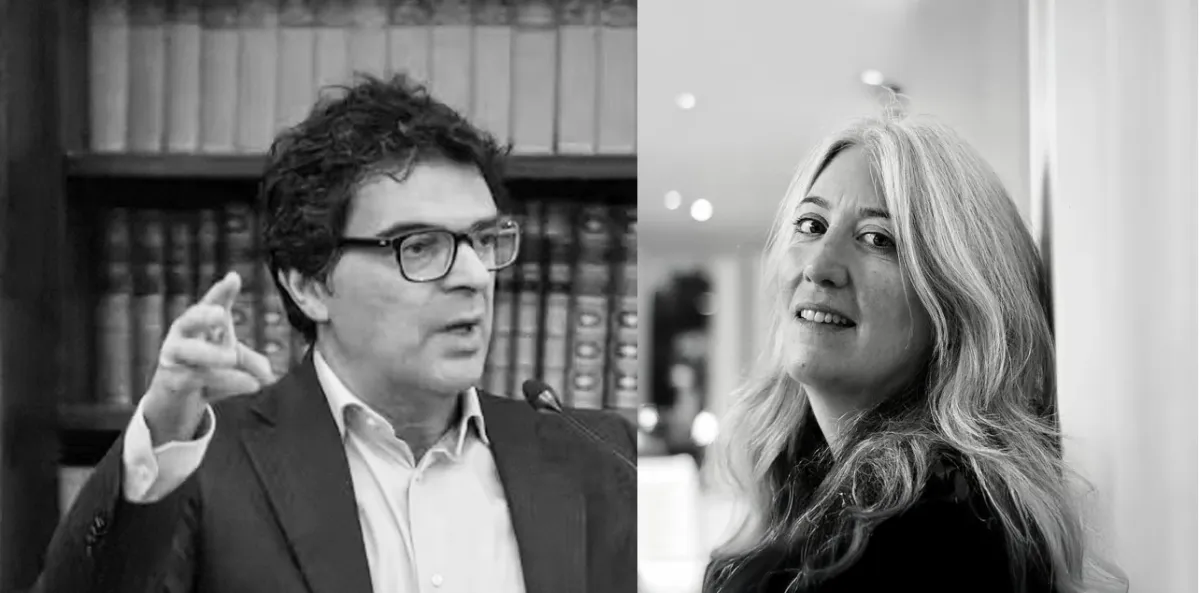
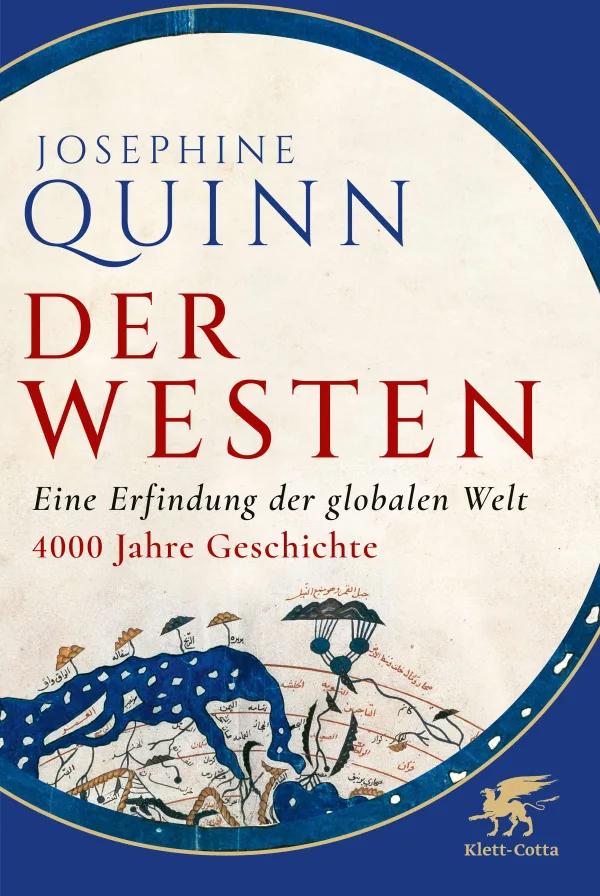
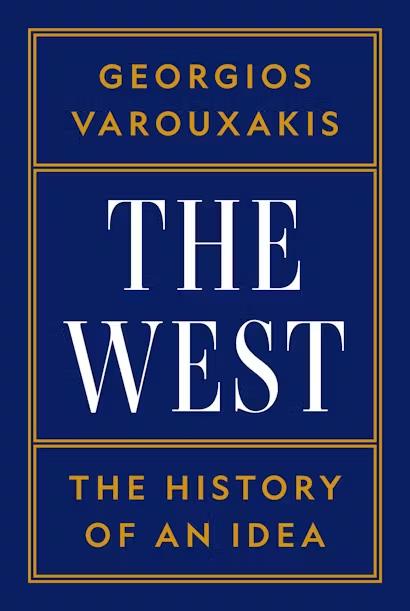
In 2024, the Irish historian Josephine Quinn, Professor of Ancient History at Cambridge University in England, published the book How the World Made the West. A 4,000-Year History with Bloomsbury Publishing, London. This was followed in 2025 by the German edition published by Klett-Cotta, titled Der Westen / Eine Erfindung der globalen Welt / 4000 Jahre Geschichte. That same year, Princeton University Press published the book The West: The History of an Idea by Georgios Varouxakis. He is Professor of the History of Political Thought and teaches at Queen Mary University in London.
Josephine Quinn wrote her book primarily to combat what she sees as the widespread belief that Ancient Greece and Ancient Rome, both commonly regarded as cradles of Western civilisation, emerged entirely autonomously. It rejects a division of the world into cultures and civilisations and condemns culturalist thinking, which ultimately means a narrowing of one's own horizon, a suppression and/or falsification of facts and which generally devalues other cultures and civilisations. (Civilisation here means a complex society with urban planning and writing; culture can be "simpler"). She has caused quite a stir with statements such as "Forget everything you have learned about the West" or "The West does not exist".
Georgios Varouxakis' book The West: The History of an Idea is not a history of the West per se, but that of the different opinions held throughout the ages about the true nature of the West. He suggests that his book will challenge everything the reader has previously believed about what the West is. In this sense, the two books are complementary. Both authors believe that there is no justification for the phrase "from Plato to NATO". Both books are helpful to those wishing to gain an understanding of the evolution and essence of the West.
 Klett-Cotta
Josephine Quinn | The West | Klett-Cotta | 688 pages | 38 EUR
I. The West / An Invention of the Global World / 4000 Years of History
Josephine Quinn shows that the "road" that leads from classical antiquity to our Western present has its origins much earlier in time and has countless off-shoots, branches and crossroads.
She describes in great detail how all the ancient cultures of the Mediterranean region learned from each other. She repeatedly emphasises that each reproduced skill was interpreted, applied and often refined by the newcomers in their own way, to the benefit of all. But she is keen to knock the Greeks and Romans off their pedestals. It is well known that they were the last to set foot on the Mediterranean stage before the Germanic barbarians put an end to antiquity. And it was already known in the 19th century from whom they had learned everything. In her introduction, the author quotes the English philosopher, politician and economist John Stuart Mill as a cautionary example. He had reflected on what constitutes a civilisation, and had concluded that its characteristics were more developed and rapidly improving in Europe, especially in Great Britain, than anywhere else in the world. If you think about the great political freedoms in England at the time and the accelerating industrialisation, he may even have been right. But according to Georgios Varouxakis, in 1850 John Stuart Mill also claimed that Ancient Egypt was the first civilisation known to us, and that we have good reason to believe that it was a civilisation of black people. And that therefore the Greeks got their first lessons in civilisation from black people.
Reading Josephine Quinn's book, it gradually becomes clear what she is getting at. She seeks to denounce the arrogance of the West and defend universalism, a profoundly compelling stance. She is concerned with one humanity, which, from earliest times has shared knowledge, and in which no one has the right to elevate themselves above others. This message is more important than ever today, and will continue to be so in the future.
She begins her journey through history around the year 2000 BC and creates vivid, almost literary scenes, allowing the reader to clearly picture those distant times. Anyone reading this book will learn a wealth of fascinating details about the cultural penetration of the Mediterranean region (in the broadest sense). From chapter 19 onwards, however, it loses momentum. From hereon, the book develops into a parade through history up to the first voyages to Africa by the Portuguese and the discovery of America - more a description of events than any deeper analysis of sources or influences.
The most important mutual cultural penetration in this later section of the book deals with the translations of Greek texts by the first Abbasid caliphs in Baghdad from around 760. They specifically searched for Greek texts which, according to the author, were rotting in Byzantine archives and monasteries at the time. These texts were not only saved for posterity, but also formed the basis for further research and development by numerous Islamic scholars. Europeans became acquainted with most of them through Arabic retranslations into Latin or contemporary languages. The fact is common knowledge, but the details are still worth reading.
Josephine Quinn's concern is best captured by a quote from the last chapter about a collection of moral tales, fables and animal stories written first in Sanskrit and then in Persian: "The first English translation of Kalila wa-Dimna was published in 1570 by Sir Thomas Norton, [...]. As one editor put it in 1888, it was an English version of an Italian adaptation of a Spanish translation of an Arabic adaptation of the Pahlevi version of the Indian original."
There is no better way to sum up the interweaving of all cultures and civilisations.
 Princeton
Georgios Varouxakis | The West | Princeton University Press | 512 | 39.95 USD
II The West: History of an Idea
As already indicated, Georgios Varouxakis also sets out to shake old beliefs about the West. In his foreword, he stresses that those who assume that the essence of the West is liberalism, democracy, law-based, individualism, etc. will be surprised. Crucially, the author gives us the inside view - he tells us what people who lived or live in Europe and the United States thought and think about Western civilisation and how this thinking has constantly changed.
While the 18th century was still clearly the century of Europe in terms of supranational self-identification, there was a shift at the beginning of the 19th century. There were two turning points: firstly, the defeat of Napoleon in 1814/15 and the reorganisation of the European continent through the Congress of Vienna, and secondly, Greece's struggle for independence from the Ottoman Empire from 1821 onwards. The reforms of Peter the Great had firmly anchored Russia in the circle of European states, but the rise of Russia as a result of the Napoleonic wars meant that it was subsequently seen as a threat to the other European countries. Before 1815, Russia was referred to as a country of the North, afterwards as a country of the East. This of course implied that there was suddenly also a West and that the term Europe could no longer be used for everyone as soon as it was about more than geography. The Greek struggle for freedom reinforced the new view of the East; the Ottoman Empire came to be perceived as part of the East, while Greece was seen as belonging to the West.
Auguste Comte, founder of scientific positivism and sociology (he coined both terms himself), played a decisive role in the first half of the 19th century. He was the first to deliberately and loudly proclaim a sharp distinction between Europe and Western civilisation. Comte also coined the term Westernisation. His "Western Republic" was sharply opposed to the European empires and their colonies - he firmly rejected both. Georgios Varouxakis therefore argues that "the West", as a deliberately chosen and explicitly political proposal, had its origins in a vehemently anti-imperialist project whose aim was to replace the European empires with an altruistic (Comte also coined this word) "Western Republic". France was to be its centre and Paris its capital. Auguste Comte included Great Britain and the "Germanic bloc" as well as Italy, Poland and Greece in this republic.
Georgios Varouxakis emphasises that at the beginning, the use of the term "West" in Great Britain and the USA differed significantly from its use in French or German. France sees itself as the heir to Charlemagne and the leader of Europe (de Gaulle was deeply imbued with this), while England's roots are in ancient Rome and classical Greece. In the USA, "the West" had its own specific meaning. It was the area that the "white" Americans still wanted to conquer and colonise for themselves. As the chosen people (God's own country), they found it doubly difficult in the first decades of their independence to relate to a Western civilisation in the socio-political sense and to a supranational entity. Georgios Varouxakis can therefore rightly argue that it was the Europeans who coined the term Western civilisation.
The US-American W.E.B. Du Bois, one of the co-founders of the National Association for the Advancement of Coloured People in 1909, studied in Berlin from 1892-94. He understood that the USA was not the centre of modern civilisation and asked: What is the spirit of Europe? His answer: 1. continuity of organisation. 2. authority of the government. 3. justice between people. 4. individual freedom. 5. systematic knowledge.
Like many black pioneers at the time, he affirmed Western civilisation in principle, but harshly criticised the fact that it did not apply its principles equally to all people. Europeans and Americans were - and still are today - adept at proclaiming and flaunting their ideals and values, without adhering to them themselves.
The First World War must be seen as a profound turning point. Europe suddenly doubted itself and its civilisation. The mechanical slaughter of millions of people on an unprecedented and previously unimaginable scale shook the belief - not only in Europe, but worldwide - in the moral superiority of Western civilisation in the face of its overwhelming technical and scientific superiority. The American soldiers who had been fighting in Europe since 1917 - and many other Americans - questioned their own isolationism after the war and demanded that the USA commit itself to the West and take a leading role in Western civilisation. As a result, a curriculum for schools and universities was developed in the USA in the 1920s called "Western Civ". For US pupils and students, this block of lessons on Western civilisation played a major role until the end of the 1960s and strongly influenced the thinking of two generations.
Germany was no longer considered part of the West after 1914; the Germans were regarded as the Huns of modernity. The Nazi takeover in 1933 and the Second World War with its industrial killing of six million Jewish citizens - in which practically all the countries occupied by the Germans were all too willing to participate, a fact I only realised latterly - reinforced this view. Because the National Socialists had also wanted to create a new Europe, people preferred to talk about the Atlantic community after the end of the war.
For West Germany, the long, painful division of Germany after 1945 was also a stroke of luck in one respect. For it was only because there was suddenly no longer a centre of Europe, which the German states - and from 1871 the united Germany - had embodied for more than a thousand years, that the much larger part of Germany west of the Iron Curtain decided, under the determined leadership of its first chancellor, that it henceforth wanted to belong to the West.
During the Cold War, this West was organised under US leadership against the communist Soviet Union. In 1955, the French philosopher Raymond Aron defined a communist as a person who accepts the entire Soviet system as dictated by the communist party. A Westerner, on the other hand, would not readily accept anything from his own civilisation except the freedom to criticise it and the opportunity it offers to improve it. He firmly rejected the idea that Western civilisation should act as the defender of Christianity. For him, liberal democracies did not represent a Christian civilisation. Georgios Varouxakis's book continues after the Cold War with debates on Francis Fukuyama and Samuel Huntington, among others, but also covers the latest developments up to Donald Trump and his Deputy Chief of Staff and Homeland Security Advisor Stephen Miller. He emphasises that today's West is not identical to the West of the Cold War.
In his conclusions, Georgios Varouxakis stresses that there is no single idea of the West and that ideas of what the West is have been constantly changing since the beginning of the 19th century. He is reluctant to commit himself to a definition, but in the end he cannot avoid classifying the values of the West as universal. He does this in the last sentence of his book with reference to the black US writer Richard Wright. He warned 70 years ago that if we were not careful, the precious heritage - freedom of speech, the secular state, the independent personality, the autonomy of science - which is neither Western nor Eastern but universal, would be erased from the minds of men.
At this point, I have one final comment. No review, and certainly not mine, of The West: The History of an Idea can do justice to the intellectual breadth and depth of this book. Anyone who wants to engage with the history of European ideas must read this book.
III The West is dead. Long live the West?
The old world order lies in ruins. Today, the sparrows are whistling it louder from the rooftops every day. Power on our planet is being redistributed. This never happens overnight and never without battles and wars. I have been expecting it for a long time. In 2012, I published an article in the journal The European - Security and Defense Union entitled The lack of will to be a greater power. In it, I criticised, among other things, that we Europeans had no vision for the future, only one of the past. My final remark was that Europe lacks the will to decide its own destiny. Georgios Varouxakis is convinced that the final chapter of Western civilisation has not yet been written. I agree with him on this point, but today no one knows how this next chapter will go. Europe and the United States are drifting apart like the two continental plates on which they lie. Sometimes by millimetres, sometimes by volcanic eruptions and earthquakes.
Historical comparisons always fall short. And yet they can help us. I like to compare the states of the European Union with the fragmented Greek world before it was conquered by the Romans. Together, the Greeks might have been able to withstand the Roman military might, but individually they were lost. That is why my personal vision for the future has long been a federal European state. However, since the failure of the "Treaty establishing a Constitution for Europe" in referendums in France and the Netherlands in 2005, the member states of the European Union have stubbornly refused to cede further fundamental state rights to the EU. In many core areas, there is still a right of veto that allows each individual member state to place its own interests above those of all others and thus get away with it.
However, this may now change. European integration only got off the ground because France was determined to prevent West Germany from regaining full control of its own steel production at the beginning of the 1950s, as the USA advocated. After initial successes, European unification stagnated until the 1980s. At that time, economic pressure grew to such an extent that, after years of preparatory work, the single market was launched in 1993, which led to the single currency in 1999.
The inclusion of a further ten countries in 2004 (eastward enlargement) required internal reforms. This political development ended in 2009 with the Lisbon Treaty. What only just worked back then is now not only no longer up to date, but democratic deficits, unanimity and a messy distribution of power are hampering the Europeans' ability to act to such an extent that they are in a state of paralysis. In a world that demands daily decisions, the European Union is not viable in its current state. If Europeans fail to make the leap to an even more supranational common union, they will have no chance of asserting themselves as a force in their own right in the battle for the new world order.
Europe needs a new narrative. The original impulse after the Second World War, that inter-European wars must be prevented, no longer holds water. Europeans must look to the future. They need a new vision, common goals that can unite them. Going back to our own cultural and civilisational roots can help, but we must not stop there. Today, these roots are no longer classical Greece and ancient Rome, but the Renaissance, in which Europeans learned to look in the mirror and endure what they see, and the century of Enlightenment, which ushered in the age of science. This is what Western civilisation is based on, this is its origin. Europe has every right to be proud of this. But under no circumstances should it become involved in ethnically, religiously or nationally defined categories. Anyone who lives in the European Union and recognises the values of European culture is a European!
There was a time when Europe brought light and terror to the world. This time, it must fight to stop the horror so that the light is not extinguished.
+++
Further reading:
Understanding China (and ourselves) better
The glass is half full
The unique nature of the European Union
Horror, comfort and hope
Does the European Union have a future?
The first intellectual of modern times
Did you enjoy this text? If so, please support our work by making a one-off donation via PayPal, or by taking out a monthly or annual subscription.
Want to make sure you never miss an article from Literatur.Review again? Sign up for our newsletter here.