



U.S./Iran: A Power Struggle to the Bitter End
 Princeton University
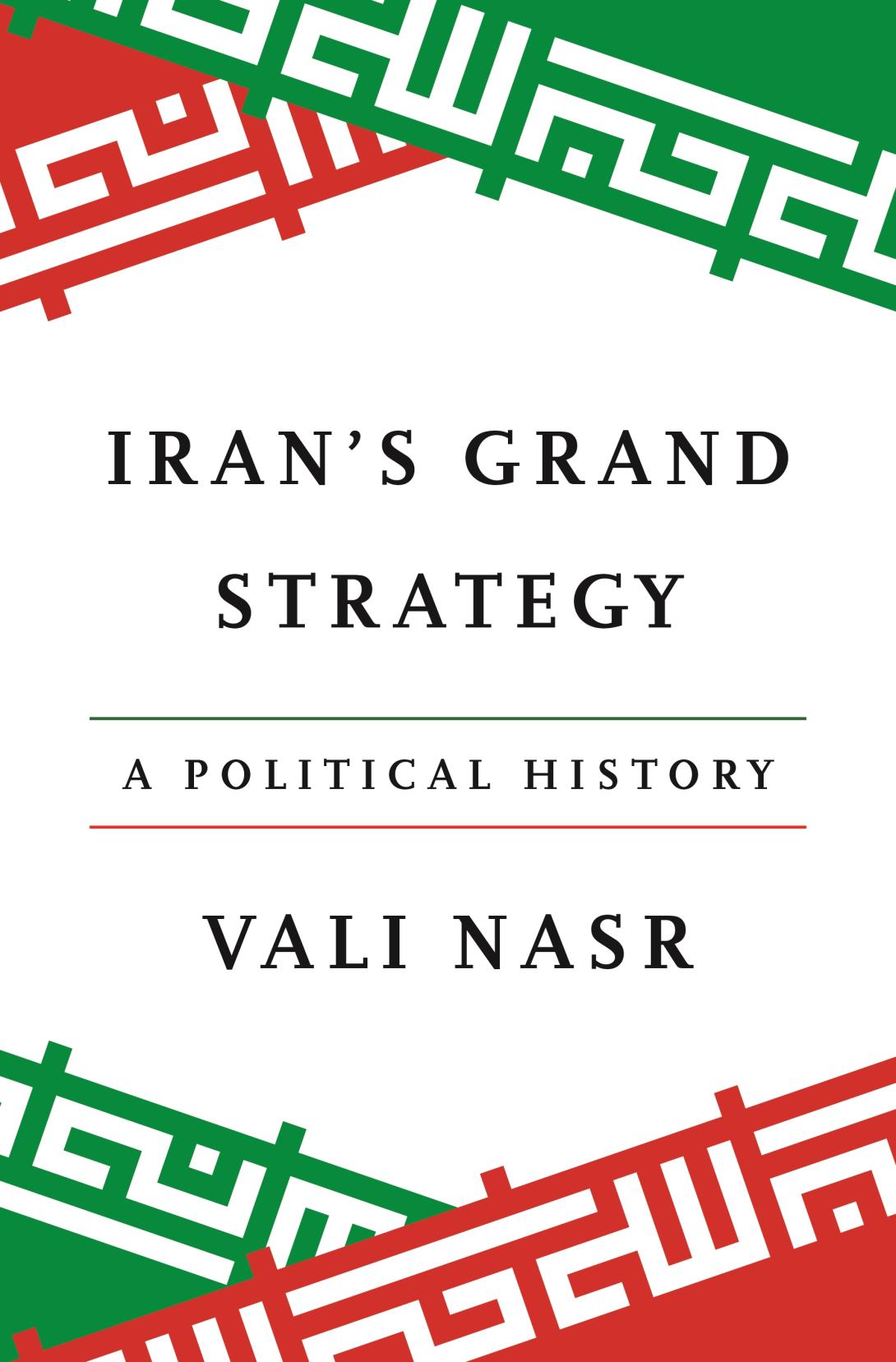
Vali Nasr | Iran's Grand Strategy | Princeton University Press | 408 pages | 35 USD
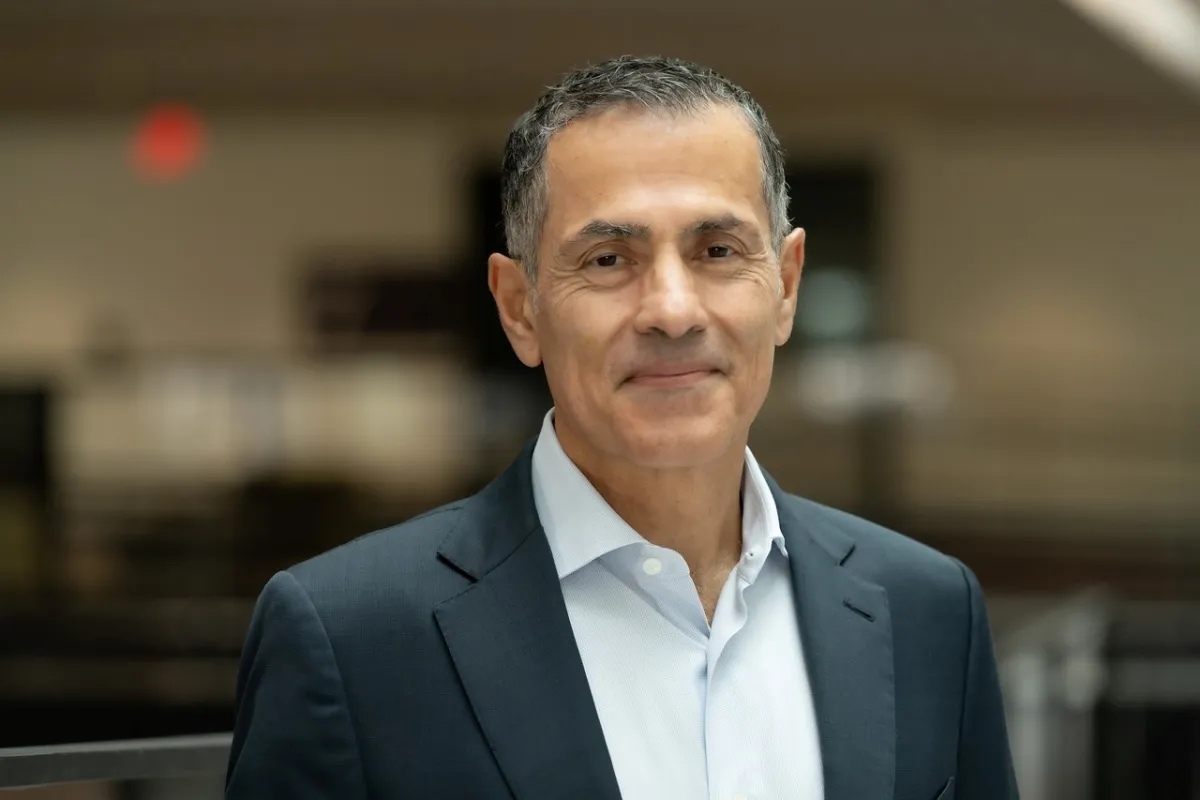
Vali Nasr, a U.S.-Iranian political scientist and the leading authority on the Middle East in the United States, published Iran’s Grand Strategy: A Political History in 2025 with Princeton University Press. This year, the paperback edition was published with an afterword in which the author briefly addresses the war waged by the U.S. (and Israel) against Iran.
In his work, Vali Nasr primarily presents a political history of Iran since the 1979 Revolution. He also places this history within a broader historical context. What I found surprising was that Iranians, too, see themselves as a unique people destined for greatness. Iran aspires to be a pocket-sized world power and to dominate the Middle East, just as it did in ancient times. A second surprise: when the Safavids elevated Shi’ism as the state religion, two-thirds of the population consisted of Sunnis. Shi’ism could only be enforced through mass murder. Asserting their identity as Shiites was intended to help the Persians hold their ground against the Ottomans in the northwest and the Mughals in the southeast.
What is particularly instructive about Iran’s Grand Strategy is its examination of Iranian history since 1979, especially because it is not presented from a genuinely Western perspective. Vali Nasr cannot, and does not wish to, deny his Middle Eastern viewpoint. He dedicates his book to all Iranians, praises their great love of country and their unshakable faith in their nation’s destiny, and wishes them lasting peace, prosperity, and that Iran may find the place in the world that it deserves. This perspective of the author sometimes yields surprising insights. This becomes evident first and foremost in the context of colonial history. Iran is caught between imperial Russia and Britain’s ambitions for power. Because the country was sometimes able to play both great powers off against each other, and was also capable of implementing major domestic reforms at times, it was able to defend its independence for over three centuries.
When Britain’s power waned after 1945, like snow melting in the sun, English greed and arrogance prevented Iran from getting a fair chance after World War II. England had completely seized control of Iranian oil and was unwilling to relinquish it. Even U.S. Secretary of State Dean Acheson was puzzled by the British stance toward Iranian demands for a share of the oil profits, which he described in his diary as downright short-sighted and foolish. (See: Present at the Creation: My Years in the State Department; W. W. Norton & Company, 1969)
An interesting point, worthy of note: Vali Nasr demonstrates that the CIA did not overthrow Iranian Prime Minister Mohammad Mossadegh in 1953. While it had attempted to do so in collaboration with the British, the effort failed due to lack of professionalism. The theory of a CIA coup remains widely held today, supposedly proving a deep historical debt of the U.S. to Iran. Mossadegh’s downfall was primarily due to his intransigence - he rejected every attempt at mediation by the U.S., which sought a negotiated solution rather than a unilateral expropriation of the Anglo-Iranian Oil Company. In the end, he was overthrown by an Iranian general.
The parallels in the policies of the Shah and the victorious revolutionaries are also surprising. The Shah, too, sought Persian supremacy over his Arab neighbours. He also advocated, in the long term, for an Iranian nuclear bomb, towards which end he initiated small-scale preliminary projects in the civilian sector. The core of Vali Nasr’s work, however, is this: for Iranian leaders, it is not religious thought that takes precedence, but nationalism. Contrary to all appearances, the state comes first, and religion second. This does not preclude the use of religion as a vehicle for national policy, clearly demonstrated by the long Iraqi-Iranian War. Saddam Hussein had attacked Iran in 1980 to capture Iran’s most important oil fields. Left to fend for itself, the country fought back with everything it had (which was very little). The unifying factor behind the Iranians’ willingness to make sacrifices was religion, and this alone ensured the survival of the Islamic Republic. A symbol of this: thousands of children were sent to their deaths as human mine-clearers.
After the war ended in 1988, there were repeated attempts to rebuild Iran according to rational principles, and to strengthen it economically. This was only possible with the help of the West (i.e., the U.S.), and that was - and remains - the greatest taboo for the Iranian leadership. The thinking of Ali Khamenei, who - until his assassination by Donald Trump - had been the country’s most powerful politician for decades, as Supreme Leader, was, according to Vali Nasr, strongly influenced by the anti-colonialist thinking of the 1960s. Throughout, his goal remained to expel the U.S. completely from the Middle East.
Vietnam was able to make peace with the U.S. in order to develop economically. Iran did not follow this path. Khamenei ensured that any initiative to open up to the West was thwarted by the Revolutionary Guards. Iran’s policy has always had two faces: one in favour of the West and one against it. Powerful forces around Khamenei and the Revolutionary Guards remained true to their goal of completely driving the U.S. out of the Middle East. However, since the Revolutionary Guards ultimately always prevailed and the resistance of millions was brutally suppressed, Iran has never managed to tap into global economic development.
The lessons learnt from the Iraq War continue to shape Iranian policy to this day. It was because of this war that Iran - which could not afford a strong conventional army - established a forward defence. Today, this is known as the Axis of Resistance. Vali Nasr clearly explains that, ultimately, Iranian policy produced not fewer but more conflicts, making the likelihood of the activities of the Axis of Resistance escalating into a major war even greater. From this perspective, the attack on Iran was an almost inevitable consequence of Iranian policy. Someone who consistently acts like a reckless pariah should not be surprised if they are treated exactly that way. Khamenei was simply unlucky that the American president made even more foolish decisions than he did.
What happens next? The world has already changed dramatically as a result of the war. Turkey (the second-largest NATO army), Pakistan (a nuclear power), and Saudi Arabia (a financial power) have allied themselves against Iran in a mutual assistance pact. The Strait of Hormuz will never again attain the great significance it once had for global oil trade. The Arab neighbours have lost any illusion of peaceful coexistence with the Iranian government. The war has further diminished U.S. governmental power. The Middle East will reorganise itself, simply because it must. This does not mean that the U.S. will no longer play a role there in the future. China cannot - and does not (yet?) want to - assume the American role.
For Vali Nasr, it is clear that the current leadership always prioritises its own power over the well-being of the people. It has killed thousands and repeatedly states that it is prepared to do so again in the future. For Iranians, these are dreadful prospects. For them, there is no light at the end of the tunnel. The coming months will show whether the U.S. still has the power to strangle the regime economically. As always, it is the population that must pay the price for ruthless power politics. The Iranians know this price only too well.
As this text was being prepared for translation, the war is escalating once again. There is no end in sight, and no one knows at the moment what such an end might look like. Considering that Russia and China support Iran—and thus the Axis of Resistance—for example, by providing satellite imagery for attacks on U.S. military bases and Arab targets such as pipelines, what I wrote in my review of the book The Coming Storm, remains valid.
Did you enjoy this text? If so, please support our work by making a one-off donation via PayPal, or by taking out a monthly or annual subscription.
Want to make sure you never miss an article from Literatur.Review again? Sign up for our newsletter here.