


Do we lack imagination?

 macmillan
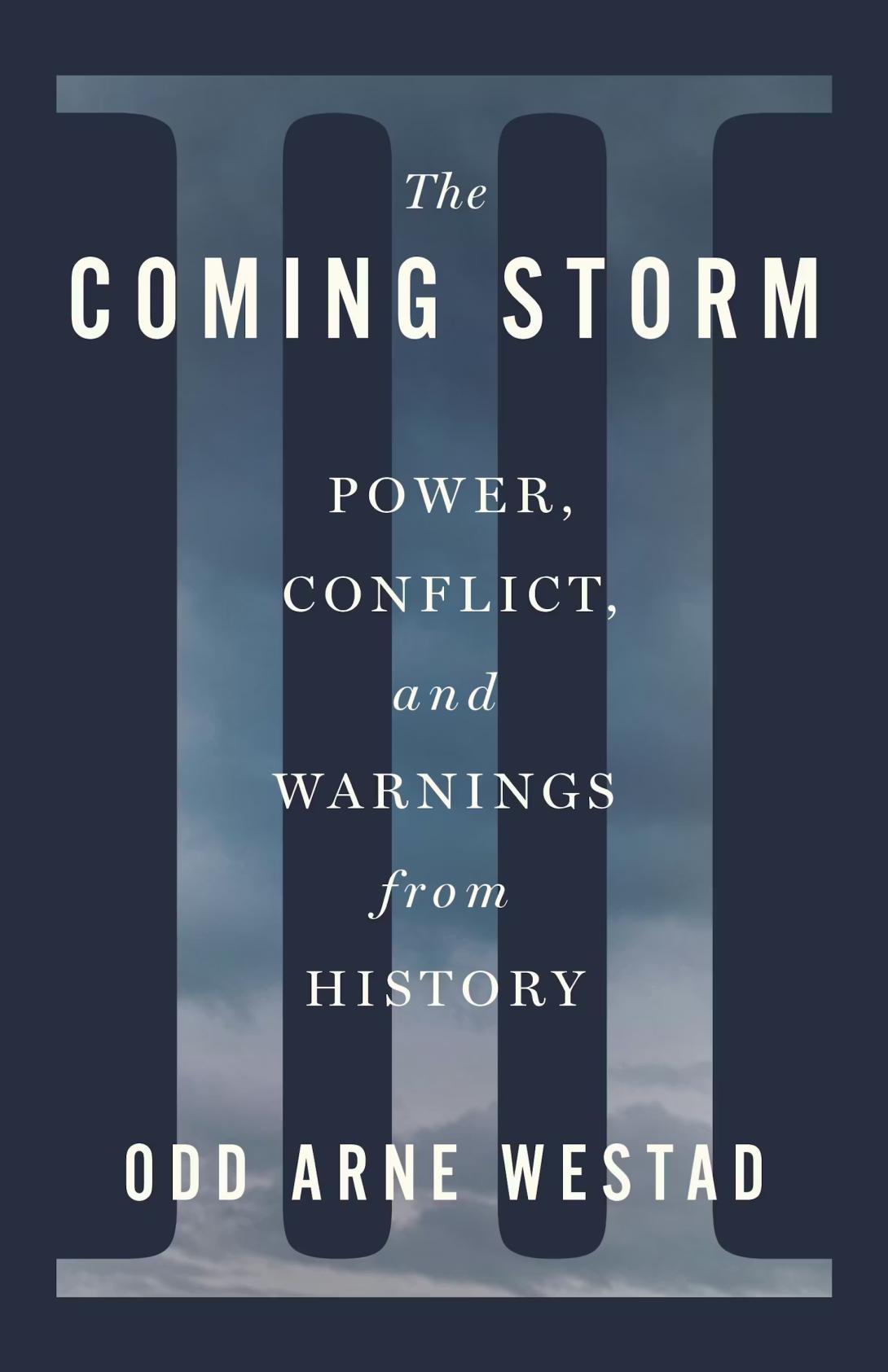
Odd Arne Westad | The Coming Storm | macmillan | 256 pages | 27,99 USD
The Norwegian historian Odd Arne Westad, professor at Yale University, has written THE book on the current war. The English edition of "The Coming Storm / Power, Conflict and Warnings from History" was published on March 3, 2026, the German edition on April 11, 2026. The war between the USA and Israel against Iran began on February 28, 2026. The author could not have taken this war into account for his book, nor could he have even imagined it, starting as he was from the premise that the American president had always promised in his election campaigns to stay out of wars, especially in the Middle East.
Reading the book, the war against Iran seems to loom, an ominous portent, foreshadowing exactly what the author wants to prevent in light of the power struggles of the major powers, but which he also sees as a very real possibility for the future, namely a third world war. We are all acutely aware just how catastrophic such a war would be.
The book reads quickly; it is a good 200 pages long, set in large type. Essentially, it is a long essay in three chapters - "Rise of the Great Powers", "Fears and Resentments" and "Reasons for War". The whole is framed by a foreword and a conclusion. Odd Arne Westadt places the historical backdrop from roughly 1880 - 1914/18 against our present day and finds a frightening number of - and unfortunately very convincing - parallels that can be drawn between then and now.
The first chapter deals with the rise of the United States after the American Civil War and Germany after its nation-building in 1870. Germany in particular plays a decisive role. The author compares the country's rapid rise to dominance on the European continent with the even more spectacular rise of China since its adoption of state capitalism using Western economic methods. Although Great Britain was nominally still the dominant power until the beginning of the First World War, this role was gradually lost towards the end of the 19th century. Similar to the decline of the USA and the West in general in our time, the British loss of power and global influence was initially only relative.
Germany and the USA had high growth rates, England only very modest ones and France stagnated (not in absolute terms, but relatively).
Just like the USA and Europe today, France and Great Britain were gripped by the fear of a great loss of power and prosperity. They attributed their own shortcomings and political failures not to internal failings, but to the behaviour of the newcomers. They were reluctant to confront the new realities. This was true for both politicians and societies and is all too familiar to us.
Westad places great emphasis on the fact that the dramatic shift in the balance of power during the three decades preceding the outbreak of the First World War was not the main cause of this war. Ultimately, it is the decisions of people that bring about war. War is not a necessity. But - as the author rightly points out towards the end of his book - wars can also solve problems that those in power have long struggled to solve. The price, however, is unimaginably high.
Fear of their own decline and resentment towards those on the rise influenced politicians and had a major impact on the decisions that led to the First World War. To prevent the outbreak of war, fears and resentments must be consciously confronted and their justification questioned, something that does not come easily to individuals or nations.
Westad asks what the strategic goals of the great powers are in the young century. His answer: as a century ago, it's all about political goals, alliances and military planning. The strategic landscape has changed. Today, it's not colonies, but the entire globe, including the deep oceans and near-Earth space. Before the First World War, the centre of world power was in Europe, today it is in East Asia. In 1914, 40 percent of global industrial production took place in Europe, today East and Southeast Asia together produce more than 50 percent. Like Germany at the beginning of the 20th century, China is now at the centre of the most important economic region. According to the author, this is both a blessing and a curse.
In 1914, Germany believed that it was in danger of losing supremacy and that a major war, should it be unavoidable, should therefore take place sooner rather than later. China is in a similar situation today, because the rapid ageing and shrinking of the Chinese population, together with an economy that is heavily controlled by the Communist Party and therefore severely hampered in its development, will lead to another relative decline in its power sooner than many expect.
In the third chapter (Reasons for War), the author outlines the steps that, despite no-one but a handful of over-zealous military leaders wanting it, led to the First World War. And this is precisely Odd Arne Westad's main point. In times of crisis, war can break out if politicians are not up to the gravity of their task. He lists the current points of conflict that could lead to a major war today. It is then often individual events such as the assassination of the heir to the Austrian throne in Sarajevo in 1914 that set in motion a development that no one is willing or able to stop. Saving face on the part of those responsible plays not the slightest role in this.
While reading the last third of the book, I was hit by a sudden realisation: the United States' war against Iran could be such an isolated event. The US may have opened Pandora's box. But even if this is not the case, the global balance of power has become so fragile that the danger of a world war breaking out has not been averted. "The Coming Storm" should be required reading for anyone who bears responsibility in the global power game. Humanity still has its fate in its own hands.
Did you enjoy this text? If so, please support our work by making a one-off donation via PayPal, or by taking out a monthly or annual subscription.
Want to make sure you never miss an article from Literatur.Review again? Sign up for our newsletter here.