



"Finding yourself without losing yourself"

Halldór Guðmundsson, born in Reykjavík in 1956, grew up in Germany and studied in Denmark. For many years he ran Mál og menning, Iceland's largest publishing house at the time, and published several books himself - including the definitive biography of Icelandic Nobel Prize winner Halldór Laxness. He later ran Harpa, Reykjavík's concert and conference hall, and was twice responsible for the program of a Guest of Honour country at the Frankfurt Book Fair: Iceland (2011) and Norway (2019).
Axel Timo Purr met Guðmundsson in a small fish restaurant in the centre of Reykjavík.
Halldór Laxness (1902-1998) grew up on the Laxnes farm near Reykjavík, whose name he later adopted. After early travels, he briefly converted to Catholicism in 1923, but turned to socialist and communist ideas in the 1930s, influenced by stays in the Soviet Union. He became Iceland's most important storyteller, known for internationally translated works such as 'Salka Valka', 'His Own Master' and 'The Icelandic Bell'. In 1955 he was awarded the Nobel Prize for Literature for the renewal of Icelandic narrative art.
Axel Timo Purr: Let's talk about Halldór Laxness. Six months ago, I would never have dreamed that I would be talking about him now, here in Iceland, because I hadn't actually thought about him for 30, 35 years or so. I read him when I was 20 - enthusiastically - but then he gradually faded from my memory.
When I was in the Philippines this summer, meeting many authors and reading their books, I suddenly found myself thinking about Laxness again. I reflected for quite some time about why that might be. Then it came to me - there is a certain similarity:
When you look at the Philippines - the global South - with its volcanoes, its mythology, the old tales and legends now being consciously integrated into literature again, functioning as part of a decolonisation process, then you end up with similar questions to those of Laxness.
This literature - at least for me - is less about linguistic experimentation than about narrative and content, about stories with a purpose. Above all, it is about the search for a national identity, for a self-image that emerges from colonial history.
And then I suddenly had to think of Laxness again. I wondered whether Laxness is not in some way also an author of the "global South" - in quotation marks - because he dealt with similar themes and turned them into literature.
That's why I wanted to ask you, as a Laxness specialist and his biographer, what you think about this.
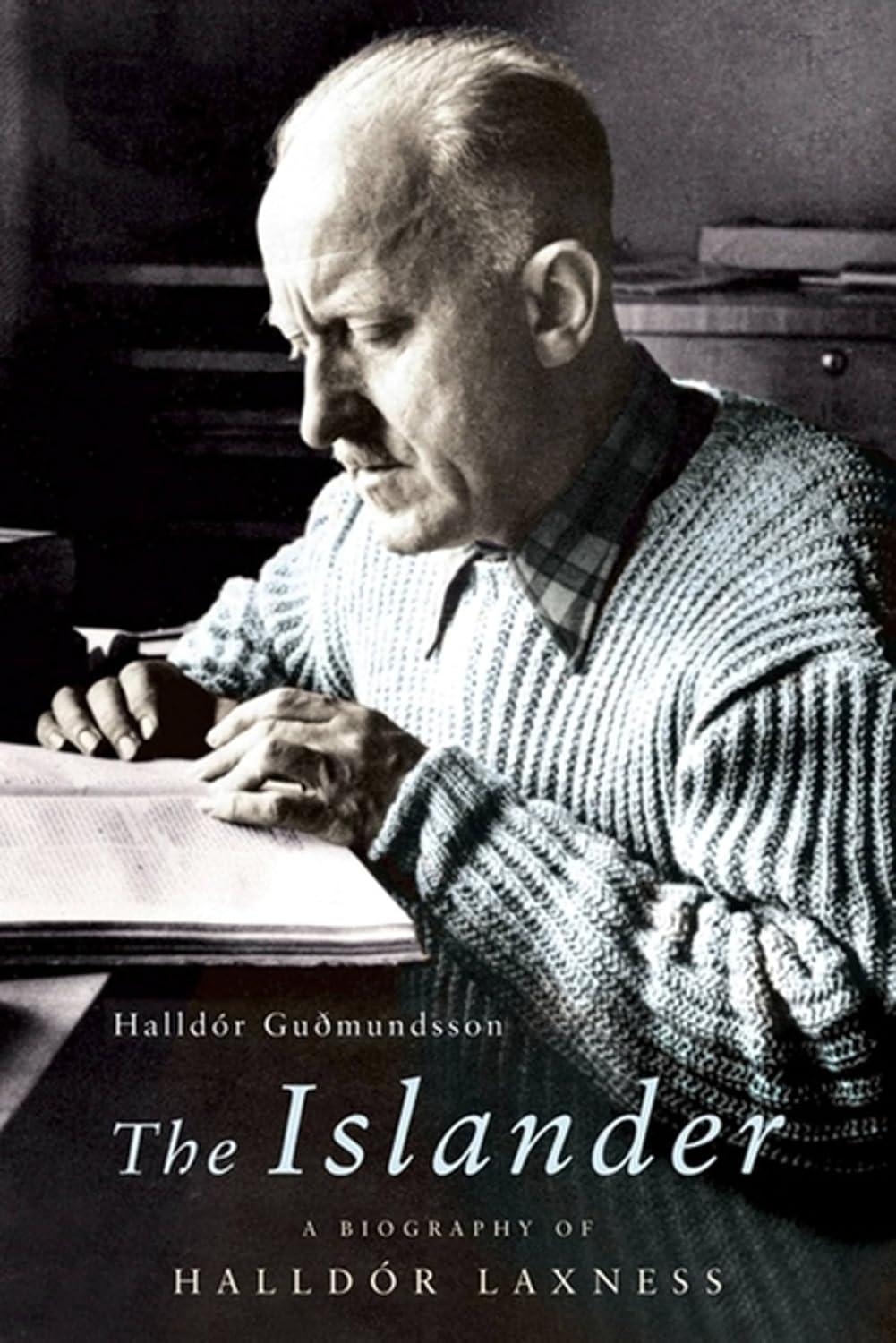 MacLehose
Halldór Guðmundsson | Halldór Laxness: A Biography | Hachete | 496 pages | 23.50 EUR
Halldór Guðmundsson: Well, what I wanted to say about your Philippines comparison - which I find highly interesting, although I don't know their literature at all: in many ways, Laxness was the personification of modernity, with all its fractures.
He came to Europe as a very young man, shortly after the First World War, and travelled extensively. He later went to America, to Los Angeles, to Hollywood, because he wanted to tell the world his stories and believed that the best way to do this was through film. Meanwhile, he was constantly publishing articles in Icelandic newspapers, urging people to acquaint themselves with modern culture, mass culture.
But when he was writing, literary writing, he was always doing just what you described about the Philippines: searching for an Icelandic identity , in the same vein as the old sagas, the folk tales, poems and songs that have been with us for centuries.
All his novels are set in Iceland. In fact, some of his characters search for and find something in the old manuscripts. It's about the survival of this old identity.
So is Laxness actually something of a literary figure of the decolonisation process for you? Someone who is trying to emancipate himself from centuries of Danish rule through language, legends, myths and a new literature?
Yes, definitely - especially in the later phase of his life, but the tendency is there early on. It's already obvious in his novel 'The Great Weaver of Kashmir'.
I've never read it.
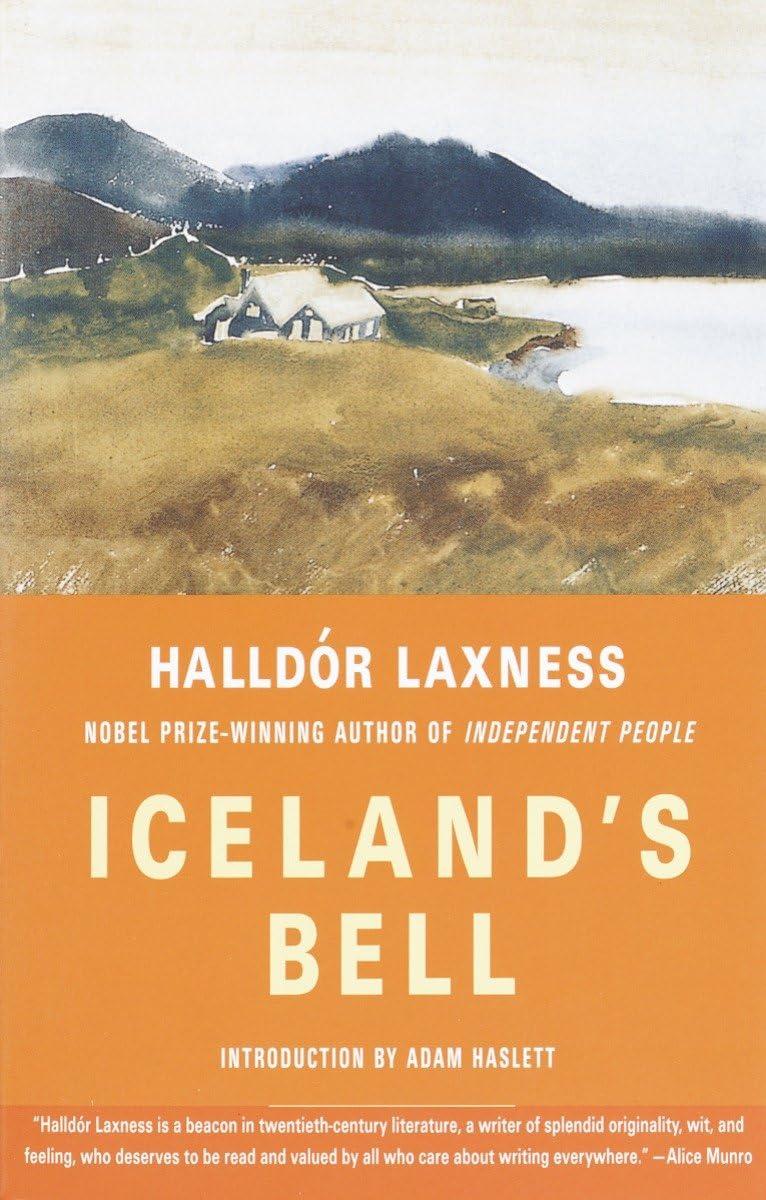 Penguin
Halldór Laxness | Iceland’s Bell | Penguin | 448 pages | 17 USD
I don't think many people outside Iceland have read it. But it is available in German, and now also in other languages, including in English. It's about Iceland being a poor, primitive country that needs to get to know European culture, modernity - and about women having to learn to emancipate themselves.
Later, in the 1930s, when he wrote his great novels, he was interested in describing the Icelander in a very small village or on a farm up on the moors or in the northwest - but turning this microcosm into a macrocosm.
For example in Salka Valka and of course in Iceland’s Bell. In Iceland’s Bell, exactly what you just described happens: It's about decolonising the country, also culturally. It is the first novel that explicitly deals with the colonial era, and was very much concurrent with what was happening in the rest of the world.
Iceland’s Bell was written during the Second World War. Laxness had to stay in Iceland at the time; travel wasn't possible. Before that, he'd been on the move for twenty years: in Russia, in Paris, in South America, at congresses with Stefan Zweig, everywhere. Now he had to stay here for years. In this situation, he inevitably turned to the old sagas, our traditions, the stories.
So out of a kind of house arrest?
Yes, "house arrest" sums it up quite well - he was stuck. And it was precisely during this time that he wrote Iceland’s Bell about the worst years of the Danish colonial period: the great famines, the years when church bells were brought from Iceland to Copenhagen and melted down to cover roofs; the time when old manuscripts and manuscripts were collected and brought to Denmark.
He wrote about the period around 1700 because he thought it was important that decolonisation should also become part of our own search for identity. Iceland's Bell had an enormous influence. Decades later, many Icelanders saw the Danish past in the way he described it. It wasn't exactly like that, historically speaking - but it was crucial for the Icelandic view of history.
And for him personally, it was interesting that Iceland’s Bell was his first book to sell really well in Iceland.
There again, I see a parallel with Filipino literature. Most female authors in the Philippines have been writing in English - the language of the American colonisers - for decades; it sells better, and there are few female readers anyway. That's why I wonder how it worked in Iceland - with this small language and so few readers.
That was a huge problem when Laxness started. There wasn't a single professional author who could make a living from writing in Icelandic. When he was around 20, he really wanted to become a writer, to tell his stories to the world. But there was practically no chance that he could make a living as an Icelandic author.
Some before him - like Gunnar Gunnarsson - became authors in Danish. Others wrote in Norwegian. You could earn something with that.
And Laxness still always wrote in Icelandic?:
He always wrote his novels in Icelandic, yes. That was essentially a radical decision. But not quite as radical as he later claimed himself.
He also wrote short stories in Danish when he was young. When he came to Copenhagen at the age of 17, he wrote a short story in Danish for the most important newspaper in Denmark at the time. He bought a three-piece suit to make himself appear older and sold a story to this newspaper, which then appeared on the front page of the Sunday edition.
At the time, he could well imagine writing in Danish. Later, when he traveled around Europe and moved to Los Angeles to write a movie, he wrote the script in English.
The famous script that became the basis of Salka Valka?
Exactly. I think he had submitted it to Universal, at least to a major studio. He just sent it in - one of apparently 40,000 manuscripts submitted.
I never really understood why he even thought he could tell his great stories as a silent movie. And he insisted that the whole thing should be set in Iceland. From the studio's point of view, that was completely crazy.
He returned to Iceland at the end of 1929 and said to himself: I'll do it in Icelandic then, I'll be an Icelandic author. But it's not as if he had already had this as a consistent plan in his head ten years earlier.
But how could that work - with so few people, so few readers? He needed some form of public support.
He got it, in a very concrete way: His mother sold the farm and pretty much everything to support him.
In addition, he actively sought to have his books translated early on. First into Danish, of course. He signed a contract with an Icelandic author who was already quite well known in Denmark then, the aforementioned Gunnar Gunnarsson. He translated Salka Valka. That was the first major translation.
Then came an English edition. And then came the Second World War - which initially scuppered his career.
During the war, however, something like a real book market developed in Icelandic. For the first time, it was possible to make a living from writing, albeit not a particularly comfortable one .Rural workers increasingly received their wages in money rather than in kind, and for a while there were almost 50,000 foreign soldiers stationed here. There was a lot of construction, the economy changed - and so did the book market.
Did the Nobel Prize come as a surprise to him? Iceland was - in literary terms - rather "off the beaten track". And the Nobel Prize Committee must have read his novels mostly in translation?
Some members of the Swedish Academy could speak Icelandic; at the time, the Nordic connection was still very much alive. When he accepted the Nobel Prize, Elias Wessén, the chairman, gave the speech partly in Icelandic. He was a linguist.
The prize did not come as a complete surprise to Laxness himself. He had been mooted as a possible laureate for three or four years, and the Academy had discussed him several times.
In Germany, England or America, hardly anyone knew him at the time. But in the Nordic countries it was no great surprise. You really had the feeling that the Swedish Academy would want to say at some point: there is this independent, great literary tradition in Iceland.
The crazy thing is that a novel like Independent People is strongly reminiscent of Growth of the Soil, the novel by the Norwegian Nobel Prize for literature winner, Knut Hamsun.
 Penguin
Halldór Laxness | Independent People | Penguin | 576 pages | 11,57 EUR
This is also deliberately written against Hamsun.
I read on Wikipedia, where you are quoted, that Hamsun, a cultural pessimist, wrote a kind of comedy with Growth of the Soil, while Laxness, a cultural optimist, wrote his story about a strong man almost as a tragedy.
I must confess: I never read Growth of the Soil as a comedy. For me, it was always a deeply serious book about the break with civilisation; a great work, but not funny.
"Comedy" is perhaps the wrong word. Independent People is clearly constructed as a tragedy: five parts, and in each part the main character loses something. It is a rise-and-fall story, a tragedy of the peasant.
Growth of the Soil, on the other hand, spreads a kind of bliss, a pastoral vision. It is insanely pathetic. And Icelanders have always had great difficulty applying this book seriously to their situation.
We were a farming society, for a very long time. But the glorification of this farming world didn't work here - it seemed strange, almost grotesque. Poverty here did not mean idyllic simplicity, but repeated failure.
And that brings us back to the parallel with the Global South: these are also societies in which poverty cannot be romanticised.
And nature is overpowering there too: earthquakes, volcanoes, floods, monsoons, masses of water. And of course it is always true that anyone can fail at any time for reasons beyond their control.
Exactly. He who succeeds today may be a poor man tomorrow. Nature is overwhelming.
This is the similarity between Hamsun and Laxness: both write on the edge of civilisation. The characters are therefore often "larger than life". Sometimes they don't seem entirely believable in the urban milieu - but as a reader, you identify with them because this conflict is palpable: between rampant nature and timid civilisation.
At the end of the 19th century, Iceland was one of the poorest countries in Europe, along with Albania and northern Norway. It was precisely this frontier of survival that preoccupied Hamsun - and Laxness too.
I'm sure much of what you saw in the Philippines revolves around similar questions.
Have Laxness and Hamsun ever met in person?
I had very much hoped to find such an encounter while working on the biography. I was a great admirer of Hamsun, read all the biographies about him and visited the places that were important in his life.
In May 1930 there was a Nordic writers' meeting in Oslo. Everyone who was anyone was there - only Hamsun didn't show up. I had hoped they would have met there, but unfortunately not.
Laxness was impressed by Hamsun from the very beginning. In the 1930s, the group of socialist writers to which he belonged were almost all enthusiastic Hamsun readers. My grandfather was one of them; he owned the complete works of Hamsun and pointed them out to me before I was 14, saying "You must read this."
I'd like to mention an aside before I forget: Manès Sperber, for example, was also a staunch communist in the 1920s. After his first trip to Moscow, he broke with communism and later wrote the novel Like a Tear in the Ocean, in which he describes precisely these breaks and the detachment from a totalitarian ideology. Did something like this ever happen to Laxness?
Unfortunately, only very inadequately.
In 1933, he visited the Soviet Union for the first time, including Ukraine - right at the time of the terrible famine. He subsequently wrote a journalistic book about it, in which he described how wonderful everything was in the Soviet Union. Much of it is simply lies or suppressed.
During his second extended stay, during the show trials against Bukharin, he waited for days to get a ticket for the courtroom. During my research, I found a photo of him sitting in the audience.
And again, he wrote a book, brilliantly formulated but difficult to bear in terms of content: a text that praises Stalin and justifies the system.
Why was he so blinded?
In the beginning, I think it was the search for an absolute truth. He came from a country where almost everything was poor and difficult. He was looking for absolute beauty, absolute truth, including politically - and apparently found it in communism.
In 1933, he actually still believed that much had been achieved in the Soviet Union: the liberation of the poor, a way out of the misery. Because during his stay, a friend of his was arrested in front of his eyes, abducted and silenced in the Gulag. No one knows for sure when and where she died.
Nevertheless, he said - I know this from his Danish translator - that if you didn't stand by Stalin and the Soviet Union, the fascists would win. That was his logic.
The interesting thing is that with The Atom Station he made something of a leap into post-war modernism. A kind of political emancipation: that in a new time, in a new world, you have to fight for your identity again and again. The Atom Station is also the only book he set in the present day.
Exactly, it is contemporary literature. He had never done that before. He wrote it directly after Iceland’s Bell, when he returned to the values of identity and self-determination.
In the 1950s, he gradually developed into a sceptical humanist, if you will. The paradox is that he was never translated into Russian during the Stalin era, although he did everything he could to become known there. It was only after he distanced himself internally from the Soviet Union, and after the death of Stalin that he became an important author there, publishing in large editions.
And this distancing from Soviet communism was clear - as shown, for example, by his letter of protest to Wilhelm Pieck about the arrest of Walter Janka, his GDR publisher, after the Hungarian protests in 1956. Janka served five years in prison. Laxness was deeply shocked by this,
but why he remained publicly silent when his friend disappeared in the gulag - that remains one of the big questions. He privately informed the woman's Icelandic fiancé, but he only wrote about it publicly for the first time in 1963 - very late. But in his autobiographical book from that year, 'Time to Write', he settles accounts with Soviet socialism.
You just described him as a sceptical humanist. Would you say that in the end he freed himself from all ideologies and saw things more clearly?
You have to take a very differentiated view.
After 1956, after the suppression of the Hungarian uprising, he was clearly against Soviet policy. He publicly spoke out against the invasion and wrote articles against it. But it was important to him not to go the way of Arthur Koestler or other ex-communists, who then switched "to the other side" in the eyes of many.
To his friends in Iceland and his political companions abroad, he did not want to appear as someone who suddenly switched camps. This loyalty was important to him. Perhaps this is why he never wrote a novel that dealt with this rupture as clearly as Koestler's Darkness at Noon or Sperber's Like a Tear in the Ocean.
In personal accounts, for example in letters to his wife, he was much tougher. In a letter after a trip to East Germany in the early 1960s, for example, he wrote that his new publisher Klaus Gysi was a terrible communist bureaucrat and that he would never set foot in that country again.
He was therefore very aware of what was happening. But he didn't want to publicly go down the typical path of the "renegade communist" who then ends up in the discourses of the right. That was a tragic constellation for him - also because he was branded a "commie" in the US and had little chance of major English translations.
That also had real consequences for his career, didn't it?
Yes. It wasn't until 1997 that Independent People was published in English again, and that was the beginning of a new phase. After that, Random House published ten of his novels in quick succession. Ironically, in 1946 Alfred Knopf, the founder of Random House, had Independent People in his program - the book sold 450,000 copies, mainly through book clubs. I was a publisher myself for twenty years and never heard of anyone saying, after such a success, that they wouldn't be continuing with that author.
But that's exactly what happened. The FBI got involved, Knopf was accused of Laxness not having paid taxes. J. Edgar Hoover personally wrote a letter. The political pressure was enormous.
When you look back today, which of Laxness' novels will survive? Which ones will remain readable for our present and also for younger generations?
 Penguin
Halldór Laxness | Under the Glacier | Penguin | 272 pages | 10.51 EUR
I think there will always be readers who discover Independent People as a great book.
I also really appreciate The Fish Concert and, of course, Under the Glacier , the most modern book he wrote.
After 1960/61, he thought that nobody was interested in epic stories anymore. He desperately wanted to be "in vogue", at the forefront of the literary movement. This was the time of absurdist theatre, the nouveau roman. So he wrote three plays in the absurdist style - none of them will stand the test of time.
In 1968, he turned back to novel writing with Under the Glacier. This book is incredibly freaky, completely different from anything he had done before, and very funny at that. When it finally appeared in English, Susan Sontag wrote her final essay on it.
We mustn't forget the great age he reached and his experience of the disparity of different eras. He is sitting with his wife at breakfast in a hotel - Janis Joplin next to him.
Or the story with Che Guevara: The Atom Station was translated everywhere after the Nobel Prize, including in Argentina. A young doctor read the book there and asked an Icelandic journalist in Cuba in 1961 whether things were still as bad in Iceland as described in The Atom Station. This doctor was Che Guevara, head of the Central Bank of Cuba in 1961.
Laxness was born in 1902 and died in 1998. In his last decade he was hardly present anymore. But I remember seeing him when I was a child - he was a friend of my grandparents.
In 1983, I was living in Denmark at the time, I wrote about him and thought: Why not just visit him? I was here for Christmas anyway, and he lived nearby. So I went there.
It was incredible. He said, "Come on, let's sit down and smoke." They were very thick cigars. He talked about all kinds of people he'd met and about his youth. He was merciless in his judgments of other authors - with a few exceptions: Cervantes, Dostoyevsky, maybe Hemingway.
But I wasn't allowed to take notes. I was just supposed to listen. The crazy thing was: I knew more about some periods of his life than he did because I had studied the sources. But he had already reinvented his own story a little.
Max Frisch also wrote about this tendency: At some point, everyone tells a story that they then believe to be their true biography.
Exactly. And this, his version, is what he told me. It was phenomenal.
At the end he said: "Now you have a pretty good picture of the whole thing, don't you?" Then later he invited me to a wonderful dinner and had also read my book about his early works - he found that very interesting.
I was worried the whole time about getting drunk, with all the beer, wine and cognac. He had once written that he thought drunk people were terrible, so I was constantly thinking to myself 'don't get drunk!'
But by then, he wasn't really in good shape. His wife took care of him, looked after him. It was probably Alzheimer's. One little anecdote about his life that I always find important: we talked about how he was always looking for the absolute. He found absolute beauty in music - in wordless art.
He wrote sixty books to get closer to this wordless art. If you asked him - as was customary at the time - which book he would take with him to a desert island, he always said: The Well-Tempered Clavier by Bach.
If you visit his house today, now a museum, the grand piano is very central. And which "book" is on it? The Well-Tempered Clavier. His wife told me that although he was no longer able to read literature at the end, he was still able to read sheet music.
So he actually took that "book" with him to a desert island, the one of his old age, which he had talked about years before.
He lived a long life, surviving everything and becoming something of a monolith of Icelandic literature. That must have shaped the country's literature too.
Are these themes - the search for identity, linguistic self-assertion, geographical and political self-control - still core themes in Icelandic literature today? You published a book last year - In the Shadow of the Volcano: A Literary Journey into the Heart of Iceland - in which you cover a wide range of topics from the Eddas and Sagas to the present day.
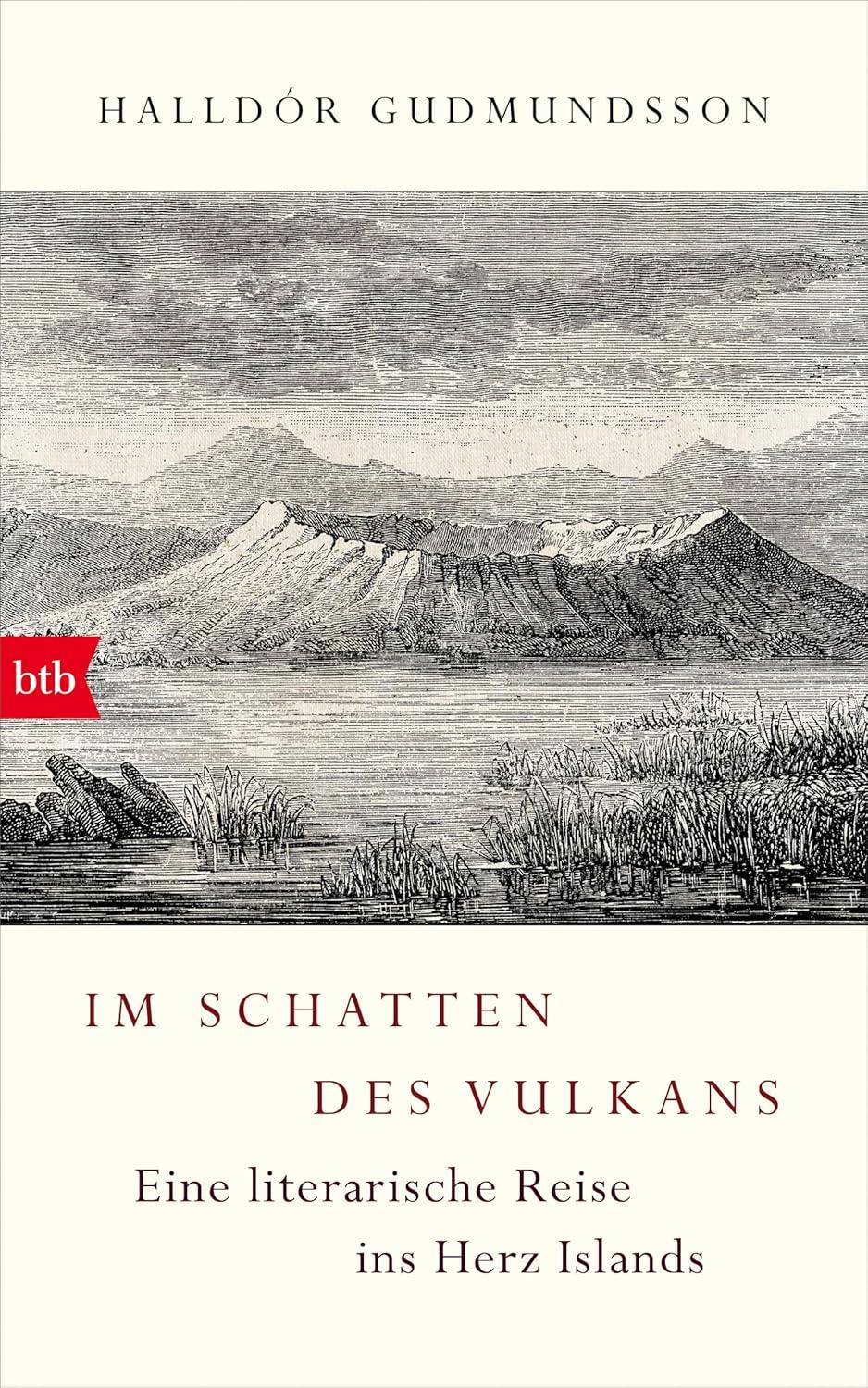 btb
btbHalldór Guðmundsson | In the Shadow of the Volcano: A Literary Journey into the Heart of Iceland | btb | 512 pages | 29.00 EUR
In this old sense, it is no longer the core themes. The topics that occupy the younger writers are by and large the same as in Europe as a whole.
You say "Europe" ...
Yes. We see ourselves as Europeans, but we are still a little further away than other Europeans. And that's exactly what creates an interesting tension.
Despite our peripheral location, we now have a very lively immigration literature. Around 80,000 of the 400,000 people in Iceland have a migrant background - in other words, around 20 percent of the population. The vast majority are not refugees, even if this is often politically dramatised. Most of them are here to work, send money home and build a life for themselves. The largest group comes from Poland, followed immediately by Lithuania.
A hundred years ago, perhaps one percent of the population were foreign. Today it's 20 percent. And I find it incredibly exciting that authors are now emerging from this part of society and writing about who they are in Icelandic.
The parallels with the global South, such as the Philippines, are truly striking. Especially because a diaspora here is doing exactly what the self-colonised "natives" have done for so many years: locating themselves narratively.
Exactly. Icelanders have always tried to capture the essence of life in stories. If you ask an Icelander what the meaning of life is, they usually start with their uncle in the Westfjords - an anecdote that explains everything. There is always a story.
Not unlike the oral tradition of many cultures in sub-Saharan Africa ...
Yes. You tell a story to explain life to yourself. Philosophy in the strict sense is a product of the city: abstract concepts, long strings of German words, all that. Horkheimer once wrote in an English letter: "There is no thought, properly speaking, other than cities." This is how urban philosophers see the world. Icelanders were never particularly good at it. We didn't have big cities, we had farms, small towns, harsh nature. But you still need ways to deal with life.
Basically, there are two big questions: How do you find your spiritual place in the world? And how do you not lose yourself in this world? In other words, how to find yourself without losing yourself in the process.
Stories arise from this tension. That's why there are so many books. And Laxness was one of those authors who brought us back from our lostness - just as he himself returned from the world to Iceland at some point.
Did you enjoy this text? If so, please support our work by making a one-off donation via PayPal, or by taking out a monthly or annual subscription.
Want to make sure you never miss an article from Literatur.Review again? Sign up for our newsletter here.