



Radical Online Identities

 Harper Collins
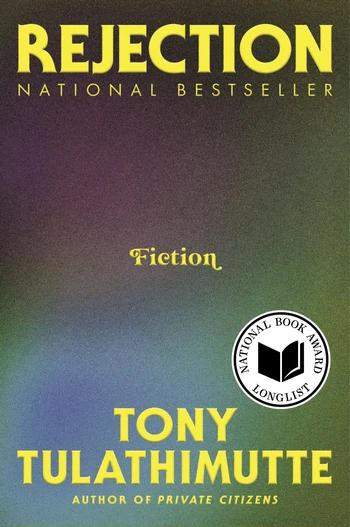
Tony Tulathimutte | Rejection | Harper Collins | 288 pages | 15,19 USD
Rejection is the original title of Tony Tulathimutte’s second book. Rejection. That captures the essence of the work. The German title Fiasko shifts the meaning— and is just as effective. For the main characters in the six “fictions”—that is, short stories—experience nothing but embarrassments, disappointments, and spectacular failures in increasingly catastrophic forms.
The opening story, “The Feminist,” was first published in 2019 in the U.S. literary magazine “n +1,” where it became the most-viewed article ever. It is told by an anonymous narrator who identifies as a feminist. The fact that he never scores sexually with any woman but is always relegated to the 'friend zone', he blames entirely on himself. Tulathimutte crafts a razor-sharp character portrait of a man radicalising gradually into an incel, a 'rejected man' who blames women for his loneliness: “Of course, no specific woman is obliged to find us attractive … but the fact that not a single one of billions of women finds us attractive proves a categorical failure, a mass breach of the social contract …” It is inevitable that such lines of thought can only end in disaster.
In his subsequent works, Tulathimutte tightens the literary screws even further—and amplifies the effect by occasionally having his protagonists appear as side characters in other stories, where he views, evaluates, and devalues them from a different perspective. For example, in “Pics,” Alison has not yet experienced love, but in high school she'd had a bit of a crush on the feminist. Years later, she meets him for an 'underground' date and, despite her aversion to his sleazy behaviour, has sex with him. “At least now I’m the one who lets a guy have his way out of pity.” Alison complains to her friends in a chat group about her constant romantic debacles, causing the group to implode when she projects her unfiltered frustration onto the women, some of whom are pregnant or in relationships.
The internet and social media feature heavily in all the stories, to the extent that “Main Character,” is set entirely in the virtual world, on multiple levels. Bee describes herself as the “most ubiquitous person on the internet”; whether she actually exists in real life remains unclear. Bee sold her own gender for $22 and vehemently resists categorisation. Raised in Massachusetts by Thai parents, this character shares key biographical details with the author, who was born in Kentucky in 1983 - and perhaps one or two experiences as well: “But sometime in seventh grade, I discovered the rarer fourth Pokémon: defiant self-distancing. I’m not from Asia, I’m an alien! You turn your minority status into an advantage, grant yourself carte blanche, and deliberately set yourself apart; and yet, you still don’t have any friends - but who would want those assholes as friends anyway?”
The additional seventh story, titled “AW: Fiasco,” is a real masterpiece. An unnamed publisher rejects the manuscript of a certain Tony. They say they “read it here with great interest and discussed it animatedly,” but unfortunately consider it unsuitable for their own catalogue. The reason for this is explained at great length. All the characters in the book bear a certain resemblance to the author; “the problem isn’t appropriation, but candour.” No writer has so successfully defused or rebutted potential criticism of their literary approach than here: “Our speculations about your intentions as an author may seem unfair and intrusive to you, but this isn’t literary criticism—it’s feedback.”
In fact, the author garnered awards and nominations for Rejection: The New York Times named it a “Best Book of the Year,” Time Magazine selected it as one of the “100 Must-Read Books of the Year,” and it was nominated for the National Book Award, among other honours.
This explosive work of literature was translated into German by a team of three. Experienced translator Stefanie Jacobs says she didn’t quite dare tackle the book on her own. She was put off by its malice and intellectual coldness. Since each story is told from a different perspective, dividing the work among the team made sense, and the fact that Jacobs, Stefanie Ochel, and Jan Schönherr brought both female and male perspectives to the project benefited the challenging translation process. To do justice to Tulathimutte’s idiosyncratic style, the three developed an artificial language for certain passages—such as chat logs and specific forum posts—and coordinated closely in a WhatsApp group they created specifically for this purpose. Naturally, they also spent a lot of time online, according to Jacobs, talking with 20-year-olds about how they chat and communicate online.
Generosity and precision are the foundation of all interpersonal communication, writes German author Daniela Dröscher in her essay “Sprechen”: The more precise and generous we are in our speech, the better our connection with others. Tulathimutte’s clever characters certainly do not lack precision, but they do lack generosity and empathy. Whether in their rare real-life encounters or their diverse virtual relationships, the millennials in this book are so persistently self-absorbed that they use every encounter with others, at best, as a test of their own assumptions. A fiasco for the characters, a delight for readers. Even if bittersweet.
Did you enjoy this text? If so, please support our work by making a one-off donation via PayPal, or by taking out a monthly or annual subscription.
Want to make sure you never miss an article from Literatur.Review again? Sign up for our newsletter here.