



Ethnocide
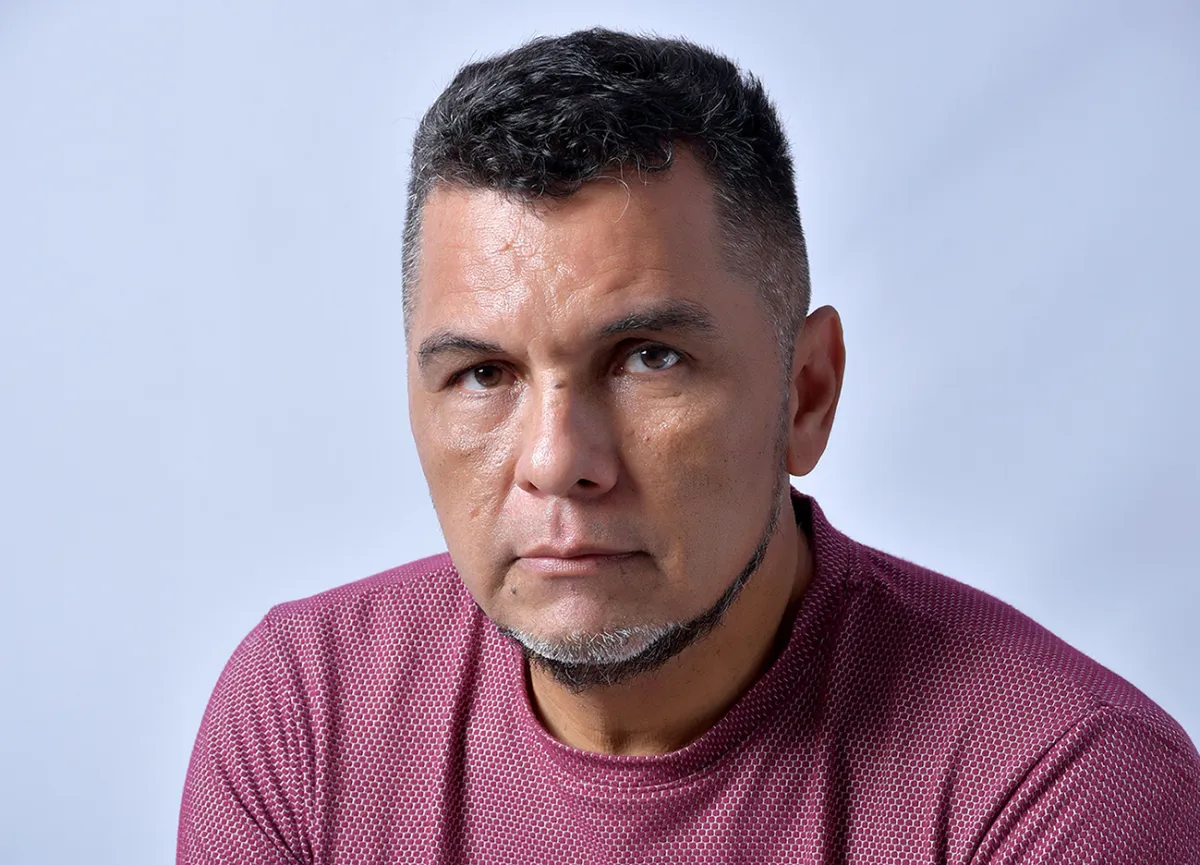
Behind the facade of certainty begins the real questioning. In his philosophical column UMBRAL, Colombian philosopher Bruno Maduro takes us to the limits of our knowledge. He analyses the blind faith in scientific dogmas, questions the construction of our history and sheds light on the unsolved enigma of the human condition. A space for thought beyond illusions, where truth often only glimmers in error and in the intermediate realm of intuition.
The Nuremberg trials brought the concepts of genocide and ethnocide to the attention of the human mind. Prior to those trials, the human mind and fiction did not regard the massacres of peoples as a crime against humanity. Despite centuries of slavery and colonialism, many still struggle to accept the world’s ethnic diversity. The human mind has been subject to its own forms of enslavement, from which it has not yet been able to free itself. To understand the term, one must venture into a complex and convoluted territory. We will begin by examining the concept of the ‘self’ in the modern West—that self which, as an ethnocentric entity, considers itself a superior human being, whether called the civilised one, or the most developed, the most intelligent, or the most capable. This conception of the superior person forms the basis of a self that fails to recognise the other as both different and equal.
A human being is nothing more than one man standing before another, as equals. That idea, originally Christian – from early Christianity – could only be rationalised in Western modernity through Kant, a European who instilled in his compatriots a sense of humanity as a whole. Before Kant, the idea or category of ‘the other’ had been an unknown concept. In fact, ‘the other’ was merely a foreigner. A barbarian. A stranger. An enemy. A slave. Or a hindrance. For the oppressor, the other is an instrument. A means, not an end in itself. The other can never be an equal. ‘Never will another be my equal,’ the ethnocentrist will say. That is why it follows logically that any man who fails to recognise the other’s personality as that of someone distinct and possessing values equal to his own is a potential perpetrator of genocide. An ethnocide in practice. When, in an act of self-interest or war, that man who does not recognise the other’s individuality has the opportunity to subjugate them, he will deploy his techniques of cruelty to the full. The ideas of reciprocity and collaboration will only be used as part of a superficial discourse that masks a ferocity directed against the other.
The ethnocide perpetrator will say: if I can cheat the other who is not my equal, it would be more profitable. If I bite them, swindle them, rob them, coerce them, or indeed take their life, this will not be considered - by the regime that protects ethnocide and subsequently genocide - a crime against humanity, let alone a common offence. On the contrary, by behaving in a manner that denies the other, the ethnocide perpetrator is realising their own exclusionary nature and promoting one of the worst forms of exclusion in the human world. In this situation, where the perpetrator is successful, they might be regarded as a hero, particularly by those who think like them and engage in the same exclusionary practices.
Ethnocidal and anti-Kantian humanity is based on a single principle: the other does not exist; and if the other should appear before me, I will say, ‘they are not my equal’. In fact, through their actions, members of the Ku Klux Klan reject Kant’s philosophy - not only in thought, but also in action. The Nazi does the same as the Ku Klux Klan supporter: they follow a similar path.
Now, on that very same path as the exclusionists of the past, we find the contemporary colonialist who, through his destructive institutions, drives forward the eradication of cultures and ethnic groups. There is that official of the modern colonial state who believes himself to be superior, simply because he is an official and enjoys advantages over his fellow countrymen. We can identify this ethnocidal state official because they act with inequality and totalitarian exclusion, and follow the same murderous logic as the perpetrator of genocide.
The right to be treated as a human being arises in the mind of a person who instils within themselves the duty to become a guarantor. That is why a state official must prioritise guaranteeing rights, not intimidating those who are weak or different from themselves or their power. The official’s sense of self must be that of a guarantor, a protector and a defender, and through such actions, they must contradict or oppose the totalitarian. There can be a change in the state official, moving from being an excluder to saying: ‘I, too, can foster that possibility of accepting those who are different. The other is also within me. But if they are not, I can learn from them.' The opposite is easy: to become an abuser, a racist. A perpetrator. A neo-fascist. A neo-colonialist. A slave-driver par excellence.
To accept the 'other' is to grasp them; to recognise them is, first and foremost, knowledge - that is, an effort to understand them. If the 'other' is not within me and I have the power to coerce them, to subjugate them, the most I can feel for them is pity, never a dignified recognition of their person. When the self acts out of pity, it is falling - not into the animal world, for animals do not rise above this - into a base state where harm to the other is just around the corner.
The exclusionary official falls into a state of human misfortune where his ‘self’ as a being becomes a structure contrary to what we have preached as civilisation. In him, man turns against man himself. (It seems strange to us, but that misery has governed our conscience for thousands of years. Perhaps we have had to grapple with it and have not realised that it has been present every day of our existence. It is right there beside us).
That is why it is so essential today to oppose these injustices against humankind. The first struggle against ethnocide therefore begins within our own selves - when we dismantle the conditioned responses that have been sold to us or instilled in us, when we begin to accept that the 'other' is not an instrument, is not an interlude, is not a disposable object. They are not a means to our ends. To recall Kant, when we do the opposite, the 'other' is regarded as something beneath us, and we ourselves fall into the trap of despising them, of failing to value them as a human being; we despise their culture, their language, their traditions and their customs. These are indeed the fundamental structures of ethnocide.
By embarking on this ethnocidal learning process, and by entering its territory - often unwittingly - we begin to belong to a segregationist sect whose practices deny human dignity; and by doing so, we are cultivating within ourselves a perpetrator’s self. A self that bears a heavy burden of malice from which we must shake ourselves free. We must be consistent and bid farewell to the exclusionary contempt directed at that innocent ‘other’, rejected on account of their ethnicity, customs or language. Without this initial liberation, the genesis of massacres and disappearances, of uprooting, and of crimes against humanity, is just around the corner.
An exclusionary and genocidal mindset, with the power to inflict human misery, coupled with a perverted mind, is the true breeding ground for the annihilation of peoples. Ethnocide is an institution rooted in the very being of the oppressor, for it kills the ‘other’ from within the soul of the segregationist. The ethnocide perpetrator wants the ‘other’ not only to destroy their own culture and identity, but also to become like them. Moreover, if that identity of the ‘other’ undermines their own way of life and behaviour, they will force the ‘other’ to renounce it and assimilate.
The self conditioned to victimisation does not need to hate in order to be ethnocidal; it merely needs to believe that the other is a trivial, inferior being, or perhaps even scum. And that is enough: let the exclusion begin. If these mental states are present in those who hold power or bear arms, such as state officials, there is no alternative but to flee from them, for the ability to confront them is often impossible.
+++
Postscript on the prevention of child ethnocide.
This postscript is necessary to highlight our defence of a Kogui girl who had been taken from her indigenous community by various Colombian state bodies that are supposed to protect indigenous children, but which, in this case, violated the ethnic rights of an indigenous baby. The girl had been taken by her mother to a clinic for emergency treatment for pneumonia; clinic staff prevented her indigenous family from accompanying her in hospital, in a blatant act of discrimination. However, after the girl was discharged, the child protection agency cruelly denied the mother any visits or contact with her daughter. My defence centred on this article, which I had previously written. State officials isolated the indigenous girl from her community and her immediate family. As her lawyer, I fought against these injustices, and after a long year – almost two – we succeeded in having the girl returned to her community. I took the case to our country’s highest judicial body, the HCSJ or Supreme Court of Justice. On 25 April 2025, the court’s civil division issued judgement STC5820-2025, in which it found that the abduction of the girl was a fact and that there had been a violation of ethnic rights, as my defence had argued, and that the indigenous girl’s native rights should be restored within her immediate family, rather than isolating her in a civilian foster home that had no indigenous members and no knowledge of her culture or language. The girl had been isolated from her community and mother for those long months. The defence was not easy. We also challenged Colombia’s official Institute of Anthropology, as it has failed to educate state officials about these communities, despite possessing the resources and expertise in this field. Furthermore, I approached several anthropology departments that are supposedly familiar with the Kogui people of SNSM. None responded; excuses were rife. Today, the Kogui girl is back in her community, and the danger of her being assimilated into civilian life has ceased. There are no official or academic statistics in Colombia on how many indigenous children suffer this ethnic harm at the hands of the state itself, as cases of this kind are subject to judicial confidentiality, and the majority of indigenous people do not speak Spanish nor have any knowledge whatsoever of the judicial system. This ruling set a national precedent, although the Colombian media have been reluctant to report on it.
+++
Bibliography
Fernández García, A., Fernández, A., Rodríguez Jiménez, J. L. (1996).
El juicio de Nuremberg, cincuenta años después.
España: Arco Libros.
Maduro, B E. (2026)
Antropología Dual. Una etnografía vista desde el otro. Adiós al objeto humano.
Cartagena Colombia. Ed. Paidia ediciones
Pérez Triviño, J. L. (2016).
Los juicios de Nuremberg.
España: Editorial UOC, S.L
STC5820-2025 Radicación n.° 11001-02-04-000-2024-02623-02
(Aprobado en sesión de veintitrés de abril de dos mil veinticinco)
Bogotá D.C., veinticinco (25) de abril de dos mil veinticinco (2025).
FERNANDO AUGUSTO JIMÉNEZ VALDERRAMA Magistrado Ponente Corte Suprema de justicia- Colombia.
Did you enjoy this text? If so, please support our work by making a one-off donation via PayPal, or by taking out a monthly or annual subscription.
Want to make sure you never miss an article from Literatur.Review again? Sign up for our newsletter here.