



Missed Opportunity
 C.H.Beck
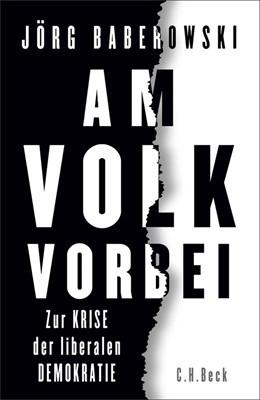
Jörg Baberowski | Am Volk vorbei | C. H. Beck | 208 pages | 25 EUR
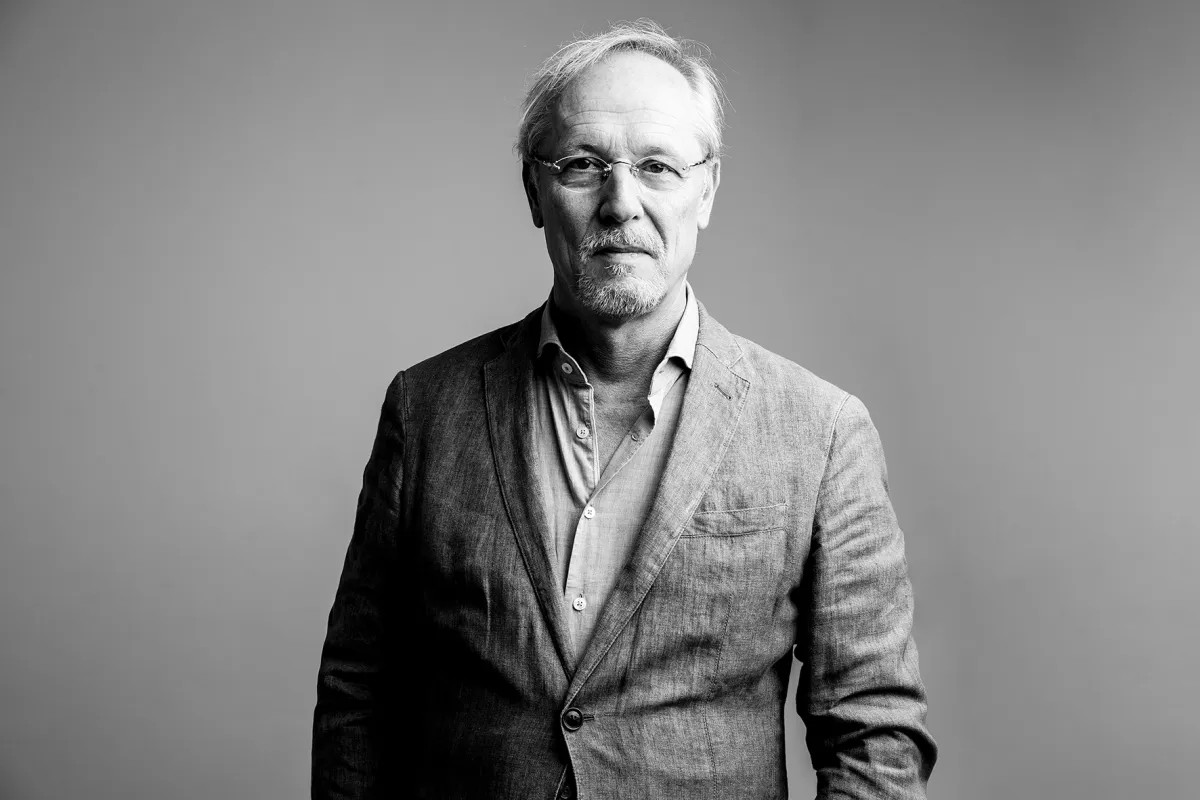
Am Volk vorbei / Zur Krise der liberalen Demokratie (Bypassing the people / On the crisis of liberal democracy) is the title of the book that Jörg Baberowski, Professor of the History of Eastern Europe at Humboldt University in Berlin, published in February with C. H. Beck. It addresses something that has been concerning me for some time. The first chapter is titled "Past the people? Democracy and populism" The author states that democracy is in a critical state; it could either survive or die, but cannot possibly stay as it is.
In the book, he suggests that populism is the force that could revitalise liberal, modern democracy. In doing so, he explicitly recognises populists as democrats, assuring us they have no intention of abolishing democracy. As for liberal democrats, they would do better to gain a wider perspective by actually engaging in dialogue with populists. This would only help, because if there is one thing that could make a difference now, it is a resumption of greater cross-party dialogue, leading to better mutual understanding . However, he lays the responsibility for this communication at the door of the liberal democrats, demanding nothing of the populists. Even if they were to lie, there would be nothing to reproach them for, writes Jörg Baberowski, as they would simply be fulfilling expectations.
At the end of the first page, he wonders how one can reconcile claims to power and participation as well as the desire for equality and freedom. He then discusses the rulers and the ruled, without making a distinction between dictatorships, authoritarian regimes and democracies. This superficiality runs through the entire book and strikes me as outrageous. I was born and grew up in West Germany and have lived in Belgium for over 20 years. Both countries are solid democracies. In both countries I was and am not ruled, but governed. (Whether by good, bad or mediocre governments is a different matter). For some, this may be a minor difference, but for me it is hugely significant.
Having begun thus, the author has no problem later in the book praising Viktor Orbán, Prime Minister of Hungary, for his illiberal democracy, whilst failing to mention the subjugation of the media and judiciary, the rampant corruption, and a small circle of "rulers" who profit at the expense of the "ruled".
Towards the end of the first chapter, Jörg Baberowski nips any possible criticism in the bud. "The arguments presented in this book are based on the work of important thinkers who know more about the nature of democracy than I could ever have gleaned: ... whose reflections have raised the debate about what a democracy was and is, and what it could still be, to an unprecedented level." How could one possibly object to the great thinkers without appearing petty and stupid?
What he doesn't say is that Chantal Mouffe, Wendy Brown, Jacques Ranière, Pierre Rosvallon, Charles Taylor and Phillipp Manow (whom he cites as his deep-thinking references) were - and mostly still are - strong opponents of neoliberalism and globalisation, and that Phillip Manow is a staunch critic of constitutional courts - created to prevent encroachments by the executive and legislative branches - as the final legal authority, arguing that they unduly restrict the freedom of the legislature. Jörg Baberowski unreservedly agrees with all of this. For him, representative democracy is the enemy, the reason that democracy is failing. Improved opportunities for participation can be discussed (consultation by citizens' committees chosen by lot, referendums, etc.), but he doesn't say a word about how states with millions of inhabitants could be governed without representation.
Since the French Revolution, the fundamental motto of all democracies has been liberty, equality and fraternity. Then, as now, freedom meant personal freedom (e.g. freedom of expression) and economic freedom (e.g. no guilds). Equality is equality before the law (no legal privileges for the nobility and clergy). Today, fraternity can be understood as the welfare state.
In the book, the author always takes 'equality' to mean 'material equality'. But no-one has ever said that everyone in a democracy must have equal wealth. Criticising that tiny, unimaginably rich elite that has emerged with globalisation and continues to strengthen, is legitimate, and here he has my full support. But he goes no further than a sentence. There is no analysis, no depth and certainly no suggestions as to what could be done better. This wealth, which is unimaginable for us mere mortals, not only leads directly to an oligarchy in the long term, but also to neo-feudalism, which is already beginning to take shape in Western democracies. It is also true that the political elite is increasingly distancing itself from society (Baberowski always speaks of the people). But again, any further analysis and possible ways and means to counteract this development are missing.
Jörg Baberowski largely relies on sweeping generalisations, which he spices up extensively with quotes from often world-famous personalities in order to render his arguments unassailable. Linguistically, his text reminded me of the steady rattle of a First World War machine gun. Nothing high speed, more an ultimately soporific monotony. The quotations are the "hits". But the reader should not be impressed by this. Unfortunately, the author is firing nothing more than glancing shots.
Jörg Baberowski believes that only a homogeneous nation can realise democracy. He even goes so far as to advocate nationalism. Has he forgotten that this ideology was responsible for the greatest wars and war crimes in human history in the 20th century? He is against migration, against the EU being governed by an unelected Commission (which is not true, because it has to face the vote of the European Parliament) and ignores the fact that it is not the European Commission that is the most decisive factor in European politics, but still the Member States.
It seems as if he is against any change in principle. For him, for example, the radical changes that the Eastern Europeans had to experience and suffer after the collapse of communism are terrible. Baberowski finds it remarkably easy to lose sight of the fact that these were liberations from dictatorships that had systematically destroyed their countries. "In Eastern Europe, people tell each other stories about life under a communist dictatorship. Their real theme in life is not the threat to democracy posed by authoritarian temptations," he writes. You can almost hear the campfire crackling. Ah! The good old days!
In reality, we have been up against extremely rapid change for decades, the pace of which has never been seen in human history. Inevitably, people will be uprooted (sometimes literally). The fact that old certainties are disappearing on an almost daily basis is not exaggeration but a phenomenon that is striking the very foundations of our civilisation(s). The fundamental theme of the book, the crisis of democracy, is real. I have not yet found a solution for it, nor has Jörg Baberowski helped me in this regard.
+++
Further reading:
Must everything change for things to remain as they are?
Does the European Union have a future?
The unique nature of the European Union
Did you enjoy this text? If so, please support our work by making a one-off donation via PayPal, or by taking out a monthly or annual subscription.
Want to make sure you never miss an article from Literatur.Review again? Sign up for our newsletter here.