



The biggest heist of all time?

 Bloomsbury
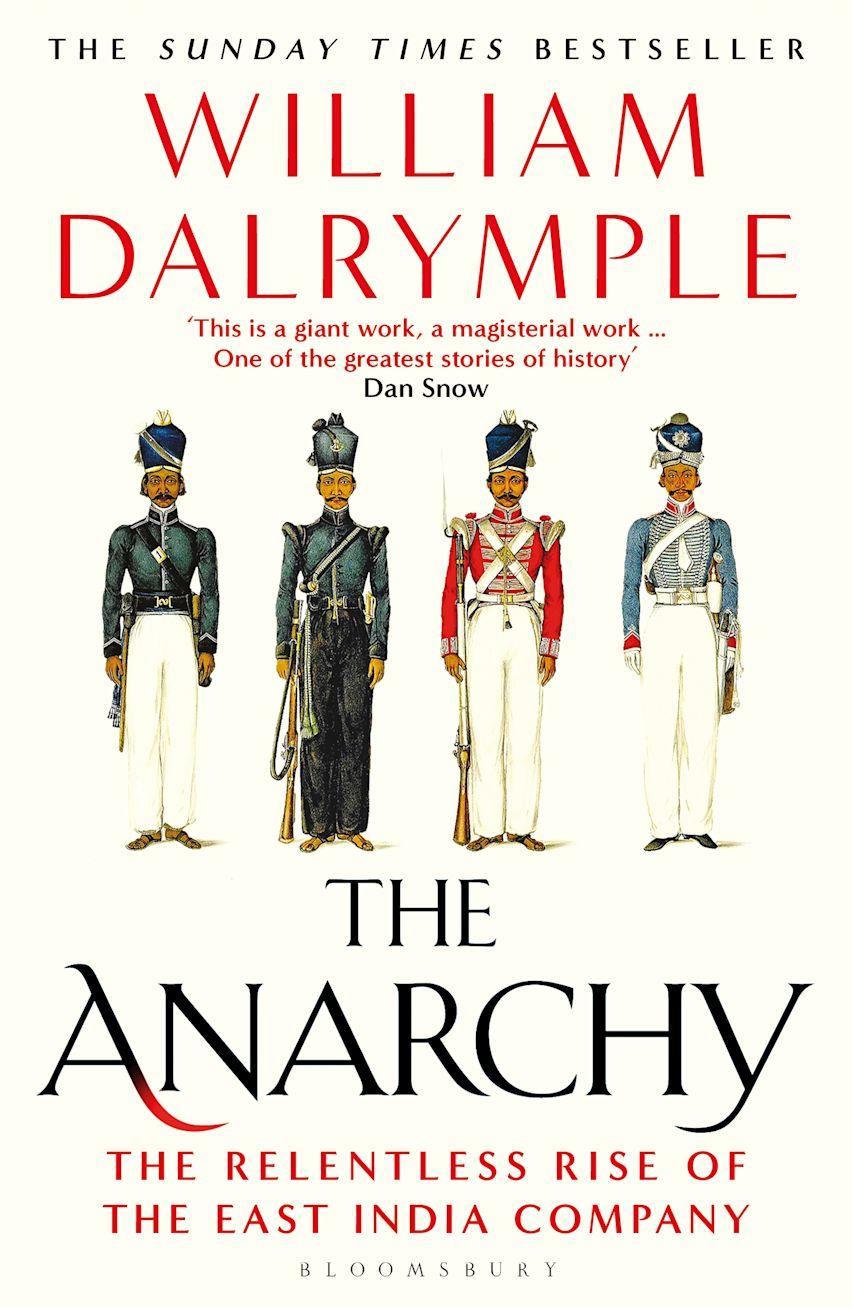
William Dalrymple | The Anarchy | Bloomsbury | 576 pages | 699 INR
The Dutch led the way. In July 1599, Dutch ships brought 800 tons of pepper, 200 tons of cloves and large quantities of cinnamon and nutmeg to Amsterdam for the first time. The profit: 400%! The English were not about to be outdone. When the Dutch sent a delegation to London to purchase ships for further voyages to the East Indies, some London merchants had had enough. They founded a trading company of their own and, on 31 December 1600, were granted a royal charter for six duty-free voyages, a 15-year trading monopoly, and quasi-sovereign privileges such as control over individual territories or the raising of armies. Two hundred and fifty years later, the East India Company (EIC) dominated two-thirds of world trade.
One of the first Indian words to be incorporated into the English language was ‘loot’, a Hindu slang term for 'spoils of war'. This word could certainly serve as a rallying cry, a guiding principle, even a title for the entire history of the EIC; travelling to India, working for the EIC and amassing as much wealth as possible in the shortest possible time was the aim of most Englishmen who ventured East. They established themselves in Bengal, then arguably the wealthiest region in the world, where the soil and climate yielded bountiful harvests, tens of thousands of weavers were producing world-class fabrics, and where gold and precious stones were plentiful, adorning rulers and the people alike.
William Dalrymple’s preface brilliantly summarises all this. It does, however, have one minor flaw: whilst it recounts extensively the atrocities committed by the British, it omits the fact that practically everyone on the Indian subcontinent was slaughtering one another. In the 17th century, the Mughal Empire was at its zenith. The English had to keep their political ambitions in check, but were able to conduct highly lucrative business. In the 18th century, the decline of the great empire began. Internal Indian resistance, led by the Marathas, eroded Mughal rule over decades of fighting. Eventually, the English picked up the pieces. But they only succeeded thanks to their superior military technology, which enabled them to defeat Indian armies of 150,000 men with just 3,000 soldiers armed with state-of-the-art weaponry. On 12 August 1765, Robert Clive persuaded the last Mughal ruler, Shah Alam, to sign a treaty placing his empire de facto under the control of the EIC.
In a relatively short space of time, the British managed to turn a flourishing landscape into a wasteland. The author begins his book with a visit to a castle in Wales. It was there that Robert Clive stored a large part of his spoils, which can still be viewed there today. The description alone is enough to leave one speechless, particularly because it becomes clear just how far behind Europe lagged behind the Indian economy. The Europeans did not gain their pre-eminent role because they were better traders or craftsmen, but because they had embarked on a unique path that was to peak in the 19th century. The technical, scientific and, later, industrial revolution taking place in Europe – and advancing at an ever-faster pace – ultimately proved decisive in every respect.
William Dalrymple’s The Anarchy: The Relentless Rise Of The Eastindia Company, the original English edition of which was published by Bloomsbury in 2019 and the German translation by C. H. Beck this spring, focuses consistently on the East India Company. So far, so good. Nevertheless, some readers might have liked to learn more about India at that time. How exactly the Mughal Empire functioned internally, how the contrast between the ruled Hindus and the ruling Muslims played out in everyday life, and much more. It's not necessary to know every detail of almost every battle, but learning more about Indian society of that era would certainly have been very interesting.
In the end, the EIC fell victim to its own success. In the 19th century, Britain could no longer tolerate the existence, alongside the official government in London, of a company that functioned and ruled in India as if it were a state. When the damage to Britain’s reputation threatened to become too great, the trading company was nationalised and then dissolved in 1874. Even before that, it had been subject to regulations imposed by the British government when it had been rescued from bankruptcy, as the company had already become ‘too big to fail’ and numerous Members of Parliament held blocks of shares.
In the afterword, William Dalrymple argues that an understanding of the history of the EIC is important for our own time, given the threat of modern technology conglomerates taking over state functions. These dangers are real. Yet it is still difficult to imagine Elon Musk & Co. subjugating the world as completely as the East India Company once did with India.
Did you enjoy this text? If so, please support our work by making a one-off donation via PayPal, or by taking out a monthly or annual subscription.
Want to make sure you never miss an article from Literatur.Review again? Sign up for our newsletter here.