


The losses suffered by women
 Canongate
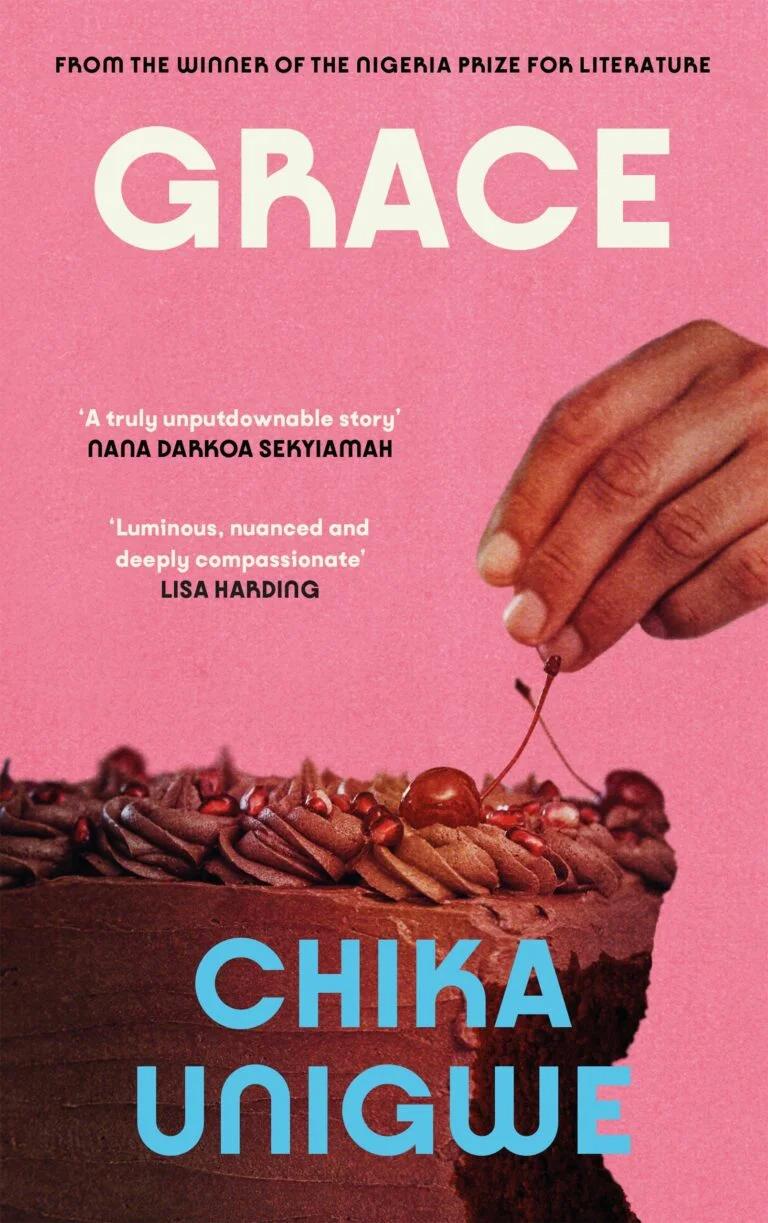
Chika Unigwe | Grace | Canongate Books | 256 pages | 15.99 GBP
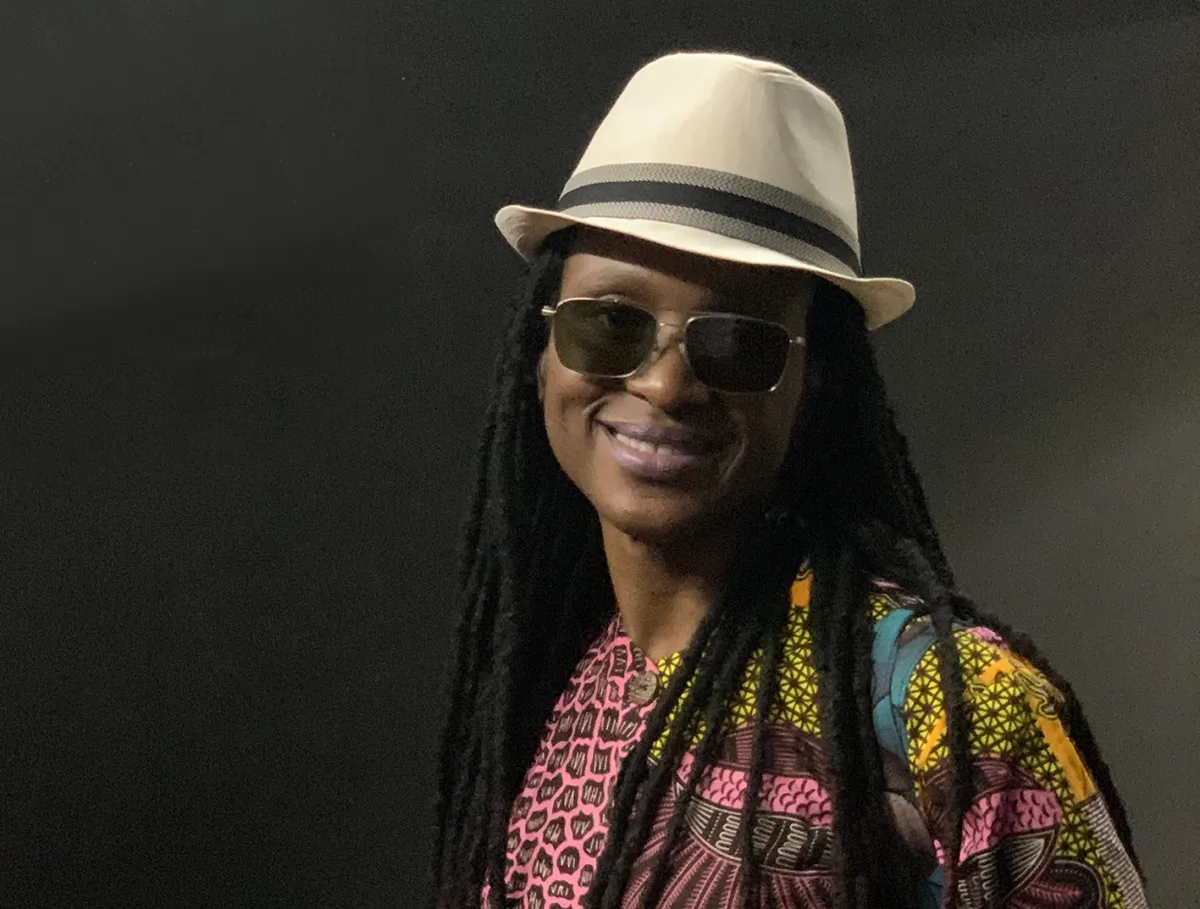
Chika Unigwe is still far less known than she deserves to be. Born in Enugu, Nigeria, in 1974, the Igbo author lived in Belgium for many years, wrote in both English and Dutch, and now lives in the USA. In 2012, her novel On Black Sisters’ Street, about four African sex workers in Antwerp, was awarded the Nigeria Prize for Literature; she has been shortlisted for the Africa39 selection at the Hay Festival, served as a judge for the Man Booker International Prize, and chaired the jury for the Caine Prize. In 2023, she was appointed a Dame of the Order of the Crown in Belgium.
This is undoubtably a remarkable international career. But more than anything, over the years Unigwe has developed a very keen eye for how social power dynamics take root in private relationships, an understanding that is particularly relevant to her latest novel, Grace. Previously, in On Black Sisters’ Street, she had explored the lives of women whose decisions cannot be neatly divided into freedom and coercion. Grace takes this interest even further.
Grace is fifteen, in 1993, when she becomes pregnant by her sixteen-year-old boyfriend Ben. What follows is not a story of teenage love, but a lesson in who must take responsibility for its consequences. Ben’s wealthy parents humiliate Grace and her mother, rejecting any responsibility on their son’s part and instead, branding the girl a slut: “You think he’ll marry her? And if she’s spreading her legs for him, how many other boys is she spreading them for?” Grace’s own parents, too, can't see a way out of the situation other than to make the baby disappear from their lives. The child is born, and abandoned.
Twenty-six years later, Grace has achieved almost everything that, to her fifteen-year-old self, must have seemed impossible. She is married, the mother of twin daughters, wealthy and professionally successful. Most importantly, however, she works with young women who find themselves in situations similar to her own back then. Her clinic takes in pregnant girls whose families view an out-of-wedlock pregnancy as a catastrophe; Grace arranges for their children to be placed with wealthy, childless couples and ensures that the young mothers receive financial recompense.
One might see this as trauma recovery, atonement or a business model. It is probably a combination of all three, and this is precisely where the novel really begins to get interesting.
For Unigwe does not portray Grace as a morally redeemed survivor. Her ‘baby business’, as her husband Okika calls it, treads dangerously close to child trafficking. ‘It seems obscene, exchanging babies for money,’ he objects. Grace replies pragmatically: ‘But a huge chunk of the money goes to the mothers who don’t want them, and the babies go to homes where they are wanted.’ Both are true. And neither solves the problem.
It is precisely this ambivalence that makes Grace a remarkably feminist novel. Unigwe is less interested in how women ought to be than in the conditions under which they are even able to make decisions. Pregnancy, childlessness, adoption, marriage and motherhood appear as socially regulated spheres in which women, though constantly having to make decisions, rarely set the rules.
One of the novel’s most insightful observations is: “That was what it meant to be a woman here: an accumulation of losses starting from childhood. The growing of thick skin.” And immediately before that comes a sentence that is perhaps even more crucial: “She knew what she would like to do, but she also knew what she would do, and the two were not the same.” Between desire and actual action lies the social reality that this novel depicts. Unigwe, however, does not turn this into a manifesto. She tells a story.
And it is precisely in the minor details that her skill shines through. In one of the most beautiful passages, a childless woman recounts how her husband dragged her from doctor to doctor, because, obviously, the responsibility for her failure to conceive must lie with her. Eventually, he takes a younger second wife. When she, too, fails to conceive and leaves him, the suspicion begins to shift. Suddenly, his penis might be the problem. The woman tells Grace about it with a laugh. ‘If the husband couldn’t get either women pregnant, maybe the fault was his?’ In just a few sentences, an entire gender order is dismantled here in a profoundly comic way.
With the same nonchalance, Unigwe discusses smoking as a moral marker of female sexuality: “Smoking was for loose girls. For prostitutes and home wreckers.” Men are allowed to smoke, but girls from “good families” are not. Grace also starts smoking during her training because she imagines she can hurt her parents by doing so. Yet even her rebellion remains clandestine. This is typical of this novel: self-empowerment takes place, but it occurs within boundaries that do not simply vanish because a woman has decided to defy them.
This also applies to Grace’s marriage. Okika is not a patriarchal villain, but a fundamentally decent, reliable man – and all the more interesting for it. Unigwe describes married life with a restraint that at times borders on the grotesque. Grace once compares her husband to water in a bucket: “Nothing disturbed him.” At the same time, she realises with a start that, despite all her efforts to distance herself from her background, she has sought out a man who resembles her father: ‘Did they know just how much Ben had taken from her? And yet, without really looking for him, she had ended up with Okika, a man exactly like her father.’
Then her mother returns. And with her comes Ben, like a ghost, along with his family and, ultimately, the past that Grace had declared closed. From this point on, Grace takes on, at times, the dynamics of a novel of revenge and vigilante justice. The social roles have been reversed: the family, in whose vast living room the pregnant girl was once humiliated, now stands broken before the successful woman. Grace notes with satisfaction that her own living room is now larger. “What goes around, comes around,” her father used to say; a phrase that, as a child, made her think of a merry-go-round where everyone's turn only lasts so long, before they must give up their place for the next person.
Moments like these are important because Unigwe allows her protagonist to experience even the less noble forms of satisfaction. Grace does not have to rise above it all. She is allowed to hate, to triumph, to be unjust. And at the same time, she is allowed to realise that triumph does not undo the past.
Perhaps this is precisely where the crucial difference lies compared to a novel such as Chimamanda Ngozi Adichie’s Dream Count. There, too, women and questions of female self-determination take centre stage. Yet whilst Adichie’s novel at times emphasises its emancipatory concerns so strongly that characters and literature disappear under the weight of the agenda, Unigwe places greater trust in the contradictions of her story. Activism rarely does literature any favours when it is already predetermined what insight the characters are meant to embody by the end. Unigwe’s feminism is more authentic because her women do not emancipate themselves by adhering to a ‘correct’ political stance. They act, fail, repress their feelings, hurt others and, at times, save themselves precisely through these very actions.
Even Grace’s professional life’s work remains morally ambiguous. She offers young women something she herself would have desperately needed: protection, a sense of purpose and at least a modicum of decision-making power. At the same time, she benefits financially from a system in which poor or desperate women hand their children over to the wealthy. Unigwe does not resolve this contradiction. Why should she? After all, literature is not an ethics seminar with a model answer.
Only towards the end does the author seem to lose some confidence in her own narrative mastery. Just as a supposed reunion almost promises the very catharsis that the novel has so skilfully avoided up to that point, a DNA test throws everything into disarray once more. Suddenly, this private story even threatens to become a publicly marketable fairy tale of reconciliation: reality TV, ghostwriters, a documentary – “People would love it.” Yet the scientific validation, which is supposed to make this happy ending media-friendly, simultaneously destroys it.
The twist within the twist feels contrived; for the characters to initially place more faith in a test result than in their own experiences and feelings requires a very deliberate narrative choice. Ironically, a novel whose strength lies precisely in the fact that biology alone does not constitute motherhood thus ties its conclusion unnecessarily closely to biological proof.
Yet this hardly damages Grace. For by that point, Unigwe has achieved something more challenging than a story of female liberation: she has shown that liberation itself can be contradictory. Grace does not become free by overcoming her past. Rather, she builds a life from its ruins that is better than the one others had planned for her, but by no means innocent.
This is perhaps the most powerful fantasy of self-empowerment that literature can offer: not the notion that one can shake off all social constraints, but the far more modest – and therefore more credible – hope of regaining agency within those constraints.
Grace is a clever, warm-hearted and astonishingly gripping novel – and, above all, one that trusts its female characters to be more complex than the message they might be seen to represent.
Did you enjoy this article? If so, please support our work a one-off donation or a monthly subscription via one of our subscription options. We’d be delighted!
Don’t want to miss any more articles on Literatur.Review? Then sign up for our newsletter free of charge!