



The Lives of Indigenous People in Montreal

 House of Anansi
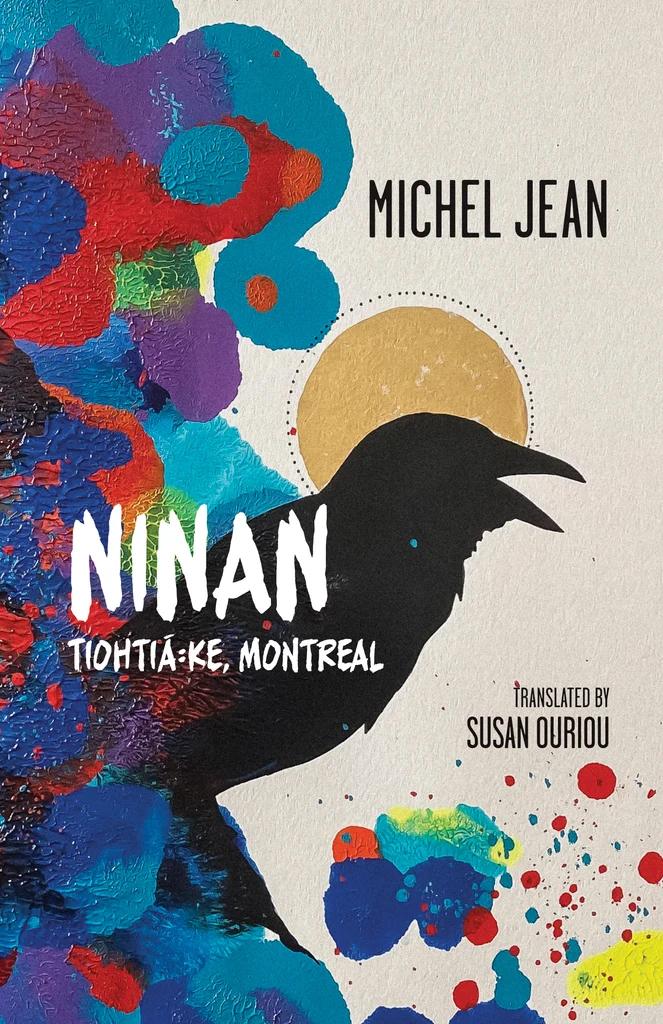
Michel Jean | Ninan –Tiohtiá:ke, Montreal | House of Anansi | 176 pages | 24,99 CAD
All major cities struggle with the problem of homelessness. Official figures vary, as many living on the streets are not accounted for in statistics. In Munich, approximately 11,000 people are currently registered as homeless; in Montreal, Québec, estimates from 2025 suggest there are 5,000 visibly homeless people, among whom the Indigenous Inuit are particularly affected. Michel Jean, the Canadian author, journalist, and news anchor, has, for several years, dedicated himself to bringing Indigenous life stories and experiences to an interested readership (for example, at the Literaturhaus München) in the form of novels. His bestseller Kukum was awarded the Prix littéraire France-Québec in 2020. In it, he recounts the life of his great-grandmother, a white woman who chose to live by a lake in Quebec among the Innu, who identify as the “Pekuakamiulnuatsh First Nation,”
His novel Ninan: Tiohtiá:ke, Montreal (“Ninan” and “Tiohtiá:ke” are Indigenous names for the area that is present-day Montreal) is set in the largest city of the Canadian province of Québec, where Élie, an Innu, must build a new life for himself in the unfamiliar metropolis after ten years in prison, having been banished from his reserve following the alleged manslaughter of his father. Completely penniless, he arrives in the city by bus. Where will he sleep? Where will he eat? How will he get money?
Jean tells this story without embellishment, using very short, reader-friendly chapters, which at times feel more like a factual report than a narrative. The omniscient narrator mostly stays close to Élie’s experiences, with occasional brief flashbacks to his childhood and adolescence in his hometown of Nutashkuan. The author also weaves in other life stories; we get to know Élie’s friends and fellow sufferers and their various circumstances, all of whom have chosen Cabot Square as their gathering place. Among them are the older twin sisters Mary and Tracy, the white-haired Nakota Jimmy (who previously appears as a character in the novel Maikan, 2023), who hands out hot meals to those in need, and the taciturn Cree, Geronimo, who soon becomes his best friend. Brief dialogues vividly illustrate the generally sparse communication among the Indigenous exiles.
For Élie, encouragement and guidance from others is crucial to finally finding a way out of homelessness and poverty, this merciless and dangerous life on the streets. Central aspects of his journey are the rediscovery of his connection to nature and his attempts to come to terms with his experiences of violence. Here, the novel touches on a theme that may seem clichéd (or romanticised?) to European readers: that a person with Indigenous roots, even if they live in the city, must reconnect with their ancestral homeland -and here this primarily refers to the nature and landscape of their childhood, as well as fishing and hunting - in order to find inner peace. In this case, at least, that is how the story is told. The author shares his personal perspective on this topic in an interview: “I am one of the Innu who live in the cities but who still long for what was taken from us. I would have liked to have experienced our cultural traditions myself, to have learned our language. But that was taken from me. For me, writing means reconnecting with that.”
But it is above all, of course, the experiences of trusting friendship and unconditional love that give Élie’s new life stability and enable him to escape his precarious situation and eventually become an academic.
At times, the novel’s characterisation seems somewhat simplistic, as if Michel Jean feared that his didactic intent would be undermined if he had portrayed the protagonist and his romantic relationship in a more nuanced way, perhaps with character flaws or major crises. But of course, it is entirely understandable that, given all the negative, and at best, pitying, media coverage of Indigenous homeless people, the Canadian author would choose a positive example (complete with a happy ending) for his novel in order to offer hope and light, and to inspire courage.
In any case, the novel offers vivid and moving insights into worlds and ways of life that are normally under-represented in the media, and that allow for a new, empathetic perspective on life on the streets.
Did you enjoy this text? If so, please support our work by making a one-off donation via PayPal, or by taking out a monthly or annual subscription.
Want to make sure you never miss an article from Literatur.Review again? Sign up for our newsletter here.