


The banality of the powerful

 Rowohlt
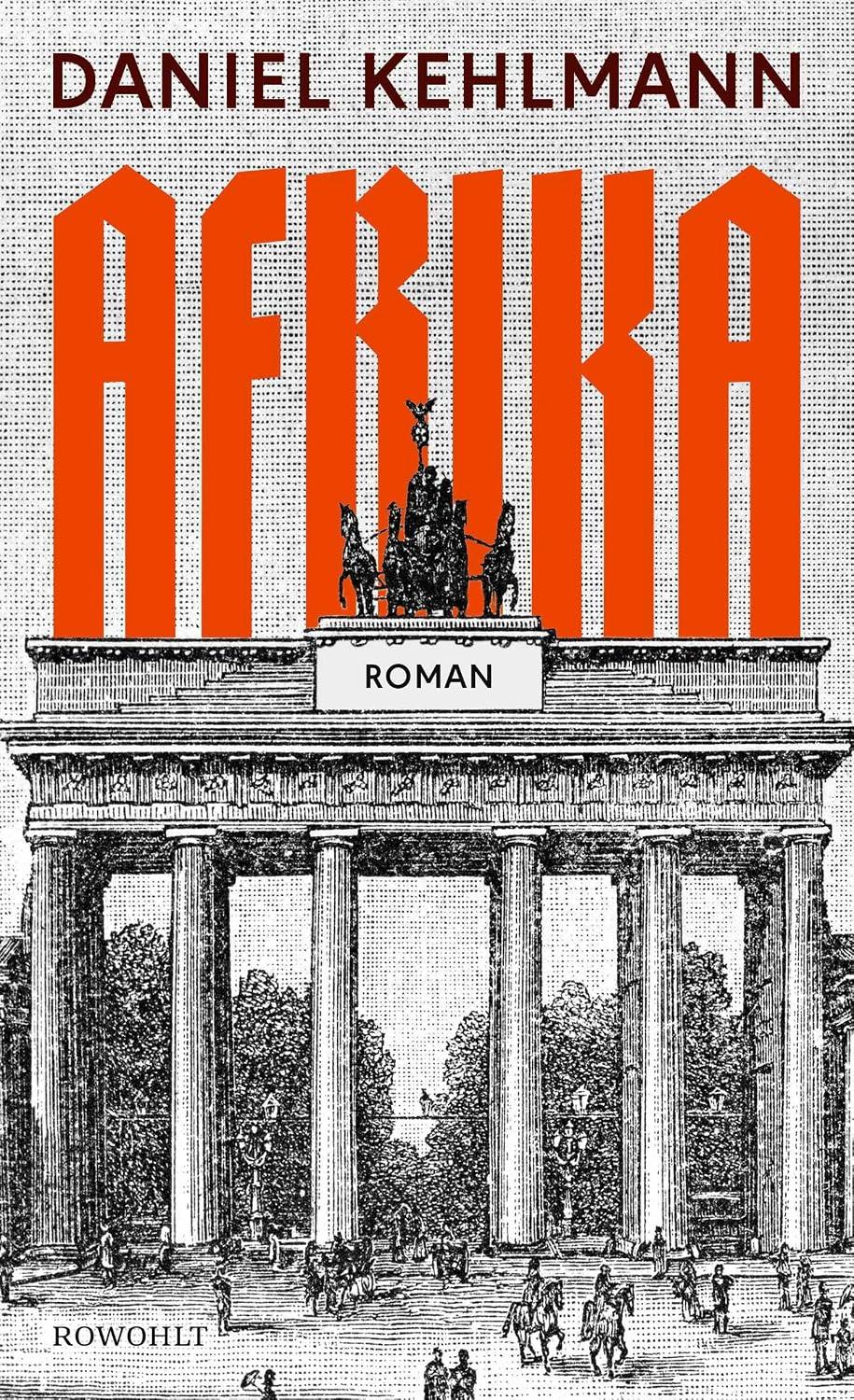
Daniel Kehlmann | Afrika | Rowohlt | 256 pages | 24 EUR
It is winter in Berlin, the River Spree is choked with ice floes, and the major European powers are negotiating the fate of Africa. However, their representatives have more important things to do. The Austrian ambassador must practise a Liszt piano piece for a birthday party; his deputy needs money to fund a love affair. Elsewhere, diplomats are preoccupied with their careers and titles. Whilst the lives of millions of people are at stake, those responsible for the decisions are only thinking of themselves.
The basic premise of Daniel Kehlmann’s new novel, Africa, is as simple as it is compelling: world history is not made by great minds, but by the vanity of the small-minded. The Berlin Congo Conference, held from November 1884 to February 1885 under the chairmanship of Imperial Chancellor Otto von Bismarck, provides the backdrop. The great powers speak of civilisation, humanity and the abolition of slavery, whilst their real concerns, of course, were entirely different: trade routes, raw materials and spheres of influence. Needless to say, African representatives do not have a seat at the table.
From this, Kehlmann creates a farce, the narrative centred on the Austrian legation councillor Strinetzky. Initially, he is hopelessly at sea, both in his private life and on the diplomatic stage. His main preoccupation is to keep his embezzlement schemes from discovery. Furthermore, he has insulted a Prussian officer and must face him in a duel. Yet, caught between financial panic and the fear of death, Strinetzky discovers unexpected diplomatic skills, with global political consequences. It is skilfully constructed, often very funny and told with the same light touch as Kehlmann’s bestseller Measuring the World. But is this levity enough to do justice to the historical subject matter, which is anything but light?
The World as a Playground of Vanities
The Austrian ambassador explains to his overwhelmed deputy that the conference is about nothing of substance: ‘Borders in the jungle! Flags between elephants and tigers! Nobody lives there anyway, so what’s the point!’ Strinetzky’s objection, that there aren’t even tigers in Central Africa, is a typical Kehlmann moment: the ignorance of the powerful becomes all the more grotesque through a casual correction. Bismarck, for his part, regards Africa as an outlet for the expansionist ambitions of other powers, hopefully meaning Europe will be left in peace. The British ambassador is outraged that other countries are also laying claim to territories which, in his view, rightfully belong to Britain. And King Leopold II of Belgium, whose rule over the Congo would lead to one of the most brutal chapters in the history of colonialism, is irked because his newspaper hasn’t been properly ironed.
Kehlmann has mastered this art of exposure. His characters betray themselves through their vanities, linguistic quirks and narrow-mindedness. Yet, over time, the effects become more predictable. The diplomats are narrow-minded, the rulers self-absorbed, the military obsessed with a ridiculous notion of honour. Every appearance confirms the familiar picture. The problem is not that Kehlmann dismantles the historical figures, but that he seems loathe to reconstruct them. They possess characteristics and roles, but little internal contradiction.
This is what distinguishes our world from the present day to which the novel alludes. Donald Trump, his supporters, or the powerful entrepreneurs of Silicon Valley may bear a striking resemblance to Kehlmann’s characters in their egocentrism and lack of scruples, yet their power is not based solely on money and intrigue. They also possess charisma, know how to inspire, promise a sense of belonging, and can generate fantasies of political or technological salvation. Kehlmann’s characters, by contrast, often appear so ridiculous that it is hard to understand why others follow them. The satire risks becoming a moral comfort zone: we see through the powerful, laugh at them and feel superior. But this does not make their power any more comprehensible.
Popular realism with historical aspirations
Moritz Baßler’s book Popular Realism: On the International Style of Contemporary Narrative (2022) provides further insight here. In it, Baßler analyses a body of literature that is easy to read, conventionally narrated and highly entertaining, yet at the same time lays claim to being high art. For him, Kehlmann ranks among the most prominent representatives of this internationally successful literary style. Baßler’s distinction between what is represented and how it is represented is crucial. A novel can depict complex historical contexts or fantastical events without the use of complex language and narrative techniques. The literary ambition is then derived primarily from the subject matter and allusions, not from aesthetic challenges. Baßler cites *Measuring the World* as a prime example: historical geniuses, intertextual references and magical realism generate cultural significance without complicating the text. Baßler uses the term ‘Midcult’ to describe this combination of easy accessibility and high artistic standards.
Kehlmann’s Africa adroitly fits this analysis. Strinetzky’s financial straits, the sudden physical appearance of a man bearing a fictitious name, coincidences, and the threat of a duel give the plot momentum. Kehlmann skilfully moves between internal perspectives, allowing his characters to follow grotesque trains of thought. Occasionally, he disrupts the realistic order: a woman in a horse-drawn carriage smells not only vomit, fish and leather, but also the grief of a former passenger; one of those heightened, magical sensory perceptions that Baßler describes as a feature of popular realism.
Such ideas lend the novel wit and atmosphere, but hardly alter the reading experience. The language remains clear, the characters are immediately recognisable, and the meaning of the scenes is obvious. Historical details authenticate a world whose moral coordinates are established from the outset. This is not entirely without value: Kehlmann masterfully crafts sharp dialogue and brings historical settings to life with just a few strokes. Yet inevitably, Baßler’s question arises: what aesthetic insight is gained when a complex reality is translated into an easily understandable system of comic exposés?
Colonial history told differently
Petina Gappah’s Out of Darkness, Shining Light (2019) is a historical novel about colonialism, set in similar times, that takes a different approach. The Zimbabwean author does not focus on Henry Morton Stanley, who plays an important role in Kehlmann’s novel, but on the man whose discovery made Stanley famous: David Livingstone. She tells the story of his African companions, who, following his death in 1873, transported his body to the coast. The two main characters - Halima, the cook, and Jacob Wainwright, a formerly enslaved man raised as a Christian - are usually only marginal figures in European accounts of exploration. Yet it is not merely this shift in perspective that is different. Gappah’s characters carry memories, wounds and longings with them; they are generous and cruel, admiring and envious. Livingstone, too, appears neither as an unblemished hero nor as a colonial caricature: his fight against the slave trade runs parallel to his entanglement in the structures of colonial exploitation. Even unsympathetic characters develop an aura of their own. They remain contradictory and cannot be fully explained.
Kehlmann, by contrast, interprets Stanley’s life with striking clarity. The unwanted child from the workhouse reinvents himself in America as an explorer; having been fatherless, he subconsciously seeks a substitute in Livingstone. Because Stanley learnt early on to endure pain, he survives expeditions in which others perish. This seems plausible enough, but smacks of armchair psychology. A contradictory life is transformed into a chain of psychological explanations. The novel provides the interpretation as well. This is by no means to suggest that Kehlmann should have chosen indigenous protagonists. His European perspective on the spaces in which colonial rule was organised and legitimised is entirely valid; precisely because it highlights the absence of those directly affected. Yet this world need not have been portrayed quite so one-dimensionally. Gappah shows just how much a novel gains when characters are more than mere historical extras.
The proximity of the ridiculous to the horrific
It would be wrong, however, to reduce Africa to its aesthetic shortcomings. For Kehlmann mercilessly lays bare the uncanny proximity of private absurdity and political crime. Leopold explains the abolition of the slave trade as an economically sensible measure: after all, a colony needs a supply of labour, and consumers with spending power. The humanitarian argument and economic interest merge quite naturally. Such passages are among the novel’s strongest. They show how effortlessly violence can be camouflaged in the language of administration, progress and good intentions.
Strinetzky’s duel, too, is more than just a comical subplot. Two men are supposed to shoot at one another because a concept of honour, one in which they themselves scarcely believe, compels them to do so. The Prussian lieutenant dreams of escape and reconciliation; yet a refusal to take part in the ritual seems impossible. Kehlmann traces this madness right down to the physical fear of death. This is where the novel becomes oppressive: within this grotesque code of honour, we already glimpse that very notion of national and military honour which, decades later, would lead Europe into the catastrophe of the First World War. This parallel narrative lends the novel a sense of coherence, at the same time demonstrating again Kehlmann’s tendency to depict complex relationships in an overly rigid narrative structure.
The past is not past
Yet this structure naturally has significant advantages, for Kehlmann’s historical world feels alarmingly contemporary: rulers regard themselves as the only true strategists, economic interests masquerade as humanitarian missions, and states derive territorial claims from supposedly natural rights. As mentioned at the outset, one is reminded of Donald Trump, but also of Vladimir Putin, of Russia’s war of aggression against Ukraine, and of a technological elite that regards democratic control as an obstacle. Even back then, decisions were being made about the fate of strangers, whilst law and morality were being adapted to suit the interests of the powerful.
Thus, Africa is a novel about our present, perhaps even more so than about our past. Historical distance reveals mechanisms that threaten to become the norm amidst the daily barrage of news. This makes it all the more regrettable that Kehlmann rarely allows his characters to step out of their satirical roles. The danger of authoritarian power lies not only in the narrow-mindedness of its representatives, but also in its seductive power and in the willingness of many to embrace its fantasies.
The afterword is almost more revealing than much of the diplomatic banter. Kehlmann thanks Volker Schlöndorff for drawing his attention to the conference and for the materials he had collected over the years. He also explicitly points out that there were no African delegates. The only character in his novel who hails from Africa is August Sabac el Cher, who was given as a gift to a Prussian prince as a child. This absence is, in fact, the real scandal around which Africa revolves: a continent is being negotiated over without input from its inhabitants. This is where the power of Kehlmann’s concept lies. His story shows how little European decision-makers know about Africa – and, indeed, how little they wanted to know.
But a compelling idea does not in itself make for a thoroughly convincing novel. Africa offers intelligent entertainment, precisely comic scenes and a historical mirror of our violent, irrational present. What is missing is that ambivalence through which a satire about ridiculous rulers becomes a deeper exploration of power. For the more alarming and important question has always been how such people come to power and why so many are willing to follow them.
Did you enjoy this article? If so, please support our work a one-off donation or a monthly subscription via one of our subscription options. We’d be delighted!
Don’t want to miss any more articles on Literatur.Review? Then sign up for our newsletter free of charge!