



Puzzle
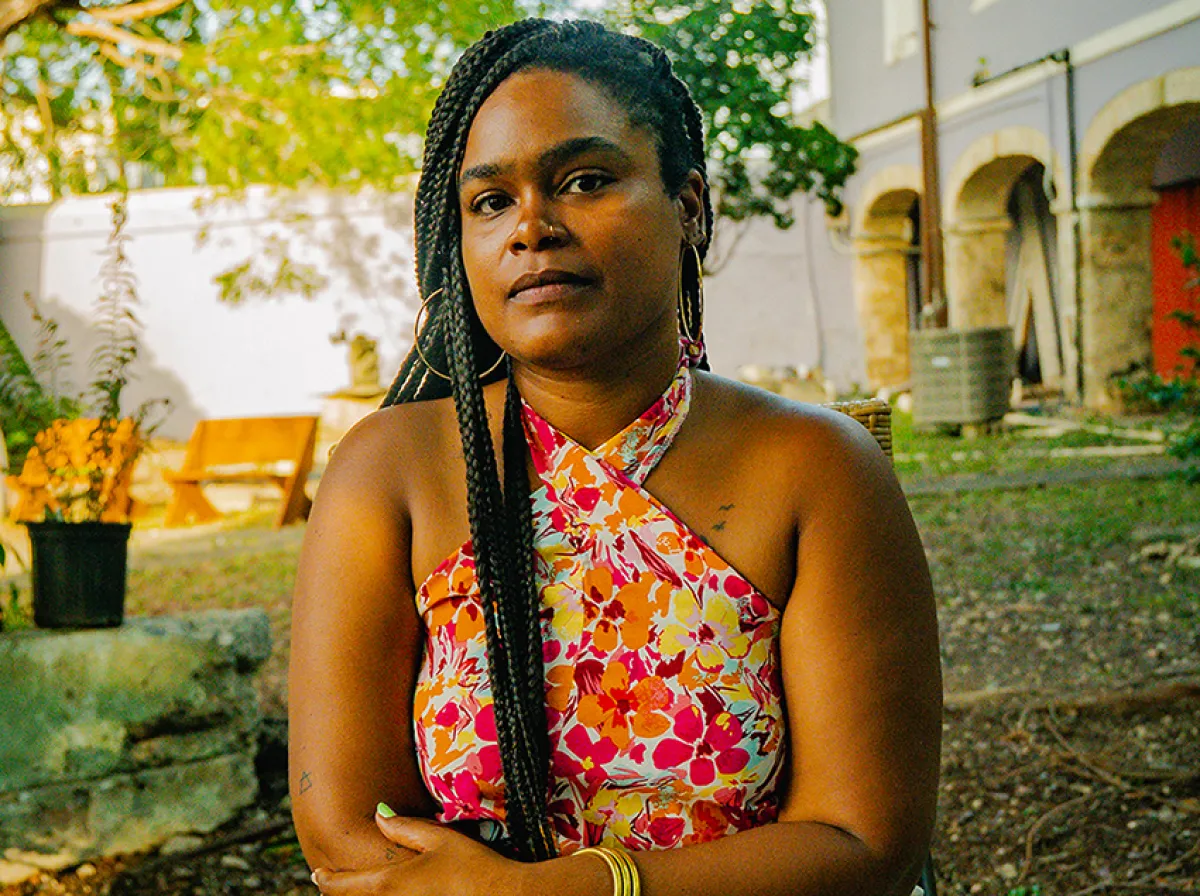
Ana Castillo Muñoz (Santurce, Puerto Rico) is an Afro-Caribbean journalist, writer and sex therapist. She is the creator of 'Con el verbo en la piel,' an educational platform on pleasure and social justice for BIPOC communities.
She has published Corona de Flores (2021), Al ritmo de Petra (2022) and Puntos de partida (2025), and her work has appeared in media outlets such as El Nuevo Día and 80Grados. She currently works at the PRAFRO Center of the University of Puerto Rico, Río Piedras Campus.
The First Time
The first time I heard Ana Castillo Muñoz read her poems was in mid-March 2026, in San Juan. The atmosphere was festive, familiar, full of joy; even so, there was a hint of nervousness as she began to speak. Sometimes, on home territory, expectations can be high. Her voice was soft and measured, she didn't need volume; the verses I would hear would be enough to break me.
This text arose as an attempt to accompany her voice and reflect on two of her books: Corona de Flores (2021) and Puntos de partida (2025). To that end, I let myself be drawn into the pain of losing her father, the broken home, the encounter with the grandmothers, the nautical miles that separate two islands; the whole puzzle, assembled with patience and care.
Ana Castillo Muñoz writes from the perspective of the women who precede her: the grandmothers who were not there, a mother who left El Cibao, in the Dominican Republic, for Santurce in Puerto Rico so that her daughter could one day leave from another place, and a woman of no blood relation who became the most real of all. Her poetry mourns absences, yes, but she does not stop at crying: she measures them, names them, assembles them. Like someone who assembles a puzzle, knowing already that pieces are missing - but the assembling is already, in itself, an act of love.
To consolidate my listening, I wrote to her with a few questions. Her answers are reflected in these pages.
 Laberinto
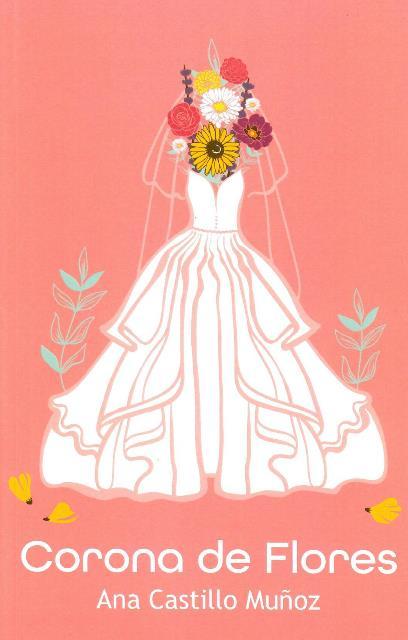
Ana Castillo Muñoz | Corona de Flores | Libreria Laberinto | 12,95 USD
Corona
The cover of Corona de Flores is a vivid pink, with the outline of a bride-like figure without arms, an exuberant bouquet of sunflowers, roses and dahlias in place of a head. The illustration – the work of Max Vega Vélez – is not merely decorative: it foreshadows. It is somehow simultaneously festive and truncated, a bloom of flowers for a head and no hands to hold anything. Even before opening the book, one encounters an image of mourning.
The common thread is the father: his abandonment, his death, the conflicting pain of having loved him despite everything. As Ana herself has acknowledged, processing this loss led to other wounds surfacing, wounds that had until then been nameless. The most persistent of these were the questions about the women in her family. The book's twenty-two poems, without sections or titles but numbered like stations on a journey, intertwine the family history with a voice that establishes no poetic distance, but rather moves closer, gets involved, even saturated. They are longer and more narrative poems than those in her second book, as if the pain of the origin needed more space to unfold.
In one of the first poems, the family home is counted in subtractions: first we were three, then two, then one. The departing father leaves
a home in pieces / that it fell to mummy, / to put back together / from the ruins.
The mother as rebuilder appears here for the first time, a figure that will return and be further developed in Puntos de partida. Later, the father's death is narrated from the daughter's body:
my chest is reduced to a space / where everything / is lost, / the air, / the breath.
And yet the book does not end in mourning but in a declaration of autonomy that is also a form of healing:
I am my own daughter / who presigns / is conjured / relieved / blessed / amidst so much inherited curse.
Ana pauses at the end of Corona de flores, and it's from here that Puntos de partida begins.
Grandmothers
Puntos de partida stemmed, as Ana herself acknowledges, from a question that Corona de flores left unanswered: that of the women who precede her. At the heart of this question, more than anyone else, are the grandmothers. The book opens with a dedication that is itself a poem: to the ancestral women who speak in dreams, to her eternal Doña Rosa, to the women who migrate - to her mother - to the Barrio Obrero, to those who did not make it and rest in the depths of sea and memory. It is a gesture of declared belonging, of multiple lineages. The first poem of the book, concise in its two lines, comes as a gentle and radical correction:
my grandmothers don't point me to the words, / they inspire me to ask questions.
The knowledge they carry is not named – it invites further inquiry. And the poet writes from that lack of knowing.
This is followed by strangeness:
my grandmothers and I / are three strangers.
This is not a metaphor: it is an exact count. One grandmother died before Ana was born. The other, of Dominican origin, lived across the water – 237 nautical miles away, which is almost exactly what separates Puerto Rico from the Dominican Republic. Soon, that strangeness becomes a task:
they are not complete / my grandmothers: / puzzles to be put together.
The periphrasis matters. It is not a broken puzzle, but an unfinished on, waiting to be solved. The book itself is that assemblage.
Then appears "Mama"–with a capital letter, a figure distinct from the biological mother - the woman who raised Ana in the absence of her mother, who went out to work as a single, migrant mother:
grandmother was Mama, / so Mama and I / were never grandmother and granddaughter.
The role substitution that necessity imposed cancelled the bond that might have rightfully existed. There was no mother at all, nor grandmother: there was a person who was both, though neither fully. The loss is not lamented, it is noted with the same dry precision of one who measures distances:
Mum lived there / I here / and it's not the same / no matter how hard you try.
And then a proper name appears:
Mum Luca, / this love has no limit / 237 nautical miles.
The abstraction of "my grandmothers" condenses into two words that are simultaneously an affective title and an emotional geography. The exact figure does not poeticise the distance, it recognises it, and then exceeds it. The sea that separates is the same sea of the book's dedication, the resting place of those that didn't make it. Ana does not dissolve that reality: she sustains it and declares that love is greater, not because the pain is less.
But it is in grandmother Rosa's poem where the book's centre lies. Ana arrived at that house with a year of life – "a year of curiosity" – and appropriated a little old lady with whom she had no blood ties:
I began to name her grandmother / even though she didn't know how to braid the 'tight' curls / of my hair.
What they built together was a language of their own: white rice, stewed chicken, blood pressure, New Year's farewells that were also rehearsals for the final goodbye. "Grandma Rosa, my old white woman." The phrasing is precise and unapologetic: it names the difference without allowing it to extinguish the love. When Grandma Rosa kept her promise to leave, Ana was left with
a banishment / an orphanhood on her temple.
I heard Ana read that poem, in San Juan, at the Cole House of the Feminist Collective in Construction. Her voice cracked.
In the interview we conducted for this article, Ana told me about the dream that inspired one of the poems in the book: a long line of women holding each other's backs, supporting and resting against each other. Amongst them, Ana herself. And running, with a flaming notebook, one of her female ancestors whose identity she cannot confirm, "But who are you, my aunt?" The fire doesn't destroy the notebook, it sets it ablaze. One of her ancestors was already writing. That dreamlike encounter, Ana writes, was "an invitation to collective trust": the certainty that she is not alone, that there are people who came before her and who will come after her who care.
The search culminates in a poem that is both manifesto and prayer: "I am all my grandmothers trying / to find each other again." Not the sum of their absences but their living continuation, their present version, the one that says she is here on this plane, seeking justice and reparation:
my own name / is the prayer I recite every / morning.
 Laberinto
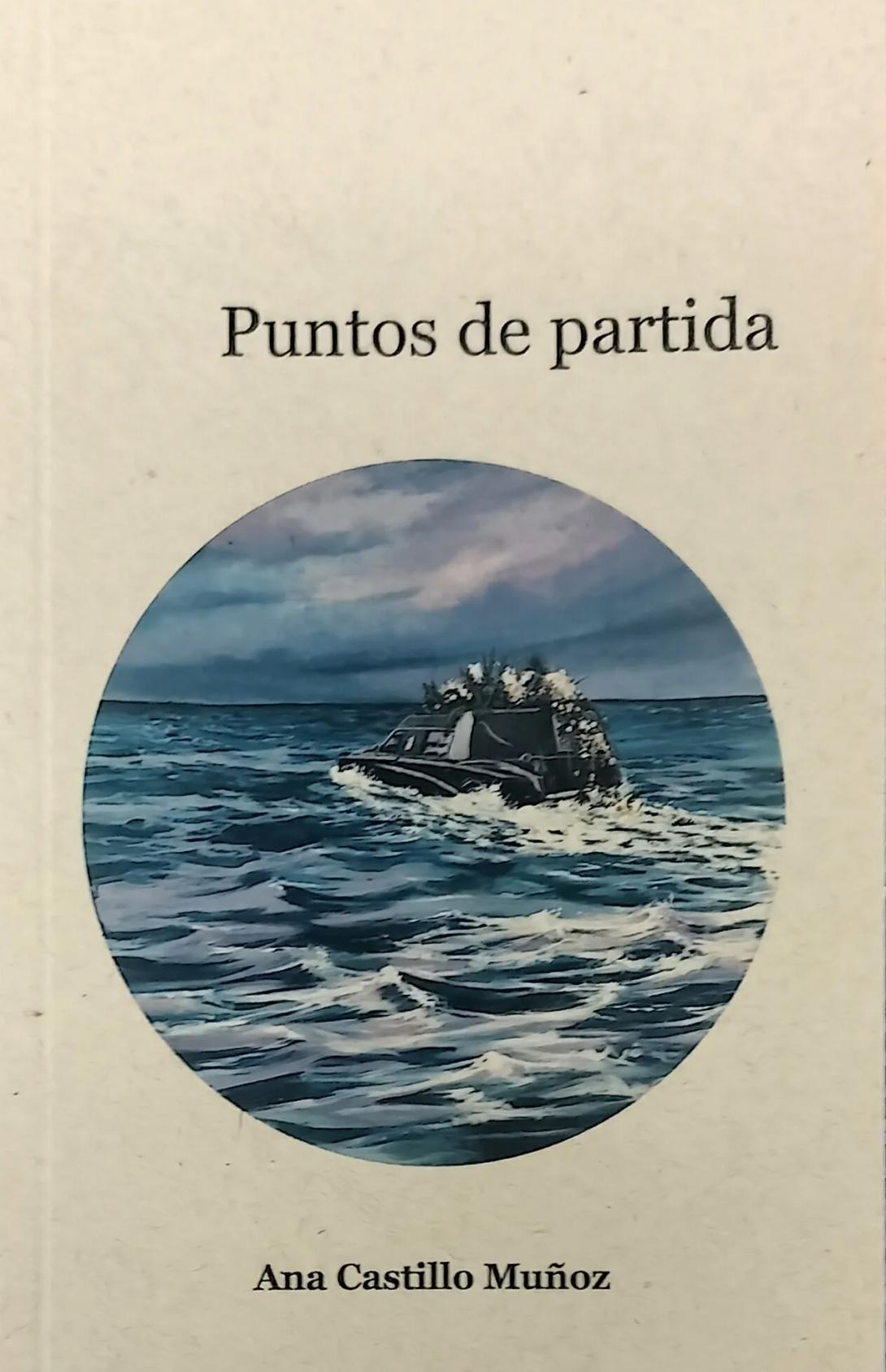
Ana Castillo Muñoz | Puntos de Partida | Libreria Laberinto | 16,95 USD
Puntos de partida (Points of Departure)
If the grandmother is the heart of the book, the mother is its backbone. From the very title of the book, this is clear: the starting point is not a mythical origin or an abstract homeland, it is a woman's body that moved:
mummy is starting point. / she left from El Cibao, / from there to the capital, / a yola, / to Puerto Rico, / to 'legalise', / from Santurce / to Guaynabo, / to swear allegiance to a flag / that did not belong to her. / from there, I was born / by Caesarean section.
The mother's migration is written both as a geographical itinerary and a political act: a woman who crossed the sea in a dinghy, who swore allegiance to a foreign flag, who arrived so that her daughter could be born and leave from another place. The caesarean section is not simply the method of birth, it is also a rupture, a cut, another form of crossing.
Ana does not feel these tensions as she writes. She told me with a clarity worth noting that the political readings come later, when the text is already published. What moves her when she writes is something else: the certainty that no personal experience is detached from that of other people who have gone through the same violence, the same resistances. The individual in her poetry is not a point of arrival but an entry point: a door to something bigger.
That door has a name and address: Barrio Obrero. Her home, a 'body' that also raised her.
I was cared for by / Eva, / Elsa, / Manuela, / Candita, / Argentina, / and Barrio Obrero.
The list of proper names – all female, all without surnames – has the weight of an alternative genealogy: that of the women who were there when the grandmothers could not be there, when the mother had to work. The neighbourhood as a matrix, as a network of care that does not require blood ties to function. In another poem, that network expands until it becomes a declaration:
we are the same / we repeat each time / we embrace the declaration FAMILY / chosen.
Chosen family is not a replacement for the absent biological family, it is a form of kinship with its own dignity and its own transatlantic roots.
Puntos de partida also muses on the body that carries and the body that weeps. There is a poem built on the image of packages - those that weigh heavy, those that are not heavy but take up space, those that hurt, those that cheer, those that in the end "are mattresses". It is an everyday image that opens up to something deeper: that which is inherited, that which is dragged along, that which ends up sustaining us without our having chosen it. And there is another poem that transforms crying into a chain of ascending verbs:
to cry is also to sing / to sing is to heal / to heal is to dance / to dance is to close your eyes / to know your many grandmothers.
It is not easy optimism - it is an epistemology of the body in movement, the idea that pain is not overcome but transited, and in that transit, the ancestors appear in a protective circle around her.
Puntos de partida is a book of movement. Like the mother who left El Cibao, crossing the sea in a dinghy. Like the grandmothers who left in their different ways: first death, then miles that were not crossed, and a promise to leave fulfilled. Like Ana, who writes to meet them all.
Ana
I asked her in writing, with the freedom to answer only what she wished to.
I asked her about the illustration by Franz Caba found in Puntos de partida: a bus in the middle of a rough sea, a dog on the roof, the title Hasta donde Dios quiera (2021). She told me that she found the work of this Dominican visual artist while leafing through a modern art book at a friend's house in Santo Domingo, when the collection of poems was still a manuscript in a drawer. Page by page she felt a resonance she hadn't been looking for: someone had created visually what she had attempted with words. "His art was a poem on its own," she told me. And there was something else: Franz Caba being Dominican, there was a shared understanding of reference, of the images that best represent "the rawness and beauty of what it can be to migrate, to move from land and take bananas and memories with you on the raft". The bus at sea and the book are two distinct poems that recognise and complement each other.
I also asked about the relationship between her two collections of poems. She replied that when she wrote Corona de Flores, her only intention was to mourn her father's death, but during that process, other long-buried wounds had surfaced. The most persistent led to a precise question: what does the relationship between granddaughter and grandmothers look like when that relationship could not physically happen? Puntos de Partida was born from there.
"But who are you, my aunt?". Ana asks the woman in her dream - the one running with a flaming notebook. She gets no answer. Or perhaps the answer is the very act of asking: writing the question, not letting the figure disappear without being named.
"It is part of what I do not want to be forgotten."
Did you enjoy this text? If so, please support our work by making a one-off donation via PayPal, or by taking out a monthly or annual subscription.
Want to make sure you never miss an article from Literatur.Review again? Sign up for our newsletter here.