



“Zimbabwe is my muse”
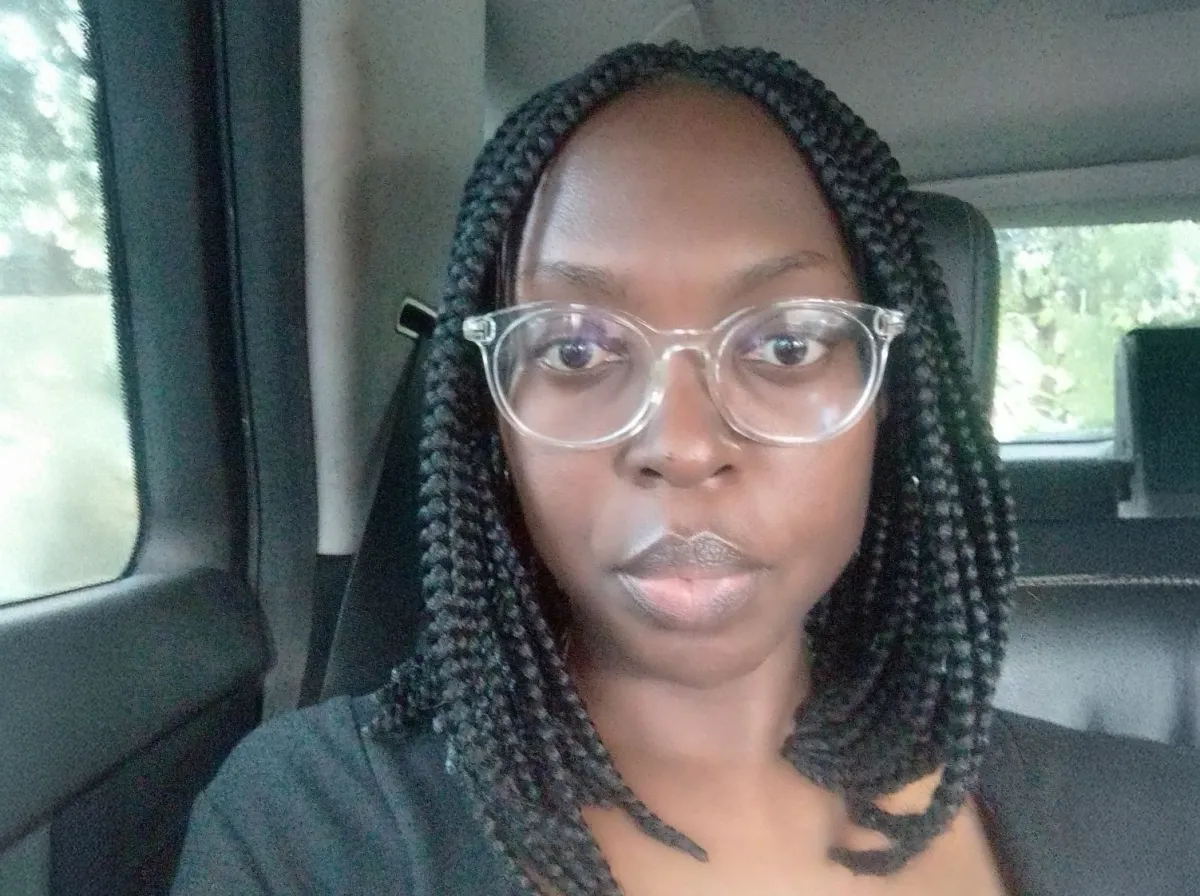
Cynthia Marangwanda is a poet, writer, and cultural heritage activist. She advocates for the decolonization of religious sites in Zimbabwe, and her work is deeply influenced by her ancestral heritage and the experience of African womanhood. She explores the intersections and conflicts between the traditional and the modern, the local and the global, the spiritual and the material. As a spoken word poet, she has performed at festivals and events in Zimbabwe, the Netherlands, Lesotho, and South Africa. Her poems have been published in several anthologies and literary magazines. Marangwanda lives and works in Harare, Zimbabwe.
Mbizo Chirasha: Who is Cynthia Marangwanda and how long have you been writing?
Mbizo Chirasha is the founder of the Writing Ukraine Prize and a UNESCO-RILA affiliate Artist. He has held fellowships and residencies in Germany, USA, Zambia, Ghana, Tanzania, and Sweden. He edits and curates several literary platforms, including Time of the Poet Republic and Brave Voices. Author of A Letter to the President, his works appear in over 200 journals worldwide, including The Evergreen Review, Poetry London, and FemAsia Magazine.
Cynthia Marangwanda: Thank you for this opportunity to talk about my work. At my core I am a poetic being and a devotee of the arts. I function primarily through my imaginative senses so I view myself as a creative dreamer. In simple terms I am a poet, author and emerging playwright. I have been a practicing artist for nearly eighteen years, although my journey began much earlier. I started writing at the age of nine, after reading a story about Aladdin which inspired me to write my own story. I am a great lover of language. I love how one can create infinite universes with language. Writing is my native tongue, it’s the most natural and instinctive thing to me. Writing is how I make sense of the world and the confusing beast called life. The only time all my fragmented parts come together in a unified whole is when I write. Writing is also an ideological tool which I use to disseminate my message. I believe writing can be a revolutionary instrument which has the power to aid in the cause of social liberation and advancement. I don’t take the gift of writing lightly at all, it’s very serious business to me. Beyond being a writer, I am also passionate about uplifting and preserving Zimbabwean cultural heritage through activism, with the decolonising of Zimbabwean sacred sites as my area of interest. In university my focus of study was women and gender, which I weave into my writing by incorporating feminist and woman-centred themes.
How do you define or describe literary culture and writing culture?
To me literary culture is when writing takes on formal structure, or rather writing as a formalised movement. This involves writers, books, readers, publishers, literary festivals, literary magazines and journals, critics and reviewers all contributing to the shaping and sustaining of a literary ecosystem. So this is when writing is institutionalised. Then writing culture is writing as creative expression in a collective sense, in all its diversity and variety. This involves the creative output of writers; the styles, forms and approaches employed; as well as how the writing is shared and presented.
What led you to get into the book, literary, creative, artistic and writing industry?
My entry into the literary and artistic industry was through inheritance. By this I mean the creative instinct was passed down to me by my paternal grandfather, J.W. Marangwanda. He was an author whose novel, Kumazivandadzoka, is part of the foundational canon of Shona books produced during Zimbabwe’s colonial era. So it’s safe to say I was born with writing in my blood and my literary calling is genetic. My love for writing is essentially a family heirloom that was handed down to me and left in my care. From a tender age I gravitated towards stories, books and the imagining of other worlds and realities. When I was nine I picked up a pen to write my first story and I haven’t put it down since.
Where you introduced to books, religion, culture and music somehow as you grow?
Growing up I was very much exposed to books through the efforts of my mother. She would bring home dozens of books from her workplace which she encouraged me to read. They were mainly American novels, many of them classics, and I devoured them ravenously. That sparked my love for reading which continued as I grew older. In high school I was always in the school library reading as much as I could. In terms of religion, my family was not overly religious. My mother went to church, but my siblings and I were never made to feel like it was mandatory for us to be churchgoers. My exposure to religion was mainly through the Anglican boarding school I attended as a teenager. As for culture, my introduction to culture was through my maternal and paternal grandmothers, who were both very rooted in traditional African beliefs, which they tried to impart to me as much as they could. When it came to music, I was introduced to hip hop by a classmate in primary school and it became the defining sound of my youth. There is a lot of beautiful poetry in hip hop music which I resonate with as a poet myself.
Who are your best writers, authors or novelists in Zimbabwe, Africa and the world?
Top of my list are the two Zimbabwean greats – Dambudzo Marechera and Yvonne Vera. Both masters of language and story. Marechera in particular is an immense influence whose work I return to often for inspiration and rejuvenation. Then also the two Nigerian greats – Ben Okri and Amos Tutuola. Reading their books is an endless source of joy and wonder for me. Another luminary whose writing I greatly admire is Ayi Kwei Armah. Furthermore, the work of Toni Morrison, Octavia Butler, Gloria Naylor and Sylvia Plath is richly rewarding for me to read and absorb.
Do you think the Zimbabwean populace shaped your artistic prowess and creative dexterity?
The Zimbabwean populace has definitely shaped my artistic and creative work because much of the content of my writing is strongly inspired and informed by Zimbabwe and its people. I am extremely patriotic (though not blindly) and I love the complexity inherent in the Zimbabwean populace. I can safely say that Zimbabwe is my muse and Zimbabwean society is a goldmine that keeps on giving to me. Zimbabwean history and culture are at the heart of a lot of my work. I have also learned and benefited a great deal from the work of various Zimbabwean artists whose creative vision has elevated my own craft. The rich spirit of my people is a huge influence on my creativity without a doubt.
How do you manage your writing career, family, professional daily work and creativity?
I don’t have a day job so my life is basically split between family and creative work. I do my very best to juggle both aspects, but the demands of domestic life often overwhelm me to the detriment of my artistic life. For the past decade much of my focus has been on motherhood, running a household and keeping the family intact. It’s remarkable how challenging domestic affairs can be and the amount of politics involved within the home! This has led to a loss of contact with much of the artistic community I used to be part of, which is of course not ideal. I sometimes don’t have the capacity to engage in external artistic activities but I make a concerted effort to participate whenever I can. Despite any pressures, I remain deeply committed to my writing and make it a point to be as creatively active as possible.
Do you think Africa is still carrying the torch as a peaceful continent, give us your opinion as a writer?
I think Africa has made great strides in carrying the torch as a peaceful continent but there is still work to be done. Conflicts in countries like Sudan, extremist violence in the Sahel, extra-judicial killings and election-related violence in certain states all need to be tackled and eradicated wholesale. Drawing on African values such as Unhu/Ubuntu can be of great help in fostering peace in our African societies because they remind us of our interconnectedness and our responsibility to uphold one another’s humanity and dignity. I’m optimistic that Africa is on the right road towards achieving continental peace and with enough willpower a peaceful status quo can prevail.
How many books have you written so far, tell us more about the journey and your experiences?
I have written two books so far. My debut book is Shards, a stream-of-consciousness surrealist novella that was published in 2014. It is a story about a troubled young woman experiencing an existential crisis precipitated by an ancestral calling she struggles to accept. It has been described as a gothic novella which I think is apt. Shards was quite well-received when it came out which was humbling. It was republished by Carnelian Heart Publishing in 2023 after being out of print for a few years. My second novella is titled The Toppling, a story about a spiritually gifted woman who is haunted by an infamous colonial ghost. It was published in September 2025 so it’s still fairly new. These are my two prose offspring thus far, but I hope to expand the brood.
Have you won any awards, accolades , prizes and fellowships through writing?
I won a Zimbabwe National Arts Merit Award for Outstanding First Creative Published Work for Shards in 2015. I was also Poet-in-Residence at Theater Dakota in The Hague in 2012. Most recently I was part of the cohort of the Almasi African Playwrights Conference in Harare in December 2025.
What's your favourite diet , food or dish , explain why that becomes your favourite meal dish or food ?
Sweet potatoes and maize are my favourite foods, especially when they are freshly cooked. From a tender age I have always loved these two foods and I never pass up an opportunity to eat them. They are the definition of delicious and mouth-watering to me. Boiled sweet potatoes with a steaming cup of tea is a heavenly meal! Don't get me started on the sheer bliss of leisurely eating a warm salted cob of maize, a truly ecstatic experience!
Did you enjoy this text? If so, please support our work by making a one-off donation via PayPal, or by taking out a monthly or annual subscription.
Want to make sure you never miss an article from Literatur.Review again? Sign up for our newsletter here.