


Let Africa Tell Her Stories
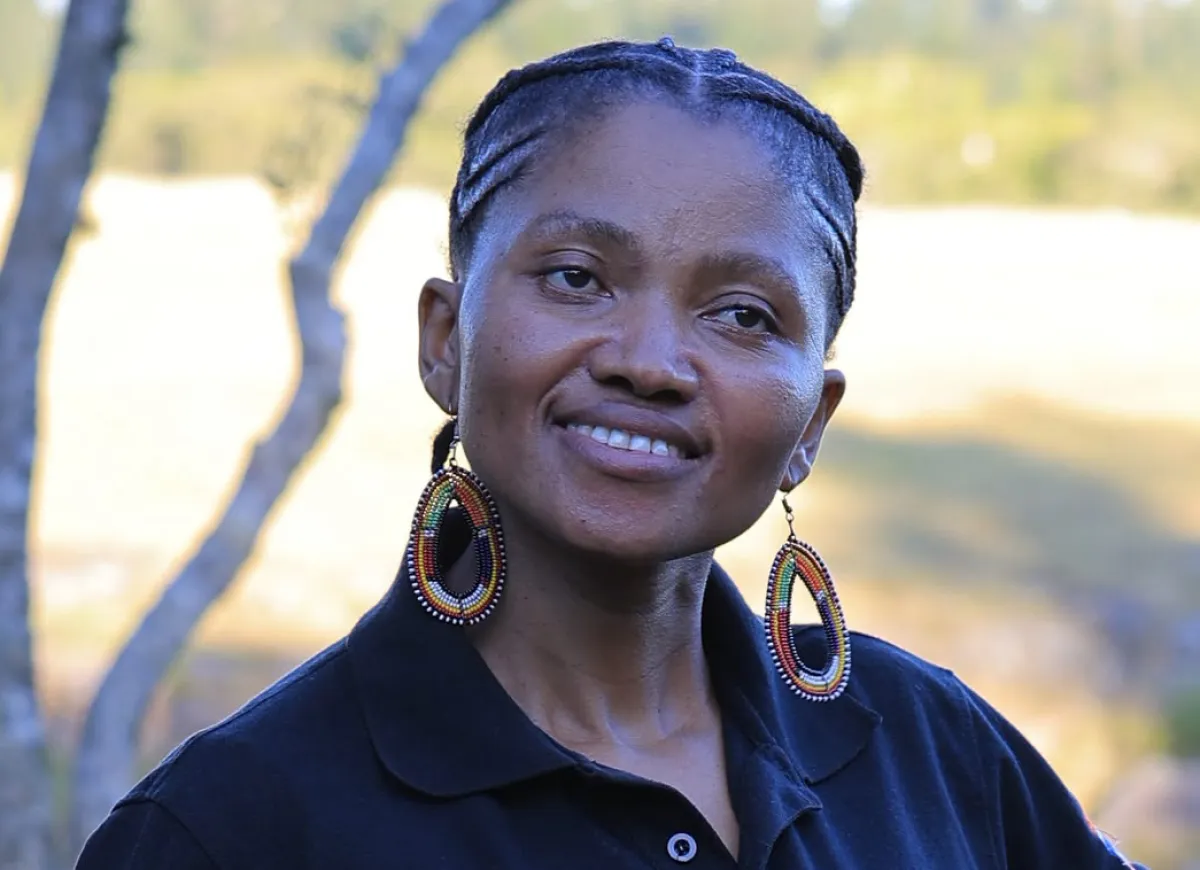
Nomawele Njongo is a South African publisher, author, literary activist and festival curator, and the founder and executive director of KwaziThina Publishers, based in Luqoqweni Village, Lusikisiki, in South Africa’s Eastern Cape.
She began her professional career in the Parliament of the Republic of South Africa at the age of 20 before working at the headquarters of South Africa’s ruling party until the age of 27.
She is the founder of the Africa Teen Authors Book Initiative (ATABI), the Esigela SA Learners Book Initiative, the Funda Mpondo International Literary Festival, the KTP Lit Gala, the Funda Mpondo International Literary Festival Magazine, the Funda Mpondo Research Day and the KTP Film and Television Scriptwriting Workshop.
She is the author of Abortion by the Womb of Democracy, Crypto Basics, Enslaved Mind Liberty and, most recently, Bank Your Story (2026). She has represented South Africa on international literary, academic and development platforms and advocates for African storytelling, indigenous languages and the creative economy.
From her home office in Luqoqweni Village, she continues to build literary initiatives that empower writers, preserve isiMpondo and champion the principle: “Let Africa Tell Her Stories. Let the World Listen.”
Mbizo Chirasha is the founder of the Writing Ukraine Prize and a UNESCO-RILA affiliate Artist. He has held fellowships and residencies in Germany, USA, Zambia, Ghana, Tanzania, and Sweden. He edits and curates several literary platforms, including Time of the Poet Republic and Brave Voices. Author of A Letter to the President, his works appear in over 200 journals worldwide, including The Evergreen Review, Poetry London, and FemAsia Magazine.
Mbizo Chirasha: Nomawele, you are known as a writer, publisher, curator and cultural activist. But who is Nomawele Njongo – and how would you describe yourself to someone encountering your work for the first time?
Nomawele Njongo: The answer depends on who is telling the story. Some know me as the young woman who walked into the Parliament of the Republic of South Africa at the age of 20, where I began my professional journey in public service. Others remember me as the woman who worked at the headquarters of South Africa’s ruling party from the age of 24 until I was retrenched at 27. Those years taught me discipline, leadership, administration and the importance of serving people.
Some know me as a writer. Others know me as the founder and executive director of KwaziThina Publishers, a publishing house I built from my home in Luqoqweni Village, Lusikisiki, proving that world-class ideas can emerge from the heart of a rural village.
I am also the founder and festival director of the Funda Mpondo International Literary Festival, where I curate conversations connecting African stories with the world. Other initiatives include the Africa Teen Authors Book Initiative (ATABI), the Esigela SA Learners Book Initiative, the KTP Lit Gala in partnership with Amaro Literacy Mission in the United States, the Funda Mpondo International Literary Festival Magazine, the Funda Mpondo Research Day in partnership with Walter Sisulu University, and the KTP Film and Television Scriptwriting Workshop.
I am a Brand South Africa Play Your Part Ambassador and serve as a member of the National Arts Council Literature Advisory Panel (2025–2028). I am also a passionate advocate for indigenous languages, particularly isiMpondo, and for recognising African stories as intellectual and economic assets.
Across Africa, many teenagers and young adults simply know me as “Mom.” Others affectionately call me “Aunt,” because my relationship with many young writers extends beyond publishing into mentorship, encouragement and family.
At home, I am simply the daughter of Masibona Njongo, the twin sister of Welekazi and the proud mother of Thina and Kwazi, whose names inspired KwaziThina Publishers. Some people lovingly call me uMaNtusi, my clan name. Others call me iMpondokazi, a name I carry with immense pride because it represents my identity as a daughter of the amaMpondo nation and my lifelong commitment to preserving its language, heritage and identity.
If there is one description that best defines me, it is this: I am a catalyst for African stories. My mission is simple: Let Africa tell her stories. Let the world listen.
You combine writing, publishing, organising and curating. How did these different roles develop, and how do you manage to balance them?
My journey has been one of continuous learning. Every role has prepared me for the next. Writing taught me to observe. Publishing taught me to believe in other people’s dreams. Curating taught me to connect ideas, while organising taught me that vision without execution remains only a dream.
In December 2020, I wrote a promise to myself: “You can go as far as your eyes can see.” Looking back today, I realise I have gone even further than I first imagined.
It all began with a single story that refused to remain untold. As a mother, my greatest inspiration has always been my sons, Thina and Kwazi. Their names inspired the birth of KwaziThina Publishers. From that single vision, one initiative gave birth to another.
First came KwaziThina Publishers, followed by the Africa Teen Authors Book Initiative and the Esigela SA Learners Book Initiative. In 2022, the Funda Mpondo International Literary Festival was born. Later came the KTP Lit Gala, in partnership with Amaro Literacy Mission in the United States, and the Funda Mpondo International Literary Festival Magazine. This year, we introduced the Funda Mpondo Research Day, co-hosted with Walter Sisulu University, strengthening the relationship between literature and academia.
We are also launching the KTP Film and Television Scriptwriting Workshop because our vision is to see African books adapted for film and television.
Curating the festival has taught me to conceptualise themes, interpret ideas, design programmes, direct productions, build relationships with stakeholders, write funding proposals, coordinate international guests, negotiate partnerships, manage public relations and marketing, and lead multidisciplinary teams.
I draw inspiration from what I see in the eyes of my mind. I do not want to leave this world carrying visions that never had the opportunity to live. I want every God-given idea entrusted to me to become a reality that changes lives.
The Funda Mpondo International Literary Festival has become central to much of this work. What is the idea behind it, and how has it developed since its foundation?
The Funda Mpondo International Literary Festival is an annual celebration of African literature, indigenous languages, research, culture and the creative economy, founded by KwaziThina Publishers in 2022. Hosted in the heart of Mpondoland in the Eastern Cape, South Africa, it was established as an inclusive platform where African stories can be celebrated, preserved and shared with the world.
It brings together writers, academics, publishers, educators, students, policymakers, artists, cultural practitioners and readers from across Africa and beyond for dialogue, knowledge exchange and literary collaboration.
Since its inception, the festival has evolved through themes reflecting Africa’s changing literary and cultural landscape. The inaugural 2022 edition, “Advancing Storytelling and Heritage,” recognised storytelling as a vital means of preserving Africa’s cultural heritage, indigenous knowledge, languages and collective memory.
In 2023, “Re-Imagining Storytelling” highlighted literature as a catalyst for dialogue, social cohesion and collective growth. The 2024 edition, “Brewing Stories, Building Communities,” reinforced cross-cultural collaboration, regional partnerships and the power of storytelling to unite people across borders. In 2025, “Bridging Generations Through Tales of the Past, Present and Future” created intergenerational conversations connecting heritage, contemporary experiences and future aspirations through literature.
The fifth Funda Mpondo International Literary Festival, held from 1–4 September 2026 under the theme “African Stories in Conversation with the World,” marked an important milestone in the festival’s development. It reflected its growing international reach and its commitment to bringing African narratives into global literary, academic and cultural discourse.
Guided by our vision, “Let Africa Tell Her Stories. Let the World Listen,” the festival continues to amplify African voices, strengthen international partnerships, champion indigenous languages and demonstrate the transformative power of literature in education, research, heritage preservation, social development and the creative economy.
For me, it is more than a literary event. It is a movement that celebrates Africa’s rich storytelling traditions while inspiring new generations of writers, researchers, publishers and readers. Through book launches, academic conferences, panel discussions, creative writing workshops, indigenous-language initiatives, children’s literacy programmes, cultural performances and publishing masterclasses, we want African stories not only to be told, but to be valued as instruments of knowledge, innovation, identity and sustainable development.
The 2026 festival was held under the theme “African Stories in Conversation with the World.” What were the main areas of focus?
Our programme explored African stories from different perspectives – from indigenous languages and education to research, publishing, intellectual property, tourism and the creative economy.
Highlights included the Funda Mpondo Research Day, the “Bank Your Story” dialogue, discussions on indigenous languages and the economic value of African literature, book launches and a film and television scriptwriting workshop. The festival brought together universities, publishers, government representatives, researchers, authors, artists and cultural practitioners from across South Africa.
Your own writing also addresses gender and human rights. How do these concerns enter your literary work?
My book Abortion by the Womb of Democracy explores the intersections of gender, democracy and human rights through the lens of lived experience. It reflects on how personal stories can expose systemic injustices and inspire dialogue, healing and social change.
I have also had the privilege of speaking at the International Human Rights Symposium, where I contributed to discussions on human rights.
Which South African or African writers have had a particular influence on you?
I greatly admire Dr Gcina Mhlophe. For more than four decades, she has dedicated her life to preserving African storytelling through literature, poetry, theatre and oral tradition. Her contribution to children’s literature and indigenous languages is extraordinary.
However, I do not model my life after anyone. I draw inspiration from what I see in the eyes of my mind. Every vision God places in my heart becomes a responsibility to pursue.
I do not want to die carrying visions that never lived. I want my children, grandchildren and great-grandchildren to know they were born into the legacy of a woman who transformed God-given ideas into institutions that changed lives and communities.
You have written poetry, stories and other works, but publishing other writers has increasingly become part of your work as well. What have you published yourself, and how has your focus changed over the years?
I believe impact matters more than the number of books published. My works include Abortion by the Womb of Democracy, published in two editions, Crypto Basics and Enslaved Mind Liberty. In September 2026, I presented my latest book, Bank Your Story, at the Funda Mpondo International Literary Festival, my first new publication since 2021.
I have deliberately chosen to write fewer books, focusing instead on creating a lasting impact. Since 2021, my priority has been to nurture writers of all ages – publishing and mentoring them, creating opportunities for their work to reach wider audiences and introducing them to book fairs and literary festivals.
At the Funda Mpondo International Literary Festival, we give priority to book launches by authors published through KwaziThina Publishers. I believe my legacy lies not only in the books I write, but also in the writers I help bring into the literary world.
How would you describe the position of literature and the publishing industry in South Africa today?
South Africa has remarkable literary talent, but there are still challenges when it comes to publishing opportunities, indigenous-language publishing, book distribution and access for rural communities.
I believe literature should be recognised as part of the creative economy. Stories create intellectual property, employment, tourism, education and cultural preservation. That is why I continue to advocate, through Bank Your Story, for African stories to be recognised as valuable assets.
You have taken part in literary festivals and cultural events in Africa and internationally. What have those encounters meant for your own work?
My journey has extended beyond literary festivals to international book fairs, universities, human rights programmes, peacebuilding initiatives and global development platforms.
I have participated in the Turin International Book Fair in Italy, the Moscow International Book Fair in Russia, the Durban Book Fair, the African Women Writers Circle Retreat, the LIASA Conference and the Africa Future-Forward Summit.
I have spoken at Nelson Mandela University during Business Arts Week and at Wits Business School, sharing insights on African storytelling, publishing, leadership and the creative economy. I also participated in human rights programmes in Rabat, Morocco, and for three consecutive years served as a virtual panellist at the Conflict Resolution Summit organised by the Embassy of the Republic of South Africa to Mali in partnership with the Ahmed Baba Institute.
I have also served as a member of a Guinean scientific team, reflecting the reach of my work beyond literature. My international engagements have included participation in the United Nations Sustainable Development Goals Nugget Hour and the United Nations Science Summit during UNGA79.
These experiences continue to shape the way I curate the Funda Mpondo International Literary Festival and reinforce my belief that literature intersects with peacebuilding, human rights, science, education and sustainable development.
Your work has received considerable recognition. Which honours have been particularly meaningful to you?
I am grateful for the recognition my work has received in literature, cultural heritage and community development. Among the honours that have meant the most to me are the 2024 Voice of Heritage Award, presented by the National Heritage Council of South Africa, and the Visionary Leadership Honour from the Global Advocacy Awards in the United States. Being named a Brand South Africa Play Your Part Ambassador has also been particularly meaningful.
But the honours closest to my heart are not trophies. My greatest achievement is the difference I have made in the lives of young people across Africa through the Africa Teen Authors Book Initiative and the other literary platforms I have created.
Equally important to me is the preservation of isiMpondo. I have made it my life's mission to ensure that my language is documented, celebrated and passed on to future generations. Through my work, I hope to help preserve the cultural identity and heritage of the amaMpondo people.
If history remembers me, I hope it remembers me as a woman who helped thousands of young Africans believe in their own stories – and who refused to let isiMpondo disappear.
Finally, Africa’s stories are also preserved through its food cultures. Which food and drink make you feel most at home?
As a proud daughter of the amaMpondo nation, I love traditional dishes, especially umngqusho, a dish made from maize and beans, served with meat and indigenous leafy vegetables.
Food reminds me of home, family and culture. Just as stories keep our memories alive, so does traditional cuisine. I particularly enjoy fresh fruit juices, and I believe that preserving our culinary traditions is another way of safeguarding our cultural identity.
Did you enjoy this article? If so, please support our work a one-off donation or a monthly subscription via one of our subscription options. We’d be delighted!
Don’t want to miss any more articles on Literatur.Review? Then sign up for our newsletter free of charge!