



"Culture isn’t cosmetic"
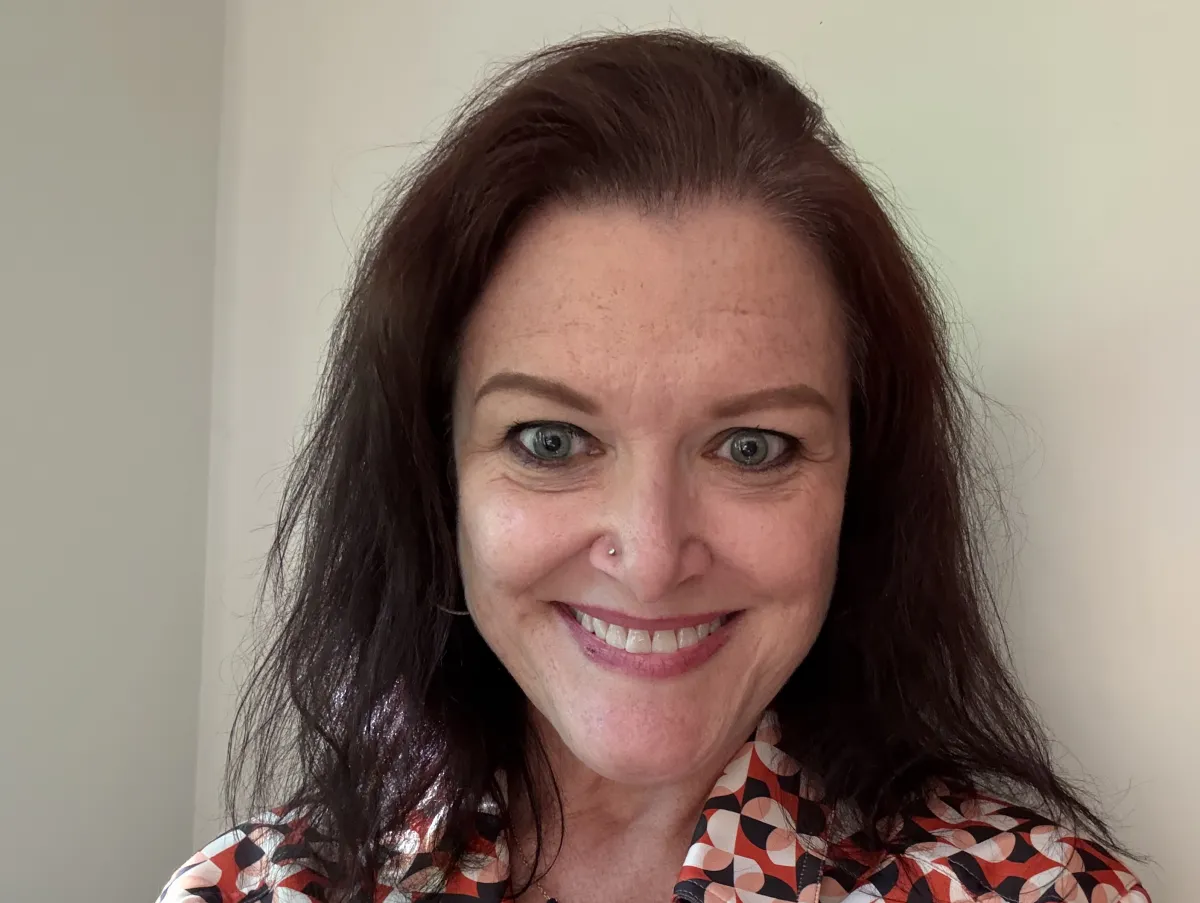
Roselie Vasquez-Yetter is Co-Executive Director of PartnersGlobal and the primary author of the ResiliencyPlus Framework. She began her career as Country Director in Central Asia (1997–2001), building civil society within an active authoritarian system – an experience that shaped her lifelong commitment to human rights, social justice, and organizational resilience. She later led initiatives across the Middle East, including four years focused on women’s rights in Saudi Arabia, supporting women’s social entrepreneurship, workforce development, girls’ education, and advocacy around the right to drive. Roselie has worked in 40+ countries, specializing in civil society strengthening, strategic communications, conflict transformation, and narrative change. She serves through a co-leadership model designed to distribute power and increase organizational resilience. At PartnersGlobal, she stewards ResiliencyPlus, helping organizations adapt to closing civic space. Her approach reflects PartnersGlobal’s origins in post-communist Europe addressing the social-safety-net vacuum by investing in local ‘peace entrepreneurs.’ She advocates for resilient funding practices that reduce burdens on frontline groups and is dedicated to ensuring communities have the institutions they need to solve problems peacefully and protect human dignity.
Mbizo Chirasha is the founder of the Writing Ukraine Prize and a UNESCO-RILA affiliate Artist. He has held fellowships and residencies in Germany, USA, Zambia, Ghana, Tanzania, and Sweden. He edits and curates several literary platforms, including Time of the Poet Republic and Brave Voices. Author of A Letter to the President, his works appear in over 200 journals worldwide, including The Evergreen Review, Poetry London, and FemAsia Magazine.
Mbizo Chirasha: Who is Roselie Vasquez-Yetter, and what have been your experiences of civil society, human rights, and activism in the global terrain?
Roselie Vasquez-Yetter: I’m a mother, wife, daughter – and a performer at heart – an actor and theater director who found her stage in civic life. I’m also a promoter of democracy, a champion for animals, and a breast-cancer survivor who has learned a lot about endurance. Growing up as the daughter of an Army sergeant, I moved often; that childhood on the move fueled my love of languages and my curiosity about how different communities solve problems. It’s what led me to international development.
For more than two decades, I’ve assisted activists and civil society organizations to find their voice and build the muscle to exist and persist in complex, volatile contexts. Early on, I served as Country Director in Central Asia (1997–2001), working in Turkmenistan, then ranked among the world’s most repressive regimes, where registering an NGO was perilous and civic space could vanish overnight. That period taught me, in very personal ways, how quickly rights can be curtailed and how courageous local leaders must be to keep serving their communities.
From there, my work took me across the Middle East, including four years in Saudi Arabia, supporting women’s social entrepreneurship, workforce access, girls’ education, and advocacy around the right to drive. Those experiences combined with work in Eastern Europe, West Africa, Latin America, and Central Asia cemented my commitment to locally led problem-solving and to the practical supports that organizations need to survive the repression of authoritarian attacks. At PartnersGlobal, that commitment lives in ResiliencyPlus, the framework I authored to help civil society adapt and endure as civic space closes.
Why are you the Executive Director at PartnersGlobal, and what do you do in that role?
I serve as Co-Executive Director because I’ve seen – in Central Asia’s crackdowns and the Middle East’s reform openings – that shared leadership is a resilience tactic, not a slogan. Two heads mean better situational awareness, fewer blind spots, and a leadership culture that mirrors the collaboration we ask of our partners. I was invited into co-leadership after six years directing PartnersGlobal’s civil society portfolio, where I helped design and lead the very programs I now steward day-to-day. And because I authored our ResiliencyPlus framework, which sits at the heart of our programming, it made sense to carry that practice into executive decision-making. Day to day, I guide strategy, accompany teams and partners, cultivate funding and alliances, and help shape the enabling environment for civil society – drawing constantly on lessons from Central Asia and the Middle East. I also steward ResiliencyPlus in practice: helping organizations scan threats, surface internal vulnerabilities, scenario-plan, protect staff, diversify funding, and strengthen narrative competency so they can operate effectively through uncertainty.
When was PartnersGlobal formed, and how do you rate your impact in powering people and strengthening undermined communities?
PartnersGlobal emerged in the early 1990s to meet an urgent need in Central & Eastern Europe: after the fall of communism, communities lacked a social safety net and trusted civic institutions to mediate disputes and steward democratic transitions. We responded by seeding local ‘peace entrepreneurs’ – providing early capital, organizational development, and long-term accompaniment. We describe this approach as sustainable social impact investment in civil society, aiming for a triple bottom line of organizational strength, democratic/social impact, and resilience. Three decades on, the Partners Network includes 20+ centers whose leaders are among the most respected in their countries. Our impact shows up in stronger organizations that still exist and serve today; in safer, more connected communities; and in coalitions that can defend rights without tipping into violence.
What are your organizational values, and what do your annual activities look like?
At PartnersGlobal, our values aren’t abstract principles – they are daily practices that shape every program, partnership, and decision we make. We are rooted in authentic partnership, locally led solutions, inclusivity, nonviolence, conflict sensitivity, and shared leadership. These values reflect our founding commitment: to stand beside civil society leaders, not above them, and to strengthen social fabric rather than impose external agendas. Each year, these values come alive through a portfolio of work focused on resilience, dialogue, collective action, and cultural expression.
A significant part of our work centers on helping organizations endure and adapt in the face of closing civic space. Through our ResiliencyPlus framework, we coach civil society organizations to strengthen adaptive capacity, diversify funding, deepen narrative competency, improve safety and security practices, and reinforce legitimacy within their communities. This approach has now been adopted by organizations across multiple regions and is increasingly a field standard for operating under political pressure.
We also believe that art is a powerful civic technology. Our Arts4Resilience initiative brings artists, cultural organizers, and community groups together to counter polarization, reclaim social cohesion, and create nonviolent pathways for expression. Rather than treating art as an “add-on,” we see it as a core part of democracy-building – a way for communities to tell their own stories, challenge dehumanizing narratives, and foster belonging. Arts4Resilience elevates local creatives as peacebuilders and helps communities imagine futures beyond fear, scarcity, and division.
Another major area of work focuses on healing and inclusion, especially for people who have survived violence, trauma, and dislocation. With support from the Government of Canada, we partner with local organizations in Iraq to strengthen psychosocial support systems, expand services for women and youth affected by conflict, and reinforce trauma-informed approaches within civil society networks. This work ties together our commitments to nonviolence, human dignity, and locally led recovery, ensuring that communities can rebuild not only institutions but also trust and emotional safety.
Across all our programs whether supporting dialogue in divided communities, helping movements coordinate strategy, or advising governments on participatory governance – our goal is the same: to cultivate resilient networks of people and institutions capable of navigating uncertainty without turning to repression or violence. We work intentionally across sectors and identities, bringing together activists, journalists, educators, artists, business leaders, and municipal officials to solve problems collaboratively.
Our annual activities reflect our core belief: a society is strongest when its people have voice, agency, and the tools to work through conflict together. Everything we do from ResiliencyPlus, to Arts4Resilience, to survivor-centered healing and governance reform is designed to protect and expand that civic space.
What do you think about current U.S. politics under Donald Trump – are we headed toward war or imperialism – and what is PartnersGlobal doing in this moment?
I’ve worked inside active authoritarian systems. The pattern is familiar: manufacture distrust in institutions, weaken checks and balances, flood the information space with falsehoods and chaos, and exhaust the public until people stop demanding their rights. That’s not a partisan observation; it’s a well-documented playbook for democratic erosion that monitors have tracked worldwide. In fact, independent assessments detail a multi-year global decline in freedom marked by attacks on the rule of law, pressures on media and electoral administration, and disinformation that corrodes public trust. Here in the United States, the political environment since January 2025 included sweeping executive actions that paused and then terminated large swaths of foreign assistance, disrupting health, education, and rights programs globally and inflicting severe operational shocks on civil society implementers. Whatever one’s politics, the method and speed of these actions had predictable civic-space consequences, and the scale of terminations and service disruptions has been widely documented. From my vantage point, the broader political economy also reflects an unhealthy tilt: policy choices that privilege the most powerful while exposing the most vulnerable. That imbalance shows up when social protections weaken, when civic organizations are defunded or delegitimized, and when marginalized communities bear the heaviest costs.
I’ve seen this pattern abroad; I recognize it at home. So our response is practical, not personal. At PartnersGlobal, we double down on civic resilience: applying our ResiliencyPlus framework to help organizations anticipate, withstand, and counter these tactics by strengthening adaptive capacity, situational awareness, narrative competency, connectedness, business acumen, legitimacy, and a resilience ethos. We document and share tools for risk assessment, digital and reputational safety, revenue diversification, and coalition-building because fragmentation is the authoritarians’ friend and unity is democratic infrastructure. Candidly, we should have applied the same prevention tools at home that we’ve used abroad. Because the United States didn’t prepare out of a sense of American exceptionalism and a false conviction that “it will never happen here,” civil society is underprepared and not yet unified. That’s the work in front of us: rebuild trust, link arms across sectors, re-center rule of law and human dignity, and ensure that all Americans, especially the most vulnerable, have both services and a voice. Authoritarianism banks on our exhaustion; our answer must be resiliency, solidarity, and daily democratic practice.
What are you doing to bring peace and harmony in places like Ukraine, Congo, Nigeria, Palestine-Israel, Sudan, Cameroon, Iran, and others?
We continue to support local peace entrepreneurs and civic activists across sectors. In conflict-affected regions we strengthen conflict-sensitive programming, trauma-informed approaches, and protective measures for staff and volunteers. We facilitate regional learning exchanges so tactics that work in one place can be adapted elsewhere, and we support women’s leadership networks, youth cohorts, community security dialogues, and justice-sector partnerships. The goal is local ownership and organizational resilience.
As Partners Global or you as a human rights advocate, what is your word or What do you say about the USA/Iran war or aggression towards each other, How does that impact on global peace and democracies? Ran war or aggression towards each other, How does that impact on global peace and democracies?
Rising tensions between the United States and Iran are deeply concerning because they highlight how quickly geopolitical confrontation can endanger global stability. Escalation between powerful states increases the risk of wider conflict, weakens international cooperation, and diverts attention and resources away from the urgent work of strengthening democratic institutions and protecting human rights. At the same time, it is important to speak honestly about the current moment. The actions of the current U.S. administration have contributed to a climate of unilateralism that many long-standing allies and partners find troubling.
Decisions that sideline diplomacy, diminish respect for international norms, and reduce support for multilateral cooperation make the world more volatile, not less. Equally concerning is what is happening domestically. When governments treat civil society organizations as adversaries, restrict freedoms, or sharply reduce public investment in the social sector, they weaken one of the most important pillars of democracy. Civil society – independent organizations, community leaders, journalists, and human rights advocates – plays a vital role in holding power accountable and ensuring that citizens have a voice in shaping their societies. For many years, democracy and peace advocates warned that democracy must be actively defended. It cannot be assumed to endure simply because institutions once seemed strong. In the United States, a sense of exceptionalism sometimes led policymakers and donors to believe that democratic resilience was guaranteed. As a result, calls to invest more deeply in protecting civic space, strengthening rule of law, and supporting democratic institutions were often met with insufficient urgency.
Today we are witnessing the consequences of that complacency. When democratic norms are weakened in countries that have long championed them internationally, it not only harms citizens at home – it also tarnishes credibility abroad and makes it harder to advocate for democratic values globally. For those of us working alongside civil society leaders around the world, this moment reinforces a simple but powerful truth: democracy must be fought for and renewed by every generation. Peace, human rights, and the rule of law depend on citizens, institutions, and international partners who are willing to defend them – even when it is difficult, and especially when it is inconvenient.
Given global instability, do you think the world will come to peace again?
Peace is a practice, not a finish line. I’ve seen that practice up close from civil society leaders in Central Asia who kept serving under surveillance, to Saudi women who built enterprises, skills, and voice in constrained environments to returned child soldiers in Burundi who were reintegrated into communities that approached them with distrust and fear. When communities have resilient organizations, they can de-escalate tensions, protect the vulnerable, and rebuild trust after shocks. That’s exactly what ResiliencyPlus helps them do – so yes, I’m hopeful.
How does the general American populace view Trump and his administration, given the U.S. is diverse?
There isn’t a single American view. There are many opinions, shaped by identity, geography, and lived experience. Healthy democracy doesn’t require unanimity; it requires legitimate channels to disagree, organize, and hold institutions accountable. Our role is to protect those channels by strengthening civil society organizations that promote participation, dialogue, and rights across differences.
How do you use art, music, and literature to promote democracy, justice, and resilience?
Culture isn’t cosmetic – it’s the infrastructure for belonging. Through community programming and our Resilient Conversations podcast series, we collaborate with artists and cultural organizers to build empathy, shift narratives, and open nonviolent pathways. Pairing cultural work with organizing and policy turns awareness into durable change. Practically, that means community theater to surface shared values, visual storytelling to humanize ‘the other,’ and music that strengthens identity and hope.
Do you publish journals, magazines, or press to educate communities?
We regularly publish frameworks, tools, case studies, and learning briefs, and we host the Resilient Conversations podcast. We also partner with researchers for independent learning studies to document what helps organizations become more resilient under pressure – all designed to be immediately useful to small and mid-sized CSOs.
Can activism, art, and civil society movements transform communities?
Yes! When activism mobilizes people, art changes narratives, and civil society provides structure - communities transform in ways that last. From the 1990s in Central & Eastern Europe to today’s complex crises, we’ve invested in peace entrepreneurs through social impact investment (seed support + organizational development + accompaniment). It’s slower than quick-hit projects, but it endures – and endurance is the point.
Our Publication also includes humanity and cultural matters, can you also tell us what is your favourite dish, I mean in terms of food, drink or otherwise, you are free to expand your response the way you seem satisfied?
One of the most meaningful foods to me is something very simple: bread. Across cultures and continents, bread appears in many forms – baguette, tortilla, fufu, chorek, pita, lavash, and countless others. Despite their differences, they all share something deeply human.
Bread is the food we break together. In many places where I have worked, the act of breaking bread is more than nourishment. It is an invitation to sit down, to converse, to listen, and to share stories. Around bread, people exchange ideas, taste familiar traditions, and recognize a shared history that runs deeper than political borders or cultural differences. That simple act – breaking bread together – reminds us that humanity has common origins and common needs.
It is humble, filling, familiar, and meant to be shared. In a way, it reflects the spirit of peacebuilding itself: bringing people together at the same table, acknowledging what we hold in common, and creating space for dialogue where understanding can begin.
Did you enjoy this text? If so, please support our work by making a one-off donation via PayPal, or by taking out a monthly or annual subscription.
Want to make sure you never miss an article from Literatur.Review again? Sign up for our newsletter here.