



“As Long as I Dream in Arabic, I Will Write in Arabic”
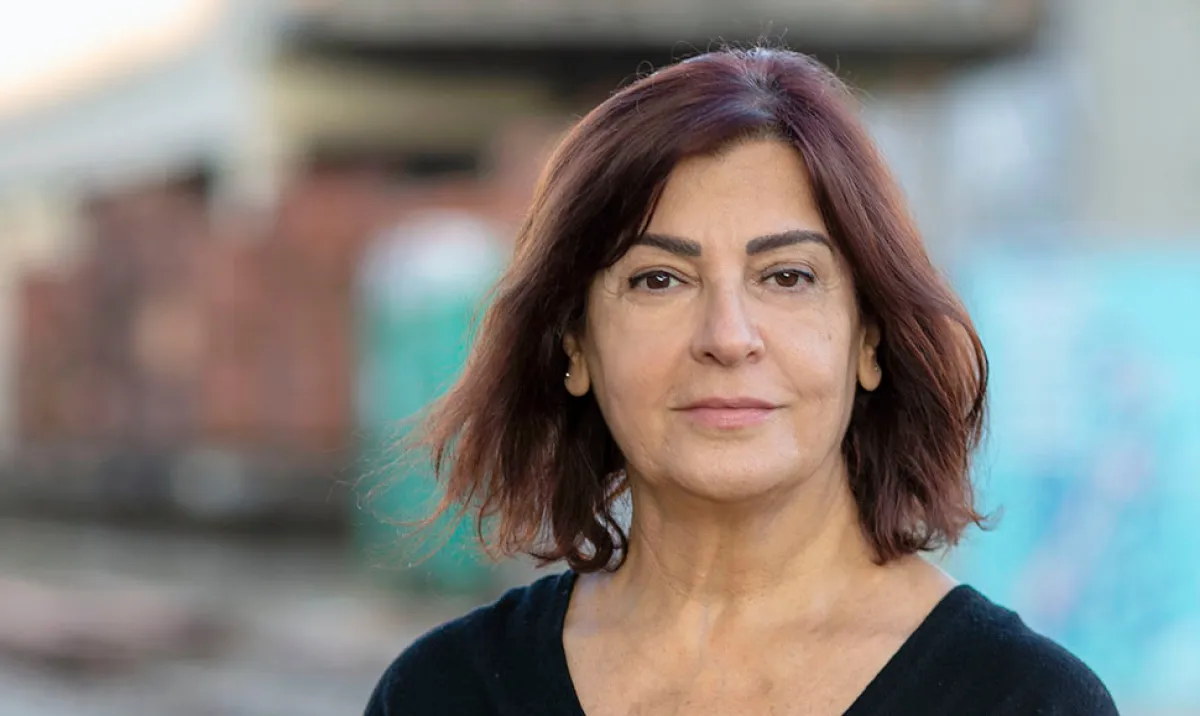
Iman Humaydan, born in Ain Anub Mount of Lebanon, studied sociology and anthropology at the American University of Beirut. She has published five novels and various short stories and written screenplays, all translated into international languages. Her novels give the voice to women to tell their own stories. Her forth novel '50 grams of paradise' won Katara Prize (Qatar) in 2016. She teaches Arabic and creative writing at European and North American universities and her creative writing course in Saint Denis university in France is the first course given in Arabic on creative writing. Humydan was a jury member for the 2022 International Prize for Arabic Fiction IPAF. She is co-founder of the Lebanese P.E.N. Center, of which she has been president between 2015 and 2022 and a Pen International board member between 2017 and 2023. She is currently writing her sixth novel and lives in Beirut and Paris.
+++
For readers who would like to experience the conversation in full, we are also offering the unabridged video version of the interview alongside the edited transcript — something like a director’s cut, with all the pauses, detours and nuances that make a spoken exchange come alive.
Axel Timo Purr is the founder and an editor of Literatur.Review. He first studied literary studies in Hanover before going on to study social anthropology, social psychology, and speech and language studies at LMU Munich. After conducting field research in East Africa on modern (anti-)witchcraft movements, the informal sector and global economic influences on individual biographies, he has been coordinating a network for translation and design since 1999 and has been working as a journalist on African, literary and film topics since 2001 for artechock, the Süddeutsche Zeitung and the NZZ, among others.
Axel Timo Purr: We are here in Paris, and I am talking to Iman Humaydan about her latest book, which was published in Arabic at the end of 2023 – Perhaps you should introduce it yourself.
Iman Humaydan: It is my fifth novel. It came out in Arabic at the end of 2023 and has since been translated into French and English. The French version appeared in early October 2025 under the title Chanson pour les ténèbres, and the English version, Songs for Darkness, came out this year. It is the story of a family, a story of four generations of women.
The novel spans the period from the eve of the First World War until 1982. It speaks about these four women, but at the same time it also speaks about the history of Lebanon.
That’s right.
For me, it is one of those rare novels that tells history without directly touching public history. It is history told through everyday life. What struck me most is that you manage to tell the story without all those big emotions one might expect. For me, it reads almost like a chronicle. You do not make a drama out of it. It is all told in a very quiet literary voice, which places the tragedies of a family, of several generations of women, side by side with the history of the country. And yet you do not really talk about Lebanon itself. I think the word “Lebanon” is almost never mentioned.
No. The novel speaks about the effects of historical events in Lebanon on the lives, on the personal lives, of these people. So the history of Lebanon is a background. I do not really deal with it directly.
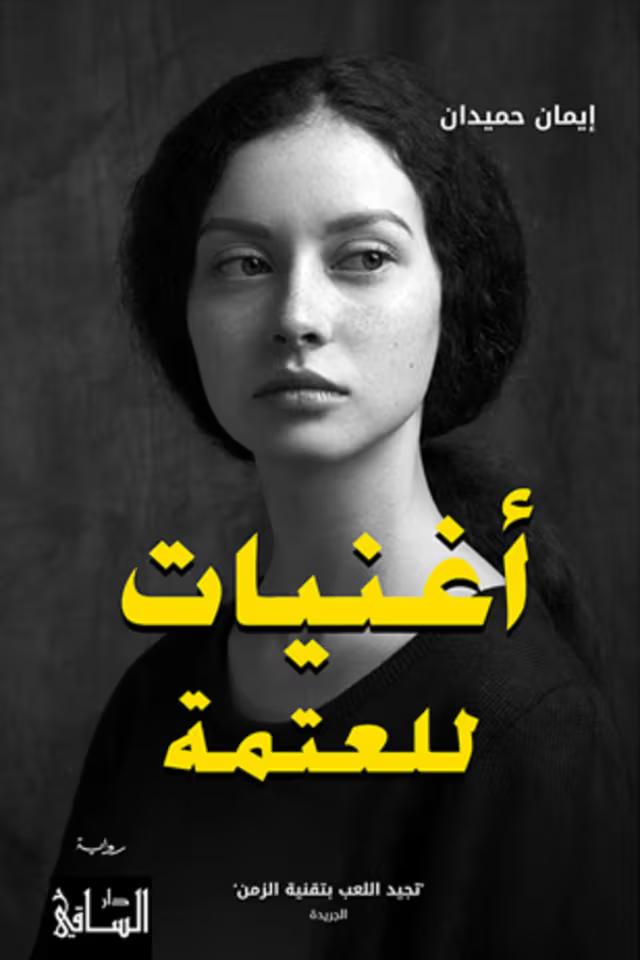 Dar Al Saqi
Iman Humaydan | Songs for the Darkness | Dar Al Saqi
There is one very strong sentence right at the beginning: “Your life ends, but war never does.” I think this is beautifully put. There are two systems, in a way: the political system, and everyday life. There are people’s dreams, and their daily attempt to live in peace. But on the other side there is violence and war. There are the dynamics of these “small lives”, let me put it in quotation marks, and then there are the “big lives” of the country or the region.
What moved me deeply is the way you describe dreams and how they end. There is a passage I would like to quote: “She was no longer sad that she hadn’t become a teacher like Yazid’s mom, who spent every summer in Ajmat. With time, her old interests, her dreams and desires faded. Every night, she laid her head down on her pillow and thought about the next day and what she could do to improve her family’s life as much as possible.”
For me, this is a very simple and very painful example of what happens to the dreams of young girls. They marry very young, too young, and their own dreams are transformed into the dream of improving the lives of their children. She never fulfills her own dream; she transfers it to something else. And even the relationship with her husband follows a similar pattern: it begins with a certain promise, but then this too fades away.
I think she never really hoped she would have a different life as far as her husband was concerned, because, if you remember, she was in love with someone else when she got married. She had to marry because the families saw it as the best solution for the well-being of the two children her sister had left behind when she died. So she feels obliged to do something for the benefit of others — but not for herself.
One of the things I find remarkable about the novel is that you do not only describe the inner perspective of women, but also of men. About one husband, you write a very beautiful line: “Deep in his heart, he admired her, but it was admiration mixed with fear.” In a way, this says everything about the relationship.
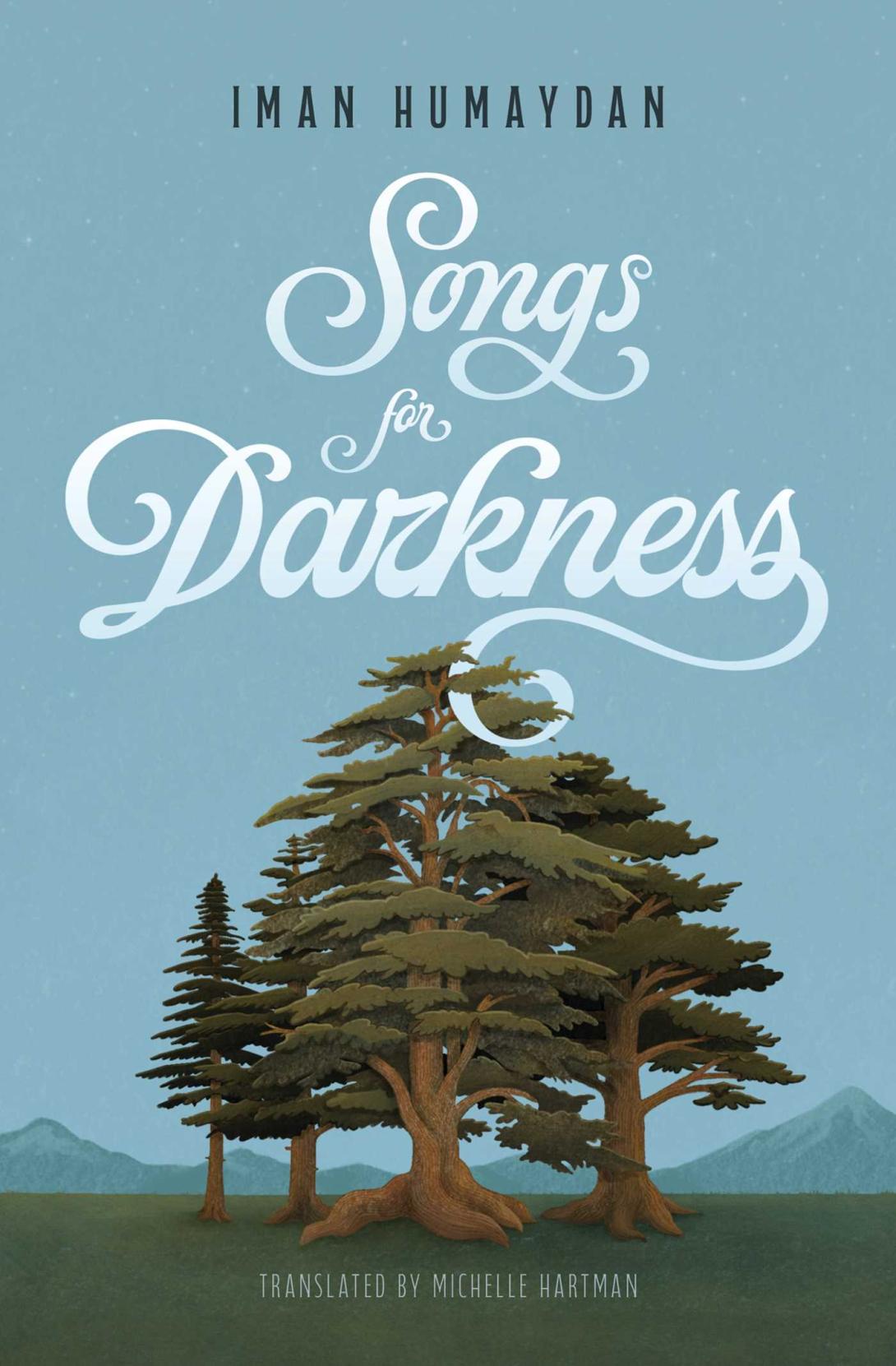 Simon & Schuster
Iman Humaydan | Songs for Darkness | Simon & Schuster
Yes. It says a lot about the fear of men, or let me say the fear of the masculine in relation to the feminine — the fear of the capacity and power of the feminine. This power does not always show. It is hidden, invisible, but it is there. And the masculine can feel it. So this fear is expressed by suppressing the power of the feminine.
Exactly. And what I had in mind at the same moment was that this fear is also the same fear that can be found in politics. What works in private life, in the family, is then transferred to the system of the state.
Exactly. It is a small example.
And from that example, you can move upwards. That is what is so fascinating: the microcosm of the family more or less mirrors what happens in the larger structure of the state.
Yes. When we talk about patriarchy, this is what we mean. There is patriarchy in the family, and then, higher up, it is the same mechanism of rule. The president of the nation, the head of the tribe — it is the same relationship. Especially in places where there is no democracy, of course.
What also struck me is the quiet tone of the novel. Your language is not activist in the way some writers write in an activist tone that can sometimes take away the complexity of a text. There is a lot of frustration in your novel, but you do not express it aggressively. How do you manage that?
I do not believe that good literature and activism can simply go together in harmony, or in marriage. Literature should stand on its own. Within it, of course, we can send messages as writers, and we can express our point of view. Activism, for me, is more political. I am a feminist, but when a writer says: “I am a feminist, and feminism says this and that,” then it is no longer literature. We can say everything we believe in, but in a literary way. And I believe this is much stronger than a manifesto.
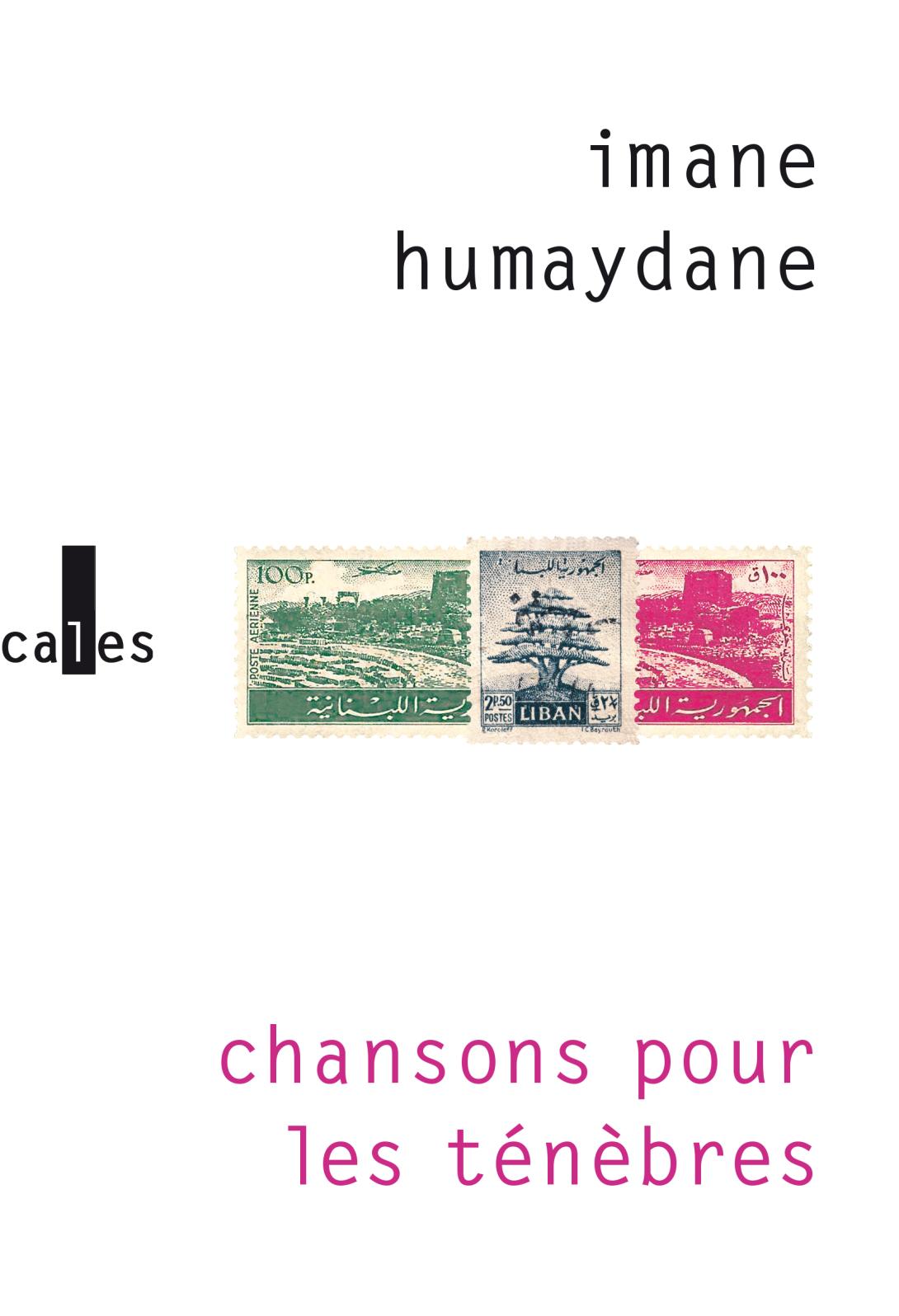 Gallimard
Iman Humaydan | Chansons pour les ténèbres | Gallimard
I agree. When activism becomes too direct in literature, it can take away the diversity of life.
To be too direct in literature is to take away the soul of creativity. The literature I love tells everything without pointing a finger and saying: “Listen, this is what I mean.” No. The reader must understand what I mean through the writing itself, in a literary way.
And the book shows this. Across these four generations, whenever a personal identity begins to form, it is taken away again. It never develops into a full personality, which is very sad. And the same is true, without the novel spelling it out, of the country.
Exactly. Especially Lebanon. Lebanon is a country, but it has never attained the stage of being a nation. It is a country in the sense that it has its own constitution, a government, a parliament. But we have never had what in French is called citoyenneté: citizenship, a real belonging to the state. The belonging of a Lebanese person is not to his or her state. It is either to the community or to the religion — but never really to the state. And this is very significant for what has been happening in Lebanon since 1970.
But why is it like this? In the West, Lebanon is often perceived as a great promise, almost as a great hope for the Arab world. But in a way this promise was never fulfilled. And perhaps Lebanon as an idea is not only important for the Arab world, but for the whole world.
Lebanon as an idea is a place where eighteen communities live together in peace. But Lebanon did not fail to become a nation because of this diversity. Not because of the eighteen communities. It failed because politicians used this diversity for their own interests. Instead of developing the sense of citoyenneté I am talking about, they developed clientelism.
If I am Druze, I go to the leader of my community to find me a job. If I am Christian, Catholic or Orthodox, the leader of that community is supposed to serve the interests of his community. These leaders became mediators between the state and the people. The state never became the place where all Lebanese belong. There is always a mediator in between.
And during the war, when the war started, the state became weaker and weaker and weaker. At the same time, the projects of each individual in Lebanon vanished. Since 1970, Lebanese migration has increased enormously. When I go to Lebanon today, I have to solve my problems as an individual: electricity, water, internet, everything. Even services that in the West are usually provided by the state. In Lebanon, each person has to create his or her own little kingdom in order to have access to these services.
And this is also what your book tells. It tells it in a transgenerational way: how traumas are transferred to the next generation, and how limited individuals are when it comes to deciding freely where to go and how to live.
Yes. With the first, second and third generations, this is very clear. And we should not forget that the country itself is still young. Independence came in 1943. So in the book there is always a parallel between the youth of the characters — a youth that never reaches the fulfillment of its dreams — and the youth of the country, which never reaches the fulfillment of the dream of becoming a place for everyone. This parallel is invisible in the book, actually.
Perhaps it is intangible. You cannot point to it directly.
Yes, exactly. You cannot touch it. You cannot say: “Ah, here it is.” But it exists all the way through the novel, until the end.
And the last generation, the daughter who reflects on all this, is the first one who tries to put the pieces together. She is the writer. In that sense, I think this is also where the hope of the novel lies: in art, in literature, in the attempt to bind together what history and family history have torn apart.
Yes, because she is the writer.
Exactly. And through writing, there is something like a therapeutic process — not only within the family, but also in relation to the country. It reminded me of Cursed Daughters, a novel by a Nigerian writer we have written about in our magazine. It tells a very different story, of course, but it also moves across generations and shows how difficult it is to escape transgenerational trauma, family patterns and silences. There, too, it is the writing, or the narrative reconstruction, that makes it possible to understand what has been transmitted from one generation to the next.
Exactly. Writing is not only archiving the lives of others. It is not only archiving the life of the country. It is also doing something to yourself. When I write such a book, I write it first of all for myself: to understand, to remember, to know, and to transmit something to my daughters and to the people around me. Through this process, a lot of change takes place. Not only in me, but also in others.
And this is true all over the world, especially for writers who have migrated from their countries and live abroad. Writing becomes a way of saving memory.
Exactly. We also have this fantastic writer from China, Su Chang, who now lives in Canada and writes down what has almost been forgotten in mainland China. And you are right: literature is a way of archiving, but also of restructuring memory — almost like rebuilding a damaged house. Especially in countries that have lived through war, where violence has created a dramatic cut between past and present.
Literature can create a bridge between past and present and save the memory of the past. Especially in Lebanon, the novel plays this very important role. I believe — perhaps sociologists will be a little angry with me — that literature, especially the Lebanese novel, plays a major role in preserving the memory of the country.
That is an interesting point. Your book has now been published in three languages: Arabic, French and English. You have also been on a reading tour in the United States. How was the book perceived by the students you met? It was mainly students, wasn’t it?
Most of the places I visited were universities, mainly in Massachusetts: Boston, Amherst, Williams College, Vassar. I also had meetings in public libraries and bookshops. The good thing was that many students had read the book before I arrived. So talking about the book was already familiar to them, and it created many questions.
Of course, the background of the story was very important for them, because, as we said, the background is the history of Lebanon. They asked many questions about the country. And because the book tells its stories through the voices of women, the feminist side of the book encouraged students — not only girls, but also boys — to ask questions about the lives of women in Lebanon and in the Arab world. So there were different levels of questions, different angles, different dimensions.
And the book was well received?
Yes. The students loved the book, and it sold very well during the tour. I also want to thank my publisher, Michel Moushabeck, the founder of Interlink Publishing. Michel is not only a publisher. He really helps and supports Arab writers in spreading their work and translating it into English. And when he is also the agent of a writer, he works very hard so that the book does not remain only in English but is translated into other languages as well. That is how my first two novels were translated into several languages, because he took care of this. The same way, I like to mention and thank Dr. Michelle Hartman, who is a professor at Magill University in Montreal, who translated almost all my novels into English (except for the first one). She knows by heart my style, ideas and the topics in my work.
We spoke earlier about the current problem that fewer Arabic books seem to be translated, and about how Islamophobia may also affect literature. Has he experienced this too?
He has, but I would change the word. I do not think it is simply Islamophobia now. Perhaps, when people hear “Arabic book”, there is Islamophobia in their unconscious. But I think that these days Western and North American readers are less interested in knowing more about Arabic culture.
Perhaps also because it is perceived as too complex. I also find the term Islamophobia strange in this context, because it reduces a whole language group and cultural sphere to religion.
Exactly. It is an idiotic perspective. If this is how people look at Arabic literature, it means they know nothing about Lebanon, because Lebanon has eighteen communities. And they know nothing about Egypt either, where there are many Coptic and non-Coptic writers. I have read beautiful books by Coptic writers and non-Coptic writers about the history of Egypt, about the dynamics of Egyptian society, about the revolution, about the young generation.
Literature passes through periods of rising and falling interest. At a certain historical moment, Chinese literature was very widely read, and then interest came down again. Sometimes this has to do with what is going on in a country. The Lebanese novel played this role at the beginning of the civil war. When my first novel was translated into French and I came to France in 2004 for a book tour, I found that many Lebanese novels had been translated that year. There was a curiosity to know what was going on in this country. Today, this curiosity is much weaker in Europe and the United States.
What we need are good publishers and a truly free press — one that is not overly politicized — that looks at texts from a literary perspective. The problem is that people often have a concept already in their heads and start reading with this concept instead of actually reading the text.
I remember once, in a gathering, someone mentioned a Syrian novel, and two or three people reacted: “Oh, not anymore. We have read a lot of Syrian novels.” But there is the text, there is the book. We should look at it from a literary perspective. Is it a creative work or not? A novel may also play the role of a sociological document, but we should never forget its literary side. If it is good literature, it tells not only a story about a certain culture, but a human story.
It is a story that reaches beyond Lebanon. As you said, Lebanon is in a way a field in which the world itself becomes visible. All these different sections, these communities, they are also the world. So a story like this is also a story about the whole world.
Exactly. I see it like that. And the dreams of these people — when the book is translated and an American, English or French reader reads it — are recognizable everywhere: the dream of finding a peaceful life, of discovering the outside world, of fulfilling the dreams of one’s children, of enjoying love, enjoying life, singing, dancing. These dreams are everywhere.
And of course, the novel is also a story of changing times. There are these beautiful sections about Beirut before the war, about a different city. Anyone who has read literature about Beirut from that time thinks: it must have been so beautiful, and now so much has been destroyed. But perhaps this too is a story of the whole world. Places are destroyed, changed, transformed.
Yes. And the book also gives an image of the city that the dominant, mainstream idea about the city did not really recognize. Many people say: “Beirut was the Switzerland of the Orient.” This is a positive description, but Lebanon was more than that. Lebanon is not only the Switzerland of the Orient. Lebanon is a place that was supposed to combine cultures, civilizations and religions and to create something more important. This did not happen because of politics.
When I hear this phrase, I always want to say: But Lebanon is more than that. Look at the literature Lebanese writers are producing. In this literature, you can see the contradictions that exist in this society. And despite these contradictions, this country has survived for hundreds and hundreds of years.
Your novel ends in 1982. But the story is not finished in 1982. Does the ending ask for a sequel?
No, it did not finish in 1982. I am writing now, although my professional work takes a lot of my time. I hope to finish the book this year. It is not simply the second part of Songs for Darkness, but I am following the lives of Asmahan, the woman of the last generation, and her daughter, who migrated to New York.
When I was in the United States, I went to New York for this reason. I visited the New York Public Library to research Lebanese migration in the 1980s: where people lived, how they lived. I found out that many lived in Brooklyn. I hope I can return to New York this year and stay another two or three weeks while I am building the end of the story. I want to write something tangible, something real. I know New York, I have been there many times, but I want to live there for a while in order to give a more realistic sense of what I am writing — especially the streets, shops, families, schools.
And when you meet people in the United States, people from the Lebanese diaspora who have read your book, how do they respond? The book is unusual because it tells history through the perspective of women, through a family, through everyday life. How do they read it?
I can give you two examples. One woman was born in the United States, but her parents are Lebanese. After reading the book, she told me there were many things she had not known, because her father and mother had not told her about them — for example the events of 1958 in Lebanon, when there were clashes and many other things.
The other example concerns people who migrated to the United States thirty or forty years ago, during the war. Some of them discussed what I wrote with me, but they stood on a different political background. Of course, not everyone agrees. And I am not writing a book so that everyone agrees with it, because I am not writing a history book. It is a novel. It is my own perception of things.
But these discussions were very fruitful and very positive. They led to the idea that yes, this country can have different points of view, and we have to cherish this difference and respect it.
That is the basis of any democracy, isn’t it?
Exactly. I love these discussions with Lebanese people living in the United States who think differently. Many of them loved the literary and creative side of the novel. They loved how it was written. But when it came to certain historical events and how they were presented in the novel, they reacted differently.
So it is not about fact-checking?
No, the events are real. But if you go deeper, you see that Lebanon, as a very young country, has always had different political parties representing different political views. This book speaks about a certain political background. The characters of the novel belong to that background. So of course, I was speaking about them.
I understand. This is interesting, because as an outside reader I could not detect this level of discourse. But for them it is a completely different reading.
Yes. But I never adopt any of these points of view in the novel. I am a writer. I write in order to understand. First of all, I write for myself, to understand what has been going on in this country and why we reached this stage. I do not say: “This is reality.” In literature, we do not write realities. We create realities.
Or perhaps literature reflects on realities, incorporates realities — because there is not just one reality.
Yes. Literature, for me, is a bit like a patient speaking to a therapist. You talk, and while you are talking, you overcome something, or you realize something about yourself. You get rid of the trauma that caused you to write.
With my first book, it was the trauma of the war that made me write. When I finished it and the book came out, I saw things differently. And this led me to Wild Mulberries, because after writing a book about the war in Lebanon, a big question was born: Why this violence? Why in our country?
And why in the world?
Exactly. Why in the world?
On a very practical level: in the United States, did people read the English version or the Arabic version?
In the United States, they read the English version. Many have lived there for forty years, and it is not easy to get the Arabic book. They are also Americanized in a way. But some people read the English version and then asked me for the Arabic original. They said: “Please, we want to read the original.” And I sent some copies.
That is different from France, where, as you told me earlier, many readers waited for the French version.
Yes, especially Lebanese readers. I have Lebanese friends who do not read Arabic. This has to do with the historical relationship between France and Lebanon. Many Lebanese are Francophone, and especially if they migrated forty or forty-five years ago and have lived here since then, they often do not read Arabic anymore. I know some people who waited for the French version and then read it.
And nevertheless, the next novel will be written in Arabic first?
Of course.
One never knows. Perhaps the market will ask for an English version first.
At least I do not write for the market. I write for myself. And as long as I dream in Arabic, I will write in Arabic.
That is a very beautiful final sentence. Thank you very much for this conversation.
Did you enjoy this text? If so, please support our work by making a one-off donation via PayPal, or by taking out a monthly or annual subscription.
Want to make sure you never miss an article from Literatur.Review again? Sign up for our newsletter here.