



What Law Cannot Fully Capture
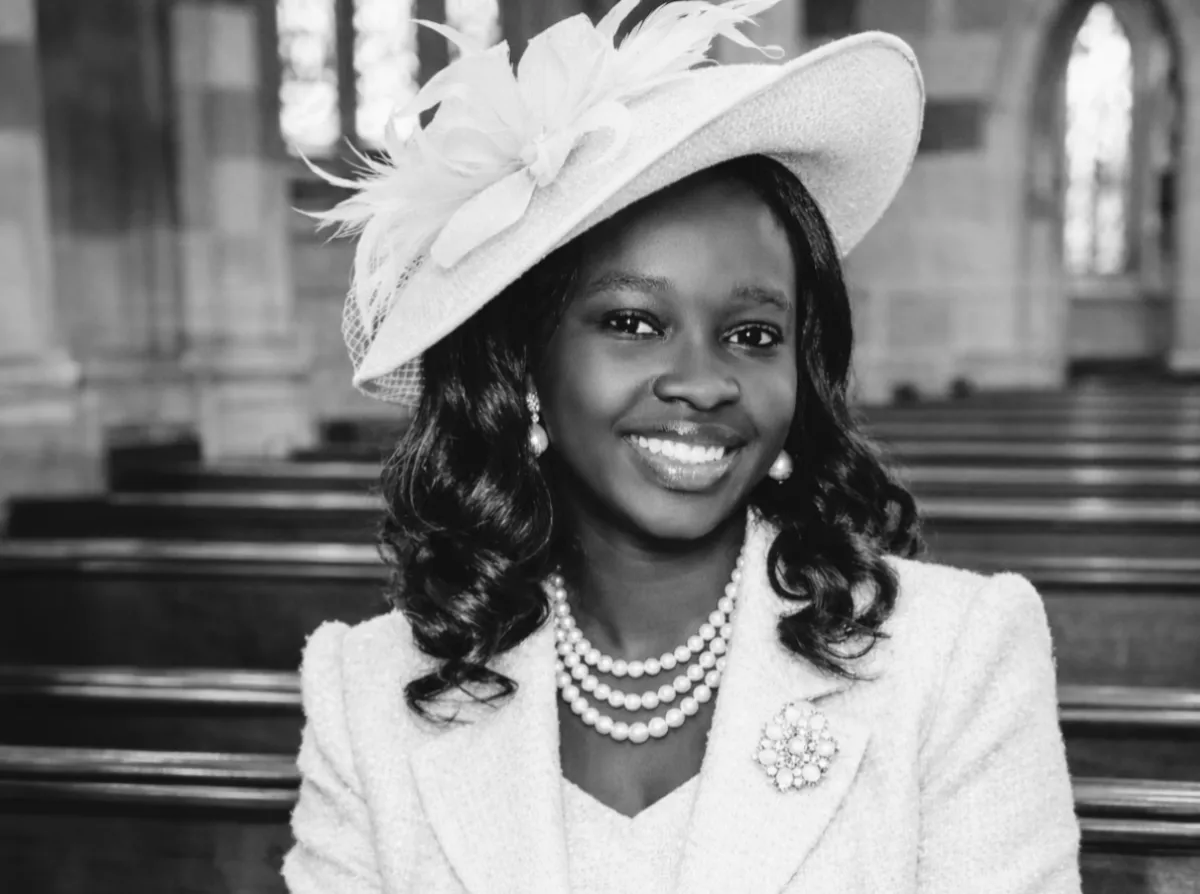
Awadifo Olga Norah, formerly published as Awadifo Olga Kili, is a Ugandan lawyer, legal scholar, poet and author working at the intersection of law, literature and ethical inquiry. Her writing explores justice, human dignity, historical memory, women’s rights, post-conflict peacebuilding and reconciliation. She is the author of Victorious Tales, Echoes of Wails and Stains on a Cowrie Shell. Her poetry has appeared in international journals and anthologies and has been translated into Spanish, Hebrew, French, Italian and Chinese. In 2025, The New Vision named her among Uganda’s most influential women. She also curates Words of Awadifo Olga Kili, a literary WhatsApp channel dedicated to peace, justice, anti-war advocacy and reconciliation through literature.
Mbizo Chirasha is the founder of the Writing Ukraine Prize and a UNESCO-RILA affiliate Artist. He has held fellowships and residencies in Germany, USA, Zambia, Ghana, Tanzania, and Sweden. He edits and curates several literary platforms, including Time of the Poet Republic and Brave Voices. Author of A Letter to the President, his works appear in over 200 journals worldwide, including The Evergreen Review, Poetry London, and FemAsia Magazine.
Mbizo Chirasha: You began writing in 2018. How has your journey developed since then, and who is Awadifo Olga Norah?
Awadifo Olga Norah: I began writing during the second year of my law degree and published my first book at the age of twenty. From the beginning, I saw writing as more than a literary pursuit. Law introduced me to rights, institutions and legal reasoning, while literature allowed me to explore the moral, historical and emotional dimensions that legal analysis cannot always reach. What began as a private form of reflection gradually became a lifelong vocation.
I am Awadifo Olga Norah, formerly published as Awadifo Olga Kili. I am a lawyer, legal scholar, poet and author working at the intersection of law, literature and moral philosophy. My writing focuses on justice, human dignity, historical memory, peacebuilding and reconciliation, especially in societies shaped by conflict and structural inequality.
I am particularly interested in the questions that remain after a legal judgment has been delivered: How are memory and justice connected? When does reconciliation become morally meaningful? And how can the law respond to forms of loss that cannot be resolved in a courtroom?
My poetry has appeared in international journals and anthologies and has been translated into Spanish, Hebrew, French, Italian and Chinese. Seeing it travel across languages has strengthened my belief that, despite our different histories, experiences such as grief, hope, love and dignity can connect people across cultural boundaries.
Writing has taught me patience, scepticism and respect for complexity. Literature asks us to confront the ambiguities of human experience rather than reduce them to convenient answers.
You have published three books. Could you tell us about them?
My books Victorious Tales, Echoes of Wails and Stains on a Cowrie Shell were self-published. That was not a fallback option, but a deliberate choice that allowed me to retain creative control over their form and ideas.
I see the books as parts of one continuing inquiry. They approach justice, human rights, historical memory, peacebuilding and reconciliation from different angles. My aim is not to turn suffering into something merely aesthetic, but to examine the political, legal and cultural structures that allow it to occur – and perhaps also allow it to be interrupted.
Your work has appeared on numerous international platforms. Which publications have been particularly important to you?
My first international publication appeared in BRAVE VOICES Journal in 2019. My work was published alongside poets from different parts of the world at a time marked by tragedies such as Cyclone Idai and the Ethiopian Airlines crash. Poetry became a form of elegy – a way of finding language for grief when ordinary speech seemed inadequate.
I was later published by Resistance Journal and Time of the Poet Republic. These platforms understand literature as a form of engagement with history rather than passive observation. My work often draws on African philosophical ideas such as Ubuntu and Unhu, which understand personhood through our relationships with others. Figures such as Thomas Sankara and Nelson Mandela also appear in my writing, not as untouchable symbols but as historical voices that continue to raise questions about freedom, leadership and responsibility.
Another important experience was having my work presented by the Little Museum of Poetry in Italy alongside that of forty-six women writers from different cultural backgrounds. The project created a dialogue with Dante Alighieri and his reflections on language, exile, morality and imagination.
My writing has also appeared in The Seychelles International Literary Journal, European Poetry, Mokasini Magazine, the World Beyond War Poetry Anthology, Womawords Literary Press, the International Human Rights Art Movement, World Pulse, Pan Writers Caravan, The Weganda Review, Uganda’s Daily Monitor and The New Vision, Kenya’s The Star and other publications.
What matters most to me is not the geography or status of a publication, but whether it treats literature as a serious way of paying attention to the world.
What are you currently working on?
My first major literary work of the year grew out of the grief of losing my mother, Dorothy Ondoru Atiku. I wrote a sequence of ten poems that was later published by European Poetry. That collection became the beginning of a larger body of work rather than its conclusion.
Since then, I have maintained a daily essay practice. I am developing a long-term project on violence, historical memory, displacement, peacebuilding and post-conflict reconstruction. It brings together contexts including Darfur, the Democratic Republic of Congo, the Central African Republic, South Sudan and Rwanda, asking what political, moral and social questions emerge after mass violence.
In April, I completed The Scrolls of Silent Hills, an anthology centred on the 1994 Genocide against the Tutsi in Rwanda and the difficult process of reconciliation that followed. I have also written short stories about women as architects of peace, published by World Pulse and on my Medium page.
My aim is eventually to bring these essays together in a single collection about violence, memory, justice and social reconstruction.
How do you balance your legal work, writing and personal responsibilities?
I do not see law and literature as two separate worlds competing for my time. My legal work mainly involves research, so it already depends on reading, interpretation, argument and careful attention to language. In that sense, it draws on many of the same habits as my literary writing. Each field feeds the other.
The real difficulty is time and mental intensity. Legal research can occupy most of the day, so literary work often happens early in the morning, late in the evening or during quieter intervals. I have learned to use those spaces instead of waiting for ideal conditions.
My family is small, and my siblings are grown and largely independent. We remain close while giving one another room to pursue our own responsibilities.
Ultimately, legal research, literature and daily life are not competing identities for me. They are different expressions of the same desire to understand how justice is imagined and how human experience can be translated into language.
Which themes are central to your work? Do gender equity, human rights and freedom of expression play a role?
My writing centres on post-conflict recovery, peacebuilding, truth-telling and reconciliation, particularly in African historical and social contexts. I am interested in what happens after violence, when societies face the slower and more difficult work of rebuilding trust, repairing relationships and creating meaning from disruption.
I have written about the Rwandan genocide and local atrocities such as the Ringili Massacre. I do not regard these as isolated events, but as expressions of deeper political and historical conditions. Violence continues to shape collective memory long after the immediate event has ended.
Gender equity is also important to my work, especially the role of women in peacebuilding and recovery. My stories for World Pulse explore how women sustain essential networks of care, mediation and social repair in communities fractured by violence.
Human rights and freedom of expression appear not merely as abstract principles, but through questions of accountability and truth: Who is able to speak? Whose testimony is recorded? Under what conditions can it be heard?
At the centre of my writing is the question of how societies reconstruct themselves after breakdown – and how memory, testimony and language can become instruments of survival.
How have your literary work and human rights activities been received in Uganda?
Recognition has developed gradually across literary and civic spaces. Writing has given me a degree of public visibility that I did not initially expect and has opened the door to conversations about literature, ethics and social responsibility.
During the COVID-19 lockdowns, I was invited onto local radio stations to discuss the education crisis and its human rights implications. I spoke particularly about the vulnerability of young girls, whose access to education and protection became even more precarious during that period.
My books have also been reviewed or discussed by national newspapers such as Daily Monitor and The New Vision. This has helped bring my work into a wider cultural and intellectual conversation beyond a strictly literary readership.
The recognition has been slow but steady. My writing is increasingly received both as literature and as a form of civic reflection.
How are writers regarded in Uganda? And how would you describe the country’s approach to human rights and freedom of expression?
Writing carries a certain prestige in Uganda, especially when an author receives public or media recognition. But sustaining a literary career is difficult. Many writers begin with great creative energy but struggle to build a lasting readership. Recognition usually comes through years of patient and consistent work rather than sudden visibility.
Human rights and freedoms are formally recognised within Uganda’s constitutional and institutional framework. These include human dignity, freedom of expression, access to education and protection under the law. At the same time, the practical experience of these rights can differ according to context and circumstance.
Public discussion of human rights continues to develop through the work of civic organisations, institutions and individuals. Writers participate in this process not only as cultural figures, but also as voices in broader debates about society, governance and public life.
Have you received awards or other forms of recognition?
Yes. In 2025, I was named one of Uganda’s Most Influential and Admirable Women in a public poll conducted by The New Vision. I was included alongside women from politics, academia, national leadership and public service. For me, it showed that literary and civic engagement could reach a wider public.
I also received the Ambassador de Literature Gold Medal from the international literary platform Motivational Strips.
Earlier, I was named Best Female Student of the Academic Year 2018/2019 at university. That recognition reflects the academic discipline that later became the foundation of my literary and research work.
Together, these honours trace a path through academic achievement, literary practice and public engagement.
Uganda has a rich food culture. What are your favourite foods and drinks?
Food in Uganda is about much more than nourishment. It is closely connected to hospitality and everyday social life. Offering food is often one of the first ways of welcoming a visitor.
The country’s fertile soil and favourable climate also mean that many families grow vegetables, herbs and fruit at home, sometimes alongside keeping poultry. Food production therefore remains part of domestic life rather than being entirely dependent on markets.
I love cooking and learned through practice rather than professional training. I prepare both Ugandan dishes and simple meals influenced by other cuisines. For me, good food does not have to be expensive. Careful preparation and seasoning can make even modest ingredients feel rich.
I especially enjoy pork, chicken, beef, liver and Irish potatoes, as well as fresh fruit and organically grown produce. I prefer natural, light and non-alcoholic drinks.
Ultimately, food is another form of connection. It brings people together, sustains relationships and expresses the quiet culture of hospitality in everyday life.
Did you enjoy this text? If so, please support our work by making a one-off donation via PayPal, or by taking out a monthly or annual subscription.
Want to make sure you never miss an article from Literatur.Review again? Sign up for our newsletter here.