



“The best version of us is WE”

 Lulu
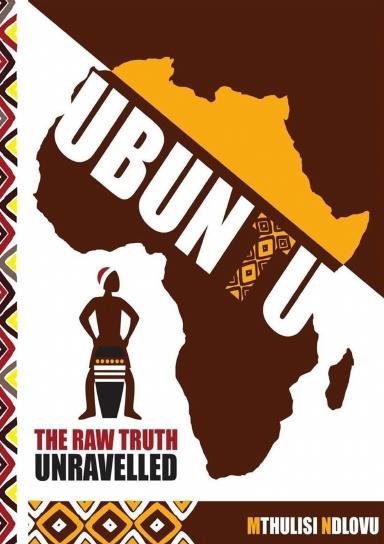
LuluMthulisi Ndlovu | Ubuntu – The Raw Truth Unravelled | Lulu | 62 pages | 7,88 EUR
Introduction: Ubuntu as Poetic Insurrection
Mthulisi Ndlovu’s Ubuntu – The Raw Truth Unravelled is not merely a poetic work, it is a moral intervention. It stands at the intersection of political theology, social philosophy, and prophetic literature. The text declares early and unequivocally: “UBUNTU is not just a philosophy; it’s the essence of humanity’s collective heartbeat.” This framing is decisive. Ubuntu is not treated as metaphor, nor as folkloric residue of precolonial Africa. It is posited as ontological infrastructure, the very condition of being human.
Ndlovu positions himself in the lineage of African writers who view literature as ethical responsibility rather than aesthetic ornament. Like Ngũgĩ wa Thiong’o, who argued that African literature must be an instrument of decolonization, Ndlovu uses poetry as civic pedagogy. He insists that storytelling must restore moral balance where history has fractured communal memory. He resists reductionist narratives about Africa and does so not through realism but through incantatory rhetoric. The book is thus a sustained argument that modern society’s crises which comprises of corruption, violence, greed, alienation, are symptoms of a deeper metaphysical rupture which is the abandonment of Ubuntu.
Ubuntu as Ontology: “I Am Because We Are”
The refrain “We value WE over I” articulates the philosophical centre of the text. Ubuntu here is not sentimentality; it is anti-individualist ontology. The self is relational, not autonomous. This position resonates with: John Mbiti’s famous formulation: “I am because we are; and since we are, therefore I am.” emphasizing the interconnectedness of individuals within a community and the importance of social relationships in defining identity and existence. Mbiti's axiom reflects the idea that one's existence and identity are shaped by the collective, challenging the notion of individualism.
In the same vein, Ndlovu’s central struggle is not merely against corruption or violence, it is against the collapse of collective self-recognition. He laments that “We are no longer WE anymore” revealing a deeper anxiety showing that society has forgotten itself. This also converges with Steve Biko’s Black Consciousness who argued that oppression first fractures the mind, producing self-alienation and internalized inferiority. Ndlovu names a similar psychic decay when he describes people “transform[ing] into these useless zombies” The metaphor is not accidental it signals dehumanization. For Ndlovu, Ubuntu becomes a technology of re-humanization. By reconstructing identity around “Umuntu ngumuntu ngobuntu”, he restores dignity through communal affirmation. Like Biko, he understands that liberation begins with recovering the moral self within a collective “WE.” His poetry is therefore not abstract ethics, it is psychological and communal repair.
Ndlovu does not treat Ubuntu as private virtue. In the appended discourse, Ubuntu is positioned as the basis for governance, economic ethics, social cohesion, and sustainable development. This move mirrors Kwame Nkrumah’s attempt to forge a unifying philosophical foundation capable of overcoming colonial fragmentation. His critique of elite capture and moral inversion “Integrity turned into fairy tales / Real redefined for fake” echoes Nkrumah’s concern that postcolonial societies risk reproducing exploitative hierarchies. For Ndlovu, fragmentation along tribal, racial, and political lines is not merely social disorder, it is ethical betrayal: “Ethnicity cracking us apart”. Ubuntu becomes the counter-ideology, an ethical collectivism that insists progress is communal or it is illusion. Yet Ndlovu’s contribution is distinct. Unlike Nkrumah’s systematic philosophy, Ndlovu works through moral proclamation. His declaration that “The best version of us is WE” functions as both summary and summons. He does not engineer ideological blueprints; he restores moral orientation. His Ubuntu is less a doctrine and more a reawakening, a refusal to normalize fragmentation.
Ndlovu’s contribution is not theoretical system-building but affective intensification. His language is deliberately repetitive, almost liturgical: “We are because we proclaim… We are love.” The repetition functions as communal rehearsal. The poetry wants to be spoken aloud. It seeks not to convince intellectually alone but to form moral habit. However, critically speaking, the text sometimes conflates ontological claim with moral prescription. Ubuntu is presented as universally self-evident rather than philosophically defended. There is little engagement with tensions between individual rights and collective obligation which is a complexity that Achille Mbembe and other contemporary African philosophers wrestle with. The work assumes that collectivism is inherently emancipatory, which historically has not always been the case. Still, as ethical manifesto, its clarity is powerful!
Political Indictment: Corruption, Predatory Governance, and Moral Collapse
One of the strongest dimensions of the text is its sustained critique of political decay. The poem laments: “Integrity turned into fairy tales / Real redefined for fake.” This line encapsulates what Frantz Fanon described as the postcolonial elite’s degeneration into mimicry and corruption. Ndlovu’s rhetoric mirrors Fanon’s anger at national bourgeoisies that replace colonial rulers without dismantling oppressive structures. The appended discourse by Thabisa Sibanda expands this critique into governance, policy, economics, environmental stewardship, healthcare, and education. Ubuntu is proposed as the ethical basis for social contract theory, participatory democracy, restorative justice, ethical capitalism and environmental sustainability. Here the book moves beyond poetry into civic theory. It is ambitious. It attempts to convert Ubuntu from cultural ethos into institutional framework.
Gender, Violence, and Moral Crisis
The text does not shy away from confronting gender-based violence. Ndlovu presents gendered violence as one of the most devastating signs of a society that has abandoned Ubuntu. He catalogues abuse with stark moral urgency: “Women bashed for baseless claims… Young girls ambushed and abused beyond scope…Mothers turned prey” framing such harm not as isolated criminality but as evidence of ethical decay. The home itself, traditionally imagined as sanctuary, is inverted into danger: “Homes turned into prisons… Safe zones into war zones… Wedding rings mere symbolism” suggesting that intimacy and protection have lost moral meaning. He indicts institutional failure: “The law dismally failing to reason… Protectors transformed into villains” and broadens the crisis to include broken masculinities: “Fathers dying in silence and turmoil… Boys brutalized for their hope” Ultimately, Ndlovu casts gender violence as “utter moral nudity, / A world stripped of its own values”, arguing that when women, children, and families are unsafe, Ubuntu is not merely weakened it has collapsed, leaving society spiritually exposed and ethically bankrupt.
Theological Undercurrents
The text frequently invokes God: “Has God transformed to God? Ulelephi Mvelinqangi?” Ubuntu is framed as divine principle. This theological layering recalls Desmond Tutu’s interpretation of Ubuntu as spiritual humanism. It also echoes Biko’s rejection of Western theological frameworks that divorced salvation from social justice. Ndlovu threads the poem with a dense theological register in which Ubuntu is not only social ethics but a sacred demand, and the collapse of humanity is treated as a spiritual crisis that implicates both God and human agency. He explicitly elevates Ubuntu into the realm of divine order: “UBuntu, the divine principle… Proper is vanity without divinity” This shows that he views moral life as being measured against a higher law rather than public opinion or politics alone. At the same time, he stages an almost Job-like interrogation of the divine in a world of violence and injustice: “God, are you listening? … Nkosi, are you still there? … God, but why? … We need your urgent service!” this prayer is not piety as escape, but lament as ethical indictment.
He invokes multiple African names for God: “Nkosi… Mwali… Mvelinqangi… Leza… Mdali… Msikavanhu” which roots the appeal in African spiritual vocabularies and reinforces his larger insistence on African-cantered meaning-making. Yet the theology is not passive: he repeatedly turns back to human responsibility, insisting that “Good deeds begin with us and now” and that Ubuntu must “prevail” as a lived ethic. In this way, the book’s theological undercurrent operates as moral pressure: God is invoked as witness and judge, but Ubuntu remains the practical sacrament proof of faith through deeds, and the only credible antidote to a world where humanity has become “thread bare.” However, the heavy reliance on divine appeal (“God, are you listening?”) sometimes risks shifting agency from political struggle to metaphysical intervention. The tension between prayer and praxis remains underexplored.
Conclusion
The most significant intellectual move of the book is its insistence that Ubuntu is not merely African but universal: “Ubuntu transcends time, space and race.” This challenges Western liberal individualism and proposes relational ontology as global corrective. Here Ndlovu intersects with contemporary global ethics, climate justice, restorative justice movements and communitarian political theory. He argues that Ubuntu must be critically developed, not merely celebrated. Though Ubuntu: The Raw Truth Unravelled 2.0 is not perfect because it is not a tightly argued philosophical treatise and does not offer sustained structural analysis of capitalism, patriarchy, or postcolonial state formation. But it does something equally important: it refuses moral numbness. Like Ngũgĩ’s cultural resistance, like Chinua Achebe’s ethical storytelling, like Chimamanda Ngozi Adichie’s insistence on narrative dignity, Ndlovu writes to restore the moral center. This book is prophetic literature, urgent, insistent and unashamedly normative. Its greatest strength lies in its clarity: “Without humanity, we are naked.” Its greatest challenge lies in its simplicity. How do we institutionalize Ubuntu in systems built on exploitation? Yet in an age of fragmentation, Ndlovu’s final assertion stands as both summary and summons: “The best version of us is WE.” That line alone secures the work’s relevance.
Did you enjoy this text? If so, please support our work by making a one-off donation via PayPal, or by taking out a monthly or annual subscription.
Want to make sure you never miss an article from Literatur.Review again? Sign up for our newsletter here.