



From bestseller to blockbuster
 Sony
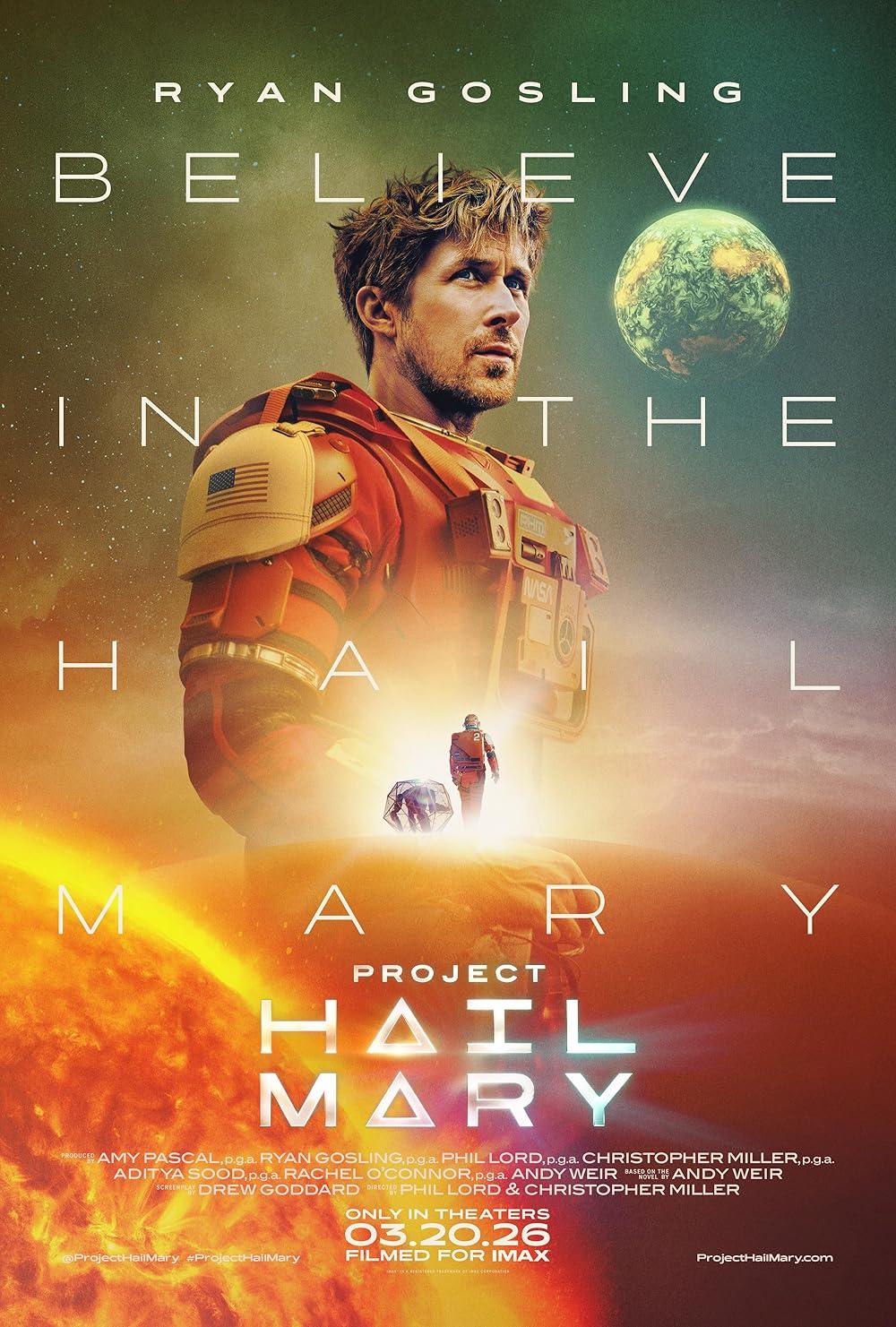
SonyPhil Lord, Chris Miller | Project Hail Mary | 156 minutes | Sony | 2026 | USA
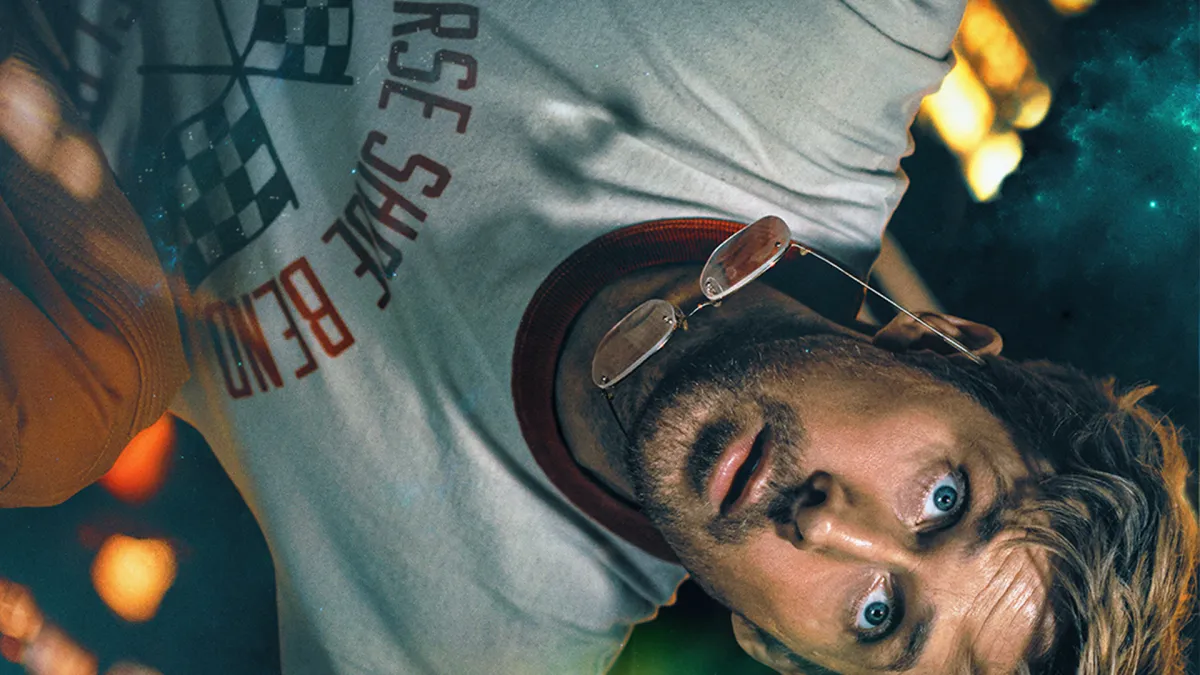
It begins with one of literature's oldest themes: A man wakes alone, cut off from the world, forced to piece together where he is, who he is, and what he must do to survive. In Project Hail Mary, Ryland Grace - played by Ryan Gosling - opens his eyes to find himself not on an island, but on a spaceship somewhere in the Tau Ceti system, light years away from Earth. He has no memory, no context, two dead crew members at his side and only a vague inkling that his existence might have something to do with the possible end of humanity.
Thus, the film continues a narrative that has worked perfectly since Daniel Defoe's Robinson Crusoe was published in 1719: the "Robinsonade", this literary experiment in which humanity is confronted by itself and in which civilisation ultimately appears to be nothing more than a fragile layer that must constantly reinvent itself. Andy Weir's novel Project Hail Mary is exactly this, except that the island here is interstellar and the tools are not axes and sails, but molecular biology, mathematics, physics and patience. The fact that this material was sold before the book was even published - Metro-Goldwyn-Mayer secured the rights more than a year before publication and paid a seven-figure sum for them - tells a second story: saving the world has once again become one of the central narratives of our day. A fantasy that preoccupies Hollywood and literature alike, it is perhaps because we have suspected for years that this is precisely what we are dealing with - trying to save a world whose disintegration, both environmentally and politically, has long since begun.
 Penguin
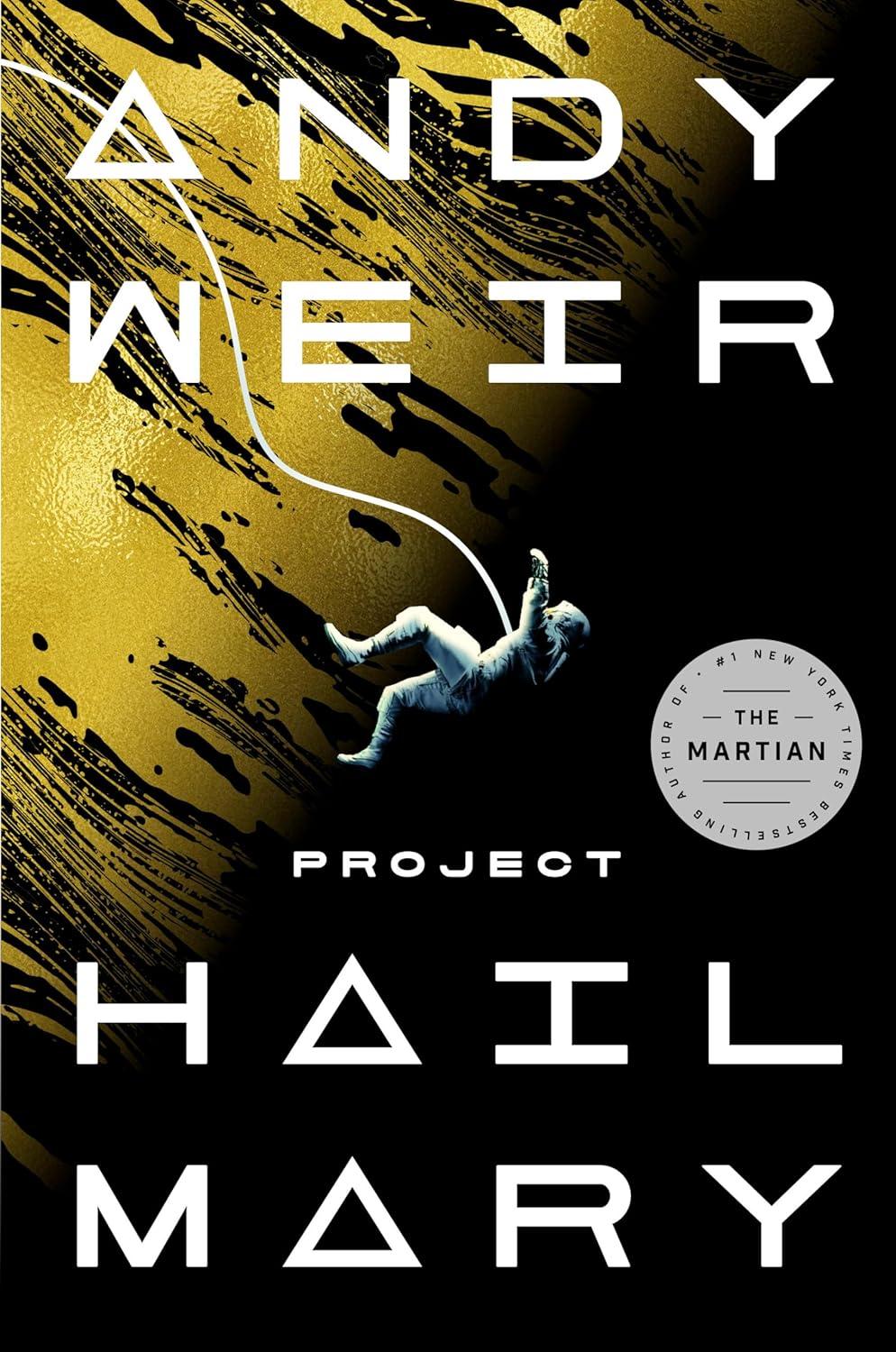
Andy Weir | Project Hail Mary | Ballantine Books | 496 pages | 22 USD
Andy Weir's novel became an instant bestseller in 2021, following on from the success of The Martian, whose film adaptation, directed by Ridley Scott, showed that science fiction can also be a genre of scientific thought within blockbuster cinema. In Scott's film - as in Weir's literary model - space was a radical experimental set-up: man is alone, and if he survives, it is only because he understands, calculates, experiments, makes mistakes and starts again. A universe almost reminiscent of the sober science fiction of Stanisław Lem, of those stories about Commander Pirx and a godforsaken universe in which knowledge alone is the real hero.
The Martian is also a Robinsonade, but Project Hail Mary is even more so, as it is not just the individual that is put to the test here, but humanity as a whole. Perhaps this is why the film adaptation by Phil Lord and Chris Miller, a directing duo who have proven their mastery of pop culture and narrative rhythm with The Lego Movie and Spider-Man: Into the Spider-Verse, takes a different path to the one taken by Ridley Scott. Instead of the cosmic tragedy that the literary source material is based on, this is an adventure film with repeated, hearty comedic interludes that are reminiscent of predecessors such as the Guardians of the Galaxy films of the Marvel Cinematic Universe. And in places, it is almost a science fiction family film spectacle, more like Steven Spielberg's E.T. the Extra-Terrestrial than Christopher Nolan's Interstellar, although the initial premise- a mission to save Earth - would certainly have provided the material for an existential reflection of our present in the vein of Christopher Nolan.
Perhaps this is precisely where the first niggle of this film adaptation lies. Weir's novel thrives on detail: experiments, trains of thought, technical monologues, dead ends and an almost childlike joy of trying to understand the world. Many of these moments are missing or only hinted at. The screenplay by Drew Goddard, who had already adapted Weir's The Martian, often opts for referencing events rather than fleshing them out. Scenes that fill entire chapters in the book are sometimes merely summarised in the film, as though fearing that the audience might lack patience or concentration. As a result, the narrative seems to run at breakneck speed, almost like a synopsis of a much richer text - and yet this approach works, and the film remains strangely exciting.
Perhaps this is due to choices of atmosphere, such as the music. The film surprisingly draws on pieces such as Pata Pata by Miriam Makeba or - as a small ironic homage to the novel - Two of Us by the Beatles, although the Beatles have a much stronger presence in the book. And then there's the wonderful, improvised karaoke scene in which Sandra Hüller interprets Harry Styles' Sign of the Times, the creation of which she and and Ryan Gosling discuss in an behind-the-scenes interview - a scene that deviates significantly from the book yet is one of the most beautiful moments in the film, perhaps precisely because it pauses the narrative briefly, allowing the characters to simply be. And it also includes Hüller's GDR socialisation being embedded with ironic wit. However, not all the musical choices are successful. The orchestral score, laden with pathos and emotionally destroying too many scenes, is far less convincing. The directors don't seem to fully trust their material and replace the quiet tension of scientific curiosity with musical urgency and bombastic rhetoric.
The casting of Sandra Hüller as Eva Stratt is similarly questionable. There are scenes in which Hüller is great, for example in the aforementioned karaoke scene or in the performance of her actual character as a crisis manager for the whole world: precise, dry, almost humourless. Nevertheless, she is not the complex, "tough" Sandra Hüller that she has been allowed to be in so many other roles - in The Zone of Interest, Anataomy of a Fall or her role in Rose, for which she was awarded the Silver Bear at this year's Berlinale. In Project Hail Mary, she comes across as unusually soft-spoken and always a little out of place, with alternatives such as Cate Blanchett, Jodie Foster or Charlotte Rampling quickly coming to mind. The character in the novel is a radically functional technocrat, someone who creates moral complexity precisely through scientific clarity. The film attempts to give her additional facets, but one is constantly irritated by both the character and the factual content. In one scene, Grace asks her if she believes in God. Her answer: "It's better than the alternative." seems at odds with the universe of Andy Weir, whose novels show that human knowledge can also function without metaphysical instances. Perhaps this small shift is also a commentary on the present day, in which religious narratives are once again having a stronger impact on public debates, or perhaps it is just a dramaturgical safeguard.
And yet one of the central ideas of the novel remains: the encounter with the alien Rocky - who thus also gives this Robinsonade the character of a "Friday" and completes it - which in the book is a fascinating study of communication, of slowly learning a foreign language, of trying to build a bridge between completely different ways of thinking. Here, too, the film abbreviates many things, but it does not completely lose the core of this idea.
Perhaps this is why the cinematic adaptation of Project Hail Mary is best seen as a counterpart to The Martian. Ridley Scott's film depicted a universe in which man is alone and only survives by thinking, a cinema of knowledge in which even the spectacular images were never an end in themselves. Lord and Miller, on the other hand, tell a different story: one in which man is no longer alone, in which encounters are more important than isolation, in which adventure and emotions are emphasised more than processes of knowledge.
As a film adaptation of a book, this approach only partially succeeds. Too much of what characterises Weir's novel is lost: his patience, his intellectual precision, his almost affectionate delight in scientific artifice and nerdy gimmicks. But as a film, without the literary model in mind, something else emerges: a great, sometimes surprisingly tender science fiction adventure that takes its characters seriously, even if it occasionally views them with humour, and which never gets boring despite its 156-minute length. Perhaps this is precisely the peculiar, always elusive quality of this film: that it moves between two possibilities and does not completely redeem either of them - between the Robinsonade of thought and the spectacle of the blockbuster, between scientific curiosity and emotional entertainment. It is difficult to decide whether this is a failure or merely a shift in perspective, especially as the film itself seems to deliberately leave this decision open.