



Edo and the ghosts
 Dedalus
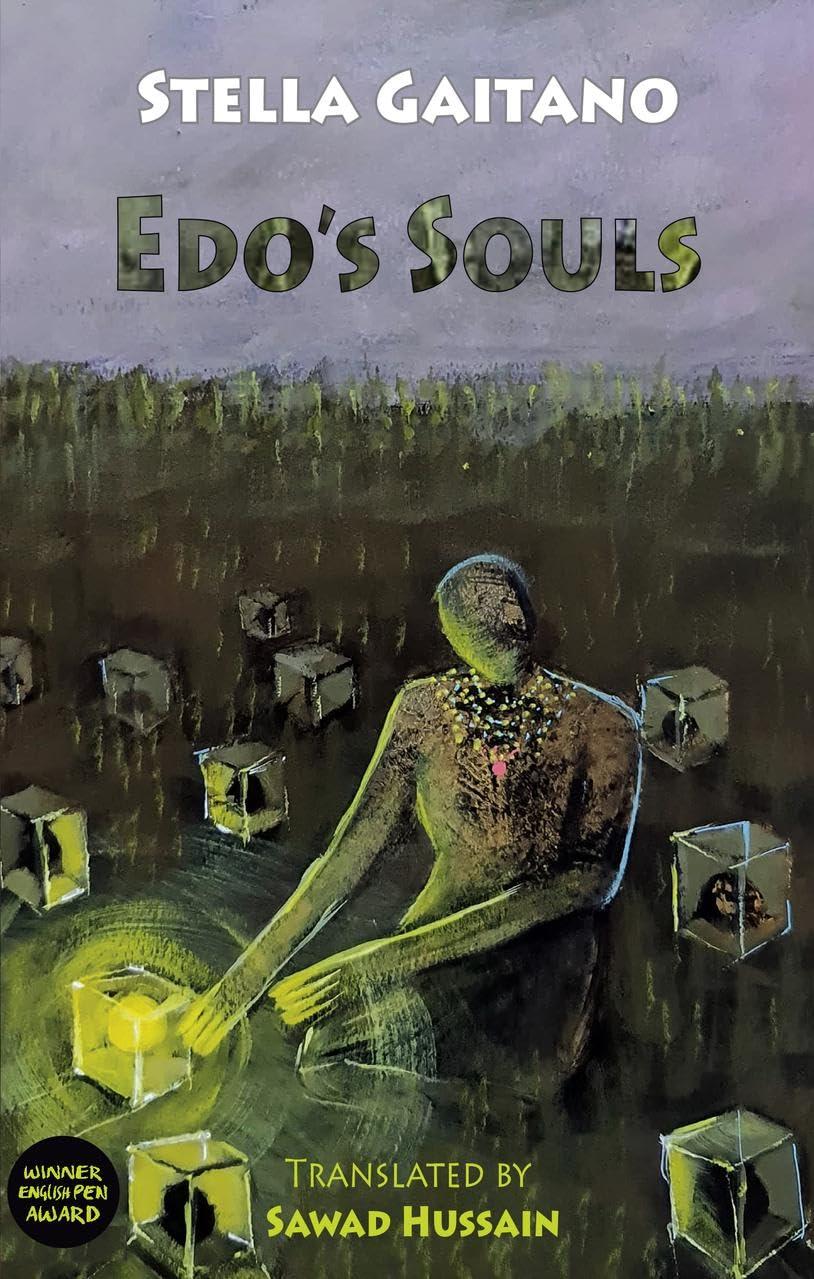
Stella Gaitano | Edo's Souls | Dedalus Africa | 260 pages | 12,45 EUR
Stella Gaitano's Edo's Souls is a novel that does not begin, but returns. On the very first pages, a woman's body lies - Edo, the first woman of the village to have a spectacular coffin "with a view" - and yet this death is not an end, but an opening. An opening into a world in which the dead do not disappear, but remain clinging to the walls, continue to act through bodies, return in the form of children, speak in dreams. "The stench of decay lingered for several years on the walls and in the cracks of the clay room, like the breath of a person with gum disease." Rarely has a novel made it clear so early on that memory is nothing abstract here. It smells. It sticks. It doesn't just rot away.
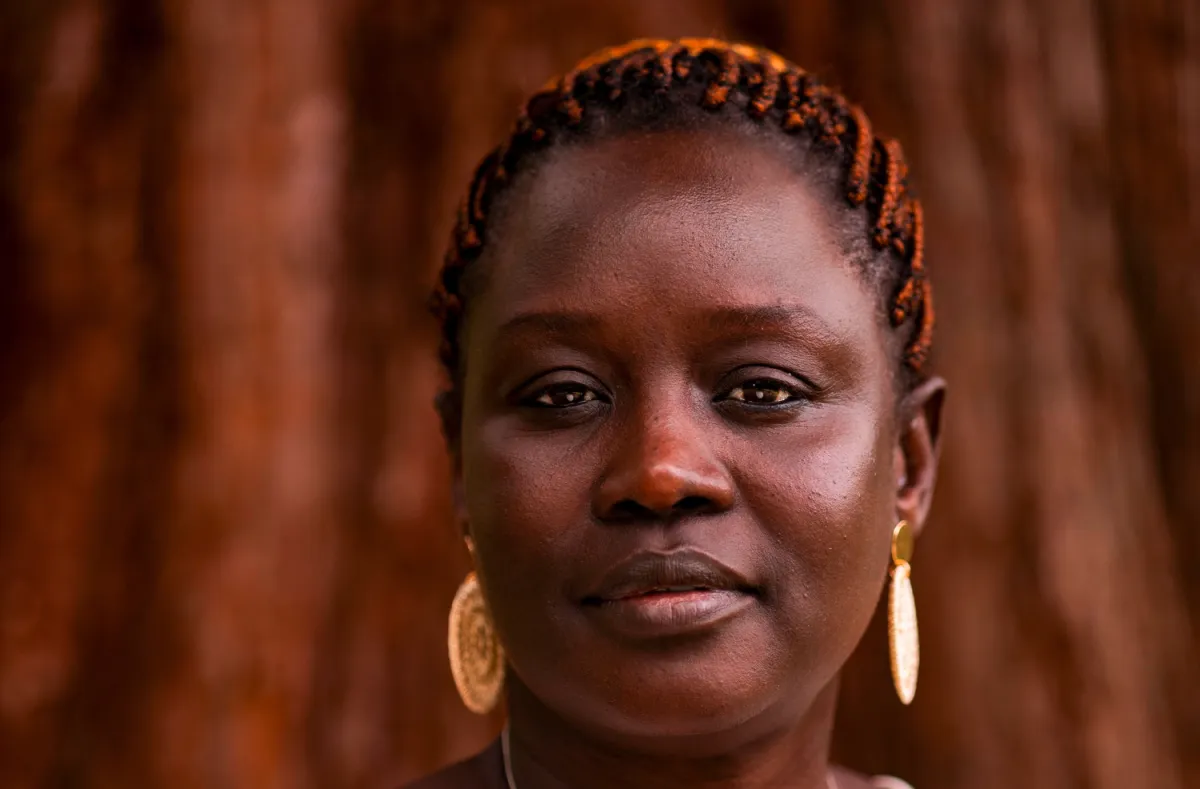
The fact that this novel is now being published in German, translated by Larissa Bender, after its publication in the original Arabic in 2020 and in English translation in 2024, is an event. Not only because Gaitano, born in Khartoum in 1979, grew up between the languages, cultures and histories of violence of the two Sudans, as the daughter of South Sudanese parents, writes in Arabic and has been living in Germany as a Writers-in-Exile scholarship holder since 2022. But also because it is precisely from this fractured sense of belonging that Edo's Souls gains its immense strength. Without ever becoming explicitly autobiographical, the novel is also an attempt to repair these ruptures: between north and south, village and city, body and history, Arabic written language and oral tradition, the ancestral world and the modern state.
Gaitano recounts the history of southern Sudan and Khartoum, from the 1960s to the mid-1980s, and yet, in view of the catastrophic war situation in Sudan currently, today the novel reads with an almost painful immediacy. The current war that broke out in 2023 is not the central focus - it can't be, of course, given the first publication of the Arabic original in 2018 - but its seeds are certainly sown here, recounted by Gaitano. A narrative of militarisation, mistrust, ethnic hierarchy, religious appropriation, impoverishment, internal migration, patriarchal violence and state brutality. The passage "Fear inevitably causes chaos. Everyone sought security by instilling fear in others" is not just describing a past civil war. It describes a political grammar that continues to this day.
And yet Edo's Souls is anything but a thesis novel. Its complexity lies precisely in the fact that it doesn't just draw one line, but a whole network of lines. Initially, Edo seems to be the central figure, then Lucy, then Marco, Theresa, Peter, later the children, the grandchildren, the ghosts. Perspectives change suddenly, almost playfully, as if the novel were playing a game of musical chairs: whoever is left without a chair is not eliminated, however, but invited to take over the storytelling. The result is a polyphonic family and social panorama in which no one is just a victim, no one is just a perpetrator, no one is just a symbol. Even the archaic village order does not appear to be a lost paradise. It is brutal, patriarchal, steeped in superstition and violence. And yet it recognises forms of balance that the modern state does not improve but destroys with prison, execution and bureaucracy, and which recall the fundamental critique of contemporary criminal law by the philosopher and sociologist Arno Plack.
The novel is particularly powerful where violence against women is treated not as a marginal theme, but as an order that inscribes itself in bodies. Martha Isai, "the woman in the village who was beaten the most by her husband", is marked by untreated fractures, scars and bruises. But Gaitano does not leave her frozen in the image of suffering. In one of the most liberating, wild scenes in the novel, Martha strikes back, beating down the man who has destroyed her for years, shouting to bystanders: "Why didn't you come to rescue me when he beat me every night?" This is not a sanitised scene of female emancipation, nor a neat, pedagogically sound moral lesson, but raw, funny, archaic and necessary physical counter-violence. A scene in which literature itself momentarily gasps.
At its core, this is a novel of bodies: birthing bodies, beaten bodies, circumcised bodies, migrating bodies, starving, desiring, remembering bodies. The circumcision scenes are among the most unbearable, precisely because Gaitano evokes rather than directly depicts them: knives, incense, women's hands, screams, blood. And later, the same violence returns in marriage, when a man treats the female body as property, suspicion and evidence. Such moments show how transgenerational trauma works: not as a psychological buzzword, but as a shock of repetition. A scream "from the depths of my memory" connects childhood, sexuality, marriage, pain and social control.
And yet Edo's Souls is not a novel of darkness alone. It is full of humour, full of grotesque exaggeration, full of joie de vivre. Lucy, the central character, is one of those literary figures that cannot be "understood" without diminishing her. She is a daughter, mother, lover, village child, city stranger, madwoman, saint, animal, landscape, survivor. Marco says of her: "Lucy wasn't just Lucy. She was a ghost inhabited by a whole tribe of ghosts." This is followed by one of the most beautiful passages in the novel: Lucy as mother, dead siblings, tree, thunder, rain, wind, scent of the earth. It is an almost cosmic abundance, but - born of loss - never kitsch.
Lucy's motherhood in particular is ambivalent. It is both caring and imprisoning. She gives birth to child after child, as if giving birth to her mother's dead. She watches over the children with a fear that is both love and curse. This fear is later named by Theresa: Lucy locks herself "in the cage of strict motherhood", in honour of her mother, whose own motherhood remained incomplete. This is great literature because Gaitano does not sentimentalise motherhood. She shows it as a cosmic force, a social task, a physical exhaustion, a psychological burden and a historical fantasy of reparation.
Equally striking is the transition from village to city. Khartoum does not appear as progress, but as another foreign country. Lucy's first shower is like drowning while standing up. The city is water flowing from pipes, alcohol in colourful bottles, men's laughter, narrowness, dependence. "I was just someone who had fled with her from the darkness of war, only to throw her into the darkness of foreignness," she later says. This is one of the sentences in which the novel unfolds its full harshness: migration does not simply save. It can also break, shatter, tear people from the earth in which their dead, their names and their senses lie.
Gaitano interweaves great political history with seemingly small scenes. The government first arrives in the village with a mosque and military trucks. Names are changed. Religion becomes a tool of power. Soldiers, insurgents, spies, torture and curfews seep into everyday life, marriages, friendships, births, school decisions. When the novel finally mentions the year 1984, it is almost a shock, because what we have read up to that point has been set in a mythically extended time. Suddenly history becomes datable: Sharia law, shortages, inflation, alcohol bottles being smashed on Nile Street, "a mixture of explosions and the hissing of snakes". The political is never a commentary here. It is the prevailing weather.
Larissa Bender's translation is due great credit, finding as it does a most viable German language for this. She strikes a balance between poetic compression and analytical clarity, between oral narrative movement and literary composition. Some images seem as if they were made of clay, blood, rain and mockery. Others suddenly cut brightly through the text. This language does not explain, it suspends. It elicits laughter in one sentence and a shudder in the next. This is precisely why the novel remains true to its subject matter: it tells of a world in which there is no neat separation between beauty and cruelty.
Perhaps this is the greatest achievement of this novel: it refuses reassuring order. It deals with war, but not just war; with women, but not just women; with Sudan, but not just Sudan; with tradition, but not nostalgically; with modernity, but without a belief in progress; with religion, but without cheap accusation; with family, but without idyll. It touches on criminal law, revenge, slavery, circumcision, education, colonial and military history, animism, Christianity, Islam, migration, poverty, desire, forgiveness, betrayal and the question of whether a family can be created when no one is born from the same womb. "The world is like a big belly in which we are all brothers and sisters," says one character. One could easily romanticise this sentence or attribute it to the Ubuntu philosophy of southern Africa. The novel does not, however. It knows that this belly also gives birth to war.
Edo's Souls is therefore a deeply moving novel, but not an easy one. It demands concentration, dedication and a willingness to tolerate irritation. Its narrative style is circular, not linear; its characters are larger than psychological profiles; its images are sometimes almost too much, because they carry a story that is also too much. But this 'too much' is precisely the novel's truth. Stella Gaitano writes against disappearance: against the disappearance of the villages, the names, the women's bodies, the dead, the southern voices in the Arab-influenced north, the past in the explanations of the present.
Ultimately, this book leaves behind more than just a story. It leaves a scent, a rhythm, a chorus. The dead are not dead, the living are not unscathed, the children are not immune from what happened before them. And yet this smile remains - golden not despite the wounds, but precisely through them. Not as a sign of healing, but as something that outlasts decay, war, guilt and birth. A smile like the crack through which the light falls - just as Leonard Cohen conjures up in his song Anthem: "There is a crack in everything / That's how the light gets in."
+++
Further reading on Sudan on Literatur.Review:
Imaginary Lives in Sudan’s War Zone
Recent Sudanese novels highlight the lives of those caught up in Sudan’s internal wars. Literature reflects the resilience of the Sudanese people and provides a background to the horrific fighting and consequences unfolding - by Leila Aboulela
The cat outside the rest room
Even before the 2019 revolution and the current civil war, the Sudanese were fighting against their ruling elite - a literary reportage by Mamoun Eltlib
Did you enjoy this text? If so, please support our work by making a one-off donation via PayPal, or by taking out a monthly or annual subscription.
Want to make sure you never miss an article from Literatur.Review again? Sign up for our newsletter here.