



Crime fiction and multiculturalism

Moritz Föllmer studied history, philosophy and constitutional law in Bonn, Göttingen and Paris. After completing his doctorate in Berlin, he was an assistant there, later a fellow in Chicago and a lecturer in Leeds. He has been Associate Professor of Modern History in Amsterdam since 2011. Research visits took him to Hamburg in 2021 and 2023.
He researches nationalism, urban modernity and individuality in the 20th century with a focus on Germany. His work focuses on elites and nationalism around 1900, the Weimar Republic and the history of individuality up to 1961, highlighting the fact that National Socialism also promoted certain forms of individuality.
"Bradford...it's a very beautiful city but a hard one too", said singer Justin Sullivan in 1984, "it's kind of died". Deindustrialisation had hit the hometown of his punk rock band, New Model Army, earlier and more severely than other British cities. Nestled between the hills and moors of West Yorkshire, Bradford had prospered in the 19th century thanks to textile production and trade, attracting not only landless Irish settlers but merchants from continental Europe, often Jewish, who had sandstone warehouses built in the district now known as Little Germany. In the modernist 1960s, concrete buildings, arterial roads and high-rise social housing sprung up, with the city hall operating on the principle of continued economic growth and a monocultural society.
However, even then a new wave of immigration was fundamentally changing Bradford, amounting to a kind of urban planning from below under increasingly difficult economic circumstances. Male factory workers, and soon entire families from the Indian subcontinent settled mainly in the Victorian terraced houses around the city centre, while the suburbs and villages still belonging to the Bradford Metropolitan District (such as Haworth, made famous by the Brontë sisters) remained predominantly white. Although there were Hindus and Sikhs among the immigrant families, and a small Afro-Caribbean community, Muslims were by far the largest group, most coming from Azad Kashmir in north-eastern Pakistan.


Muslim protests, Muslim middle class
This has made the now post-industrial city a testing ground for British multiculturalism since the 1980s, and in particular, its treatment of Islam. The public burning of Salman Rushdie's novel The Satanic Verses in 1989 and the riots of 1995 and 2001 made negative headlines both nationally and internationally. Since then, the literature of religious studies and sociological and contemporary history has been examining the motives of the Muslims involved. They saw their peaceful or violent protest as a continuation of a local activism that had initially been triggered by racist attacks and right-wing extremist agitation. In this respect, they defended their religious and ethnic identity against the writer Rushdie, perceived as blasphemous, and later against the police, whom they considered hostile.
In doing so, they invoked local politics, which in the 1980s had committed to the preservation of particular identities and thus tied in with a British tradition of multiculturalism. The New Labour government responded to the riots with a mix of a national desire for integration, efforts at economic regeneration and rhetoric around consumerist diversity.
The post-industrial city of Bradford has been a testing ground for British multiculturalism since the 1980s, and in particular its approach to Islam.
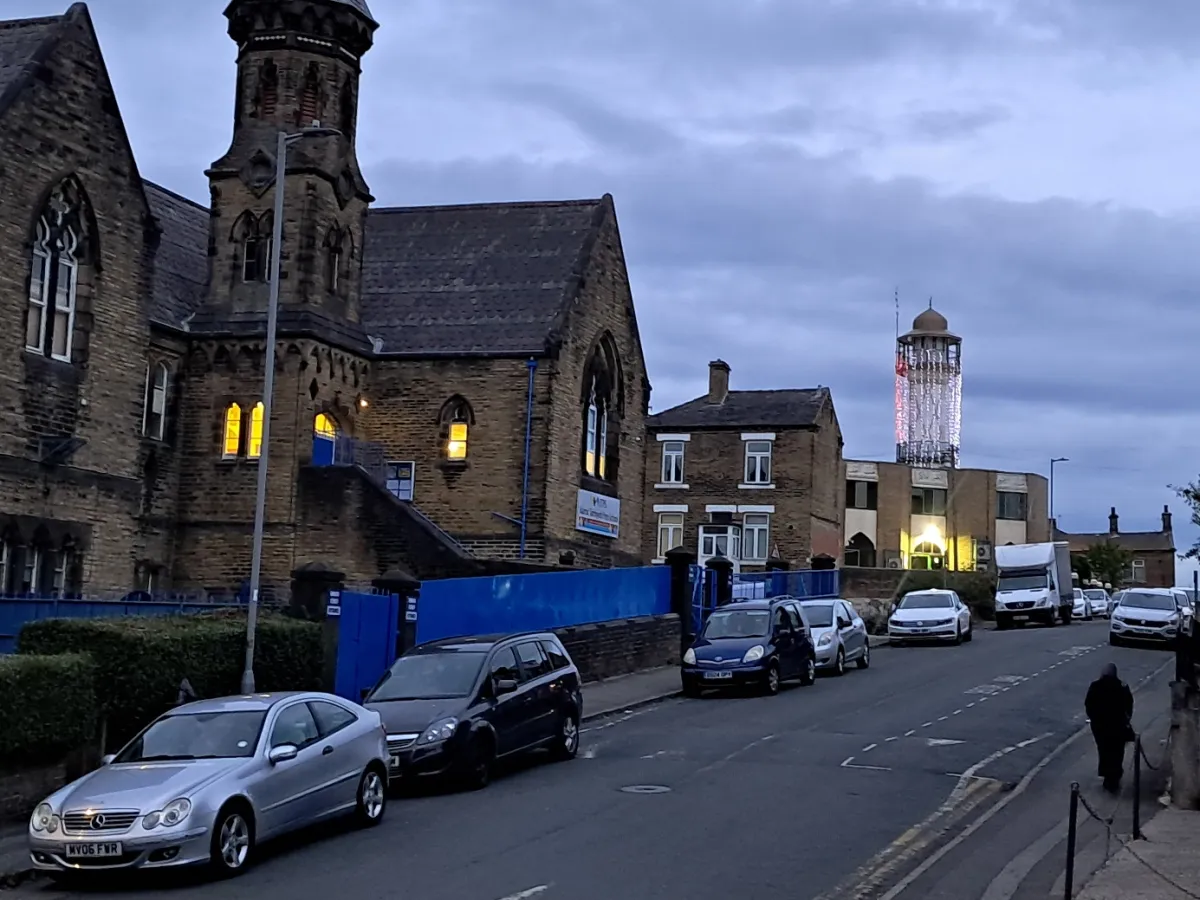
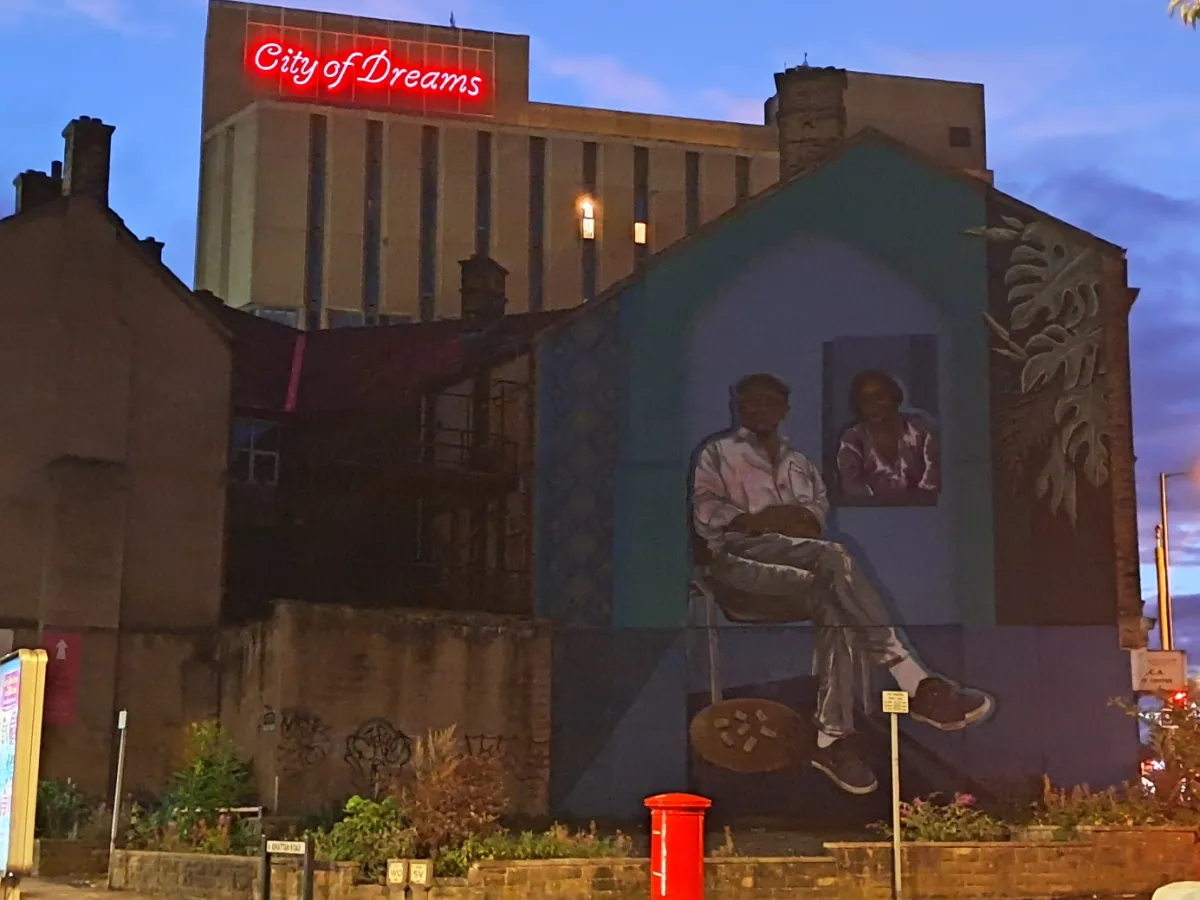
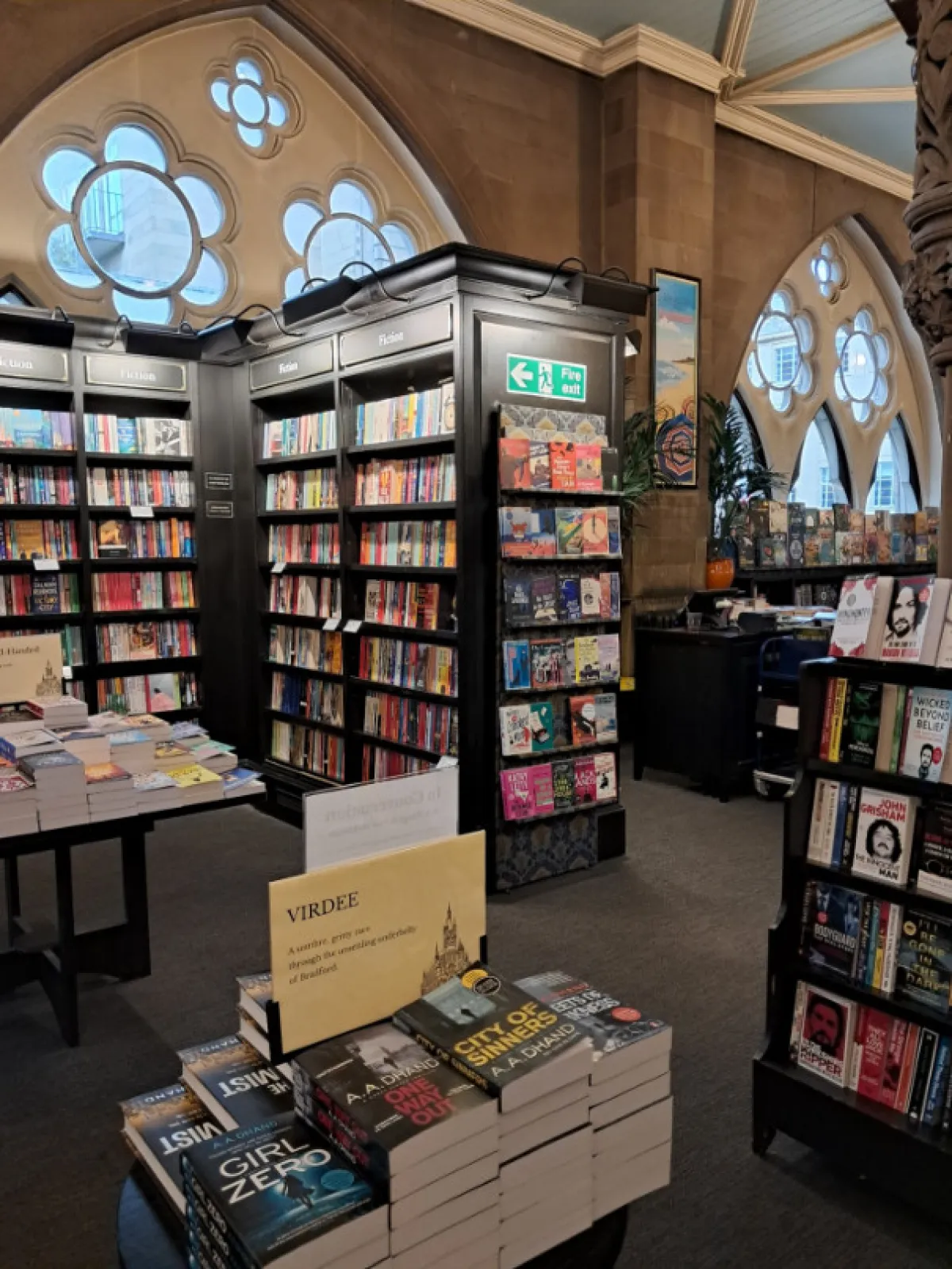
Walking through contemporary Bradford, which in 2025 was UK City of Culture, commands respect for the dynamism of this urban society. Some 19th century textile factories stand empty, others have since been converted into apartment complexes. In the square in front of the huge Victorian town hall, the atmosphere is as relaxed as it is in the new Broadway shopping centre, in the streets around the university and in the historic Wool Exchange, now home to a bookshop and café.
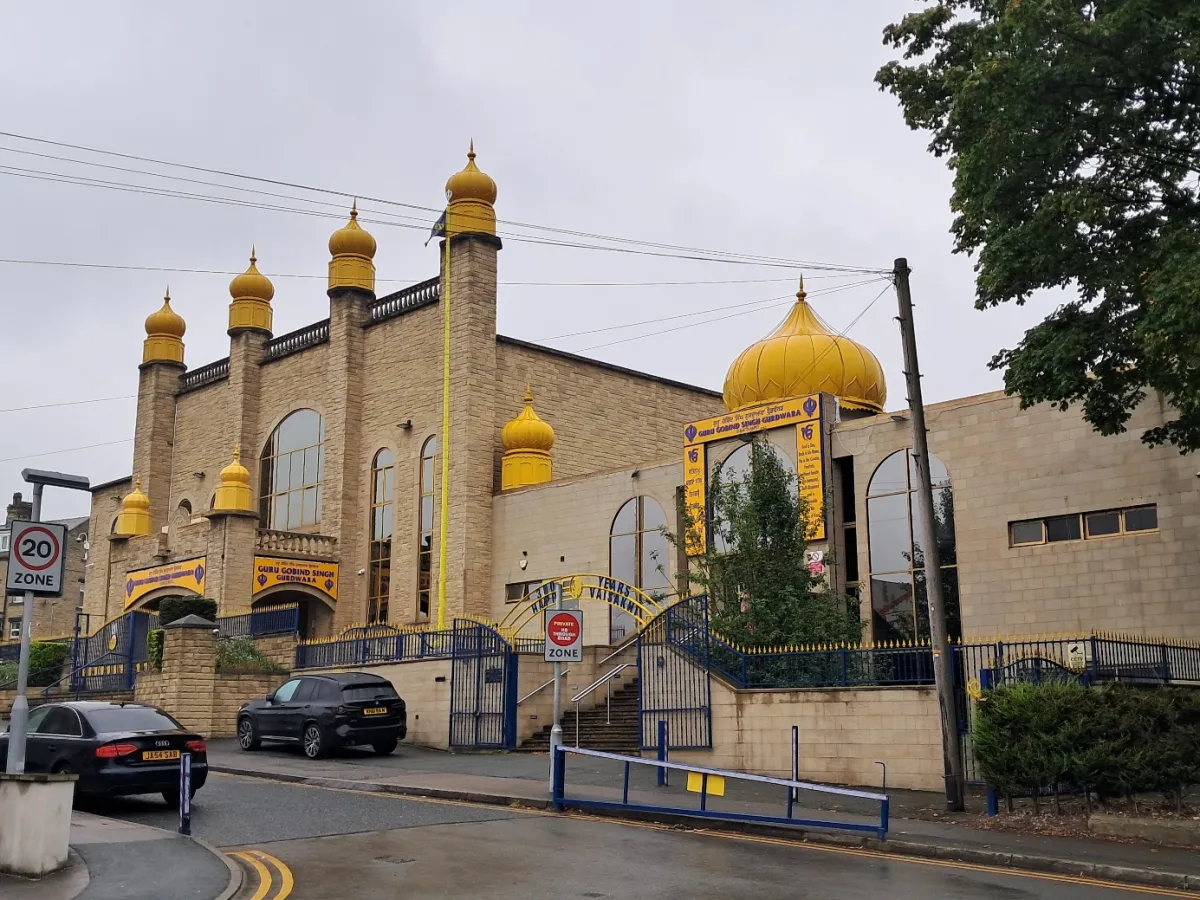
Despite the evident poverty, what is striking is the presence of a self-confident Muslim middle class in one of the most business-friendly cities in the country. In addition to various mosques and temples, you can walk past "Islamic lifestyle" shops and enjoy a desi breakfast in the popular "J'Adore", whose somewhat pretentious name, and prices to match, fit seamlessly into the consumer world of the English middle class. While the riots of 2001 were directed against a supposed "white" BMW garage in Manningham, north of the city centre, people soon gave up counting the German cars parked there.
A.A. Dhand and Saima Mir
In the land of Sherlock Holmes and Miss Marple, this new self-confidence includes homegrown crime novels. A.A. [Amit] Dhand and Saima Mir deliberately set out to do something about the cultural underrepresentation and widespread stereotyping of British Asians. They drew on observations they were able to make in their parents' local shop, and later as, respectively, a pharmacist and former local journalist. Dhand, agnostic son of Hindu parents, still lives in his home town. He takes real-life buildings, streets and even restaurants as his starting point, so you can use his books as a literary travel guide. Mir, who gained notoriety with an article detailing her journey from two marriages and divorce to becoming an "emancipated Muslim woman", has lived in London for some years. She writes in a more detached style, less focused on Bradford specifically, which is nevertheless easily identifiable.
Both A.A. Dhand and Saima Mir proudly acknowledge their origins, but as academically educated representatives of the second generation of immigrants, they are critical of the pressure to conform exerted by conservative families and closed communities. They culturally enhance the city, still considered impoverished and dreary, whilst simultaneously casting it in the gloomy light and moral hinterland of crime novels. Four of Dhand's six books revolve around Detective Inspector Hardeep "Harry" Virdee, who, typical of the genre, only loosely follows the rules of police work. Central to Mir's two novels so far is Jia Khan, whose father runs a clan-based criminal empire until she takes it over herself - a constellation that has unsurprisingly given rise to comparisons with Michael Corleone in The Godfather.
Alienated Sikh: Detective Inspector Harry Virdee
What picture of multicultural society do the two crime writers paint? Harry Virdee is Sikh, but married Saima, a Muslim. His father disowned him for this, although it later becomes clear that behind his rigid attitude lie traumatic memories of expulsion and flight during the partition of India in 1947. "I wanted to write about monocultural meeting multicultural", says Dhand, referring to an important motivation behind his novels, which in many respects tell of a world of mutual isolation. Multiculturalism, for Dhand, takes place in Harry and Saima's home. Harry is no longer religious, but still adheres to the custom of touching, if not his mother's feet, then her slippers every day. Saima prays, celebrates the end of Ramadan and values a combination of symbols and rituals from both religions. They have named their son Aaron and are raising him as a middle-class "British boy".
Harry Virdee has no time for diligent investigative work because the fragile social coexistence in Bradford is in constant danger of being blown apart. Following the murder of a dubious Muslim businessman, far-right politicians are fanning the flames of latent ethnic conflict in an attempt to bring about a repeat of the 2001 riots. His independently-minded niece is found dead, so he must stop his criminal brother from seeking revenge. A serial killer targets South Asian women who have entered into relationships with white men. A terrorist group holds worshippers, including Saima Virdee, hostage in a mosque, threatening to detonate a bomb. To ward off these dangers, Harry navigates a world of white prostitutes and Muslim cab drivers, Catholic nuns and sexist car mechanics. He reactivates his rusty Punjabi to speak to South Asian families, occasionally ventures into the blocks of social housing, where white youths at best tolerate a Sikh as a shopkeeper, and enters into a pact with the dubious Home Secretary Tariq Islam.
Muslimische Modernisierin: Clan head Jia Khan
Saima Mir's protagonist Jia Khan is working as a criminal defence lawyer in London at the start of the novel - "twice as good as men and four times as good as white men". With an Oxford degree, Savile Row suits and a vegan diet, she has distanced herself from the world of her father and patron, a devout Muslim from Peshawar who rose to become king of the Bradford underworld in the 1970s. But she has also left her husband Elyas, a journalist, and her son Ahad. Jia initially only returns for her sister's wedding, but as a result of her father's murder, she takes over the chairmanship of the jirga, the assembly of elders with its own rules. She must now hold the clan together with both warmth and a cool head, defending it first against Eastern European drug dealers and then against a conservative Muslim woman with rival ambitions.
Jia becomes "the Khan", shaping the transition from the traditionalism of the elders to the syncretism of the younger generation. She hires technologically savvy British Asians to bring the established drug empire into the digital age and link it to the development of software and financial products for the global Muslim market. At the same time, she is part of a complex middle-class nuclear family, as she, her husband and her son grow closer again, though are never able to overcome the emotional distance and tension resulting from their separation. Jia navigates between different worlds: She has read feminist literature and prays daily, drinks both English tea and chai with cardamom, visits Eastern European families grilling sausages and celebrates her own culinary traditions. And she confidently confronts members of London's upper class because she understands the strengths of her own community with its Pakistani and northern English roots and anti-imperial energies.
Bradford and multiculturalism
The Bradford conflict over The Satanic Verses arose not least from the opposition between the cosmopolitan Salman Rushdie's postmodern-hybrid understanding of culture and multiculturalism as the state's protection of its own identity, as demanded by local Muslims. A.A. Dhand's and Saima Mir's novels open up a different and more contemporary perspective. They present Bradford as an urban society that is as fractured as it is dynamic and as a coexistence of different cultures that can hardly be influenced institutionally - although this coexistence is faltering in the outlying districts and suburbs and threatens to explode latently even in the city centre.
At the same time, they point to shifts from the preservation of the respective tradition in a foreign environment to the self-confident combination of different influences and identities, to the crossing of boundaries in the world of life and to a stronger role for women. Dhand and Mir portray multiculturalism understood in this way in literature, represent it biographically and publicly advocate it. In this respect, they do not "just" write crime novels, but are intellectual voices of British Asians from a supposedly isolated provincial town in northern England.
+++
Did you enjoy this text? If so, please support our work by making a one-off donation via PayPal, or by taking out a monthly or annual subscription.
Want to make sure you never miss an article from Literatur.Review again? Sign up for our newsletter here.
The essay by Moritz Föllmer originally appeared at Geschichte der Gegenwart (Contemporary History). We gratefully acknowledge the permission to republish.