



Wishes Do Come True
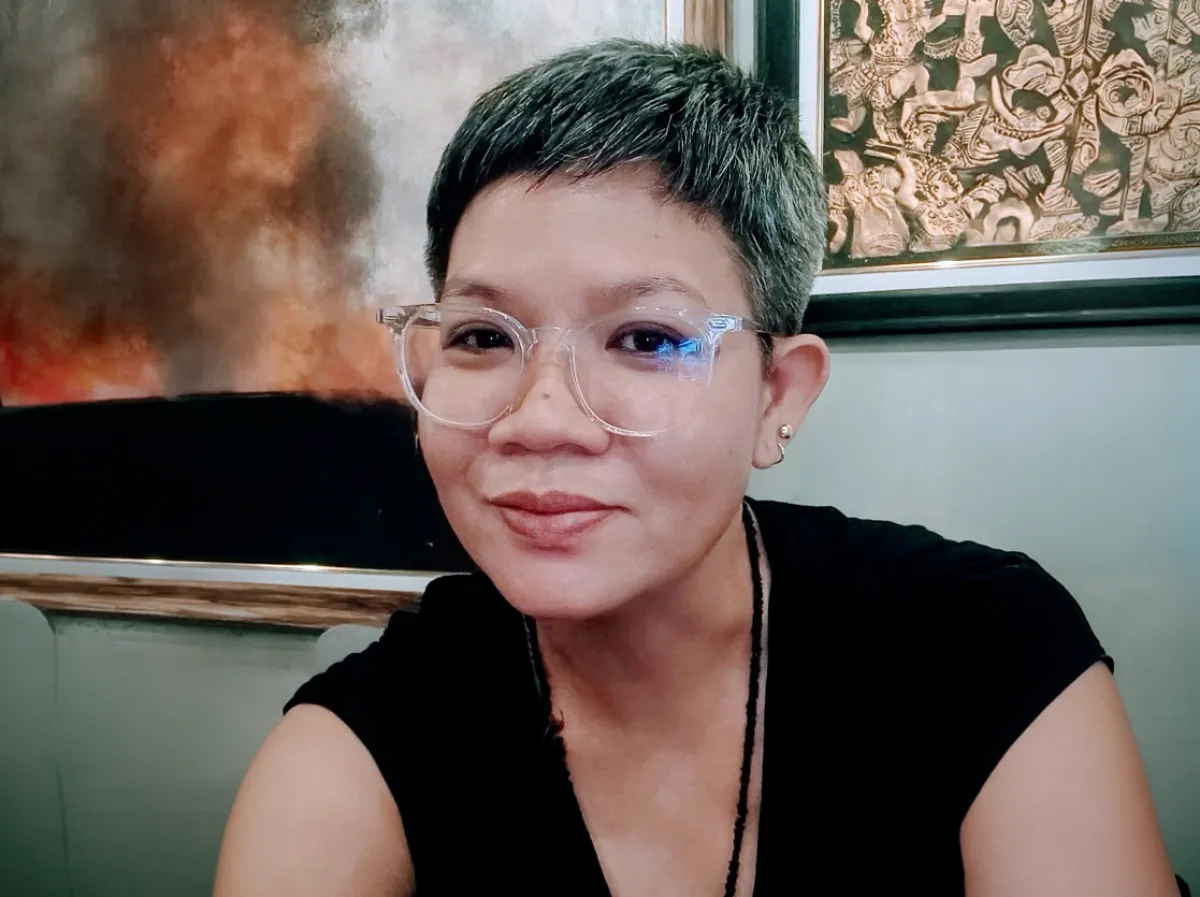
It's summer in the global North and winter in the global South. Reason enough to bring summer and winter together on Literatur.Review in August and publish previously untranslated or unpublished stories from the North and South of our world.
Mia Tijam was born in Iriga City and raised in Naga City, Bicol. She studied at the University of the Philippines Diliman and is a fellow of the Silliman University National Writers Workshop (2007) and the Women’s Annual Writing Workshop (2024). She writes award-winning poetry, nonfiction, and short fiction.
She has worked as an editor and literary judge for ANI, Philippine Genre Stories, and the National Book Awards, and is known for Philippine speculative fiction. Her debut Flowers for Thursday was a National Book Awards finalist; its 2024 bilingual edition became the first English–Rinconada short fiction collection in Philippine literature. Her latest book, The And That Was, was published in July 2026.
VII.
She almost looked like a China doll sprawled on the sala floor. With her curly brown hair, full red lips, porcelain complexion that she got from her mother, and the high forehead, button nose and the slanting brown eyes that she got from her father. She was alone in the living room, humming a senseless tune under her breath as she bent over two fairy tale books and her scattered toys, drawing on a coupon bond with a black crayon.
Her hand paused as she heard a sob from the kitchen, and she stopped humming. It seemed to be the only sound she had heard in their house for a while now. There were no more raised voices or happy squeals of laughter. It was the only sound that could be heard in their house this day, after hours of hushed voices and murmurs that came with pats on her head. She heard another muffled sob and her hand held the crayon tighter.
After forty days, she finally felt her daddy’s absence.
At that moment, she completely understood what had happened— that because her daddy’s heart had stopped beating then he would never come back. She wished— she wished that things would be the same way they were before, that things would be different from the way they were now. She wished that her daddy was still here.
She felt strangely ill, feverish and afraid. She wanted to cry and to have her daddy, to have someone, hug her. She opened her left hand, letting the black crayon slip from her tingling palm. She did not see how the lifeline in her palm had suddenly broken, began once more on a faint line. She stood up, brushed her pink dress into place, and walked towards the hallway.
I stepped out of her shadow and bent to look at what she drew on the coupon bond. Her mother peered through the kitchen door and saw me. She walked towards me and looked over my shoulder to look at the drawing. She sniffled and patted my head. I turned my head to look at her and smiled. Her mother smiled for the first time, but wanly, and then walked towards the hallway, too.
*In Filipino (more specifically, in Tagalog), “Ate” (pronounced roughly ah-teh) literally means “older sister.” It is also a polite and respectful form of address for an older female person with whom one has a friendly, familiar, or family-like relationship.
“Weren’t you just in the sala?” her mother asked as she saw her daughter in the hallway walking towards the bedroom she shared with her older sister, her Ate* Lynn. Her mother placed a hand on her forehead in confusion and exhaustion as she sniffled once more, “I saw you there, drawing.”
She turned around to look at her mother. “No, Mommy, I’m here,” she mumbled, and her small, sad figure turned around to walk away.
Yes, I echoed, I’m here.
I looked at the drawing that she had left unfinished. It was a drawing of their family and their house. One of the faces with broken lines almost looked like her, but she was drawing me.
 Rosarium
Mia Tijam | The And That Was | Rosarium Publishing | 148 pages
XIV.
Their lives had not gotten better after her daddy died.
Her mother was always sad and struggled to pay off the debts from the business her daddy left, to keep their family surviving, to keep them all together. Her Ate Lynn was always there for their mother and had grown old and tired beyond her years as she helped their mother take care of their family, while her older brother had gone off to the mountains and became a guest in their lives. Sometimes they would receive letters from him, one saying that he had married a girl in the mountain, and another, much later, telling them that his wife and child had died.
And through the years, she grew up restless, withdrawn, and quarrelsome. She would often throw tantrums and scream until she was hoarse when things would not go her way.
Sometimes I would smile on behalf of her, to make her mother and her Ate Lynn happy because she never did. When she finally noticed that they rarely smiled at her, she began thinking of what she had become as she got older. It seemed that no one liked her. She wished she were different. She began looking inside herself and then outside herself, outside, at other people.
*A Barangay Hall is the administrative office and seat of government of a barangay—the smallest local government unit in the Philippines, comparable to a village, neighborhood, or district.
Then, one day, she took a classmate home with her. She said that her classmate’s father was beating her. She wanted her mother to come with her to the Barangay Hall* to report it. She said that it was wrong and that something should be done.
She saw and found more and more wrong things outside. She joined rallies, screaming outrage and injustice, screaming so people would hear, but it seemed no one wanted to listen. She wished she could do something, something more, something to make the wrongs that she saw better.
*In the Philippines, the term “red book” is sometimes used as a general reference to communist or left-wing political literature.
One day, she simply packed her bags and told her mother that she was going on a two-week immersion to learn more about changing how the country was and how life was, to go where she could really help, and to see change. Her mother tried to stop her but could neither convince her not to go nor tie her down. Later, her mother would say that there had been no warning that her daughter had felt like that, or that strongly. No tell-tale signs of red books* being read. No secret after-school meetings. No voiced thoughts on politics. Her daughter would always come home on time, do her chores and assignments, talk to her family, and laugh with them— very much the desired youngest daughter and younger sister. There was no warning that her child was becoming the child of a cause.
*The male counterpart of “Ate” is “Kuya,” which means “older brother” and is also used as a respectful form of address for older men.
Her Ate Lynn tried to go after her on the morning she left, calling her name over and over, but she just smiled and waved until the jeepney she was riding disappeared from view. She disappeared from their lives, going off into the mountains, too, like her Kuya*. Her first mountain was called Sagrada, this barangay of corn fields in Iriga. Ta’di na naman su mga malang puputi– the fair ones have come again, as she and others like her would be said of among themselves by the people who were as brown as old tree branches watching them trooping in lines.
The times that her mother thought that she saw her in the grocery store or waiting outside their house for her, or the times her Ate Lynn thought that she saw her in her school or in their room, or all those times that they thought she was with them, they were really seeing me.
XXI.
Then the letters came, written in yellow paper and sent in plain white envelopes stamped from different towns. The letters would always say that she was all right, that she was happy wherever she was, doing what she did. She would always tell her mother and Ate Lynn not to worry.
She didn’t say that once she wished that she didn’t have to shear off all her long brown hair because it was infested with lice. She didn’t say that sometimes she wished she were eating better food or sleeping in better places. She didn’t say that she wished she and the people with her didn’t have to flee from the soldiers pursuing them, didn’t have to run for their lives. After all they were not doing anything wrong, they were only helping. And that sometimes she wished that she didn’t have to do some of the things that she had done. Most of the time she wished that wherever she was, life was really changing and it was getting better.
She didn’t say that she wished that she would stop feeling as if someone or something was running after her, trying to catch up to her, calling her. Her letters didn’t say that when she really missed her mother and her Ate Lynn, she wished that she could just go home.
She wished, but she stayed and she never complained. And the more that she wished, the more that people who knew her, those she had left behind would catch a glimpse of an older her somewhere else, doing something else, sometimes. When they would see me, her mother and sister would sigh in relief, begin to smile, blink, and the next time they looked, I would be gone, too.
*The word “kaingin” originates from the Philippines and refers to the practice of clearing forest or brushland and then burning the vegetation to create land for agricultural cultivation.
Years later, her feet got badly infected while she was helping the kaingin* farmers and she was sent home to get the proper medical treatments and to heal. She arrived at their house one morning, just before dawn, limping. Her mother and her Ate Lynn had cried in shock—unbelieving that she was really there— and then in worry upon seeing her feet. But they were happy, happy that she was home.
She was happy to be home and I was happy to return to her shadow. She was happy to stay at home, to eat and sleep in peace, to cook for them, to talk to them about their lives but never about her life, and to do some of the things that girls her age would do, like having coffee at Starbucks or going to the mall. After several months, they celebrated her 18th birthday and her mother began to hope that she would stay. One night, they were both lying down on her parents’ bed and her mother said as much.
“Maybe you can go back to high school and graduate, or if not, enroll in a culinary school since you love cooking so much,” her mother suggested to her.
She quietly stood up and left the room.
I returned, hugging her mother. If only I could wish, I would have wished that I could stay home, too, I said, but I believe in what I’m doing and I know the consequences. Her mother had only sighed and nodded.
When they woke up the next day, she was gone.
As time passed, she would come and leave like lightning, saying that she couldn’t stay, saying that it wasn’t safe, saying that she just wanted to see them. As time passed, her mother and Ate Lynn had learned to get used to her long absences, and fleeting presence.
Then one day what they wished would not come true did, and I came to them at the hour that she would usually come home. Her mother thought I was she, happy at first, then afraid when she finally saw that I wasn’t her daughter. She did not ask who I was, what I was.
“Tell me,” her mother asked, “Tell me she’s alive.”
I could not, so I shook my head. Her mother’s face showed shock and then she flinched as something deeper gouged her. I could not even begin to imagine how her mother felt, wondering if what had raked her raw would someday give way to acceptance. She was silently asking how her daughter died. I wanted to tell her that her daughter did not die alone, that I was with her.
But I could not tell her.
I did not tell her that she was just walking, as if taking a stroll in the fields, turning her head up to the sun and closing her eyes against its warmth. That she was smiling, then her eyes had snapped open, and the smile was wiped off her face when her companions screamed at her to run. How she ran, wishing for cover in the fields under the sun, hearing only her breath, deaf to the shouts and sounds of gunfire.
I did not tell her how the smell of gunfire became a stench, what pain she felt when the bullets went into and through her, that she felt as if she were burning, and that she couldn’t breathe. She did not even feel the pain on her head or knees when she fell. Her hands weakly flew to her chest as she looked at where she was bleeding. She kept on gasping for breath as blood spurted out of her mouth, crying, moaning a tune of pain.
How afraid she was. I did not tell her that she wished that things did not turn out that way, that she wished that her mother and her Ate Lynn would not see her like that, that she wished someone was with her.
I did not tell her mother that I saw her like that. I did not tell her that I was with her daughter, but I could not do anything for her. I did not tell her that she died wishing that the tearing agony would go away, but it never did. She, like everyone else, was only granted 21 wishes. Her dying wish was one more than what the lines of the palms would allow.
If only I could wish, I would have wished that among all her wishes, that last come true.
Her mother was wondering how she died but I would not regret not telling her. Later that day, people came to their house in Quezon City and told her that her daughter was killed along with others when government troops overran a suspected New People’s Army camp. Her mother went to that coastal town in Bicol the next day, taking the bus, to claim her daughter’s body.
She found her lying in a wooden coffin in the municipal hall of that town, dressed in someone else’s pink dress, looking once more like a sleeping China doll. Strangers stopped to look in and then moved on. Some of the villagers told her that they knew her daughter and that she helped them. She had taught them about herbal medicine, something she had learned from her mother.
“She was just so young,” her mother later lamented. It was the same lament of the soldiers after. They were all too young. What were they doing there?
She had died just before she turned 21.
I did not tell her mother that at the moment of her daughter’s death, I felt this raging bafflement. She just wanted to make life better. And the soldiers thought that they were just making life better, too. They were both doing what they thought was right yet why did it end so wrong? And if only I could wish, I would wish that things would have ended differently and that people would not forget her and all those other young people, too young like her, nor feel this sad futility.
If only I could wish, I would wish that my wishes would come true.
I.
We are all born because of a wish.
She was born because her mother and father, both at 35, wished their love to be made into flesh, so happy to have found each other after each of their marriages failed. She had a sister from her mother and a brother from her father and everyone in her family loved her. Everyone in her family would live long to see her go to school and finish college, have good friends and a good job, meet and marry the love of her life and have her own family. She would give her parents grandchildren and her brother and sister nephews and nieces to spoil. She would go through the usual problems in life, but she would live long and be happy.
She would not wish for anything more.
But then there are those who are born because people wish for their worlds to be just different from as they were— to be someone else or to be somewhere else. That is when I and the others like me are born, when people wish for what is deemed the impossible.
Each time they make this wish, uttered in the quietest of thoughts, it becomes etched into the lines of their palms, changing the lines of their lives and the intertwining lives of people around them in the course of every seven years. That is when you begin seeing us, seeing the double of the people you know then, or of how they would look if they were a little changed or older.
The more that these wishes are made, the more that we are seen.
Her loved ones would see me when they would wonder sometimes where or how she was, wonder how it would have been for her if she or her life were different, when they really missed her, when they were reminded of her, or when they wished that she were still alive.
But before people make their wishes, I and the others like me live in the shadows, in your shadows. After all, we are not born to take over your lives — just to be the shadow of what might have been, of the what if, of that wish that someday you will make. We are not born to make wishes. We are born because you make wishes. We are born so that your wishes would come true. And in the end, we are left to remember your wishes.
I lived in her shadow. I will be born someday and step out of her shadow because someday she will make that first wish, too. Then she will keep on wishing, like everyone else. And wishes do come true.
+++
This story first appeared in Mia Tijam's collection The End That Was, published in July 2026.
Our sincere thanks to the author and publisher for allowing us to share it with our readers.
Did you enjoy this text? If so, please support our work by making a one-off donation via PayPal, or by taking out a monthly or annual subscription.
Want to make sure you never miss an article from Literatur.Review again? Sign up for our newsletter here.