



The Water Knows
It’s summer in the Global North and winter in the Global South. Reason enough for Literatur.Review to bring summer and winter together in August and publish previously untranslated or unpublished stories from the North and South of our world.
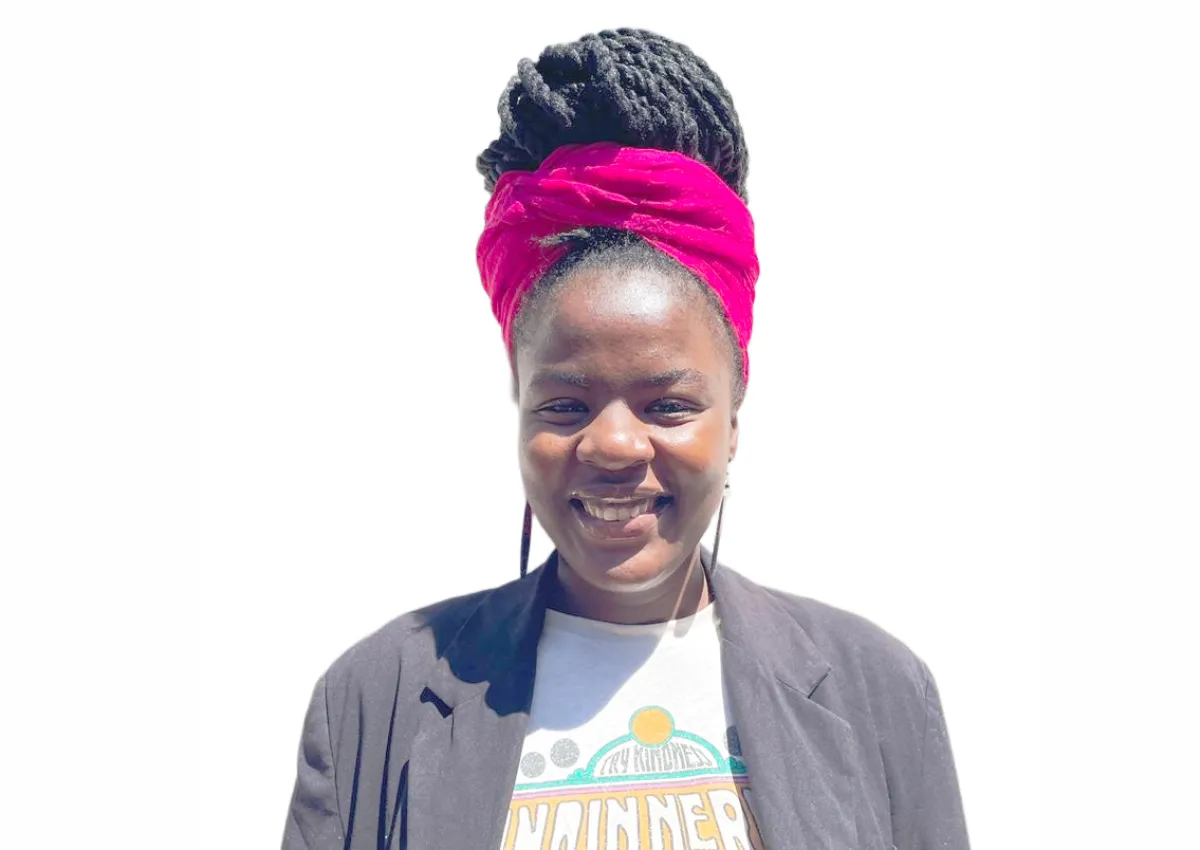
Eunice Tayamika Maganga is a Malawian creative writer, journalist, and radio producer based in Lilongwe, Malawi. She holds a degree in Arts Education from Mzuzu University and works at Story Club FM as a radio presenter, producer, and marketing officer. Through her work, she develops and hosts narrative-driven programmes focusing on arts, culture, and social issues.
Alongside her broadcasting career, Maganga is an active creative writer whose work explores cultural issues, African literature, and humanitarian themes. She is an alumna of the CANEX Africa Creative Writing Workshop, Algeria (2025). Her poetry has been published in Poda Poda literary journal, featured in the Mundanity issue of December 2025, and she has forthcoming work in an upcoming anthology.
Her writing explores grief, womanhood, survival, and becoming. When she is not behind a microphone or a notebook, she is probably rereading The First Woman by Jennifer Nansubuga Makumbi.
There was no escaping the fiercely raging waters. They struck Tikondwe’s lithe body so viciously, she almost gave out. Still, she held on to the branch for dear life. She had to get to her baby no matter what.
Splash!
The roaring waves punched into her, weakening her grip. Her hands slipped. She wept with the skies. A heavy helplessness washed over her. Who would hear her from here? She looked to the heavens, to God, for an answer. Nothing. No one. It finally dawned on her. This was her punishment. It was she who had brought calamity on Ziyende. Her attempted murder had invoked God’s wrath.
Despite this nagging guilt, she was determined to fight the current forcibly trying to whisk her away to her demise. Fervent with hope her baby had to be alive, she dove right into the violent murky waters. She writhed, contorted, her body hit countless times with arsenal deployed by the water. At some point, she clearly traced the outline of a body, clad in a blue t-shirt and jeans.
Headless.
A deep fear washed over her. She had to get to her baby before it was too late.
In the distance, there was a piercing scream. Despite the heavy downpour, even the spirits could not miss her frightened cries. Miraculously, the kiln she was in stood strong, almost like a fortress in the raging storm. Although it was in a deserted part of Ziyende, it was not spared from the carnage. Remnants of what used to be a dense forest lay around it, carcasses of wild game scattered haphazardly. Relics from the Spirit house: multicoloured clay pots shattered, sacks of grain burst open coated in thick brown mud, gourds crushed under the heavy weight of granite and trees. God had clearly left the land. Eerily, She had made sure to spare the child, as if a final gift of mercy. A scared cherubim, hours old, terrified by the sounds reverberating around her, lay cold. She would scream as if she knew her mother was helplessly clawing through hell to find her.
Tikondwe heard her. She trailed the cries as if she were a hound dog. Bludgeoned, bloodied and bruised by the deluged river, she was relentless. She fumbled in the dark, tilting on insanity. Upon finding her, she cradled the tiny being, blowing and rubbing, conjuring warmth. Tired and wounded, she managed to feed her, eventually falling into a deep sleep. She had a nightmare.
A man raped her. It was her uncle, Tunduma. She had been delivering maize meal from her mother to her aunt, when he, taking advantage of his wife’s absence, threatened her with her life as he defiled her. As time went by, she had tried all sorts of potions and poisons. Life remained. The clinic was a no-go; her cousin worked there. She could not risk it. That is why when she felt contractions, her water breaking, she bolted for the hills.
She had wanted to kill the baby. As she writhed in pain in the kiln, cursing the universe while she crowned, she knew she was not going to go through with it. She would leave it up to the elements. Swaddling the newborn in zitenje, she willed the skies to do as they saw fit. It would be months before anyone went there; the child would have been a ghost by the time anyone visited, she thought to herself.
The dream continued. She met a man clad in a blue shirt and jeans, listening to a portable radio. On it, more warnings about an impending Cyclone Chitengamoyo. He briefly stared at her. She could sense his suspicion and perceived judgement. But he quickly went on his way.
Tikondwe’s eyes snapped open. There was commotion around her. Her eyes searched the crowd. Villagers? Rescuers maybe? As she scanned their faces, too weak to move, she saw him. The blood drained from her body.
Tunduma clawed away at the debris on top of her.
Next to her, her baby lay sleeping with laboured breath.
The months that followed were a whirlwind. Cyclone Chitengamoyo had been cruel. Lineages, property and livelihoods lost, it seemed rebuilding was inconceivable. However, that did not stop the whispering.
“It seems she seduced him.”
“Oh please, everyone knew she was fast.”
“Are we sure the child is even his? She was moving around with other boys so I am certain they planned to pin this on him anyway.”
“The child is in hospital fighting for its life while the witch claims she was not planning on killing it. A heartless child that one. I would even claim she is more heartless than the floods. Both just took from everyone with nothing to give back.”
“I have been told the authorities are involved. They went around asking questions. Ha! During this time when we are all trying to pick ourselves up is when they decide to ask about that girl? Just think — someone comes to you today asking about her escapades when you cannot locate the body of your brother? Who does that? So inconsiderate.”
“Inu inuu. I just want it to be over. I just want this year to be over. So much has happened.”
“Maybe Tikondwe doing this at the Shrine led up to this moment. It’s all an omen.”
As the investigation into Tunduma continued, the whispers grew louder. The villagers were disgruntled. It seemed no one was more invested in gossip than they were in their collective welfare. Soon enough, as people usually do, their attention went elsewhere. There was word of aid coming from the boma and azungu which put people in a frenzy. How much were they getting? What about the property they had lost? How could they bury family and friends with no bodies? Abominations were in no shortage. Still, there was hope. The community grew restless as more bodies were being recovered, found elsewhere but badly broken. How would they be helped then? More questions arose by the day. Tikondwe breathed a sigh of relief as this took the attention off her. There were no more judgemental eyes thrown her way, no more clicks of tongues and hushed laughter. She was also comforted by her mother who had rushed to her side the day the earth decided not everyone in Ziyende could live forever. She stayed with her, helping her nurse her grandchild, cooing both mother and child to sleep through their bouts of illness. Tikondwe saw how her mother fought back tears the day she recounted her ordeal to the authorities. She saw how Mother curled her fists when they questioned her about the baby. The storm had been raging angrily that day too. It matched the swirl of grief, guilt and fear inside her. By the time she was discharged from hospital, the sun was shyly showing its face to the decrepit terrain of the small village. She looked at the land she had called home for the last seventeen years, now stripped of vegetation and any semblance of greenery. The heat was unbearable. From the depths of her heart, she knew these were among the last days she would spend here. She was intent on leaving.
It had been twenty-five years. Ziyende, now lush and alive, was buzzing. The lady scanned the village in disbelief. The child beside her kept speaking incessantly about missing out on a party and rushing back home to the city to meet up with friends. She was typing furiously at her phone, brows drawn and eyes glued to the screen. The lady smiled weakly as she mumbled responses, still looking around in quiet shock. They drove a little farther into the village. When they got to the edge of the park, they got out of the car and met an officer by the gate. He greeted them formally and led them to a small cabin office inside.
“Welcome once again, Mrs B. We are so glad you decided to be a part of this project.”
“Thank you so much, Ranger Mitus. Ufulu can get so insistent at times and humoring her is the only way I can have peace back home. She insisted we come today for the survey because a party tonight apparently cannot wait.”
He laughed. Ufulu wiggled a bit in her chair, clearly embarrassed that she had been outed. Ranger Mitus shifted his attention to the girl. She was a spitting image of her mother, just darker and more innocent looking. Less nervous too. He had noticed Mrs B looked quite uneasy — shifting in her chair, hands slightly trembling, her voice a little shaky. He knew this because he had interacted with her before. She was a woman who spoke with conviction and carried herself with an air of authority. She was the new Project Manager for the Wildlife and Environmental Society after all. Why did she seem so out of it? He redirected his focus to Ufulu.
“To the young lady why did you choose here for your research? We only have twelve trees of the species you are studying. Mavimbi has more than a thousand.”
She shrugged. “Well, Mavimbi did not record a leopard on the loose now, did it? I was hoping I could catch sight of one. Plus I hear there might be a shrine here that dates five hundred years back. Nothing cooler than seeing that for myself. Mum thinks it is a phase that I want to dive into Nizimu but we’re here now.”
Ranger Mitus shifted in his chair.
“Nizimu? As in the ancestral religion? Why?”
Ufulu looked up and made direct eye contact.
“Why not?”
Mrs B quietly looked in her daughter’s direction. Her uneasiness was etched on her face. She weakly gestured to the officer to ignore it, but she could tell he was far more intrigued.
“I had hoped it was a phase she would grow out of, but it seems she is serious. I cannot fight her out of her interests anyway. I am at my wits’ end at this point,” she confessed.
Ranger Mitus looked from mother to daughter and smiled. He was not about to interject himself into this curious family affair. It was one of the main reasons he had jumped at the opportunity when Mrs B had reached out looking for support for Ufulu’s school project. He had only seen her on television and interacted with her by email. He could not pass up the chance to meet her in person and to pitch the conservation project Ziyende wanted to pursue now that leopards and other predators had been spotted for the first time since Cyclone Chitengamoyo.
“Shall we proceed… to the shrine? That is where the trees you want are concentrated.”
Mrs B let out a long sigh.
“Lead the way,” she surrendered.
Her heart was pounding and she wondered if Ufulu could hear it. She was trembling. She made a show of gripping her dress as they followed Ranger Mitus out of the office to his car. As he made the uphill drive, too engrossed in her own dread, she missed Ufulu sneaking a glance at her hands, shaking as if she had been out in the cold. It was the hottest day of the year.
The drive uphill was the longest of Mrs B’s life. It was not long in distance, but it felt like years. With each turn, she relived the horror of the journey towards baby Ufulu. She fought her tears as a sharp, stabbing pain pierced her chest. She beat it with her fist, clinging to the light fabric of her dress. She almost let out a loud wail when Ranger Mitus announced they had arrived. Still in pain, she hesitated before getting out of the vehicle. Both Ufulu and the officer were already out, striding together towards the kiln.
The kiln.
It all began here. Once a shrine that had stood strong amidst the chaos, it now looked worn and weathered. Mrs B froze. She scanned the area and saw how much had changed. When she had left, the land had been bare, the shrine naked and abandoned. Now there were trees — so many trees. The kiln itself looked less imposing than it had the day she crawled into it to reach Ufulu.
Her head was fuzzy, her eyes hot with tears. She was out of breath, heaving in and out. The ground beneath her felt like it was giving way. She could not see straight, could not hear her daughter screaming beside her. She heard herself let out a deep, guttural cry. It did not sound like her at all.
The sky opened without warning, all at once, the way it had twenty-five years ago. As if it had been waiting. As if it had always known she would come back here. She felt it on her face and could not wipe it away. She could not tell anymore what was rain and what was her. Ufulu was screaming somewhere above her. The earth beneath her felt soft and giving and smelled of everything she had buried here. In the distance, a siren. She tried to find the sky but her eyes found something else, a strip of fabric, faded, caught between the roots of a tree. Chitenje. The same blue and white she had wrapped Ufulu in on that night.
Then there was only darkness and the sound of rain.
+++
Originally published in Writing Climate Resilience Africa: Short Stories, Essays and Poetry, this story is presented here with the kind permission of the editor, Mbizo Chirasha.
Did you enjoy this text? If so, please support our work by making a one-off donation via PayPal, or by taking out a monthly or annual subscription.
Want to make sure you never miss an article from Literatur.Review again? Sign up for our newsletter here.