



The Two of Them
It’s summer in the Global North and winter in the Global South. Reason enough for Literatur.Review to bring summer and winter together in August and publish previously untranslated or unpublished stories from the North and South of our world.
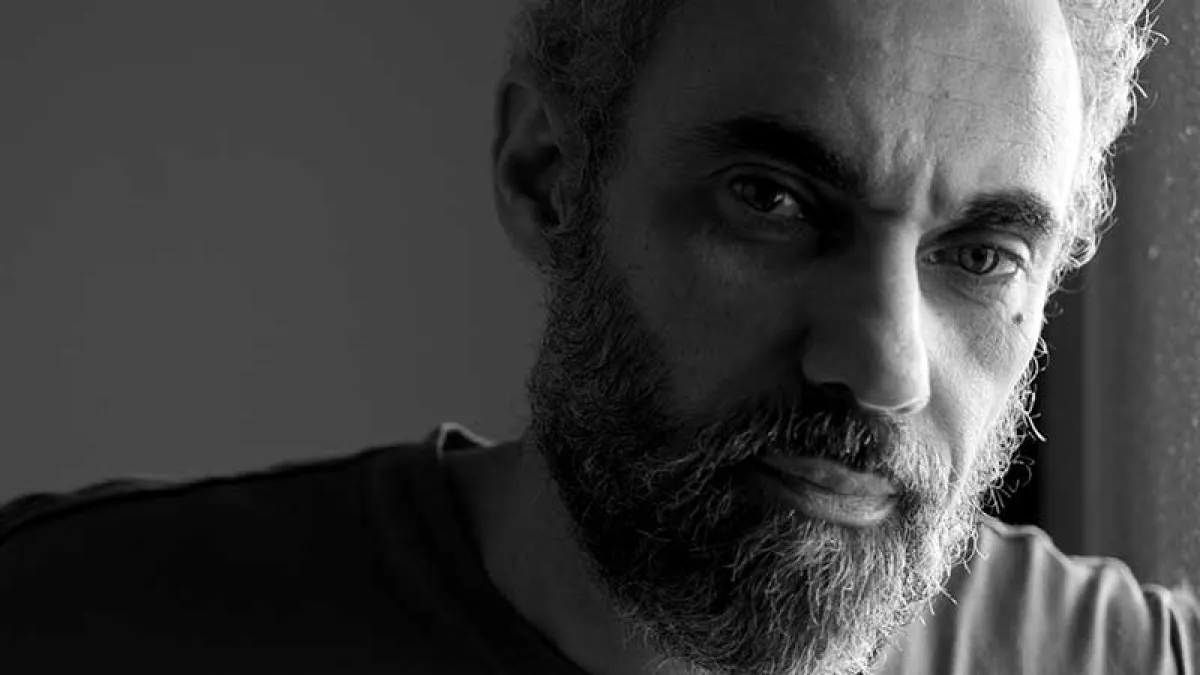
João Anzanello Carrascoza is writer and professor at the Escola de Comunicações e Artes of the Universidade de São Paulo. He has published the novels Aos 7 e aos 40 and Caderno de um ausente and also storybooks O volume do silêncio and Espinhos e alfinetes, among others. His stories have been translated into Croatian, English, French, Italian, Spanish, Swedish and Tamil. Among the awards he received, there are the Guimarães Rosa (Radio France Internationale), White Ravens (International Youth Library Munich), Jabuti, Fundação Biblioteca Nacional and Associação Paulista dos Críticos de Arte.
I didn’t understand at the time—in boyhood—the private world of father and mother, back when there were six of us. Even I, the youngest, noticed how no would win over yes between them. How, calm one moment, they would fall out virulently the next.
Nothing big would happen on those days of ours. It was the ordinary life, as in other small towns. The day would dawn, we would go to school, father to the store, mother to household chores—and there were so many that several fell to each of the children: Gisa helped in the kitchen and in the cleaning of the bathrooms, Tati swept and waxed the floor in the living room and bedrooms, Luiz took out the trash and helped father at the store, and I, I did whatever matched my size (some kind of play).
Each one and all, we lived through our learning experiences, in solitude or sometimes mingled together: Tati and Luiz would watch TV together, fans of the same shows. Gisa would help me with my homework on the dining room table, while father and mother would talk in the kitchen of bigger topics—in the future, I would find out what they were and how deceiving their magnitude was—and still, they would keep an eye on us, their surroundings.
And then, mother’s voice, soft and caressing, would suddenly get louder and soon father’s, low and mineral, would drown hers out, only to be outdone by mother’s screams. And then words would gnaw at the air, ricochet off the walls, entwine until the hollow sound of a fist on the table or a plate shattering on the floor would echo—mother would run through the living room, her eyes dim, and she would lock herself in the bedroom. Father would walk out to the backyard, where he would stand in the smoke of his cigarette and howl into the shade of the trees.
These episodes would recur with slight variations: a provocative sneer would resound, and then a cup would be broken; a singsong from mother, and an insult from father in response. There was nothing we could do but commiserate in complicitous silence and the next day wake up to each other and talk cheerfully. There was nothing left for us but forget what had happened and enjoy our precarious lull.
I didn’t understand the workings of the universe, although my gaze wasn’t focused exclusively on a minute fraction of its mechanism—before going to bed, I would get to thinking of the immense machine of destiny and its infinite combinations. I had few friends and hardly ever went to visit them, but I would see a friend’s mother here, a friend’s father there, though never the two of them together, one telling the other about the experiences of the day, the man embracing his wife, or the two of them in noisy disagreement, so that I didn’t feel sad (when I witnessed the scenes of conflict between my parents) or happy (when I caught them holding hands in harmony). Without the awareness I have now, I only felt that I was alive—and that was living, accepting simply what happened to me, be it pain or contentment. Besides, Gisa and Luiz, older than I, didn’t seem troubled or frightened by the unpredictability of those ebbs and flows. They were used to them and, I imagine, convinced that there was no way to foresee the next confrontations, nor was there an alarm capable of warning us that they were imminent.
And so we carried on, each one focused on our own little things, which were sometimes everyone’s, each one living our own personal story, so attached to the family’s, we all so essential to each other, although to the city we were but half a dozen residents, and to the world, anonymous folks, statistics, numbers. We chose to ignore, spotting mother lying on the sofa, father stroking her hair, that they were, in reality, closer to the next explosion.
The day of boiling-over arrived, detaching irrevocably from a future that could have been different but wasn’t. It was sluggish-making hot, father and mother were on the veranda, like sweethearts, whispering to each other, and then they started raising their voices in a race to the top, and in seconds they were there. The noise caught us by surprise for its unheard-of quality. First, a glass shattered, then another, then something that sounded like a vase. Then—a greater fright—the sound of a closed fist hitting. Twice. A third time. A howl from mother, her piercing cry stabbing the air.
We rushed to the two of them, to watch more than interfere, and were almost knocked over by mother, who ran into the house sobbing and locked herself in the bathroom. Father crossed the street under the blazing afternoon sun, leaving the gate wide open behind him. On the veranda, chairs flipped over, dirt from the flowerpots scattered around, glass shards—order turned to pieces. At Tati’s command, we put everything back, thus starting a routine of immediate erasure of all traces. As if then life could go back to normal, and family peace, once wounded, could heal faster.
The next morning, mother came out of her room in sunglasses to hide her black eye and stayed home all day. At her request, Luiz went to the pharmacy to buy some soothing cream. Father spent two nights on the sofa. But on the third, while we were watching the nightly soap opera, the two of them had started to smile at each other. At once, these smiles allayed my anxiety and hurt me like an insult. Mother bid me good night, and perhaps suspecting that, unlike my siblings, I didn’t understand I was to keep quiet, whispered in my ear in a plea rather than a threat, Darling, don’t mention any of this to your grandmother.
And, of course, at Sunday lunch, it struck grandmother as strange that mother should have tripped on the bedspread while making her bed in the morning and hit her face on the bedside table. But grandmother didn’t ask for details, which challenged that version of the facts. Grandmother, I now understand, knew that pretenses come undone on their own. Uncle Beto then put a song on the record player, father and mother started to dance, and we laughed at their playfulness.
But the stream of days showed us that the two of them had only broken through the surface of discord and from then on would be touching its bottom: a gnarly bottom covered in sharp rocks.
For weeks we enjoyed some miraculous good fortune, oblivious to the fact that if serenity was a few degrees above us, suddenly its opposite could erupt out of nowhere and immediately tear it apart.
And so it was that on that Saturday night, we were gathered around the pizzas, taking turns reaching for our two or three slices, father at the head of the table, mother in command, cutting up and placing the slices on the plates. Focused on our tasty treat, we didn’t notice who struck the first word-match but heard the next ones, crackling like gunpowder, both father’s and mother’s, and soon the two of them were hurling insults at each other like enemies right before our eyes.
In less than orchestrated moves, we tried to break them up, Luiz and Gisa with their palms together in prayer, begging, Father, father, don’t hit her, Tati in a corner, yelling so that the universe could hear her, Stop it, stop it, stop it, and I, wrapped around mother in an attempt to protect her, crying on the inside, soaked through to my toes in rage. Conscience then struck my father; he reined in his fury. And mother only lost two teeth.
From then on, the tension would heighten when night started to fall and father came back from the store, and I felt mother’s fast, warm breath on my neck on those nights when she slept with me. It pained me that new confrontations could erupt at any time, and I struggled to understand what could trigger them. But the logic of emotions was greater than my understanding. The passage of time was putting the two of them together again, hand in hand. At father’s birthday party, mother’s happiness was plain to see (her tooth implants sparkled). She was growing in her womb a new sibling for us. I ignored the feeling I got every time I spotted her kissing father in front of others, whether it was shame or pride.
Other episodes came, similar, weaker in my memory—though perhaps not in mother’s body—and these were more spaced out. Thus, amidst those frights, we grew up and, dragged along by other torments, sometimes by joy, we hardly suspected that destiny, in its episodic accounting adjustments, was writing a new invoice.
Until what was to happen happened, the big event—because mother that time ended up striking back: threw knife, pot, plate, whatever was on hand, at father. And if it hadn’t been for Cido, our neighbor, who rushed to break them up, I don’t know how that fight would have ended. I do know that afterwards Uncle Beto wanted to take us home with him, but mother wouldn’t allow it. With her new baby in her arms, she said, This is my home! We will stay here! Father was the one who left for a few days. But one night he came back. I remember it well, all of us in the living room, he on the sofa, his head bowed, eyes on the floor, as if silently asking her for forgiveness.
A (long) time of truce came, capable of almost obscuring those scars that, at least in me, had stuck like lines that define our faces, make us distinguishable from others, and above all give us the certainty when we look in the mirror that we are indeed who we are. During this time, Luiz buried himself in his schoolwork, I filled in for him at the store, where I started to discover that father was also sweet and patient in the other half of his life. I grew confused at the vastness of this truth, although it revealed itself gradually, in the rhythm of our day-to-day lives, a beam of light at a time, and suddenly that immense sun. I was too immature for compassion. I resisted my love for father so I wouldn’t sacrifice my love for mother. I was learning how to be bigger, it wasn’t all just ignorance anymore, I already recognized what I had seen and no longer sensed the world (only) through the pain of my wounds.
Then, when I had stopped the hemorrhaging of doubt, and the scenes I remembered didn’t hurt me as much, those men from São Paulo decided to come to our town. Neither I nor Luiz were at the store that afternoon. Cido, who was talking to father at the counter, said he didn’t fight back, didn’t move, only opened the cash register and took out the money. Still, the men fired their guns. Because father was there. Father existed to them as a path existed.
After that, I never saw mother smile that way again, her teeth sparkling. Not even when Gisa’s child was born, the first grandchild she had so longed for and who would compel her once again and with great intensity to exercise her love. All these years, I never said to her what I wanted to say, and what I will never be able to say to father, who was gone that afternoon, when I didn’t know what I know now.
I see them, now comingled, in this house of childhood, which I rebuild in my memory, mother behind the sunglasses and her share of guilt, and father on the sofa beside her, his head bowed, eyes on the floor, silently asking her for forgiveness.
+++
Translated from Portuguese by Ilze Duarte.
The original Brazilian Portuguese version can be downloaded here:
Did you enjoy this text? If so, please support our work by making a one-off donation via PayPal, or by taking out a monthly or annual subscription.
Want to make sure you never miss an article from Literatur.Review again? Sign up for our newsletter here.