



Suicide isn't for Africans
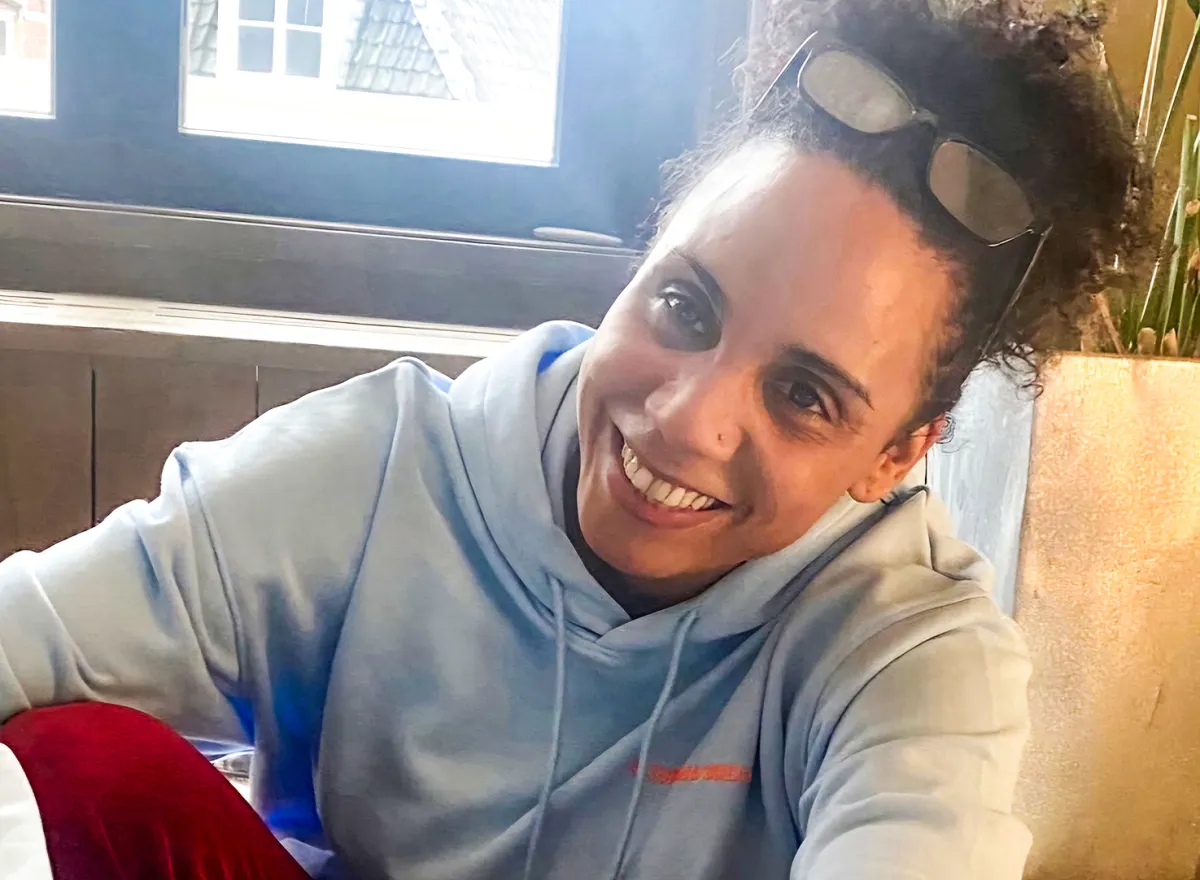
Melara Mvogdobo was born in Lucerne in 1972. After studying education and giving birth to three sons, she lived in the Dominican Republic, Cameroon and back in Switzerland.
In addition to her writing, she taught traumatized young people and led workshops on textile handicrafts and tropical cuisine. In 2022, she moved to Andalusia with her family.
In 2023, her first novel "Von den fünf Schwestern, die auszogen, ihren Vater zu ermorden" (Edition 8, Zürich) was published. Her second novel, Großmütter, was published in German by Transit Verlag in 2025 and was shortlisted for the Swiss Book Prize that same year. Her short story Dieu Merci! was shortlisted for the Caine Prize in 2026.
You had imagined it differently. Somehow more dignified and impressive.
You had imagined that your family would notice your absence immediately. Your siblings, your aunt, your mother, your cousins—they would all feel the void you had left behind and suffer for it. They would recognise your worth and regret having treated you so badly.
Filled with satisfaction, you’d imagined how they would burst into tears the moment they realised you were dead. Gone forever.
Perhaps it would be Valentine, your younger cousin, who would be the first to discover the letter. She would read the lines and quickly understand. She had always been bright for her age. Panicking, she’d run to your mother and scream: “Clarisse has killed herself! She’s in the well, the deep draw well behind the house, at the bottom of which the black water glistens darkly.”
You could just picture it. Your mother, crying out in agony, and spilling the contents of a pan across the rough cement floor of the kitchen. Everyone crowding into the kitchen, demanding to know what new misfortune has befallen the family. Valentine, picking up the note with your last words from the floor, which was perhaps now splattered with d’arachide (1) sauce, which no one would ever eat again.
You were certain that your family would rush, wailing, to the well. They would glimpse your strangely contorted shape, deep down below, and cling to the futile hope that you were still alive. That if they could just pull you out of that damned well, everything would be all right again. You could practically hear their cries for help. Neighbours! Help! Au secours! (2) A smirk crept across your face. Satisfied and malicious. Because you knew better. There was nothing left to be done. You were dead. No shaking, no pounding on your chest, no matter how fervent a prayer, and not even the hardest slaps right across your face would bring you back from the realm of the dead.
(1) Arachide sauce (also known as peanut sauce or máfé) is a creamy, spicy peanut sauce from West and Central Africa, traditionally made from peanut paste, tomatoes, and onions.
Only now would they realise what you'd meant to them. Maybe not right away. But certainly in the days that followed. During the preparations for your funeral, you would be sorely missed. Who would handle the countless errands that a death like this entails? Who would your mother ask to mop the floor, scale the fish in the tank, and serve the guests offering their condolences? Your lazy siblings and cousins, perhaps?
They’d regret having mocked you for your slightly darker skin colour and having called you briquette de charbon, a “piece of coal.” How often did they laugh at you when, during an argument, your brain turned to crumbly rock and your tongue lay in your mouth, useless as wilted vegetables after a long day at the market? They mimicked you and called you stupid when, instead of defending yourself, you could manage nothing more than a stutter.
(2) Help, neighbours! Help!
You had revelled in the idea of how guilt would crush your mother’s heart. Almost unconscious with grief, she would sob: “My beloved daughter! Why didn’t I treat you better!”
But none of that had happened. Instead, you stood in the cool, knee-deep water at the bottom of the well, unsure what to do next. About an hour ago, you’d mustered all your courage, your pent-up anger, your shame, and all the hurts of the past few years, and jumped into the well. The fall was short and unpleasant - much shorter than expected - and not half as heroic as you’d hoped. You scraped the skin on your arms and legs against the rough walls of the shaft. You must have tried to break your fall with your hands, since one finger is sticking out at an unnatural right angle from your hand.
No one up on the surface had inquired about your whereabouts. The muffled sounds drifting down to you reveal that everything was carrying on as usual.
You didn’t know that the note, with your farewell words on, had been blown to the floor by a gust of wind from a slamming door. Then, after several members of your family had stepped on it while crossing the kitchen without paying any further attention to the piece of paper, your letter ended up in your mother’s hand; she crumpled it up and used it to light the fire in the outdoor kitchen.
(3) Yaoundé is the capital of Cameroon and, with a population of around 2.4 million, the country’s second-largest city after the port city of Douala.
You tilt your head back and look up. Your world has shrunk to a silvery-gray circle. As if through a peephole or an oversized telescope, you see only this small piece of Yaoundé (3). From one side, the large leaves of your plantain tree jut into the view. Sometimes they sway gently in the balmy air.
How peaceful, you think. Maybe that’s the trick. Maybe you should always view the world through a telescope. Always focus on just one tiny fragment. Simply block out everything else. Maybe then the world would become clearer and more bearable.
Before you'd decided to commit suicide, you'd tried to learn more about it.
“What do you think of suicide?” you’d asked your mother one afternoon on the porch.
When your mother tutted disapprovingly and crossed herself at the same time, you quickly added: “I’m asking because of this video a friend showed me.”
(4) My daughter
“What kind of video is that?” your mother asked. “A video of people committing suicide?” Ma fille (4), what’s this all about? What kind of friend is this who shows you such devilry?
(5) Little sister
Petite soeur, oh! (5), your mother said to her sister, who was in the middle of sweeping the yard. Come here and listen to what our silly daughter is asking. A friend showed her a video of people committing suicide, and now she wants to know what I think about suicide!
Your aunt stopped sweeping the yard and came out to the porch to join you. She shook her head in disbelief and tutted, just like your mother had done. Ma fille, oh, what terrible thoughts those are!
Tell me, ma fille, were the people who committed suicide in that video Black or white?
Your aunt had looked at you expectantly. White, you’d replied uncertainly, almost questioningly.
(6) A well-known exclamation of amazement, surprise, sympathy, or gentle mockery
Ehee! (6), the two sisters had triumphed in unison.
Of course they were white! Suicide isn’t for Africans!
Your mother had really got carried away that day:
Ma fille, think about it!, she exclaimed indignantly. We endured colonisation and were dragged off into slavery. We were oppressed, tormented, and exploited for centuries. If we had a tendency toward suicide, there would be no Africans left in the world. We’ve had—and still have, by God—more than enough reasons to despair of life.
(7) No, no
But we don’t kill ourselves. Non, non (7), we don’t do that!, your aunt had agreed with her.
No, we’re tough. Just like the stray dogs in the neighbourhood. They may be missing an eye, their tail bitten off by an opponent in a fight, their bodies covered in poorly healed scars, but they keep fighting. Day after day. They don’t grumble or whine. They don’t question their fate.
Instead, they defend the pitiful remnants of the gnawed chicken bone between their paws with everything they've got, even when its splintering pieces cut their throats and they risk choking on them. The chicken bone may seem pitiful and unappealing to others, but the stray dog will defend it to the death.
It never even considers giving up!
Ehee! Ma fille. That’s how we Africans are.
(8) white people
Suicide isn’t for us. Unlike the blancs (8), we’re used to suffering. That is our strength. We don’t give up! We know that the world is full of problems that must be solved and endured. You can’t catch the warming rays of the sun or the smell of a good meal with your hands. You have to enjoy the moment and forget about tomorrow and any misfortune that may come with it. That’s as close as we humans can get to happiness.
After that conversation, you felt ashamed for quite a while. You felt whiny and weak.
(9) A colloquial term from Cameroon and Central Africa that refers to gossip, neighbourhood rumours, and the passing of information from mind to mouth
At the same time, you weren’t entirely convinced. Were there really no suicides in Cameroon? You realised that you had never heard a Kongossa (9) about a suicide.
Maybe your mother and her sister were right: suicide simply isn’t part of the repertoire in African societies.
And if a suicide had occurred somewhere after all, then—as you were quite certain after this conversation—the family of the deceased would have known how to cover it up. “It was witchcraft” (10), people would have whispered behind closed doors. Someone had put a spell on him. He wasn’t himself when he swallowed the pills. An evil spirit had possessed him, le pasteur l'a confirmé. The pastor said so.
(10) On witchcraft
You thought about it some more and came to the conclusion that, strictly speaking, you weren’t all that interested in your own death, but rather in getting back at your family.
You realised that your plan hadn’t been well thought out. After all, if you were dead, you wouldn’t get to see how your family suffers.
So you put your suicide plans on hold for the time being.
But then the incident with Monsieur Obam happened.
Monsieur Obam was your maths teacher. And you were absolutely terrible at maths.
(11) the high school graduation exam
You had already failed the bac (11)—which you were deeply ashamed of. No one in your family had ever needed more than two attempts. Maybe you really were stupid.
So you’d decided to take your fate into your own hands. You thought of your older sisters, how they played up their feminine charms, how they wrapped every man who prided himself on his virility around their little finger with that seductive batting of their eyelashes and that provocative walk that made their buttocks wiggle.
Your sisters would have known how to handle a situation like yours.
You observed Monsieur Obam for a few days. One outsider can recognise another.
Monsieur Obam was unremarkable. Almost pitiful. Small and skinny, he looked as if he’d been cobbled together from various spare parts. His arms were too long, his legs crooked and short. And perched on his scrawny neck was a head that was far too large, which—despite all the misery and Monsieur’s young age—already sported a sizeable bald spot.
You had rejoiced: it would be a piece of cake, even for you! Monsieur Obam would be grateful to you!
So after class, you waited for him at the spot where he parked his meticulously maintained little motorcycle every morning.
Monsieur Obam, please, can I have a word?
He’d looked at you somewhat puzzled, as if he wasn’t sure where he knew you from.
“I’m in your class,” you prompted him. “And it looks like I won’t be able to pass maths this year either, no matter how hard I try."
Monsieur Obam had started blinking nervously. Probably just a tic, you thought.
"Do you perhaps have any idea what to do about this? I’d be very grateful. I mean, very, very grateful."
(12) We’ll see what we can do
Monsieur Obam had hesitated for a moment. Then he said, “Come to my office next Friday after the last class.” On verra ce qu’on pourra faire (12).
From then on, you went to Monsieur Obam’s office every Friday in the late afternoon. A small, cramped room full of papers and books. He would lock the door behind you every time, while you set about pulling your top up and baring your breasts.
It never took longer than half an hour. Your initial excitement and unease gave way to routine. Bored, yet with your goal firmly in mind, you let your teacher pant as he kneaded your breasts. He took them into his mouth with a smacking sound, leaving his saliva on your skin. It reminded you of the slimy trails left by the big, tasty snails on the walls of your house early in the morning.
This went on for many weeks. But then, exactly two weeks before the exam, it happened.
(13) Inn
Monsieur Obam had just locked the door behind you, as usual, and turned to face you. You were standing there, ready as always, presenting your bare breasts to the man, when Monsieur Obam said: “Let’s go to an auberge (13) today.”
(14) Please
You didn’t let your shock and disgust show and said, in a calm voice," S’il vous plaît (14), Monsieur Obam, that wasn’t the agreement. That won’t work."
(15) Okay. No problem
Monsieur Obam’s gaze lingered on you for an uncomfortably tense moment. Then he shrugged and said, "Okay. Pas de problème (15). As you wish."
You shouldn’t have been surprised. But you were anyway, when Monsieur Obam failed you on the maths exam. For the third time, you hadn’t passed your bac.
That was yesterday. The shame took your breath away and you started sweating profusely.
It wasn’t so much the thing with your bare breasts and Monsieur Obam’s kneading hands. Rather, what’s really bothering you is the fact that you let yourself be deceived. Surely something like that would never have happened to your sisters. They would have spotted the signs in time and taken steps to avoid the situation.
(16) A traditional and elegant top or dress for women in West African countries such as Ghana and Cameroon.
For a brief moment, you’d thought about telling your aunt or your mother everything, albeit altered slightly, so Monsieur Obam would have come off very badly. Your aunt would surely have grabbed the old machete next to the front door in a fit of rage and stormed off to your school in her faded house—Kaba (16). She would have brandished the machete menacingly in front of Monsieur Obam’s face and hurled the most vicious insults at him. She would have kept at him until beads of sweat formed on his bald head and, with trembling knees, he promised to make amends.
Yes, part of you wanted nothing more than that. But the other part knew you weren’t ready to subject yourself to your family’s ridicule for ever more. You could practically hear the mocking laughter of your siblings and cousins: Briquette de charbon tried to be clever! She showed the teacher her breasts, and what did she get in return? Nothing! Our stupid, stupid Briquette!
Just imagining it made your cheeks burn.
So you sat down and wrote your anger on a piece of paper. The very piece of paper that your mother, without anyone having read it, had just set ablaze.
You blamed everyone else for your misery. It’s because of you that I jumped into the well. Because of you and because of Monsieur Obam.
And now you’re standing there in the knee-deep, cool water of your draw well. In the darkness, which, strangely enough, feels welcoming to you. Your finger seems to be broken—it throbs so painfully.
(17) Plantain tree
You’re still looking up toward the small, silvery circle. This peaceful corner of Yaoundé. To the right, the large leaves of the plantain tree (17) sway gently. You see the milky rays of sunlight pushing through the light grey of the sky. You sigh. Why can’t the world always be like this? So small and uncluttered. Far enough away not to bother you with its demands.
You shrug. You know you can’t stay at the bottom of the well forever, no matter how appealing that might be. But you make a decision; to hold onto this view, this soothing telescopic sight, within yourself. From now on, whenever life tries to demand more from you than you can bear, you’ll conjure up this image in your mind. This little piece of your city, of your life, that doesn’t threaten you but gives you peace and security.
But there’s still one thing left to do.
You murmur to yourself under your breath: I’ll just eat and drink out for the next two weeks.
Then you lift your wet Kaba up past your hips, pull your pants aside with two fingers, and pee long and contentedly into the knee-deep well water.
Afterward, you call out at the top of your voice: Hey! I’m down here! Get me out of this damn well!
+++
Further reading by and about Melara Mvogdobo on Literatur Review:
Dieu Merci!
A Cameroonian story from Switzerland
Happiness is like a language that must be learnt
In her novel "Grandmothers", Melara Mvogdobo distills two life stories from different cultures into a literary coup d'état. It would be hard to write about female empowerment more tenderly or brutally
Did you enjoy this text? If so, please support our work by making a one-off donation via PayPal, or by taking out a monthly or annual subscription.
Want to make sure you never miss an article from Literatur.Review again? Sign up for our newsletter here.