



Seven square meters
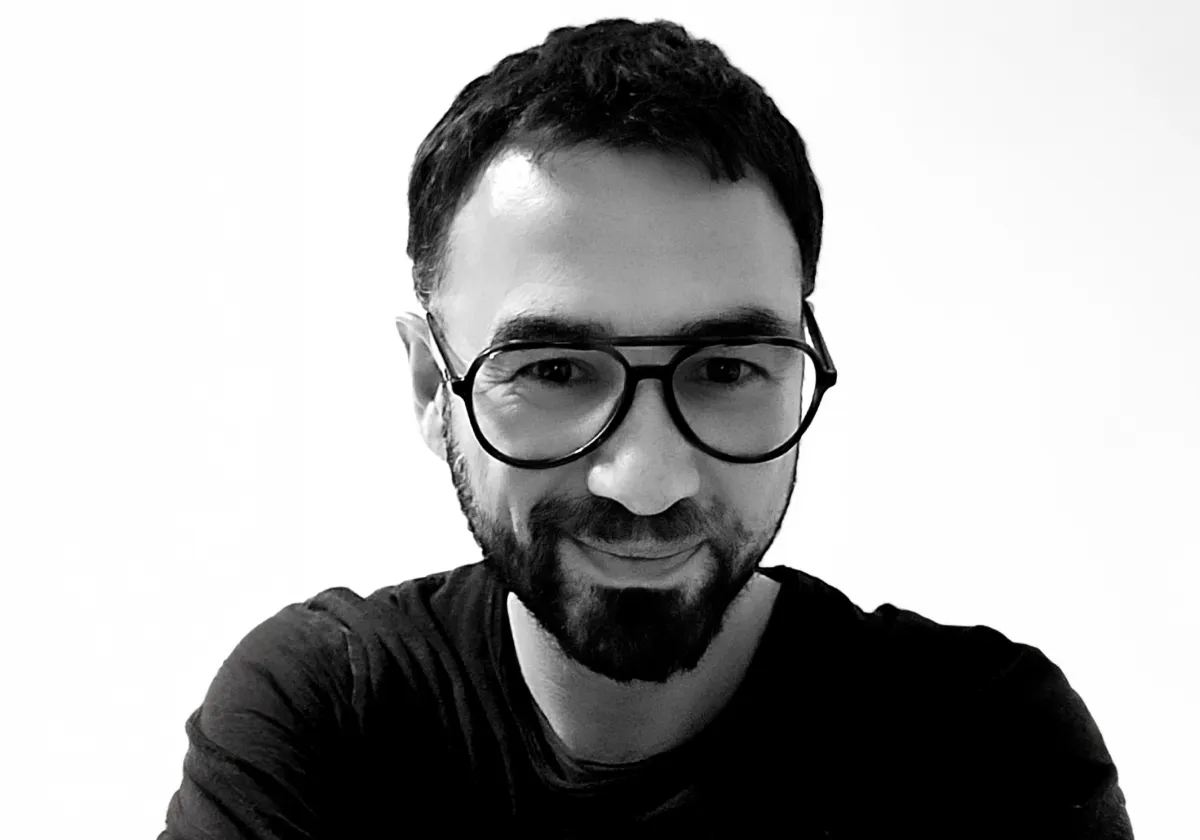
Adam Mouchtar is the son of the renowned theater and opera director David Mouchtar Samorai. He has been active in the political engine room of Europe for over twenty years: as an advisor in the European Parliament, working with MEPs from different countries and political camps, including for a Vice-President of the House. With the EU40 network he founded, he developed new forms of political communication aimed at making European politics understandable and tangible for young people. In his literary work, he deals with power, responsibility and the tensions between external action and inner experience.
The cell
When the door closes behind me, I know immediately. Not later, after the first thought, the initial fear. Immediately.
So now the time has come.
I have been waiting for this moment my whole life, unable to tell anyone, even to fully admit it to myself. An intuition - one too far-fetched to explain. A sixth sense. A quiet certainty that has always been with me, no matter where I was: one day I will sit in a cell.
Not as a punishment.
But as a test.
The room is small. Much smaller than in films. No window. No shadows. Just this hard, white light - unremitting, as though scared of being left alone. A blue plastic mattress lies on the floor, next to it a bare steel toilet, with neither lid nor seat . A camera in the corner. A camera, of course.
I stop - respect, though, not fear.
My body reacts faster than my mind. My breath falters briefly, then finds its rhythm. I know this moment. I have practiced it a thousand times without knowing why. In yoga studios, on hotel room floors, early in the morning before the world exists.
I take a few steps. Three to the left, two back. That's it. Seven square meters. So that's how little it takes to take away everything you thought you had.
The thought of freedom comes, but it's strangely pale. No drama. No outcry. For me, freedom was never the absence of boundaries. Freedom was always something internal.
I sit down on the mattress. It creaks. The plastic cover sticks slightly to my skin. I'm cold; not uncomfortable but clear-headed. I think of all the times I've imagined what it would be like to have nothing. No role. No image. No outside.
The panic comes anyway. It rises slowly, wraps itself around my chest. I let it in. You can be there too.
The thought of suicide emerges, briefly, matter-of-factly, like a technical suggestion. I immediately recognise it for what it is: the ego's last attempt to regain control. I let it move on.
The camera flashes red.
The light stays on.
Good. So there is no night into which I can disappear. There is only wakefulness.
I take off my shoes. Then the jacket. I fold everything neatly. Not through fear of control, but out of respect for the moment. Rituals have always sustained me.
I start to move. Slowly. Consciously. I stretch my arms, turn my neck, move into positions that my body knows. I breathe in, breathe out. I don't meditate in the classic sense. I observe. Thoughts come, thoughts go. Memories lose their sharpness. My name loses its meaning. My story too.
I realise that I am prepared. Not because I was particularly clever, but because I have practiced letting go all my life.
Maybe this is not the end, but the first moment when nothing more is required of me except to be.
Seven square meters. And for the first time, freedom doesn't feel like movement, but like dissolution.
The question
When they take me out of the cell later, I don't know how much time has passed. I only know that something inside me has slowed down, while everything outside is speeding up.
The corridor is bright, clean, almost clinical. No keys. Instead, this short buzzing, this neutral beep that indicates that an electronic decision has been made. The door doesn't open for me, but over me.
I walk down the corridor. More doors. The same sound every time. Everything is in order.
The world is waiting outside again.
Outside was no longer about me. And yet it was also about me as I walked through the corridors, step by step, past doors that opened and closed with no regard for me. Because I was doing something that had never been foreign to me: asking. Like the youngest child on Passover evening, asking why this evening is different from all other evenings. Why we taste bitterness. Why we eat unleavened bread. In Judaism, this question is not an attack on the order, but its prerequisite. Only the answer, the memory of liberation from slavery, makes the ritual acceptable. Without an answer, only obedience remains.
Jonah had this questioning in his blood. And at some point, this questioning was no longer read as an attitude, but as closeness. As a position. As part of a context that he himself had not noticed for a long time. As he walked on, always along the same corridor, he realised how easily a sentence, mis-timed, could change its weight. A thought lodged itself like an obstacle. It was the old, uncomfortable question of whether fear and development should be separated from each other, or whether they necessarily mix. Whether one had to do without as long as the proof was outstanding. Jonah would have asked this question even if no one had listened. Not to relativise, but to understand.
He was prepared to think about dangers, including geopolitical ones, and those hidden behind technology and promises. He was able to accept that power works quietly, that dependency does not come from coercion but from habit. But he wanted proof. He wanted to be allowed to see it. For himself. And, by the same logic, for others too. For without proof, only suspicion remained, and suspicion alone had never set him free. His footsteps echoed briefly on the floor and then disappeared again.
What worried him only later was the movement he had fallen into. Not just his own, but the larger one that carried him without his permission. They were also looking for outside proof; they too wanted certainty. They collected, listened, organised - not arbitrarily, but exercising caution. And yet the search itself began to take on forms that were alien to it. The question produced tools that made it difficult. In order to secure freedom, one approached control. To avoid dependence, new bonds were created.
Jonah realised that he had failed not because of the question, but because of the moment when it became greater than himself. Just as the biblical Jonah was swallowed up through no fault of his own but by a storm, he too found himself within a discourse whose dimensions he had underestimated. He had only wanted to ask. And had become part of something that swallowed him up as though he were invisible.
He stopped short before the corridor ended. He had never believed progress belonged to everyone. He had only believed that it had to be questioned before it was followed or forbidden. That one could say, as on Passover evening: show me what you say enslaves us. Only then can I decide what to free myself from.
Jonah drives through the snow in his car. The traffic is at a standstill. Spring had arrived, briefly, then disappeared. His phone vibrates incessantly.
Messages pour in. Names of editorial offices. Short questions without context. Whether it was true. Whether he wanted to say something.
One word sticks: sealed.
He sees the door to his office in front of him even before he has actually seen it. The stripes. The sign. This simple sign that says: someone has fallen here.
A journalist calls. The conversation doesn't last long. It's enough.
For the first time, Jonah understands that it won't be about the truth.
An hour later, his superior calls. A cautious voice. They just want to know if there's anything to worry about.
Jonah says it's been a misunderstanding. As he speaks, he realises how hollow the words sound. Not because they are wrong, but because they no longer protect anything.
He hangs up and knows something is broken. Trust is not a legal state. It always belongs to others.
The car lets him know that assistance mode is switching off. Conditions are too bad. He has to drive himself.
Naturally now.
And yet there is something new. A distance. An observation.
He thinks of the cell. Of the light. Of the silence. He is aware that he carries this place within him.
The mother
In the cell, Jonah decides to think of his mother. It's not nostalgia, but necessity. He knows he has to make use of this place. As a workspace.
His mother is high up on this mental list.
He consciously summons her.
She had once been an apparition. Beautiful, sophisticated, admired. Men had desired her, women had stared at her. She knew that. It belonged to her.
This woman has not disappeared. She has slowly become smaller.
Not through one blow, but through many small decisions. Always against friction. Against conflict. She didn't want to lose anyone but lost herself in the process.
The alcohol crept up. A glass in the evening to end the day. Another to fill the silence. No drama. A substitute.
The alcohol was like a breast to her. Something warm that soothes with no demands. Closeness without relationship.
She didn't drink to forget. She drank to numb herself.
Over the years, her world shrank. Everything new became exhausting. Every expectation an imposition. So she became selfish - not hardened, but worn out.
Before Jonah forgives her, he goes back further.
He sees her face in the orange light of a late afternoon. That light in which everything softens. Her gaze is calm. Warm. Without demand. An unconditional love that held him as a child. This love was real. And it was strong.
He understands that it hasn't disappeared. It had always been there.
He continues to breathe calmly. He holds on to this image.
Then he lets go.
Forgiveness does not mean approving decisions. It means no longer carrying them in your own body.
In this moment, he feels calm. No euphoria. Only order.
Marriage
After he has finished thinking about his mother, Jonah turns his attention to his marriage. It's her turn now.
He thinks of his wife with tenderness and weariness. Of the beginning. Of her strength. Her clarity. Of a closeness that required no explanations.
Then the years rolled by. The children. The responsibility. Life became heavier.
Jonah was never easy. He was searching. Restless. Hungry for depth. He wanted to feel everything.
His wife wanted stability. Rhythm. Reliability.
He sought truth in opening up, she in holding together.
He demanded honesty where she needed function. She absorbed where he pushed.
They were both wrong. And both right.
In the cell, Jonah realises that he has overwhelmed her with his desire. That he has demanded something of her that no human being can achieve.
He forgives her nothing. He forgives himself.
Freedom does not mean breaking free from attachment. Freedom begins when you stop blaming the other person for your own restlessness.
The muse
Beyond marriage, something remains that Jonah has long misnamed. Not a longing for another woman, but for space.
This longing is older than his decisions. It is the place in him where images are created.
The woman does not exist. And yet he knows her intimately. Her way of walking, keeping silent, listening.
She is not a substitute. She is a tool.
Through her, Jonah realises that he can write. Not formulate, but create.
This is how Sicily emerges in him. An old villa on a cliff. White stone. Heavy curtains. The sea stretching out in front.
They retreat there because they are allowed to be physically undisturbed. Loud. Impatient. Without a clock. Without consideration. The body is allowed to speak before the head interferes.
After making love, Jonah lies there motionless. Warmth, closeness, scent. Then he gets up, still naked, and goes into the kitchen. Beneath his feet are cool mosaic tiles, irregular, cracked, each with its own story. Heat in his body, coolness in the floor.
Here he grows old. Here he becomes a writer.
And this is where the danger lies.
This world is perfect. Too perfect. It demands nothing of him. If he stays too long, he loses himself.
In the cell, Sicily takes his place. As a gateway. Not as a destination.
Money
Jonah knows that he must not skip this section.
He thinks of the house. The moment of decision. The quiet lurch in his stomach that he ignored.
The house was beautiful. Too beautiful. As soon as they moved in, it started. Bills. Expert opinions. A roof that needed to be replaced immediately.
He sold his Audi A6. A car that had felt right. Deserved. Earned.
But the proceeds weren't enough. Not for the roof. What was missing was cash. Readily available money.
The bank calmly explained to him how such things worked. A larger loan was possible, but only if he financed a new vehicle. Only then could the necessary liquidity be freed up.
So he was forced to drive a bigger car because he had no money for the roof.
The BMW X7 was bigger, more expensive, more eye-catching. A car that smacked of success, when in reality it was a symptom of confinement.
Not wrong enough to stop it. But wrong enough not to forget it.
In the cell, this construction quietly collapses.
Money was never the real issue. It simply heightened the problems.
He no longer knows which way is up and which is down.
A man who leads a life that is bigger than himself runs the risk of one day losing his way. Not dramatically, not at a threshold, but on an ordinary day when everything seems normal .
While he shines and acts in the environment of the powers of this world, he laughs warmly, almost oblivious. In between, he seeks the hours when the world leaves him in peace and he owes it nothing. He believes he has earned this peace.
When he comes under pressure, when the movements around him speed up and he is forced to let go of the reins, he begins to swim. He then tries to lead a simple life, for both himself and his family. To focus only on what matters. For a while, he succeeds -
until the adventure of being itself gets in his way.
Until his heart threatens to burst with longing, until his appetite for life overflows in the middle of his garden - a garden that reminds him of Sussex; the henhouse brings to mind his grandfather's garage, old brick walls, damp and grass, the smell of petrol from the lawnmower.
And of a study.
As a child, he had once gone in uninvited. His grandfather was sitting at his desk, headphones in his ears. There were notes on the table. Muffled voices came from the headphones. No music.
Jonah stopped because he understood.
Not everything. But enough.
Swahili. The language used by his mother when she sang nursery rhymes to him. Familiar words, out of place here. Not meant for closeness, but for order.
The grandfather didn't take off his headphones. Said nothing. Jonah went out again. Later, it was never mentioned.
Since then, Jonah has carried with him the experience that you can hear things even when you're not supposed to. And that understanding sometimes comes before anything else.
Nothing stays separate long enough. And he never succeeds in making those simple decisions that would leave the rejected clearly behind. Instead, he carries everything all at once, living parallel possibilities. He keeps contradictory realities in the air in front of their respective participants.
How is one supposed to keep one's wits about them?
There are moments when he thinks he knows what would help him. An old movement. A familiar thought. Something that used to dampen, slow down, provide order. And at the same time he knows that this very idea would drag him down further. He can't tell whether the restlessness is causing this desire or whether the desire itself is the restlessness. Both feel equally old.
People demand consistency and reliability. Predictability trumps every other quality. But Jonah is increasingly carrying too much at once. Sometimes he wonders whether a single person can write world history. He can't think that for himself. And yet he is always amazed at how energy and persuasion are enough to set things of great importance in motion. As soon as he encounters the consequences of these movements, he seems too small to have any significance at all.
He is a husband. Father. Anchored in routines. What is all this to him?
In retrospect, he never sees himself as the author; he doesn't mastermind, but is part of a larger context. Through not conviction, but because when a call for action came, he moved.
And at some point you have to decide whether to stand still
or go anyway.
Movement
When they finally let him go, it is later than he would have thought.
It has long since turned to night outside. During the transport, he caught only brief glimpses of the day he had missed in his cell: sunlight on a building’s wall, the bright expanse of an afternoon sky between buildings, reflections in the windows of passing cars. Now there is no trace of any of it left. The air is fresh and light, almost transparent, and carries only a faint memory of the sun’s warmth that must have shone over the city during the day.
Jonah stops for a moment. Feels his breath. The ground beneath his feet.
Nothing is resolved. The trial will continue. The questions remain.
But something has been decided.
He no longer has to run. No more appearing bigger than he is.
Freedom begins when he stops running from himself.
Jonah takes off. No faster than necessary. No slower than possible.
The world doesn't wait for him.
And for the first time, he doesn't see it as a threat.
He goes in.
+++
Did you enjoy this text? If so, please support our work by making a one-off donation via PayPal, or by taking out a monthly or annual subscription.
Want to make sure you never miss an article from Literatur.Review again? Sign up for our newsletter here.
The text is based on the author's personal experiences. In March 2025, he was arrested as part of legal proceedings; his home and office were searched. Since then, he has been released on bond.
From the author's point of view, the investigation is also embedded in a political context, particularly in connection with the debate surrounding Huawei and the possible state influence in the area of 5G infrastructure in Europe. As a result of these events, he was suspended from his duties in the European Parliament.
The text is a literary treatment of these facts. At the same time, the story is part of a larger book project that is still in the making.