



Fragments of Hope in Failing Light
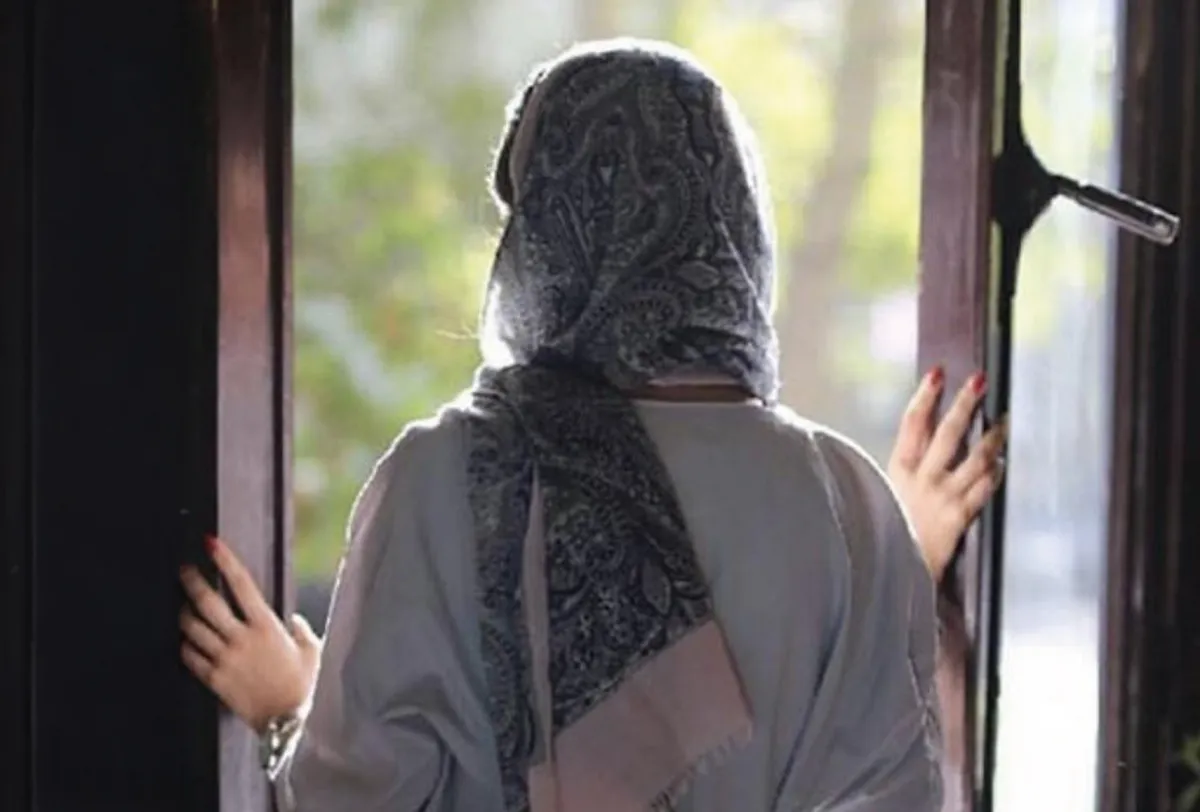
It’s summer in the global south (which is winter in the global north), and for the month of February Literatur.Review is bringing them all together, publishing previously untranslated or unpublished stories from the north and south of our world.
Dunya Yousufzai is 22 years old and lives in Afghanistan. She is a former student of Kabul University whose academic journey was interrupted due to Taliban restrictions. Currently she is studying online at the American University of Afghanistan (AUAF).
I was born, so I have been told and so I remember it now through a mesh of later knowledge and reconstructed images, in a region that older atlases once described as the heart of Asia, a place whose name – Afghanistan – has since hardened, in the imagination of the outside world, into a synonym for conflict, intervention, and collapse. Yet for those who lived there, and for me in particular, it was neither abstraction nor symbol, but the interior landscape of everyday life, a space in which the idea of peace existed not as a political concept but as a quiet, almost bodily expectation. In my earliest memories, the country appeared to me as something close to a paradise, a place where one could breathe without effort, where fear had not yet become the dominant mode of perception, and where the thought of leaving did not accompany every plan for the future. That this sense of safety rested on fragile ground was not yet visible to me.
From the vantage point of childhood, the world possessed a deceptive calm. Poverty, interruptions, and even the distant sound of explosions entered my consciousness only in fragments, like disturbances one registers without understanding their cause. I went to school every day, propelled by an unexamined eagerness, my mind filled with a multiplicity of dreams whose content was vague but whose urgency was unmistakable. The air itself seemed different then, charged with a promise that I accepted without question. I was impatient to grow older, to arrive at a future that appeared luminous simply because it was not yet defined, unaware that this impatience would later feel like a form of blindness.
The days passed in a sequence that, at the time, seemed endless and ordinary, yet now appears irretrievable. Childhood yielded to adolescence almost imperceptibly. School remained accessible to me, and my life was structured by lessons, examinations, and homework, which constituted the entirety of my worries. Only in retrospect did I recognize that these concerns, which once felt oppressive, were in fact signs of a protected existence. At the time, I believed myself to be searching for happiness elsewhere, not realizing that it had already settled quietly into my days.
(1) The Kankor examination is the central university entrance examination in Afghanistan, which regulates access to public universities.
Youth arrived with a different texture of time, denser and more demanding. The pandemic, along with the approaching Kankor (1) exam, compressed the horizon of my thoughts. And yet, hope persisted with a peculiar intensity, most vividly associated with Kabul University, whose name alone was enough to accelerate my pulse. Whenever I passed its gates, I imagined myself inside, inhabiting a future that still seemed attainable. I studied late into the night, driven by the conviction that effort itself might serve as a form of protection, and by the aspiration – still tentative, but deeply rooted – to become a journalist.
When the days of the Kankor finally arrived, they unfolded under the weight of anticipation and fear. I remember entering Kabul University for the first time with a sense of unreality, aware that my prospects might be determined by a single examination paper marked by 160 circles. Questions multiplied without resolution: what if I failed, how would I speak to my parents, how would I account for the years of preparation to myself? Before any answer could arrive, the country itself was overtaken by an event that disrupted not only individual plans but the very continuity of time. In August 2021, the Taliban returned, President Ashraf Ghani fled, and the republic dissolved with a speed that rendered comprehension impossible.
The memory of that day has remained strangely intact. Even now, recalling it produces a physical response, as though the body itself retains knowledge the mind would prefer to repress. In what felt like a single moment, the future I had been preparing for vanished. I remember sitting on the floor of our house, in a narrow corridor, repeating to myself that this could not be happening, that such a reversal must surely be temporary. But reality, once established, allows no negotiation. That first night under Taliban rule was permeated by fear. Nearby, armed men attempted to enter the house of the Minister of Higher Education; gunfire broke out and continued for hours. I remember shaking uncontrollably, convinced that death had ceased to be an abstract possibility and had entered the immediate vicinity of our lives. When the fighting ended, I understood how narrowly we had been spared.
In the days that followed – days marked by confusion, departures, and waiting – the American forces left Afghanistan, and what remained was a silence heavy with threat. What began then was a systematic constriction of life, directed with particular force at women and girls. Schools were closed to girls, as they had been two decades earlier. Promises were issued and withdrawn almost immediately. Universities followed, their doors shut to women. It became evident that the logic governing the new order differed little from the old one, and that the exclusion of women from public life was not an unintended consequence but a central objective.
Regulations multiplied daily, further limiting women’s movement and visibility. Some women gathered the courage to protest, briefly reclaiming public space, but their voices were quickly extinguished. Arrests followed, often without explanation, and accounts of imprisonment circulated quietly. Even leaving the house began to feel like an infraction. Gradually, women were erased from the visible fabric of society, as though absence itself were the desired outcome. The sensation was one of slow suffocation, like descending into a well whose depth could not be measured.
(2) The Duolingo English Test is a modern, adaptive online English placement test.
During these years, my thoughts oscillated between self-reproach and gratitude. I learned, not without resistance, to locate fragments of hope within disappointment, and to practice gratitude not as consolation but as a means of remaining oriented. Rather than allowing time to pass unused, I turned to what remained accessible to me. I began studying English, uncertain of its purpose. After a year, despite the surrounding restrictions, I passed the Duolingo (2) exam, an achievement that had once seemed implausible. Two years later, I received admission to the American University of Afghanistan. Only in retrospect did this sequence appear coherent, as though governed by a logic larger than my own intentions.
When I realized that physical attendance at university would still not be possible, I sat among my books and lecture notes and cried, doubting their relevance. I questioned God repeatedly, asking why the right to study had been withheld, why endurance seemed to replace progress. And yet, when the admission email arrived, words failed me. Gratitude emerged not as triumph, but as a quiet recognition of survival. It became clear to me that expectation and fulfillment rarely coincide in the manner one imagines.
Now, in my second semester, I study online. When I join my classes, the sense of shared presence persists, fragile yet real, sustained by voices and screens rather than walls. This experience does not negate what has been lost, but it suggests that erasure is never complete. Something remains, though it may take unfamiliar forms.
I intend to pursue the study of law, not out of certainty, but out of a need to respond to what I have witnessed: the systematic silencing of women, the normalization of injustice, the quiet acceptance of violations that repeat themselves across borders. To live as a woman in Afghanistan requires a degree of endurance that often remains unacknowledged. Restrictions imposed by the state intersect with familial expectations and social norms, producing a network of constraints that is difficult to escape. Forced marriages, entered without consent, continue to shape the lives of many girls, often invisibly.
Whether these conditions will change remains uncertain. What I know is limited to what has already occurred, to the persistence of memory and the accumulation of loss. I remain where I am, still free in my way, neither entirely defeated nor fully reconciled, carrying forward what can still be carried: the capacity to observe, to remember, and to continue, cautiously, without the assurance that endurance will lead to resolution.
Did you enjoy this text? If so, please support our work by making a one-off donation via PayPal, or by taking out a monthly or annual subscription.
Want to make sure you never miss an article from Literatur.Review again? Sign up for our newsletter here.