



Forbidden Food
It’s summer in the Global North and winter in the Global South. Reason enough to bring summer and winter together in August on Literatur.Review and publish previously untranslated or unpublished stories from the North and South of our world.
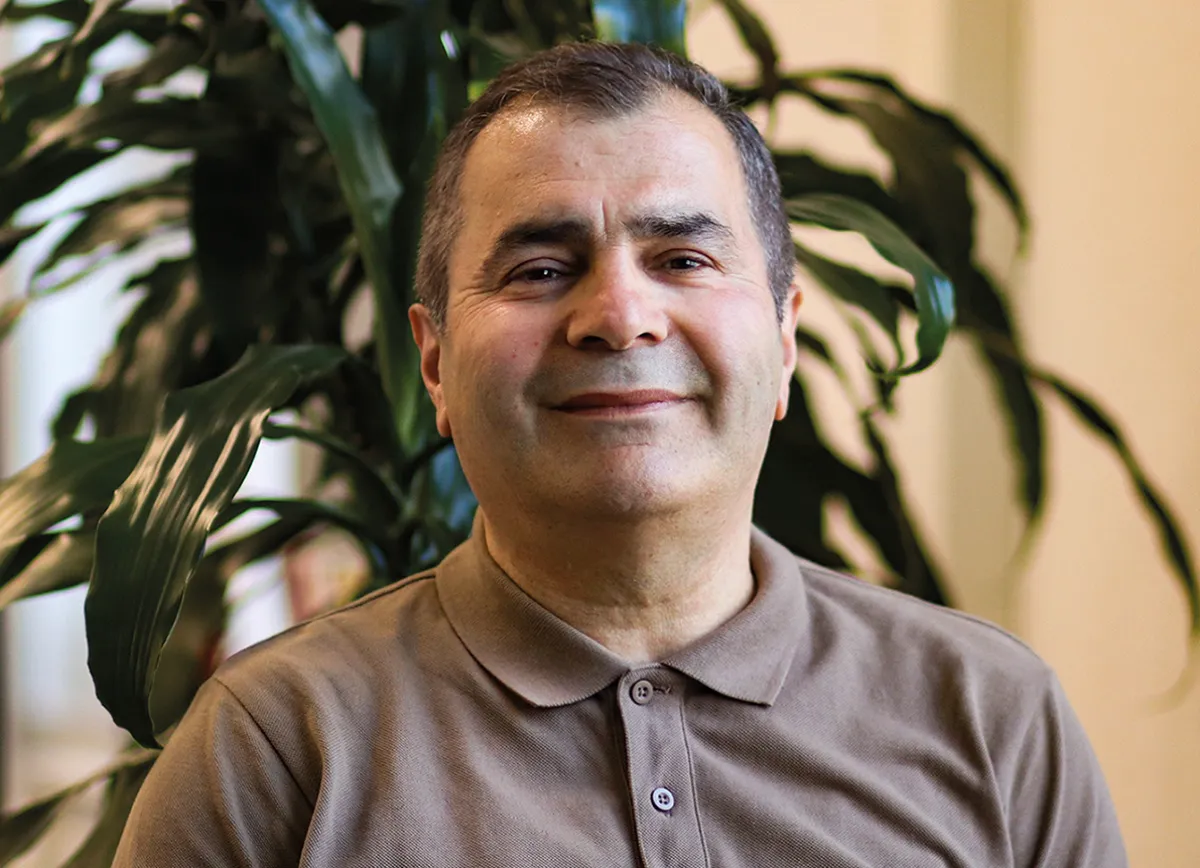
Abil Hasanov, born in 1968 in Western Azerbaijan, grew up during the turbulent period of Perestroika and the collapse of the Soviet Union. His formative years coincided with the period when Azerbaijan was seeking its independence.
He worked at the state-run film studio Azerbaijanfilm and wrote for opposition media, primarily for the newspaper Azadlıq. His political activism led to repression and threats of arrest, forcing him to leave the country.
His book The Abandoned Homeland was published in Germany, and The Fear of Losing Love in Turkey. His work combines autobiographical experience with contemporary political history and paints a picture of the Caucasus caught between rupture, memory, and hope.
“Yes, I wanted you to experience what I am about to tell you. Whatever one may say about it—alcoholic drinks have their own unique appeal. I know that in our religion, both pork and alcohol are forbidden. Our elders wouldn’t touch pork, even with the tip of their tongue, and they didn’t give it to their children either. But strangely enough, it was different with alcohol. Although it was haram*, our elders still drank. You’re surely wondering why—but there are many questions to which even I have no answer. One thing, however, remains true: alcohol tastes good.
I remembered something... I was at Aunt Tanja’s. Do you know Aunt Tanja? How could you? Since my childhood, Aunt Tanja has been a woman who deeply fascinates me. A true woman. When I say “human being,” I mean her. She knows no deceit, doesn’t lie, is hardworking and skilled. If you’d like, I’ll begin. I’ll tell you a memory from my childhood.
That day, Aunt Tanja called me over. “Go and get us some bread,” she said. It was a sweltering hot summer day. I had just come back from playing football, was out of breath—and hungry. Do you know what I was thinking? How delicious warm cream cheese would taste in still-warm bread...
“Where?”
“In my stomach!”
Right at that moment, Aunt Tanja called out to me:
“Go and get me some bread!”
Alcoholic drinks were practically a staple on our table. As I said—pork was forbidden. But as strict as the ban was, the craving was often stronger. Although I had several opportunities to eat pork or sausage, I refrained out of fear of the adults.
Now I want to tell you about that difficult day: as the scent of the pork Aunt Tanja was frying wafted through the stairwell, a craving awakened in me. Aunt Tanja lived with Uncle Borya. Her family was from Ukraine. Both her parents had died in World War II. Tanja and Borya grew up in an orphanage in Baku. Fate had brought them together—they started a family there and lived their lives in that city.
*In Islam, the Arabic term haram means “forbidden” or “strictly prohibited.” It refers to actions, objects, foods, or behaviors that are prohibited under Islamic law (Sharia). Anyone who commits an act classified as haram is considered sinful according to Islamic belief. The opposite of haram is halal (Arabic for “permitted” or “allowed”)
Tanja worked as a nurse, Uncle Borya as an electrician in a factory. Their children lived in Ukraine. That’s why Aunt Tanja often sent me shopping—to the shop or market. A large part of my day passed that way.
Uncle Borya repaired our electrical appliances at home; when the kitchen or bathroom taps broke, we called him. He did everything for free. He wasn’t a selfish person. In short: they were warm-hearted neighbours. Sometimes my father and Uncle Borya would sit at our place or theirs, drinking vodka and chatting.
My father certainly drank vodka, but he wouldn’t touch pork. Once I had just come home. The smell of fried pork hung in the air. The smell made my empty stomach go wild. Just then, Aunt Tanja called me and sent me to get some bread.
When I came back, there was fried pork on the table with potatoes, lard, seasoned with special herbs—as if begging me: “Eat me!” They invited me to the table. I sat down. When Aunt Tanja noticed me looking longingly, she put potatoes and meat on my plate. No one was supposed to notice—I tasted the spicy lard on the table.
But just at that moment, my father walked in unexpectedly—with a bottle of vodka in his hand. At first, he didn’t seem to notice. But suddenly his gaze fell on my plate, on the pork I was eating. His eyes flashed with anger.
Fear made my throat tighten, but I tried not to let on. At home, I didn’t say a word. I waited for my father to come back to punish me. He came not long after. The smell of vodka filled the apartment. He staggered, barely able to stand, called me over with a slurred voice—and punched me in the face:
“You bastard! Don’t you know that pork is forbidden in our religion?”
The blow made me feel as though the pork I’d eaten at Uncle Borya’s was turning into blood and flowing out of my mouth and nose, down over my chest. Somehow my grandmother managed to pull me out of my father’s grasp. She began to reason with me:
“See, my son? If you hadn’t eaten pork, your father wouldn’t have hit you.”
I looked questioningly at my father, looked my grandmother in the eyes, and said:
“But Grandma... isn’t vodka also haram?”
The next morning, Aunt Tanja came to visit us. When she saw the bruises on my face, she looked at me with pain in her eyes and said:
“I’m sorry, my son... I never thought it would end this way.” Ever since that day—every time I see pork—my hand unconsciously wanders to my face. I remember that fateful day, look back, and ask myself:
“Was the sin in the pork—or in the vodka?”
Did you enjoy this text? If so, please support our work by making a one-off donation via PayPal, or by taking out a monthly or annual subscription.
Want to make sure you never miss an article from Literatur.Review again? Sign up for our newsletter here.