



My Homeland in the Caves of Death
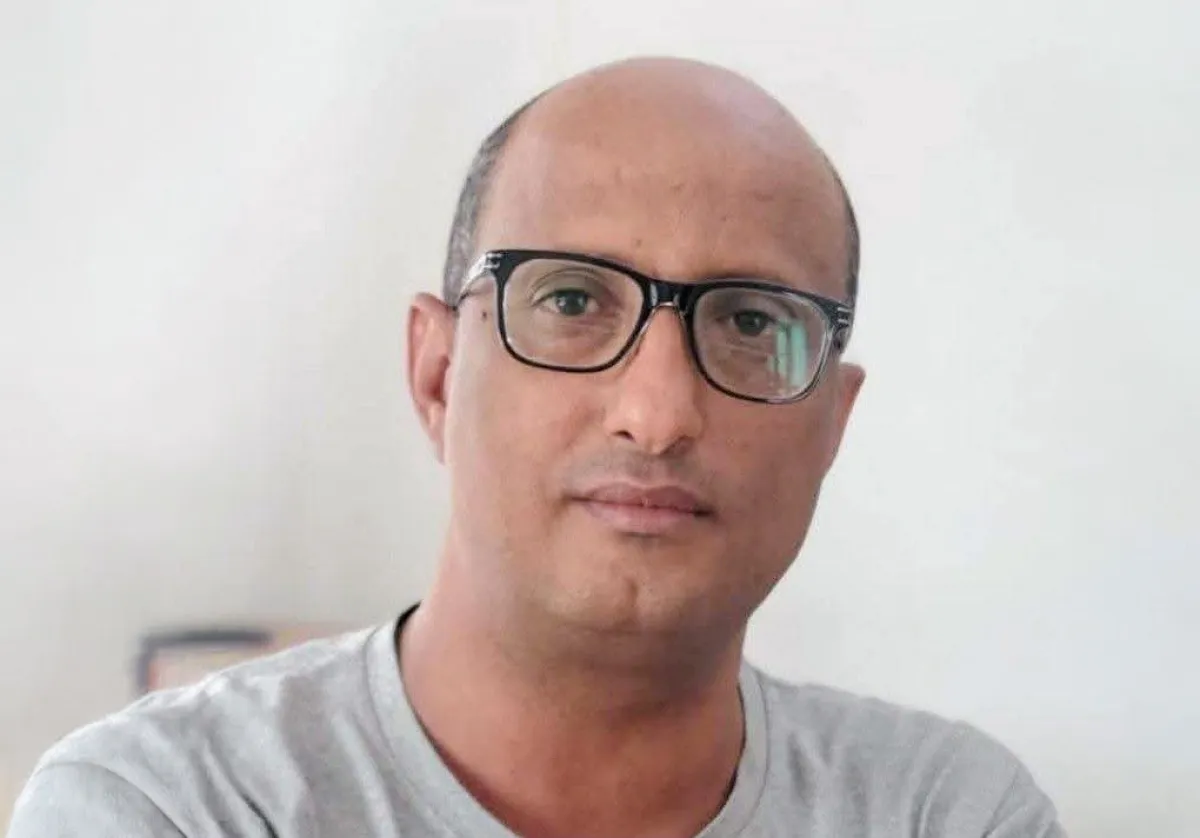
Mohammed Al-Mekhlafi is a writer from Yemen who specialises in Arabic literature and literary criticism. He writes in both Arabic and English for various local and Arabic platforms, as well as for other websites in Europe and Canada, including Rai Al-Youm, Quraysh, Al-Quds Al-Arabi, Toyob Al-Libbi and Nakheel Iraqi.
He also works as a translator from Arabic into English and vice versa. To date, he has translated seven books, including plays, an autobiography and a novel.
Can literature see what reality has yet to witness? Sometimes, literature outpaces reality not in time, but in attentiveness. It captures the minute details as they quietly take shape, long before they become obvious to everyone.
This concept is vividly embodied in the work of the German critic Siegfried Kracauer (1889–1966), a pioneer in the study of mass culture even before the rise of the Frankfurt School. In his 1947 book, From Caligari to Hitler (Princeton University Press), Kracauer analysed the profound link between art and society. He illustrated how mass culture unmasks a collective’s repressed desires and fears, revealing them as looming shadows before they ever solidify into tangible facts.
Kracauer did not claim that German cinema predicted Nazism as a matter of prophecy. Instead, he pointed to something far more subtle: cinema was unconsciously capturing the pervasive fear and the collective yearning for submission. These were the anxieties gnawing at the public consciousness long before they solidified into political policies. The true artist does not foresee the future; rather, they perceive the present with a depth that the present cannot yet recognise in itself.
Born in Frankfurt, Kracauer worked in journalism and film criticism. He was among the first to treat cinema not as fleeting entertainment, but as a psychological and social record that charts a nation’s hidden fears and desires. In his reading of Weimar Republic films, he revealed that the imagery of authority and tyranny was never innocent; it was a harbinger of what was to follow in German history. For Kracauer, art is not merely a mirror; it is a window.
Turning to the Arab world today, specifically to Yemen and the broader Middle East, one must ask: is the writer we read today capturing these hidden signals? Or do they remain captive to what has already become visible on the surface?
Yemen stands here as a condensed model. Chaos is no longer an anomaly; it has become the daily background. Conflict is no longer an event, but a familiar scene. The result is a quiet collapse of social and political structures, leaving a people living in a state of perpetual loss and unending fear.
When the Blind See What the Sighted Cannot
In Yemen, we find a living embodiment of this intuition in the experience of Abdullah Al Baradouni. He possessed a piercing political insight, perhaps as a compensation for losing his sight to smallpox at the age of six, which allowed him to see what was unfolding behind deceptive slogans and appearances.
*A personified metaphor for Yemen’s Sabaean heritage, history, and civilization.
Al Baradouni did not write from a vacuum. He lived through imprisonment and suffering, witnessing Yemen’s transformations during its most critical stages. This made his writing spring from raw experience, not from an outsider's perspective. In his collection, To the Eyes of Balqis’s Mother (Dar Al Awda, Beirut, 1971), his poetry transcends aesthetic expression to become a tool for understanding societal shifts. For him, Balqis* was not merely a historical symbol, but an expression of a Yemen caught in a state of tension and turmoil. In his poem, From One Exile to Another, he highlights this absurd cycle, a nation spinning in a void of endless conflict:
My homeland, from tyrant’s hand to tyrant worse to cruelest gaze,
From prison cell to prison cell, from exile to exile’s maze,
From a conqueror laid bare to a conqueror cloaked in disguise,
From one beast to two while she, the scrawny she camel, lies.
My land dwells in death’s caverns, neither perishing to find rest, nor healing to arise.
These verses are not an attempt at prophecy, nor are they cold, dry reports of events. Instead, they reveal how crises take shape from within. Al Baradouni traces a kind of chain reaction of collapse: one tyranny giving birth to an even greater one, and a nation turning into a restless arena of conflict. But what truly sets him apart is his ability to see the hidden coloniser, those silent transformations that trap Yemen in caves of death, where it neither dies to find peace nor heals to rise again.
Hamid Oqabi @ Literatur.Review: Umm Al-Duwais – A short story from Yemen
The Ram That Unmasked Power
From poetry to the novel, from the concentrated intensity of Al Baradouni to the expansive reach of Hamid Oqabi. A son of Tihama, Oqabi left Yemen for France at the turn of the millennium. His departure was not necessarily a political statement, but rather a search for a stable life for himself and his family, away from his country's strife and divisions.
In his novel, The Yemeni Stud Ram (Dar Al Darawish, Bulgaria, 2024), the author offers no direct predictions or overt political manifestos. Instead, he tells a seemingly simple story that uncovers a far deeper trajectory. The story begins with a small ram found by a man named Wahid in a village in Beit al Faqih. The ram grows remarkably, gaining a widespread reputation as people seek it out to breed their livestock. Rumours spread that its meat grants virility, driving its price to astronomical heights. Gradually, it evolves from a local phenomenon into a source of influence that reaches officials and, eventually, the pinnacle of power.
Over time, the ram becomes an instrument of hegemony. Its meat is used to win loyalties and buy off opponents. The tale reaches its climax when the ram is sold to a neighbouring country, not alone, but with the entire village and everything in it, as if the land and its people had become mere components of the deal. However, this ascent does not last. The ram dies, triggering a collapse: the fall of authority, the eruption of revolution, and the descent of the country into chaos.
The novel does not suggest this will happen literally, but it illustrates how collapse occurs: when illusion becomes reality and replaces critical thought. At its conclusion, the image is reversed. Yemen, despite everything it has endured, becomes a humanitarian destination, as if the path to preserving the world's humanity must pass through it. Violence breeds violence, and the sense of loss may endure, but that does not eliminate the possibility of a different generation emerging to gather the fragments, a change that rises from within Yemen itself.
From Shi’r Magazine to the Digital Crowd
This literary endeavour to track the shifts in consciousness is not confined to poetry or the novel; it extends to observing cultural transformations in the digital sphere, as seen in the work of Alwan Mahdi Al Jilani.
Al Jilani, a poet and researcher deeply invested in heritage and spirituality, and a prominent voice of the nineties generation with an output of 37 books, shrewdly realises that hidden reality is no longer limited to ancient folk tales. It now hides within the language we use to write our fragmented daily lives on screens. In his book, Sorrows of the Estranged (Anaween Books, Cairo, 2023), Al Jilani offers a precise reading of the Yemeni cultural scene through the lens of language and structure. His work is the result of a decade long journey tracing the path of the prose poem from its beginnings in Shi’r magazine to the spaces of social media.
Al Jilani chose the book’s title inspired by a social custom in Tihama: a woman who marries outside her village is called "The Stranger" (Al Ghariba), a title that haunts her regardless of how well she integrates. Al Jilani applied this concept to the prose poem, which has endured a double alienation: it arrived as an immigrant from another culture, and simultaneously collided with a traditional palate that refused to bridge the gap between poetry and prose.
Al Jilani argues that today’s digital shifts reflect the changing nature of the Arab individual. Social networks have liberated poets from traditional constraints, but they have also created a vast space for the loss of depth amidst the clutter of texts. He demonstrates how digital freedom can turn into an illusion of participation, and how new tools can distort consciousness, in much the same way Al Baradouni observed society’s collapse as logic fell before myth.
Living here in Yemen and observing all that unfolds, I realise with certainty that the transformations we are enduring were not as sudden as we imagine. The truth is that literature unmasked them long ago, but we squandered our time ignoring it.
Those texts I once read and dismissed as mere fiction or complex symbols that did not resemble us, I see them clearly today. It is as if they were documenting reality while it was still quietly taking shape. Literature has never been silent; we were simply too preoccupied to listen. Everything we are living through today was written clearly before us all along, but we simply chose not to see.
Did you enjoy this text? If so, please support our work by making a one-off donation via PayPal, or by taking out a monthly or annual subscription.
Want to make sure you never miss an article from Literatur.Review again? Sign up for our newsletter here.