



African theatre versus Western classics
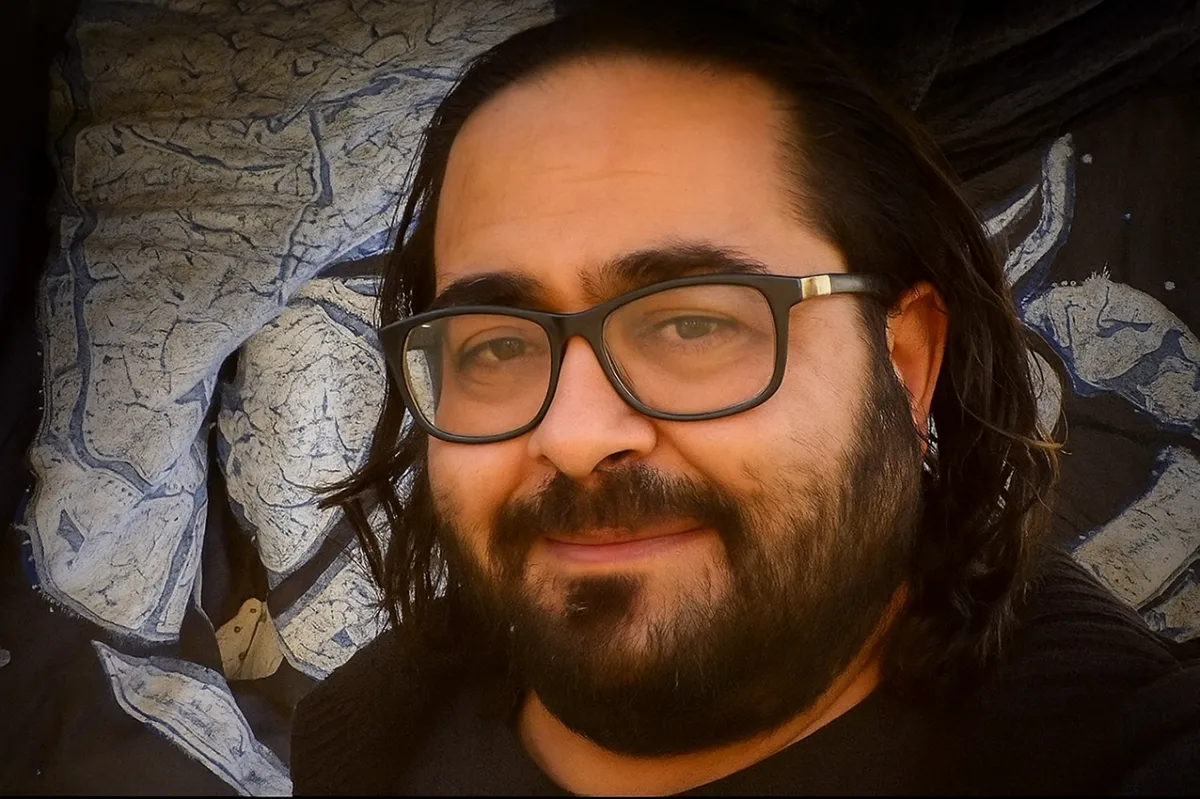
Hamed Ben Mohamed Mahdawi is a Tunisian writer and cultural critic with a degree in Arabic language and literature. A former cultural journalist, he works in the field of theatre and performing arts and has contributed to the visibility of contemporary creativity through his reporting on festivals and cultural and artistic events.
He has published research and critical articles in specialised Arabic journals and on cultural platforms, focusing on theatre, literature and the visual arts. He is particularly interested in the relationship between artistic expression and social and intellectual change.
Mahdawi is the author of the poetry collection I Sing the Prosperity of Cioran’s Pillow, which illustrates his interest in the human and aesthetic dimensions of writing.
The Western dramatic canon - that is, the body of great theatrical texts historically established as the ‘benchmark’ of dramatic art (such as the works of Shakespeare, Aeschylus, Molière and others) - is a source of discontent and opposition for certain Afrocentric thinkers. Concerned with interpreting culture and art from an African perspective, they believe that this Western corpus imposes unfair standards for judging new theatrical works from the African continent, since these are always evaluated according to criteria that are foreign to their cultural and historical context.
Some theorists have gone so far as to call for the complete rejection of this body of work and the development, instead, of forms and modes of representation deeply linked to the African experience, whether rituals, popular songs or modes of oral narration, which are considered more authentic and closer to the local social and cultural reality.
However, this article advocates instead the need to assimilate and repurpose the Western corpus, that is, to treat it not as a European model imposed from outside, but as material that can be reshaped and adapted to meet African cultural, political and creative needs. Appropriation does not imply capitulation, but rather the implementation of a critical and creative act that transforms Western texts into tools for expressing issues specific to African identity. Repurposing refers to the transfer of this corpus away from its original functions (rooted in European contexts) and orienting it towards new functions that respond to the demands and questions of the African public. Within this framework, the role of cultural hybridity and double consciousness in guiding this creative process can also be observed.
This process can be implemented through several models, ranging from the rewriting of Western texts in an African context to the reinterpretation of European heritage from a postcolonial perspective, including the application of traditional African modes of interpretation to classical Western texts. This opens up a creative horizon that transcends the traditional duality between 'the West’ and 'Africa' and also restores the metaphysical and ritual dimension contained in the original texts.
The model of creative transposition
The first model is generally known as transposition, while some American researchers call it ‘Black Orpheus’ (Black Orpheus). This term alludes to an important cultural and historical reference: it was used by the French philosopher Jean-Paul Sartre in his famous essay Black Orpheus (1948), in which he presented an anthology of the Senegalese poet Léopold Sédar Senghor, considering African poetry as a new voice emerging from the Western heritage and proclaiming its uniqueness. The name was then taken up in 1957 in Nigeria by a literary magazine founded by Ulli Beier, Black Orpheus, which became an important platform for the promotion of modern African literature, whilst rethinking its relationship with the West. In theatre studies, the term today refers to the reinterpretation of classical Western texts in an African context.
This model is therefore based on African playwrights inventing African equivalents to classical Western works, in a one-to-one correspondence between characters, settings and dramatic structures. A striking example of this is Ola Rotimi’s play The Gods are Not to Blame, adapted from Euripides‘ famous tragedy Oedipus Rex. Rotimi retained almost the entire original structure: Oedipus became Odewale, the action moved from Thebes to Kutuje, and all names were replaced with their Yoruba equivalents.
Through this transformation, the Greek heritage becomes a simple cultural metaphor or symbolic framework reused in an African context, while a new text emerges that addresses current African issues, yet continues to draw on Greek dramatic foundations in its underlying structure. Western classics are thus reproduced in an African mould, becoming a means of questioning issues of identity and destiny on the continent, rather than a simple reworking of foreign texts.
Welcome Msomi presented his famous play uMabatha, first performed in 1971 at the University of Natal’s open-air theatre, following the same logic as the ‘Black Orpheus’ model. The play was based on William Shakespeare’s Macbeth, but Msomi changed certain elements, setting it in the Zulu kingdom in the 19th century during the reign of Shaka and Dingane. Thus, Banquo became Bhangane, Lady Macbeth became Kamandonsela, King Duncan became Dangane, and the Thane of Cawdor became Khondo. More importantly, the play was performed entirely in Zulu, without any other linguistic intermediary.
Thanks to this strategy, Masumi managed to reframe the reception of Shakespeare’s text so that was perceived as an African work addressing local African issues. In South Africa, during the apartheid era, official institutions were steeped in the policy of ‘Afrikanerisation’ of theatre, i.e. the imposition of the cultural domination of the Afrikaner minority, coupled with the marginalisation of African culture and its forms of expression. Furthermore, radical theatrical activities were largely prohibited due to the rise of the Black Consciousness Movement.
The performance of uMabatha was nonetheless authorised on the grounds that Africans were thereby contributing to their own ‘cultural colonisation’, by reproducing European texts in local formats. But Masumi’s transposition had the opposite effect: it freed Shakespeare from his European centrality by incorporating Zulu dances, songs, percussion, costumes and laudatory poetry. Thus, Zulu culture, threatened by the apartheid regime, became a celebrated and restored culture under the guise of Shakespeare, making this performance both an artistic and political act of resistance.
The model of reconnecting with African roots
The second model of reusing Western classics, particularly those of Greek origin, is what is known as ‘reclamation,’ which some intellectuals from the African diaspora in the United States call ‘Black Athena.’ This trend stems from the historical fact that much of the content of Greek plays, including myths, gods and culture, is of African origin. According to the ‘father of history’, the Greek Herodotus, the Greeks inherited their myths, gods and culture from the ancient Egyptians, who were, from a physiological point of view, a mixture of Asian and Black people. This view draws intellectually on a work by Martin Bernal: Black Athena: The Afro-Asian Roots of Classical Civilisation - 1987).
In this conception, the god Dionysus is considered a Greek version of the African god Osiris. It was also the Egyptians who invented performative theatre, which were then ‘stolen/copied/assimilated’ by the Greeks in the form of dithyrambic song and dance. The Greeks developed these further, creating what is known as the ‘Western dramatic canon’, exclusively associated with the West. According to this model, the choice of material ‘stolen’ from Africa and its reintroduction into African theatre does not constitute cultural colonialism, but rather a historical correction that returns culture to its rightful owners.
Although the metaphysical dimension of Western theatre has receded since the emergence of the European bourgeoisie, it has remained an essential component of African theatre. Zimbabwean director and researcher Samuel Ravengai provides a striking example of this interaction in his play Vumani Oedipus, which not only references Greek mythology, but also makes profound dramatic and cultural transformations, showing how the classics can be reinterpreted to serve a powerful local vision. Ravengai shifted the action to an imaginary African country called Nguniland and merged some traditional characters, such as the priest and the senator, into a single character called Ndunankulu, simplifying the dramatic structure and focusing the conflict on relationships relevant to the narrative axes. He also added new elements not found in the original Greek text, reduced the dialogue and revised the language to avoid the canonical phrasing used in classical translations, thus presenting a work more in line with the tastes of contemporary audiences in South Africa.
But the most profound transformation lies in the reconfiguration of the reception: the play is not only aimed at an English-speaking audience, but is open to several local languages, highlighting the multiplicity of cultural identities and reintegrating the African experience into the heart of the classical text. Similarly, the play exploits metaphysical and ritual elements by invoking spiritual mediums (sangoma) and collective rituals, not as superficial folkloric elements, but as parts of a value system in which destiny, ancestors and invisible forces are inextricably linked to everyday life. Thus, the Greek text moves from a passively reproduced reference to a living space for the production of meaning, reshaped in the light of the African context to raise new questions about destiny, identity and power, just as Arabic theatre – in its use of the classics – seeks to question its present by invoking the mythical past.
The analysis reveals that the reuse of the Western dramatic works in the African context is not limited to a simple adaptation or imitation of classical texts, but represents an integrated critical and creative process aimed at reorienting these texts to address African cultural, political and social issues. By way of illustration, Black Orpheus and Black Athena offer multiple mechanisms for restoring the African roots of theatrical heritage and adding the ritual and metaphysical dimension that is lacking in many Western plays, thus allowing African theatre to be a space for experimentation and celebration of local identity in the face of the legacy of cultural colonisation.
These examples confirm that critical interaction with Western classics is not a capitulation to cultural domination, but rather a tool for enriching African culture and redefining the relationship between universal heritage and local particularities. From this perspective, the creative reappropriation of Western theatre can be seen as part of a broader strategy to strengthen African cultural and creative identity in the contemporary world, beyond the traditional division between 'the West' and 'Africa'.
+++
Did you enjoy this text? If so, please support our work by making a one-off donation via PayPal, or by taking out a monthly or annual subscription.
Want to make sure you never miss an article from Literatur.Review again? Sign up for our newsletter here.
English adaptation based on the French translation from Arabic by Khaled Osman