



The fish rots from the head down
 Simon & Schuster
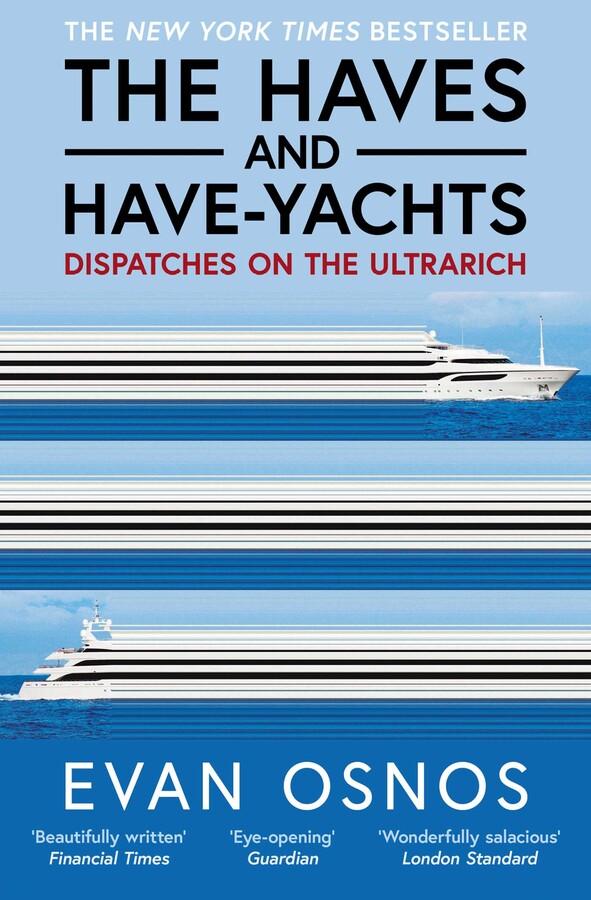
Evan Osnos | The Haves and Have-Yachts | Simon & Schuster | 304 pages | 10,99 GBP
No, I’m not jealous. When I was 20 or 21 years old, I basically made a vow that I didn’t want to become rich. Under no circumstances! Please, no. All I asked was that I should never be without life's essentials, and always be able to pay my rent. So far, I’ve largely succeeded in following this path in life.
There is a growing awareness of the extraordinary wealth possessed by a small elite in most countries around the world. It’s no longer enough to simply let the new ultra-rich live their lives without envy. Their power and influence have grown so great that they can destabilise entire societies. In his book The Haves and Have-Yachts / Dispatches on the Ultrarich, Evan Osnos cites a study on this topic. Here I must confess that I had overlooked this point in my review of the book The Coming Storm, which deals with the danger of a Third World War, even though the author explicitly pointed it out.
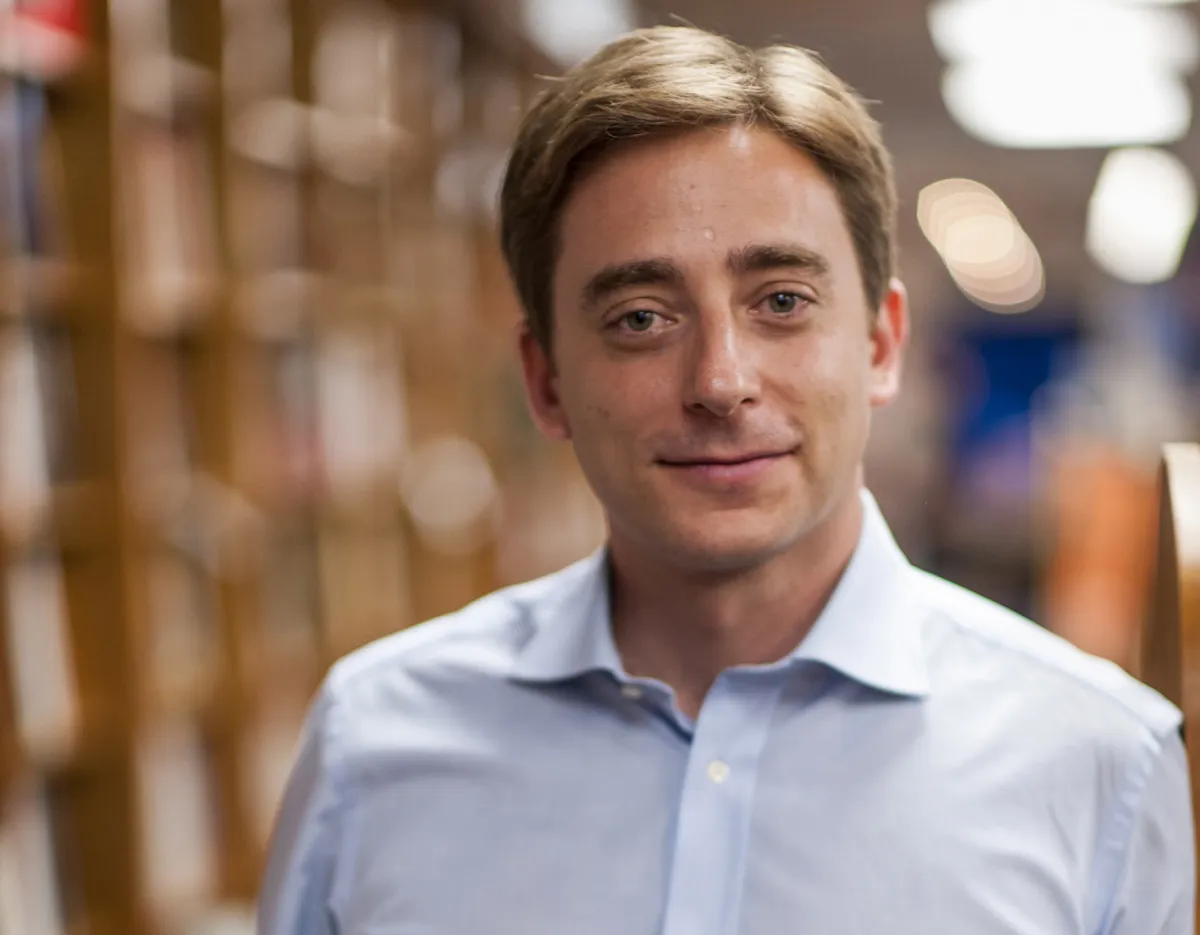
Evan Osnos is an American journalist and author who works for 'The New Yorker' magazine. His bestselling book was published in 2025. In February of that year, C.H. Beck released a German paperback edition. In June, the publisher Schuster & Simon followed with an English edition. The book is a collection of essays and reports previously published by the author in 'The New Yorker.' The earliest text dates back to 2017. The author divides his book into three main chapters: 1. The Rewards: How to Spend Your Money. 2. The Methods: How to Keep Your Money. 3. The Dangers: How to Lose Your Money. Each main chapter consists of three essays.
The opening essay gives the book its title. It’s about yachts that grow ever bigger by the year. As one billionaire explains to Osnos, people buy them because it’s a good way to spend excess money. But also, how better to advertise one's status to other ultra-rich individuals? As a reader, one cannot help but view the question of who owns the biggest yacht from a phallic perspective. Who’s the biggest? Who’s got the longest? Who's is the most powerful?
Yachts are also so highly coveted because at sea, you’re in extraterritorial waters and thus, de facto, outside the law. Evan Osnos quotes a yachtsman who says: “If the rest of the world finds out what life is like on a yacht like this, they’ll bring back the guillotine.” Later in the book, I came across the acronym GOAT, which I had been unfamiliar with. No, it doesn’t stand for “goat.” It stands for “Greatest of All Time.”
The ultra-rich are often people who not only take big risks but also analyse things deeply, including with regard to the future development of humanity. Many ponder how they might escape what is considered a possible societal collapse—a collapse to which they themselves, as they are surprisingly often aware, have contributed significantly. Here’s a tip for all of us: When making an escape, it’s important not only to have a plane and a pilot at the ready, but also to be sure to take the pilot’s family along. The realisation that a pilot would be reluctant to leave his family to a terrible fate in order to save his employer was slow to dawn, but ultimately, the ultra-rich grappling with this issue have come to accept this as a regrettable necessity.
Evan Osnos repeatedly highlights how the fundamental attitudes of the elites in the U.S. have altered drastically since around 1980. Still influenced by Puritanism, the U.S. super-rich - not yet ultra-rich - were rather reluctant to display their wealth. They didn’t flaunt it. They embraced certain values and felt a sense of obligation toward the general public. Exceptions proved the rule. With the vast wealth made possible by globalisation and the rapid technological advancements of recent decades, these attitudes have been gradually disappearing. For some time now, the motto has been: 'as much as possible, as quickly as possible.' By any means available. Citing private concerts given by famous musicians, even for dictators, and paid millions of dollars, the author illustrates this shift in mindset even within a sector that, from the 1960s to the 1980s, thrived by presenting itself as rebelling against the establishment.
Anyone wanting to learn more about Mark Zuckerberg and how he maintains and continues to expand his wealth will find this book a valuable resource. Evan Osnos paints a nuanced portrait of him. He observes, asks questions, presents research findings, and does all of this in a refreshingly non-ideological way, without ever losing sight of his objective.
In his essay “The Rules of the Ruling Class,” he begins with Tucker Carlson, who, the day before this essay was written, withdrew his support for the American president. He discusses, in particular, how certain among the elite have made criticism of that same elite their business model. His father is said to have recommended journalism to him with the words, “They’ll take anyone,” after his son had failed the entrance exams for several career paths he had tried to pursue.
There will always be elites, but they are also constantly being renewed. History is a graveyard of elites, said Vilfredo Pareto, who coined the term around 1900. If you want to be part of it, it’s not just money that matters—you also need a keen sense of the rules. The struggle for the top is relentless, because the summit of a pyramid cannot accommodate everyone. In Silicon Valley, it’s said that the prevailing prediction is that artificial intelligence will divide the world into just two classes. One will be those who tell AI what to do; the other, those to whom AI gives instructions.
Some dig their own graves because their schemes are so obviously illegal that they get caught. The rule is that the very things that made them so successful are also the things that contributed to their downfall. This is coming from someone who himself spent substantial time in prison and, on his release, organised self-help groups for ex-convicts from the world of big business, going on to build a professional career as a consultant for such cases.
Among them are people who probably thought like Leona Hemsley, who told her housekeeper, “We don’t pay taxes; only the little people pay taxes,” before she eventually went to prison. But under Donald Trump, the risk of things coming to that is becoming increasingly remote. The number of employees at the tax audit agencies is being consistently reduced. However, by international standards, the U.S. is probably more the rule than the exception.
It would be easy, reading this book, to become a conspiracy theorist. Warren Buffett said in 2005, in response to critics of his observations: "There’s class warfare, all right, but it’s my class, the rich class, that’s making war, and we’re winning.” But one thing I know for sure: Even the richest and most powerful ultimately have just as little control over their own fate as everyone else. Putin’s war against Ukraine and Trump’s war against Iran are the most recent examples of this.
In his book, Evan Osnos has shown what the world of the ultra-rich looks like from the inside—how they live and what they think. Having a realistic understanding of this could prove important for our future.
Did you enjoy this article? Then please support our work one-time or monthly through one of our subscriptions. We’d appreciate it!
Don’t want to miss any more articles on Literatur.Review? Then sign up for our free newsletter!