



The Topography of the Repressed
 Spector Books
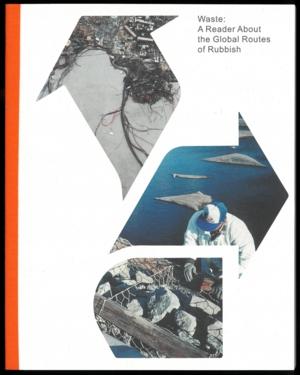
Museum Ostwall at the Dortmunder U | Waste. A Reader About the Global Routes of Rubbish | Spector Books | 166 pages | 22 EUR
The flow of goods does not stop at the checkout. It continues to circulate, invisible to Western consumer societies, and settles elsewhere as toxic sediment. Anyone entering the Museum Ostwall, in the exhibition building Dortmunder U, is confronted with the uncomfortable truth that our prosperity is based on a geography of repression. The current exhibition “Trash. An Exhibition on the Global Paths of Waste” connects historical perspectives dating back to the 1960s with contemporary art, focusing on those areas where the system of perpetual consumption leaves its ugliest traces. Around fifty international artworks shed light on the social, ecological, and political dimensions of trash. The exhibition is particularly striking where it exposes the colonial continuities of Western throwaway culture. The artistic positions from the Global South radically challenge the Eurocentric perspective and present waste not as an abstract environmental problem, but as a real, economic dependency.
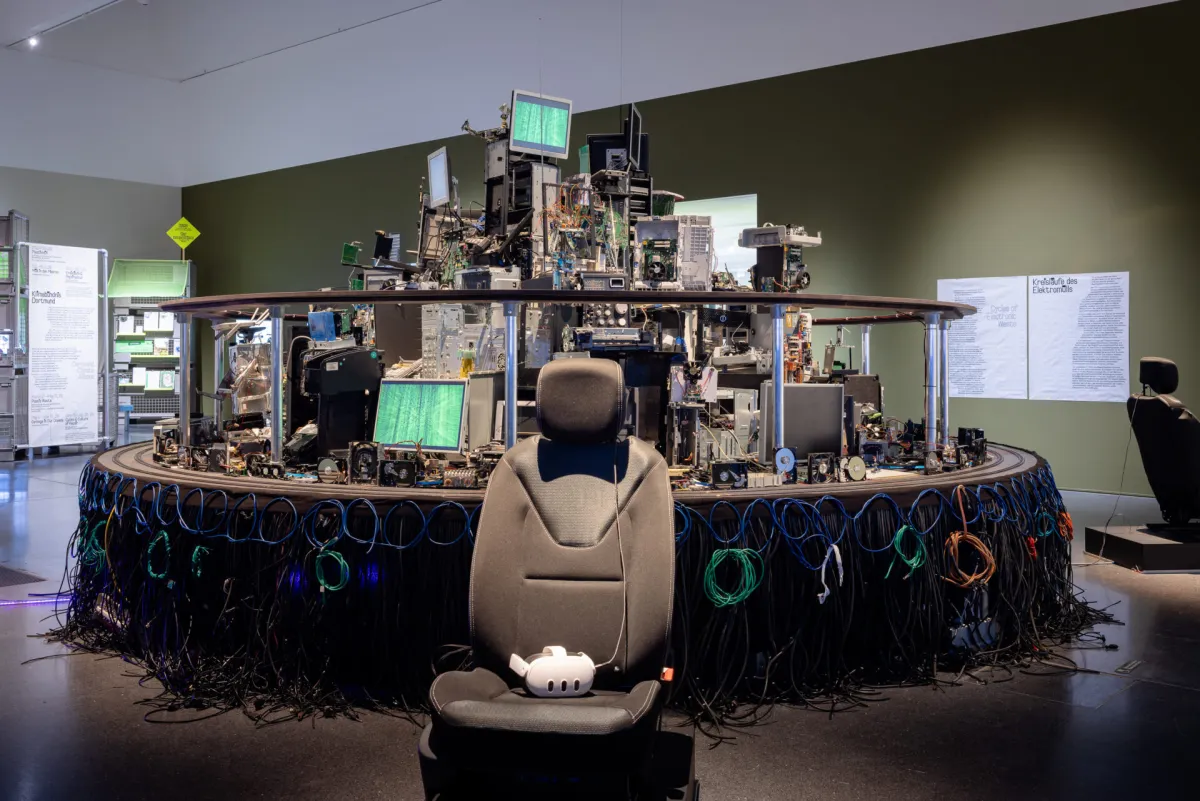
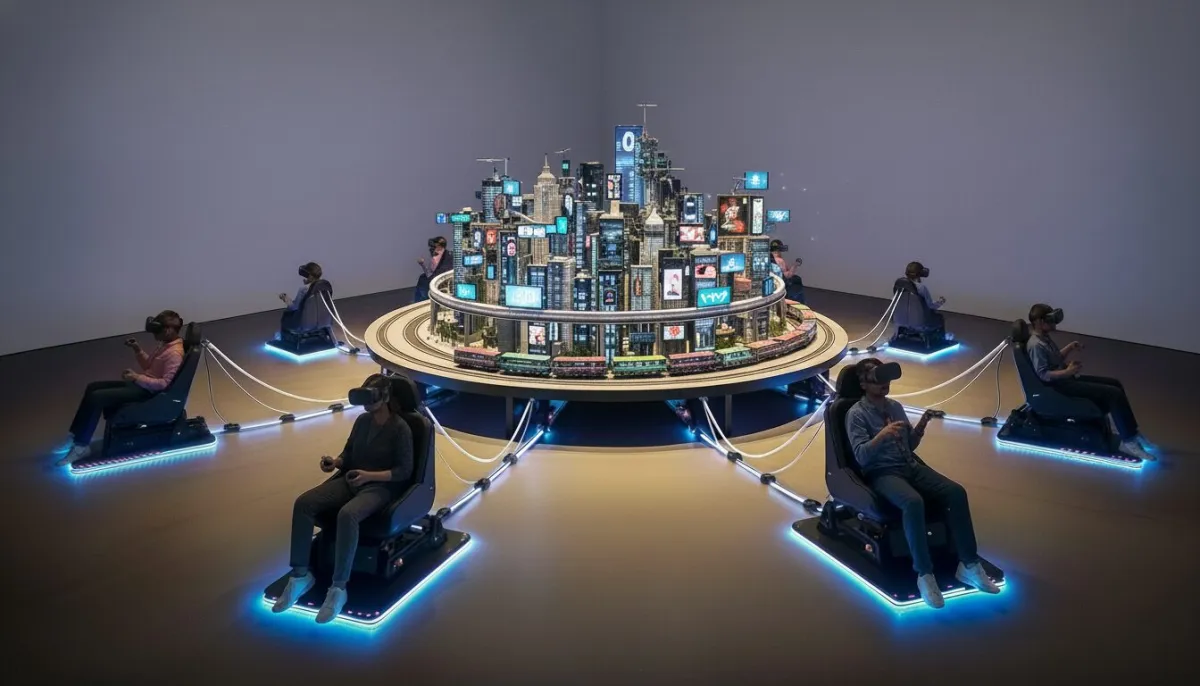
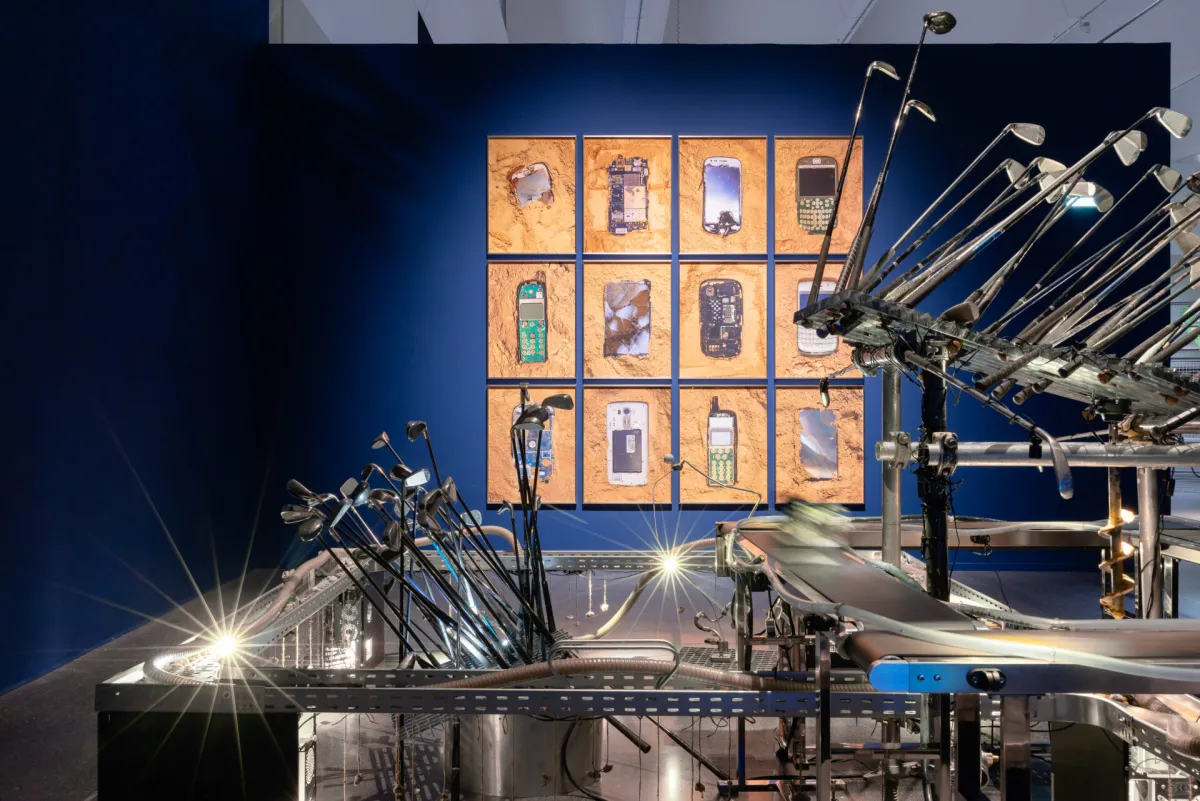
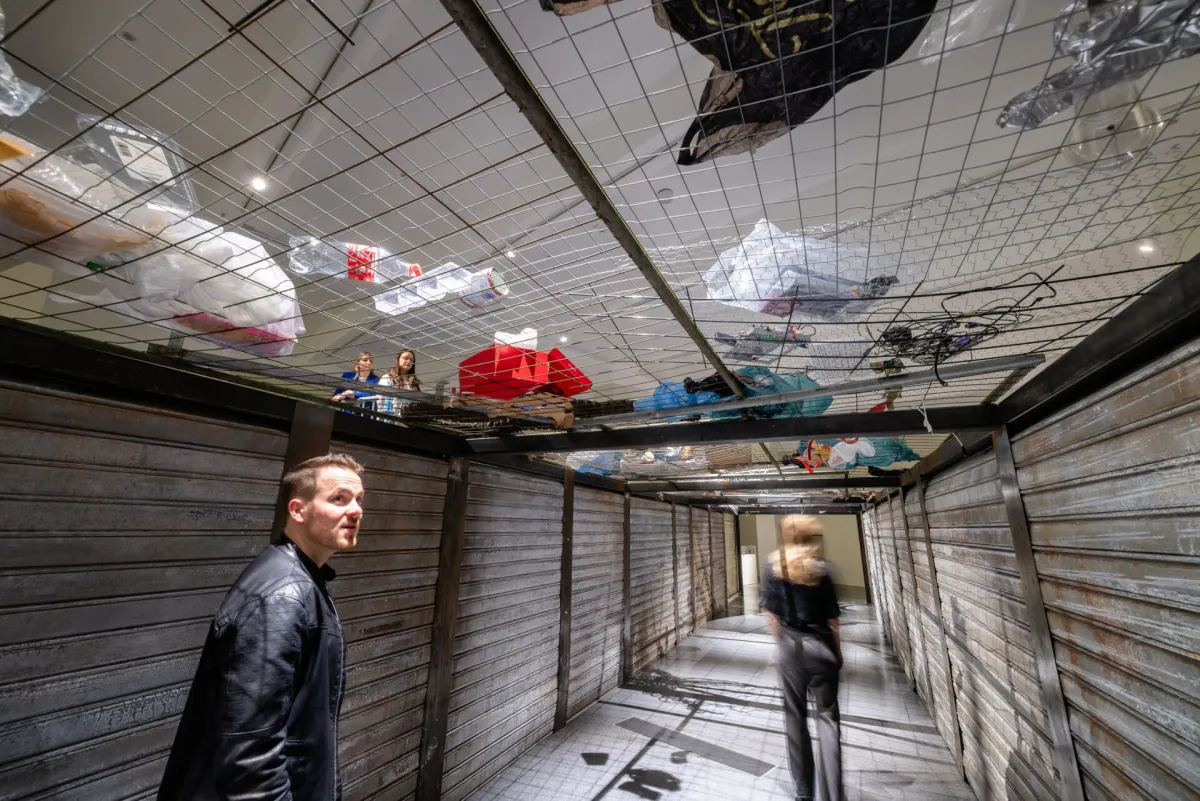
In her video work Brown Goods, artist Karimah Ashadu traces the informal, often life-threatening cycle of used European electronics in West Africa, bringing to light the people who, under precarious conditions, recycle what the North discards. In contrast, Akwasi Bediako Afrane’s commissioned work TC-2000, created specifically for the exhibition, is an Afrofuturist science-fiction city built entirely from Dortmund’s electronic waste. Interwoven with flashing screens and model trains, Afrane transforms technological waste into a utopian narrative of resilience. While Ana Alenso, in her expansive multimedia installation Obsolete Swing condenses the toxic processes of raw material extraction and disposal in the electronics sector into an oppressive Anthropocene landscape, Kader Attia fundamentally highlights the political dimension of waste: his unsettling installation Los de arriba y los de abajo invites visitors to walk beneath a grid walkway piled high with real scrap metal—a work that references the nets in Hebron used by the Palestinian population to protect themselves from the refuse of higher-lying settlements. Here, trash appears as the ultimate instrument of power within social hierarchies.
Alongside the exhibition, the Leipzig-based publisher Spector Books has released the bilingual anthology “Müll. Ein Reader über die globalen Wege des Abfalls”( Waste: a reader on the global trail of waste) It expands on the exhibition's themes with interdisciplinary contributions from scholars and artists, best-practice examples, and a reflection on the project and its development process with the exhibition’s critical friends. Among the noteworthy contributions, the essay by South African cultural scholar and science fiction author Nedine Moonsamy stands out. Her text resonates masterfully with the exhibited works. Moonsamy deconstructs the Western concept of trash as an absolute endpoint. She argues that the definition of waste is inextricably linked to colonial power: what is declared worthless in the Global North arrives in the Global South as a toxic burden, forcing local people into a hyper-creative, often vital, practice of repurposing objects. Moonsamy demonstrates that living with and among trash need not be a purely dystopian end-of-days scenario, but that new forms of subversive economic activity and resistance are developing in the interstices of landfills. In Moonsamy’s work, trash becomes an archive of globalisation—and a material from which the future is already being built in the Global South, while the North is still desperately trying to bury its past.
"Since the industrialised nations of the Global North have been grappling with the consequences of excessive consumption, they have also had to deal with the growing problems of waste disposal and recycling. Many countries are very reluctant to tackle the waste problem within their own borders; instead, they exploit the barely regulated waste management processes in the Global South. "
With this exhibition, the Dortmunder U demonstrates the courage to confront the gap—the gap that the Western consumer system leaves in the global consciousness. Waste is not the end of the chain, but the beginning of a deeply unequal global narrative.
+++
March 28 March – July 26, 2026
Waste. An Exhibition About the Global Routes of Rubbish
Museum Ostwall at the Dortmunder U, Dortmund
Did you enjoy this text? If so, please support our work by making a one-off donation via PayPal, or by taking out a monthly or annual subscription.
Want to make sure you never miss an article from Literatur.Review again? Sign up for our newsletter here.