



Ramadan, then and now
Mohammed Al-Mekhlafi is a writer from Yemen who specialises in Arabic literature and literary criticism. He writes in both Arabic and English for various local and Arabic platforms, as well as for other websites in Europe and Canada, including Rai Al-Youm, Quraysh, Al-Quds Al-Arabi, Toyob Al-Libbi and Nakheel Iraqi.
He also works as a translator from Arabic into English and vice versa. To date, he has translated seven books, including plays, an autobiography and a novel.
I woke up today just before noon, scrolling through my phone and searching for something to write about. I usually try to publish at least one article each week, but today I feel drained and unfocused.
Even though I am not working at the moment and have more than enough time, writing feels unusually difficult. It is as if the words have lost some of their luster and grown weary, or perhaps reality itself has become too vast to fit into a single article.
This year’s Ramadan feels noticeably different. Exhaustion is visible on people’s faces everywhere, weighed down by worries that are hard to ignore.
Beggars crowd the streets in front of money exchange shops and mosques, and some go door to door, searching for a bite to quiet their hunger.
Meanwhile, most people remain inside their homes, confronting their bitter realities in silence.
In the past, those who begged were usually elderly people with no one to support them, along with a few of society’s most marginalized. Today, however, the scene is strikingly different and far more painful.
Young girls at the beginning of their lives, mothers carrying their children, and small boys and girls stretch out their hands simply to survive.
Amid these heartbreaking scenes, I witnessed something last night that has not left my mind. A young girl, no more than twelve years old, approached me outside a small shop and asked if I could help her.
"Where is your father?” I asked.
“He passed away,” she said softly.
She told me that her mother was sick at home and that eight younger siblings were waiting for her. They live in a small, crumbling basement apartment. She had left the house shortly after the afternoon call to prayer and wandered the streets hoping someone might help her. By that hour, she had collected only three hundred and fifty riyals—an amount that would not even be enough to buy a simple suhoor for her family.
I asked whether she had eaten iftar. She said a woman had invited her into her home and offered her food, but she had grown frightened and left quickly.
I stood there looking at her, thinking about the harshness of the moment. A child of that age, with such innocence, standing alone on the street late at night, searching for a way to bring food to her family in a city whose streets are not free of harassment and danger.
Beyond this scene lies a wider atmosphere of uncertainty. The region remains overshadowed by war, conflicts continue to expand, and major powers move fleets and armies across the seas.
Such developments often ripple outward, threatening disruptions in oil and gas markets and placing new strains on the global economy. Caught within these overlapping circles of tension is a country like Yemen, already burdened by old crises, living on the margins of the storm yet absorbing its full impact.
Amid this heavy reality, my mind drifts back to the city of Aden, where I was a university student, balancing work and study. I remember those days as carrying a different rhythm and vitality, unlike the weary faces we see today.
My days would begin around nine in the morning. I would head to my office in the Secretariat of the Director of Security for Aden Governorate. At the time, Brigadier Mohammed Saleh Turiq, may God grant him health and a long life, served as the province’s security director. He was deeply patriotic, known for his discipline and careful attention to every matter related to security.
I worked as a media officer. Each day, I reviewed roughly a dozen newspapers, marking articles that dealt with security issues or discussed the work of the security services in the governorate. I would then sort through the material that required a response or clarification, preparing appropriate replies or drafting media statements before presenting them to the director.
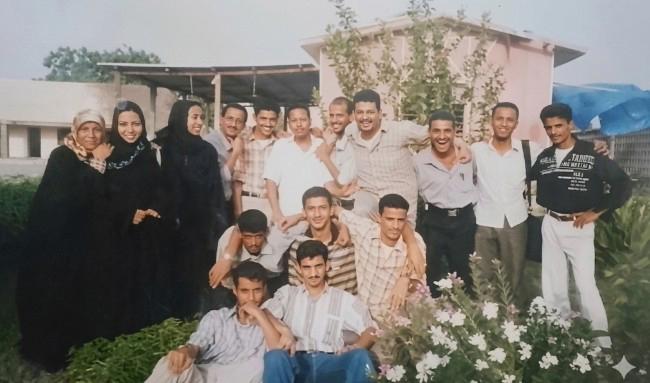
Afterward, I would head to the college and attend classes until about four in the afternoon. I remember one day during Ramadan when I sat with a group of classmates under the trees in the college courtyard.
We spoke about Ramadan traditions in Aden. They described the rituals of welcoming the holy month in vivid detail, while my female classmates spoke enthusiastically about kitchen preparations and the dishes families made a point of preparing during Ramadan.
Aden, with its humble people and unique character, comes alive during Ramadan. Children play with firecrackers, people prepare themselves spiritually and materially, and streets fill with laughter and anticipation. Mosques are crowded day and night with people performing prayers and praising God, while families gather at dining tables where rich and poor sit side by side, sharing food and hospitality.
Just before the sunset prayer, we would head to the home of the director of the security chief’s office, Ebrahim Al-Mekhlafi. His house sat along the slope of Jabal Hadid Mount overlooking the city of Al-Mualla.
There we would gather for iftar. He would lay out a generous spread of Taiz-style dishes: fattah soaked in rich broth with local ghee, hot chilli mixed with Taizi cheese, and other plates stretching along the length of the sitting room. As we ate, we watched the Ramadan comedy series Tash Ma Tash, the room filled with laughter and playful banter.
Sometimes my friend, Lieutenant Colonel Badr Shatara, a kindhearted man, would invite me to his home in Al-Aidrus neighborhood of Crater. His house was a modest rooftop shack made of wooden planks. Yet he was a master at preparing shorbat Al-kaware. I always enjoyed those evenings with him, sitting together, exchanging friendly conversation, and passing the time in easy companionship.
At nine in the evening, I would usually make my way to Crater to meet my colleague Mohammed Shabeer. We would wander through the streets and narrow alleys of the district, eventually settling at Sukran Café, where we drank Adeni milk tea and shared stories, laughter, and jokes. Around us sat people of all ages. Even elderly men joined in games of dominoes, their voices rising with bursts of laughter, while children ran and played along Al-Baz Street.
We often spent our evenings this way until midnight. Afterward, I would return to my lodging at the Security Administration in Khormaksar, where I shared a small room with my friend, Lieutenant Fahd Al-Maqtari. Once back, I would review my lessons, eat a late suhoor, and then drift off to sleep around two in the morning.
Thursday nights, however, carried a different flavor. We would gather at the apartment of my friend Mutasim Al-Odaini in the triangular building near the Faculty of Education in Khormaksar. The building, constructed by the Russians, consisted of 120 apartments spread across four floors and arranged in the shape of a triangle.
The apartment was always scented with the fragrance of Adeni incense. There we met with friends: Professor Abdulrahman Al-Qisha'ee who taught us didactics in French, Bilal Al-Khalidi; Ahmed Zaher, Muath Mogha'les, may he rest in peace and Rafiq Al-Humaidi, the ever-striving student who, alongside his studies in French at the Faculty of Arts, was also enrolled at Amin Nasher Institute studying radiology. He carried his bag with him everywhere, moving from place to place, never quite having a fixed place to stay.
We spent some of our most memorable evenings there, listening as Mutasim Al-Odaini filled the room with religious chants. At other times, he would sing songs by Kadhem Al Saher or Abdelhalem Hafedh, and the apartment would come alive with warmth, friendship, and music.
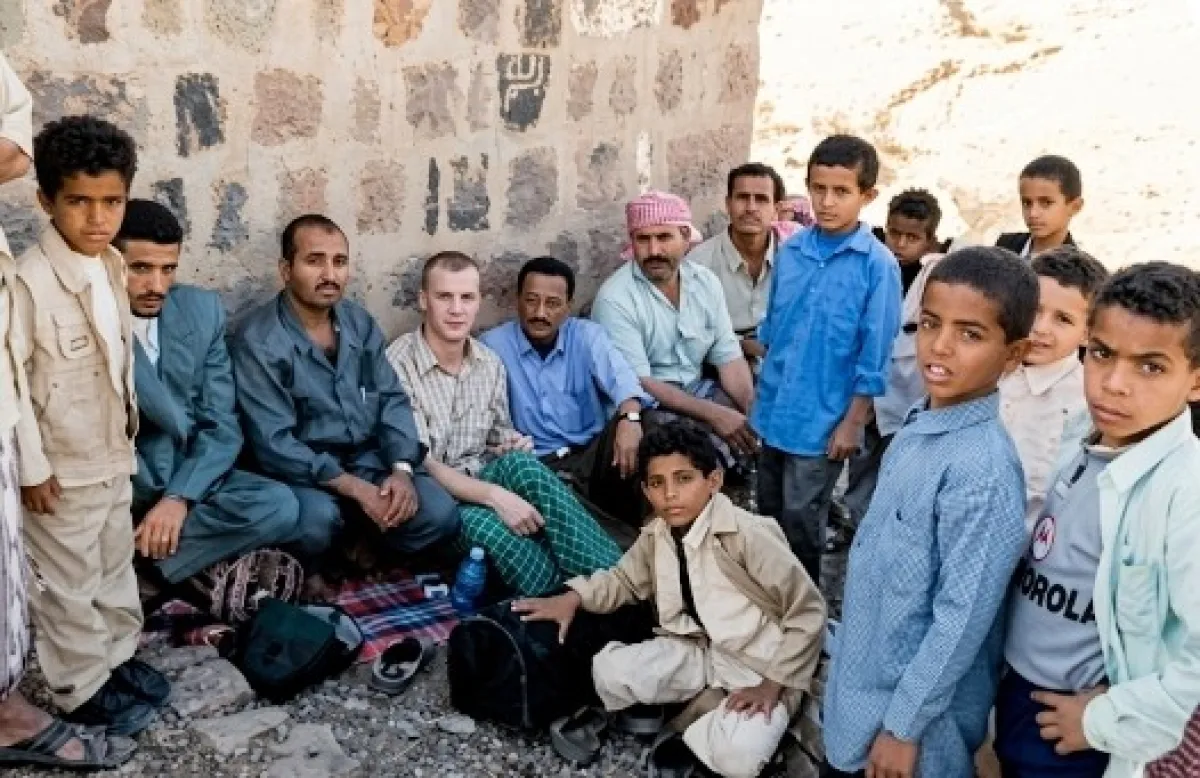
Two days before Eid, I would usually travel to my village, Kinda, in the district of Mekhlaf Sharab, north of the city of Taiz, to spend the holiday there. On one occasion, my French friend Sébastien Dolidiquic, who was also my professor at the university, accompanied me. We arrived in the village just before the sunset prayer. The sky was heavy with clouds, and a light drizzle began to fall, as if blessing our arrival.
At the village market, people gathered around us with curiosity and surprise. They welcomed us warmly and asked, “Who is this?” I replied, “This is my friend Sébastien from France. He came with me to visit the countryside of Taiz.” The villagers nodded with admiration and greeted him with genuine hospitality.
Sébastien respected our religious customs. During Ramadan, he refused to eat during the daytime, choosing only to drink water and occasionally smoke discreetly.
After the afternoon prayer, we would go to Al-Hossain market to buy qat, then head to the valley, or sometimes up into the mountains, with the village boys, taking photographs together.
Some villagers would stop us along the way and try to invite Sébastien to embrace Islam. I remember Saeed Abdo Al-Wali, one of the most respected men in the village, known for his generosity and kind heart. May God protect him. He would say to Sébastien, “Repeat after me: I bear witness that there is no god but God, and that Mohammed is the messenger of God.” Sébastien would repeat the words after him.
Later on, Sébastien did indeed embrace Islam. He changed his name to Mohammed and eventually married a woman from Aden.
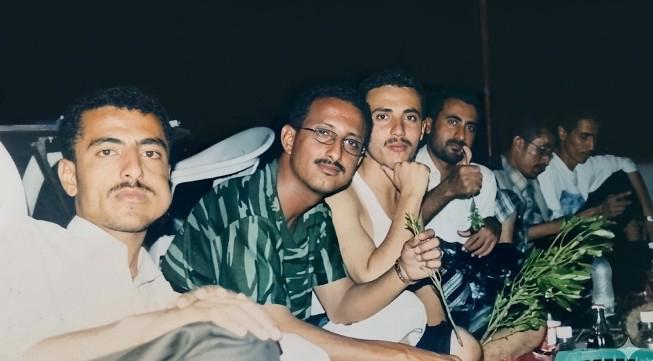
In the evenings, we would chew qat in the sitting room of Mohammed Hamoud, my nephew, together with the young men of the village.
The atmosphere was relaxed and cheerful. Sébastien spoke some Arabic and particularly enjoyed listening to Mohammed Abdul Qaisi, may God grant him health and well-being, as he sang with his beautiful voice, mixing humor with song. We spent five days in the village before returning to Aden.
In those years, foreigners could be seen everywhere, filling the cities, historical sites, and tourist destinations. Today, those scenes have largely disappeared, as though the world has stopped noticing the lives unfolding here.
As I write these lines, I cannot help but feel a mixture of nostalgia and sorrow. Nostalgia for a time when Ramadan carried the flavor of simple joy, clear laughter, and faces bright with contentment.
Sorrow for what we see today, fatigue, and faces burdened by the weight of life. I remember all those small moments, from the streets of Crater to my village, and the friends who shared with me times that will never be forgotten. I realize that life, despite its harshness, still holds small moments that allow us to smile.
Did you enjoy this text? If so, please support our work by making a one-off donation via PayPal, or by taking out a monthly or annual subscription.
Want to make sure you never miss an article from Literatur.Review again? Sign up for our newsletter here.