



The Martyr
It’s summer in the Global North and winter in the Global South. Reason enough for Literatur.Review to bring summer and winter together in August and publish previously untranslated or unpublished stories from the North and South of our world.
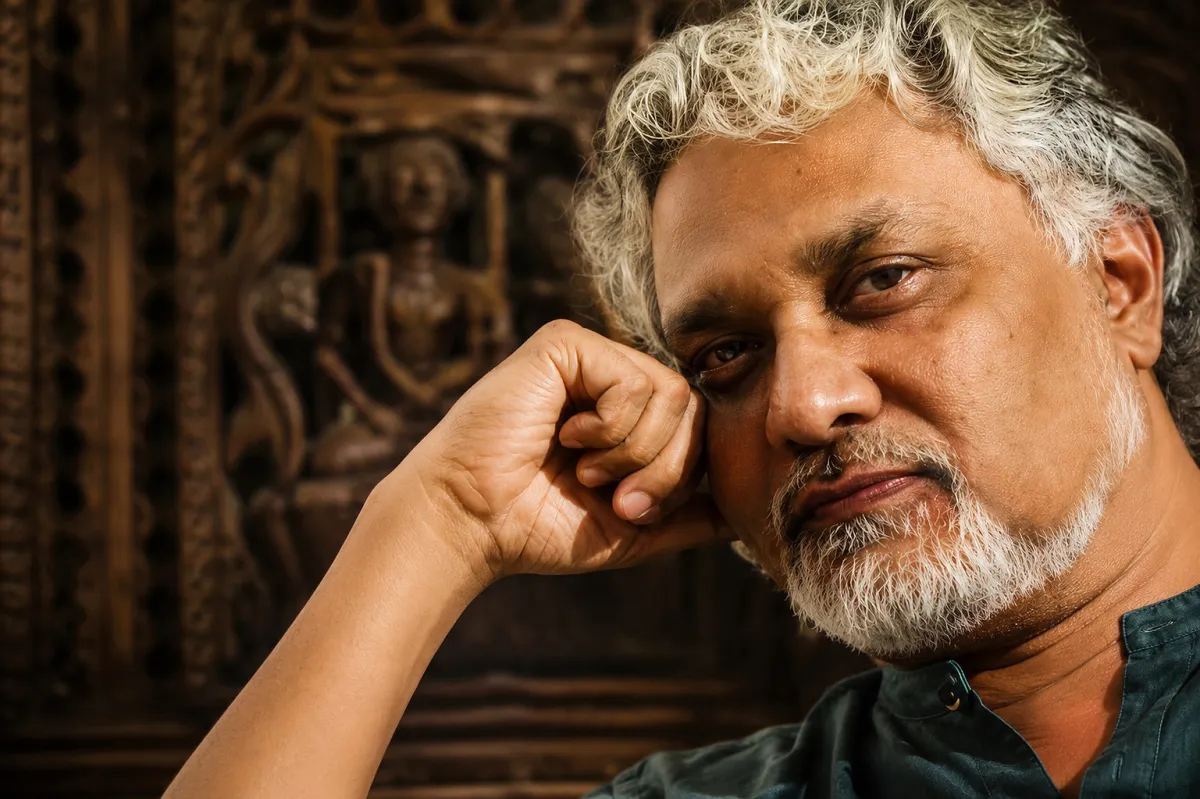
Kunal Basu is the author of twelve novels and three collections of stories. His works have been translated into numerous languages, and his story The Japanese Wife was adapted into an award-winning feature film directed by Aparna Sen. He has presented his work at international literary festivals around the world and has held literary fellowships in the United States and Australia. Born in India and now based in Oxford, where he teaches at the University of Oxford, he is completing an interconnected collection of stories set in contemporary Calcutta.
Amar Dey was long dead and forgotten for almost half a century before he was resurrected by the ugly roar of a bulldozer. The martyr’s stone that bore his name along with the year of his birth and death had aged ungracefully over the years to resemble the inscrutable tablets of the ancient Indus Valley, allowing no more than a confirmation of his arrival in 1952 and passing at the very doorstep of youth at the age of twenty. Standing on the sad apology of a pavement and set against an equally decaying wall of a once-resplendent villa that was now in ruins, it could easily be mistaken for a milepost of the type long abandoned by municipal surveyors.
The teashop owner Sanatan, who heard the bulldozer first, thought it to be a continuation of his nightmare of aliens descending from their madly whirring spaceship that he’d viewed on TV in the company of his precocious grandson. Setting the water to boil, his early mornings were full of fragments of the night before, including the shrieks of an owl that never failed to fill him with a sense of foreboding. Once he’d identified the ugly machine as the offender, he called out to the man inside the driver’s cabin, motioning him to stop the noise as the bulldozer’s jaws gobbled up the villa’s wall within sight of the martyr’s stone. Deafened by his headset, the godforsaken man waved back at him smiling, thereby inviting the vilest of curses.
Among Sanatan’s earliest customers, Haripada Bhaduri confirmed the rumour that was making the rounds in the neighbourhood. The villa’s owners who’d fought a decade long court battle among themselves had finally agreed to bury the hatchet at the behest of a holy man, and sold the magnificent ruins of their ancestral home to a property developer thus inviting the bulldozer.
‘It’s Mars,’ Haripada, who’d turned decisively to astrology since retiring from his clerkship at the government’s food department, announced after the morning’s first sip. ‘It is known to precipitate action after a period of uncertainty.’
The insurance salesman Nabin Malakar who’d joined them unnoticed, screwed up his nose and complained about inadequate risk insurance to guard against a structural collapse that could damage adjacent buildings and underground power lines.
‘Think about a building under demolition as a bomb,’ he explained to fellow customers. ‘When it explodes, it doesn’t just kill what’s underneath it, but sends out shockwaves to its surroundings. One moment you could be taking a bath, catapulted like a rocket the very next.’
As the teashop went about its morning business, the bulldozer inched dangerously close to the martyr’s stone, till Sanatan screamed at full volume to break through the headset’s enforced silence, compelling the driver to stop. Alighting from his cabin, the man ambled over and grinned apologetically before ordering tea.
‘Do you know what you were about to do?’ Sanatan asked the bulldozer man, then provided the answer to his uncomprehending face, ‘You were about to bury Amar Dey.’
The silence of the teashop demanded an explanation, and as Sanatan went about recollecting the faint memory of a night when he’d had to live through his nightmare, water boiled over in the pot, tealeaves waited patiently in the kettle and flies circled the milk in the pan.
‘It was early 70s when I was barely 7 or 8. It was the decade of the revolution with students boycotting classes, schools and libraries shutting down, exams cancelled at short notice. Everybody headed home at sundown, the night drawing out young men with bombs and the army with guns. Maoists had turned the city into a battle zone.’ Sanatan, who was a poor student but excelled in football, was forbidden to stray from home in the evenings, but he had risked all to slip out unnoticed to borrow a pair of boots from a friend for early morning practice. ‘Leaving our lane, I’d measured my steps to reach the crossing that was pitch dark under curfew. I could hear voices whispering in the night, the sound of police siren approaching. Someone ran past me almost brushing against my shoulder and then a bomb burst in the bazaar not far from where I was.’
‘Who threw the bomb?’ Nabin asked, holding his empty cup.
Sanatan shook his head. He didn’t know. ‘I heard the sound of running feet and a gunshot. Then I dashed home in a panic without looking back.’
He had spent a sleepless night shaking from the incident. Next morning, the neighbourhood poured out into the bazaar and stood in a circle around the corpse of Amar Dey who’d been shot in the back by the police as he tried to escape.
‘He seemed to be alive still, eyes wide open, head floating in a pool of blood.’ Sanatan sighed at the end of his recollection. ‘There were those who claimed he was a known Maoist, but others said he was just an innocent bystander, a victim of bad luck. Everyone agreed he was a martyr.’
*
It was unclear who had erected the stone in Amar’s memory, but over time it had become as much a feature of the landscape as the bazaar with an occasional wreath gracing it on the day of his martyrdom. Gradually, as years then whole decades went by, it lost the gloss of tragedy; only a handful of residents remaining to recount the events of that fateful night. Like the absent Maoists, Amar Dey too had disappeared from the shadowy folds of collective memory to leave behind a somewhat pointless artifact that served no purpose except to offer the four-legged guardians of the neighbourhood a convenient marking-post.
Like a spark that was capable of starting a wildfire, the news of the martyr’s stone’s impending demolition spread rapidly in the neighbourhood and beyond courtesy the tea stall’s customers. Haripada Bhaduri was the principal catalyst. In his mind, the arrival of the bulldozer coincided with the ascendance of the Warrior Planet, and he made it a point to draw a clear parallel between a man’s assertive nature and impulsive actions to that of the monster machine as he examined the birth charts of his clients. Not to be left behind, the insurance agent found exceptional success pitting life insurance schemes to be obviously superior to the martyr’s stone in enshrining continued legacy in the event of natural or accidental death. It didn’t take long for the word to spread from door-to-door and across lanes, leap over busy crossings and paddle its way through the sewage canal such that the forgotten stone jumped over more pressing matters to capture hearts and minds with a newly-found significance.
The poet Bidyut Biswas was the first to clearly articulate the true value of the martyr’s stone, inviting general approval. It was integral to memory just as a cell was integral to life, he wrote, in the first of a batch of poems dedicated to the stone, the absence of which he compared to an empty soul. Quite suddenly, a spate of poems, essays and impromptu street plays flooded the neighbourhood, each bent on surpassing the rest in its adulation of the once-forgotten monument. Not to be outdone by culture-wallas, politicians jumped into the fray, none more vociferously than Bapi Dhar, the ex-footballer and coach of the local club with a reputation for rabblerousing.
‘The bulldozer isn’t the real culprit,’ the footballer turned politician blared through a bullhorn. The property developer was to blame for tearing down a heritage villa to build multi-storied pigeon garrets to sell at a premium to upstarts. The moneyed class had invaded their genteel neighbourhood, snapping up prized land and erasing precious memories. ‘It’s capitalism, which is the real culprit,’ the politician’s verdict rang loud and clear.
‘Wasn’t his party behind the violent elimination of Maoists?’ Someone whispered in the crowd. Kamalesh Kundu, the developer in question, was his chief funder during the past election—quipped another. As always, his audience divided naturally into two groups, the vociferous one siding with Bapi Dhar, the other holding its silence in defence of capitalists. The teashop that bore the brunt of the division saw an exponential rise in sales as a cup or two wasn’t enough to settle the matter over the course of any evening. Beside the regulars, visitors flocked to the disputed site to catch a glimpse of the martyr’s stone as well as the bulldozer, which lay dormant after the first flurry of activity. It stood like a silent spectator, its jaws retreated like a beast forced into submission, the empty driver’s cabin gazing out ruefully at the partially demolished wall. The bulldozer man was nowhere in sight and on enquiry was reported to have left the city for his native Bihar to attend the birth of his twin sons following a spate of baby girls.
*
For once, Sanatan was spared the nightmares, his mind full with serious matters arising daily at the teashop. In regard to the martyr’s stone, he took neither side, thinking mostly about Amar and his tragic death. The young man’s family had left the neighbourhood after the incident, and he recalled a truck making its way out of the bazaar’s narrow lane carrying their possessions. Perhaps his poor parents and siblings wished to forget that fateful night, needing no reminder of it offered by the stone. It was hard to keep on living with the memory of blood, he muttered to himself, trying to erase his own memory as he brewed the first pot of the morning while keeping his eye on the stone that had witnessed a second arrival following that of the bulldozer.
Dashu, the vagrant who’d lost his mind following the death of his entire family when the roof over their heads collapsed due to faulty construction leaving him as the sole survivor, had reappeared in the neighbourhood after a lengthy absence and perched himself on the martyr’s stone treating it as his private estate. Ugly fungal patches covered his bare torso, caused by malnutrition and poor hygiene. Clad in a loincloth and barefooted, he evoked sympathy among onlookers who tossed over titbits and loose change but maintained a safe distance fearful of his tantrums. For the most part, he sat quietly, eyes shut and lost in contemplation, broken occasionally by raucous laughter at some imagined comedy.
Sanatan felt sorry for Dashu catching him gazing plaintively at the boiling teapot. Just like the martyr’s stone, he too was a living feature of the neighbourhood, a bearer of tragic memories and doing poorly over the years.
‘Do you know what this is, and who is it for?’ Sanatan asked Dashu pointing at the martyr’s stone, bringing over tea and biscuits for him. Dashu smiled broadly, nodding.
‘Chairman Mao Zedong.’
Sanatan burst out laughing. ‘No, Dashu. Chairman Mao lived and died in China, not here in Kolkata.’ He pointed at the inscription on the stone— 1952-1972 — bolstering his point, ‘Mao Zedong lived till a ripe old age well past 80 not a mere 20 years.’
Dashu shook his head violently, the tea spilling out of his cup, and kept repeating, ‘Mao, Mao, Mao, Mao …’
Poet Bidyut Biswas, a perennial sufferer of insomnia, had arrived early and observed wryly having witnessed the exchange between Sanatan and Dashu, ‘He is right. The dream of Chairman Mao Zedong died at this very spot where Amar was killed. His agrarian cause would forever remain a mirage, each martyr bearing testimony to a failed revolution.’ Dashu’s answer was to be viewed in symbolic terms not literally, he explained to a perplexed Sanatan, and lapsed into silence, composing the first of his odes to the vagrant lunatic.
Nabin Malakar brought the troubling news of the bulldozer resuming its mission with the return of the driver following his wife’s successful delivery of twins. ‘The property developer is keen to finish the job quickly before all this hullabaloo over the stone turns into hysteria. He is reported to be on the verge of striking a deal with our politician friend.’
‘What kind of a deal?’ Sanatan asked. How could you possibly strike a deal with a corpse …? He wondered.
‘The crafty Kamalesh Kundu might offer a token amount to the local football club to name its annual 6-a-side competition after Amar. Call it Amar Dey Memorial Shield, or something like that. In exchange, Bapi will ensure a trouble-free removal of the stone.’
‘That would be an insult to Amar’s memory,’ Bidyut Biswas was opposed to the idea. ‘It’d turn the whole thing into something abstract. The players and spectators wouldn’t have a clue about the name disassociated from the location of the tragedy. You can’t replace blood with a piece of silver,’ Bidyut concluded and ordered more tea.
The more troubling news was the arrival of Jyoti Sinha, the ace journalist, to the scene. She was a household name; her exposé of a celebrity actor’s murder of his wife had earned her rightful fame as a fearless journalist especially because the actor in question was known to be a friend of powerful politicians. She had a knack for digging deep for evidence and a ruthlessness that had earned her the epithet of Bloodhound.
‘Why would someone like her be interested in a decades-old case and a bulldozer of all things?’ asked an innocent customer at the teashop.
‘Because she has been fired by her editor for factual misrepresentation, and is trying to reinvent herself as a grassroot reporter,’ replied Nabin who knew a thing or two about news reporting given his career insuring public disasters.
‘She’ll find the grass to be green here,’ Bidyut commented sarcastically. ‘A dead revolutionary, a greedy capitalist, a corrupt politician and a madman make for a tasty brew. Let’s see what else she is able to add to the pot.’
*
True to her creed, Jyoti Sinha visited Aruna Dasgupta, the septuagenarian widow who was recovering from cancer and had the distinction of being among the very few who’d known Amar when he was alive.
‘Tell me about the boy,’ Jyoti asked Aruna, after she’d waited for her to take a few puffs to calm her lungs. ‘Was he the Maoist mastermind as some claim him to be?’
‘He was my son Hiran’s bosom friend,’ Aruna spoke haltingly. ‘They grew up playing football, and studying together before exams. Both were good students. My Hiran was an idealist who dreamt of a just society whereas Amar’s ambition was to go to America.’ Aruna sighed. ‘Hiran gave books to Amar and implored him to read them. Books written by Marx, Lenin, Mao.’
‘Could he have thrown the bomb that night at the bazaar?’ Jyoti cut to the chase, bringing the early boyhood phase of the memoirs to an end.
Aruna Dasgupta frowned. ‘Amar was the timid one, never put himself forward unlike my son. He wasn’t decisive, not given to impulses. He held himself back in most situations.’
A small crowd had gathered outside the window of Aruna’s single storied home, and Jyoti dropped her voice before asking her next question, ‘Was Hiran out that night with Amar, the night he was killed?’
Aruna fell silent.
‘Did the two go out on a mission? Was it Hiran’s idea to break the curfew?’
A vacant look entered Aruna’s eyes. Jyoti dropped her voice even lower, ‘Was it Hiran who threw the bomb? Did both of them run afterwards, but Amar took the bullet in his back?’
As conflicting rumours about Amar’s death started to circulate, Jyoti Sinha chose to land up at an address a dozen miles away to conduct her enquiries with one Sreela Gupta, retired headmistress of a girls’ school for lower-income households.
‘Why would she want to interview the headmistress?’ Nabin Malakar asked fellow tea-drinkers. Sanatan kept quiet. A scene played in his mind, one involving young Amar and a slightly younger girl. He had caught sight of them on his way to the football ground one afternoon. Both appeared to be shy, but were holding hands. He saw Amar slip something into her side bag that seemed like a letter.
‘Because Madam Gupta could be related to our Amar,’ Haripada Bhaduri, who had cast Amar’s horoscope from municipal records of his birth, replied with a knowing smile.
‘Related how?’
‘His 7th house was afflicted by Ketu, which means Amar might well have had an un-consummated affair. A true love thwarted by death, which of course was a curse of his 8th house. Now who was the unlucky girl? Maybe Jyoti Sinha has managed to track her down after all these years.’
Whatever be the truth of her enquiries, the Bloodhound’s early reports muddied the waters considerably with questions being raised about Amar’s true identity. Was he really the notorious Maoist revolutionary that he was claimed to be? Or just an innocent victim, paying the price of his friend’s foolishness? Wasn’t it ironic, she wrote in her column, that the real Maoist was now well-settled in America while Amar—the innocent one—was dead? Was the martyr’s stone then an apt remembrance of sacrifice for a noble cause or simply the landmark of a senseless killing? —Jyoti Sinha asked her readers, and left the answer hanging.
All this much ambiguity was, of course, difficult for researchers to resist, and a group of students from the nearby university made their appearance with a page-long survey and hounded shoppers and sellers alike at the bazaar with their questions. Those unfamiliar with the multiple choice format turned the researchers away, while others needed painstaking explanations to answer if they believed the memory of Amar was worth preserving (Yes or No) and if the best way of doing so was to: A) build a proper memorial, B) commission a website, or C) run an annual lecture. A low response rate wasn’t enough deterrence for the researchers who pressed on nevertheless, didn’t think to stop even when a hapless surveyor made the mistake of asking Dashu and received a tight slap in return.
*
The arrival of future owners of the flats that’d replace the demolished villa raised temperatures and fulfilled Haripada’s prediction of the conflict proneness of an ascendant Mars. Those who’d paid a handsome advance, demanded a quick completion of the project and pressured Kamalesh Kundu to proceed with a speedy demolition. Alighting from fancy cars, the future owners paraded around the ruins, kicking around a few loose bricks and brandished building plans much in the manner of dogs marking their territory against rivals. The more adventurous among them tried to start the bulldozer, making menacing noises to scare off the urchins who’d formed an inquisitive circle around them.
As to be expected, all that much aggression brought out the worst instincts among the normally docile citizens of the neighbourhood, and the events that followed could only be described as unfortunate.
Evening had barely set in when the lanes echoed with slogans, as a small group of agitators circled the neighbourhood, brandishing hastily drawn banners and handing out photocopied leaflets to passers-by. Living up to their reputation, the ageing band of ex-Maoists didn’t waste time in organising the resistance against the greedy would-be-owners. Notwithstanding creaking knees and frayed vocal chords, they made their presence felt purely through the ardour of their cause, and inspired a new generation of revolutionaries.
Soon, the neighbourhood buzzed with secret societies, worrying the parents of teenagers but lending it the long-lost charm of youthful exuberance. From then on, matters could only take a turn towards direct action to save the martyr’s stone, and a rock landed on the bulldozer shattering the glass of the driver’s cabin. Almost overnight, walls were plastered with hastily written slogans, almost all of them in tar and therefore impossible to erase. Protest songs sung in chorus replaced blaring TV dramas, and rumours floating in the bazaar warned of an armed assault on the villa to take it over and turn it into a workers’ commune. It was time for the police to make their presence felt.
For the most part, none had heard of Ranabir Nandy, the Officer-in-Charge of the local police station. He was young and athletic, known to be ambitious but not as violent as other members of the force. Recently married, he looked content with life, free of the tell-tale marks of stress that turned policemen prematurely bald and potbellied.
‘You must find a compromise between the two sides,’ Inspector Nandy told Bidyut Biswas who had appointed himself the spokesman of the anti-demolition coalition of citizens, having found a renewed burst of creative energy. ‘Like two sides that agree to a draw because neither can score an outright win.’
‘How can there be a middle ground when only the extremes are acceptable to both sides?’ Bidyut countered, displaying rare clarity for a poet. If the activists were to have their way, the stone would remain in place defeating the development project, which would need it to be removed if it were to see the light of day.
The Inspector flexed his arms, which was his way of toning up his muscles, and offered a counterargument. ‘Now imagine that you’ve succeeded in scaring off the owners and Kamalesh Kundu. What then? The stone will remain where it is, the ruin remain a ruin. It’ll turn into a snake-pit, a den of druggies and criminals. It’ll be an eyesore to the whole neighbourhood.’ Resting his arms, the Inspector made a philosophical point, ‘Like most revolutions your victory will only lead to paralysis.’ Then, he made Bidyut uncomfortable by his veiled threat to ban all ‘cultural activities which were the chief culprit when it came to chaos.’
Calming Bidyut down with tea, Sanatan offered a solution brought to his attention by his grandson who was no less than a genius when it came to playing video games.
‘You can win without killing the enemy,’ he parroted the boy, then suggested a way out of the impasse,
‘Sometimes distracting the enemy is enough to have them leave the battlefield. Fighting wouldn’t be necessary at all, just a crafty diversion would do the job.’
‘Distract how?’ Haripada Bhaduri was all ears. As an astrologer, he traded in distractions especially when his predictions failed to hit the mark frustrating his clients.
‘By spreading the word that the villa is haunted.’ Using his own genius, Sanatan spelt out the plan, ‘The whole place was cursed, one could say, inhabited by the troubled spirits of the owners’ ancestors. We can make up stories about supernatural sightings, howling heard in the middle of the night, shadowy forms playing hide-and-seek among the ruins.’
Nabin, who’d held his tongue all this while, shook his head, ‘A haunted house can’t be insured. It’ll benefit neither side.’
‘Only the conjunction of Moon and Ketu in the 12th house can bring about ghost sightings,’ Haripada sounded less than enthusiastic, ‘the whole neighbourhood would need to display this rare feature in their charts.’
Rising to leave, Bidyut Biswas hammered the last nail into the ghostly coffin announcing that it was infinitely better to have snakes roam the ruins than ghosts.
The stalemate that resulted from the laboured search for a middle ground benefitted none except Dashu who, unattended by most, had planted a row of saplings around the martyr’s tomb, scraped grime off the pavement underneath and hung a garland of carnations he’d stolen from the bazaar’s flower stall, capping it all with fragrant incense.
*
A month into the impasse and exactly on the 50th anniversary of Amar’s martyrdom, two rival rallies were held by the pro- and anti-demolition sides. The neighbourhood’s mood, despite the likelihood of a confrontation, was strangely relaxed, abetted by a glamorous full moon gracing the February sky. The demolition supporters had arrived led by Kamalesh Kundu and prepared to read out a legal statement establishing their inalienable right over the villa. The men dressed in suits and the women in expensive evening wear stood out in the crowd, releasing various brands of perfume into the night breeze that blanketed the assorted smells of the bazaar. Held by a short leash, Kamalesh’s pet German Shepherd looked bored, turning its face from side to side to follow a colony of rats that attended to urgent business gathering scraps from the vegetable stalls. Waiting patiently for the other side to arrive, the owners amused themselves by following the kite fight waged by neighbourhood boys against the rapidly darkening sky.
Prohibited from carrying placards and singing songs, the anti-demolition squad arrived holding up candles and turned circles around the martyr’s stone like whirling dervishes. They too waited for Jyoti Sinha to bring over the retired headmistress Sreela Gupta to stand before their opponents and make a final plea to the greedy owners to leave the stone alone.
As the crowd swelled and the mood shifted to eager anticipation, Sanatan shut down his teashop and joined others, holding firmly onto his grandson’s hand. Grumbling, Nabin Malakar followed suit, unhappy to be involved in a project with no tangible insurance-related outcomes. Among the teashop regulars, only Haripada Bhaduri was missing. Predicting a general upheaval resulting from a full moon afflicted by the malefic Saturn and obdurate Mars, he had left the trouble spot early.
When Sreela Gupta finally arrived, she was accompanied by her middle-aged son and daughter-in-law and led up to the stone by Bidyut. The crowd fell silent. Many expected her to break down and weep, recalling perhaps her last encounter with Amar. Some expected her to be defiant, rallying the crowd with a rousing speech. But inexplicably, she stood like a statue before the martyr’s stone, eyes vacant, impassive, refusing to utter even a single word. Jyoti Sinha nudged her gently, as did Bidyut, whispering into her ear, but she could be a living corpse for all one cared, answering the repeated urgings with silence.
Then Dashu, who’d hidden among the crowd, leapt up on the wall behind the martyr’s stone, threw his fists at the sky and screamed, ‘Long Live Chairman Mao,’ and kept on screaming his lungs out. Kamalesh Kundu’s German Shepherd responded with a growl then lunged at him, almost snapping the leash, and amidst the general confusion of things all hell broke loose. Everyone started to speak all at once, a suited owner dressed in outlandish suspenders read out the legal statement, his voice drowned by Maoists chanting slogans against filthy capitalists, Bidyut reciting his most recent sonnet over a megaphone, Aruna Dasgupta releasing her pent-up sorrow in loud sobs, worried parents scolding their wards to leave instantly for home and their children breaking out into impromptu tableaus to celebrate the martyr. With so much going on, the overhead electric line snapped plunging the neighbourhood into darkness. It further agitated the crowd, especially those who feared being trampled upon in a stampede. The candle-bearers ran around madly, the flames enacting the dance of fireflies in the darkness. Someone yelled for an ambulance and just then, a gunshot rang out of nowhere, the bullet whizzing its way through the crowd and grazing the palm of Sreela Gupta’s hand before lodging into the very heart of the martyr’s stone.
*
In the aftermath, which brought commiserations and recriminations galore, the middle ground emerged almost miraculously, and as is usually the case, it came from the brain of a capitalist. Once the martyr’s stone had been removed, he’d name the newly built set of flats after Amar, Kamalesh Kundu offered—Amar for “immortal”, which indeed was the literal meaning of his name. Enshrined on a plaque and embedded into the wall of the new property it’d escape the ignominy of the pavement and general neglect, and crucially, remain forever beyond the reach of bulldozers. It was the best way for Amar Dey to find a happy coexistence between the two sides, guarded by capitalists and revolutionaries alike.
Ex-Maoists, after a protracted debate, found the solution acceptable, as did the entire neighbourhood including the teashop regulars. With the politician Bapi Dhar and Inspector Nandy lending their blessings, the demolition started after a gap of weeks only to hit the final twist in the tale.
Having made two additional trips home to see his newborns, the bulldozer driver was all too happy to begin work, but was compelled to stop as the monster machine inched close to the martyr’s stone. Dashu had curled up to sleep by it, cradling the stone like his mother. It didn’t take long for the driver to realise that Dashu was dead, eyes closed as if he was deep in sleep and dreaming, lips twisted in a smile. The neighbourhood gathered to watch the shocking sight, shaking their head at the unexpected tragedy. It didn’t take long for yet another stone to make its appearance, one erected beside that of Amar, in memory of martyr Dashu.
Did you enjoy this text? If so, please support our work by making a one-off donation via PayPal, or by taking out a monthly or annual subscription.
Want to make sure you never miss an article from Literatur.Review again? Sign up for our newsletter here.