



The pen that makes thrones tremble
Vicdan – the Azerbaijani word for ‘conscience’ – serves as the starting point for this column by Abil Hasanov. His writings interpret literature and philosophy as forms of self-affirmation and resistance: against dogma, against power, and against intellectual complacency. The focus is on thinkers and poets whose work affirms the unity of conviction and existence. Criticism appears here as a precise form of judgement – and as a practice of intellectual freedom.
In June 1885, almost two million people flooded the streets of Paris. They had come not simply to bury a poet but to transform freedom itself into a triumphal procession. It was no mere farewell, but the solemn march of liberty over the moral tomb of tyranny.
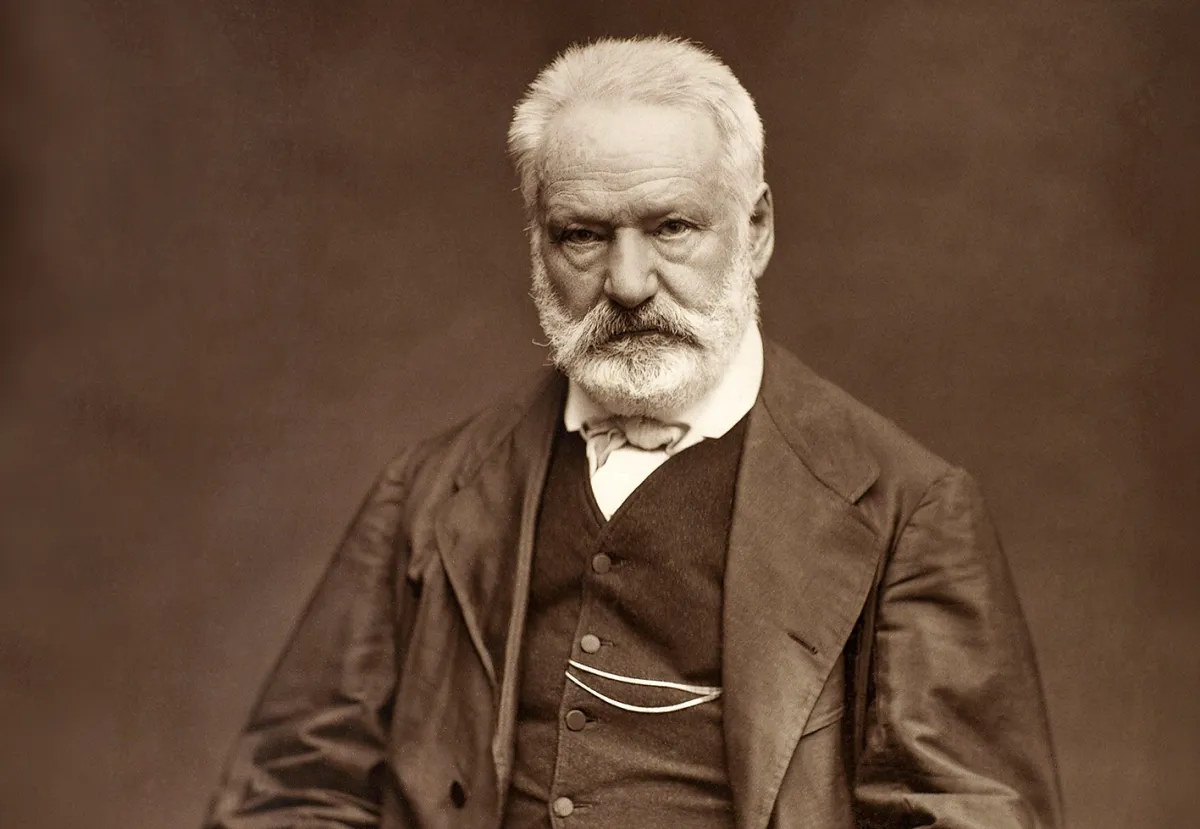
History has known many tyrants who hid their cruelty behind a veneer of gentleness, yet still demanded heads. But figures like Victor Hugo, capable of tearing to shreds those mendacious chronicles written in blood by tyrants, are only born once a century. The man in that coffin had spent his life causing kings many a sleepless night and ensuring that the oppressed voice of the people resonated throughout the world.
The pettiness of dictatorship, the grandeur of Hugo
The confrontation between Victor Hugo and Napoleon III - that infamous "Napoleon the Little" - was no ordinary political quarrel. It was the eternal victory of mind over matter.
– On one side: an army, the police, ruthless censorship and a bought press.
– On the other: an exiled genius, armed only with a pen and an unwavering belief in the truth.
The balance of power seemed unequal - but the victor was clear from the outset. Hugo proved that dictatorship, as powerful as it may seem, is nothing more than a house of cards in the face of truth. He may have been expelled from his homeland, but he could not be silenced. He etched that indomitable will into history:
"You may chase me from my homeland, but you will never succeed in wresting freedom from my soul."
Why did the dictatorship fear Hugo?
Because the dictatorship lives in darkness, but Hugo was the sunlight. Darkness does not fear the sun - it simply fades to nothing in its light.
The strongest pillar of a cruel regime is the ignorance of the people. But Hugo tore that thick curtain from the eyes of humanity with his work "Les Misérables" (The Wretched). He exposed the system of tyrants as a machine that only serves to crush the people.
Through the character of Jean Valjean, he showed the world that a "criminal" branded by the system can be infinitely purer than the tyrant himself. Most cruel of all is that this machine destroys people - and then judges them.
When Hugo took up his pen, the foundations of the palaces trembled. For he held up the hideous face of the dictator not to a mirror, but directly to the awakening conscience of the people.
Heroism in the Siege: The True Measure of Valour
When Napoleon III raised the white flag before the enemy and surrendered miserably, the seventy-year-old Hugo stood like a soldier in the trenches.
Here the true difference becomes apparent:
– The tyrant sells his fatherland to save his own skin.
– The poet turns his pen into a rifle to defend his fatherland.
When Hugo shared his last loaf of bread with the starving Parisians, he was in fact hammering the last nail into the coffin of tyranny. He stood with the people and tore away all the dictatorship's masks.
The last lesson: the final judgment of history
And then the grand finale... Hugo had decreed: "Take me to my grave in a pauper's cart." This wasn't just modesty. it was a silent yet devastating judgement on all tyrants who hide behind their thrones.
History has pronounced its just verdict:
The emperors were forgotten, the tyrants crumbled to dust. But Victor Hugo ascended to the summit of human conscience in a simple pauper's cart.
For thrones fall, palaces rot, but the monument of conscience is eternal.
Kings have departed, empires crumbled. The "little" Napoleons became faded shadows of history. But Hugo's pen still speaks today. It still cries out. Dictatorships may be built on fear, but those who have conquered fear are forever invincible.
Never forget:
"The voice of conscience is above all laws."
Because sometimes... a single pen is mightier than an entire empire.
Did you enjoy this text? If so, please support our work by making a one-off donation via PayPal, or by taking out a monthly or annual subscription.
Want to make sure you never miss an article from Literatur.Review again? Sign up for our newsletter here.