



Language in Pain
 Dar Al-Ramak
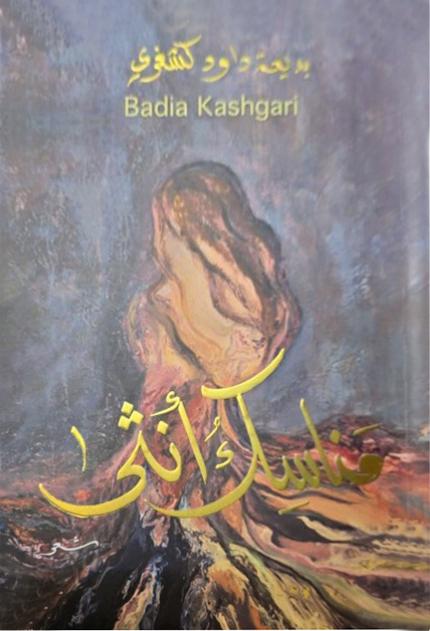
Badia Kashgari | Manasik Untha (Rituals of a Woman) | Dar Al-Ramak, Beirut | 111 pages | 25 SAR
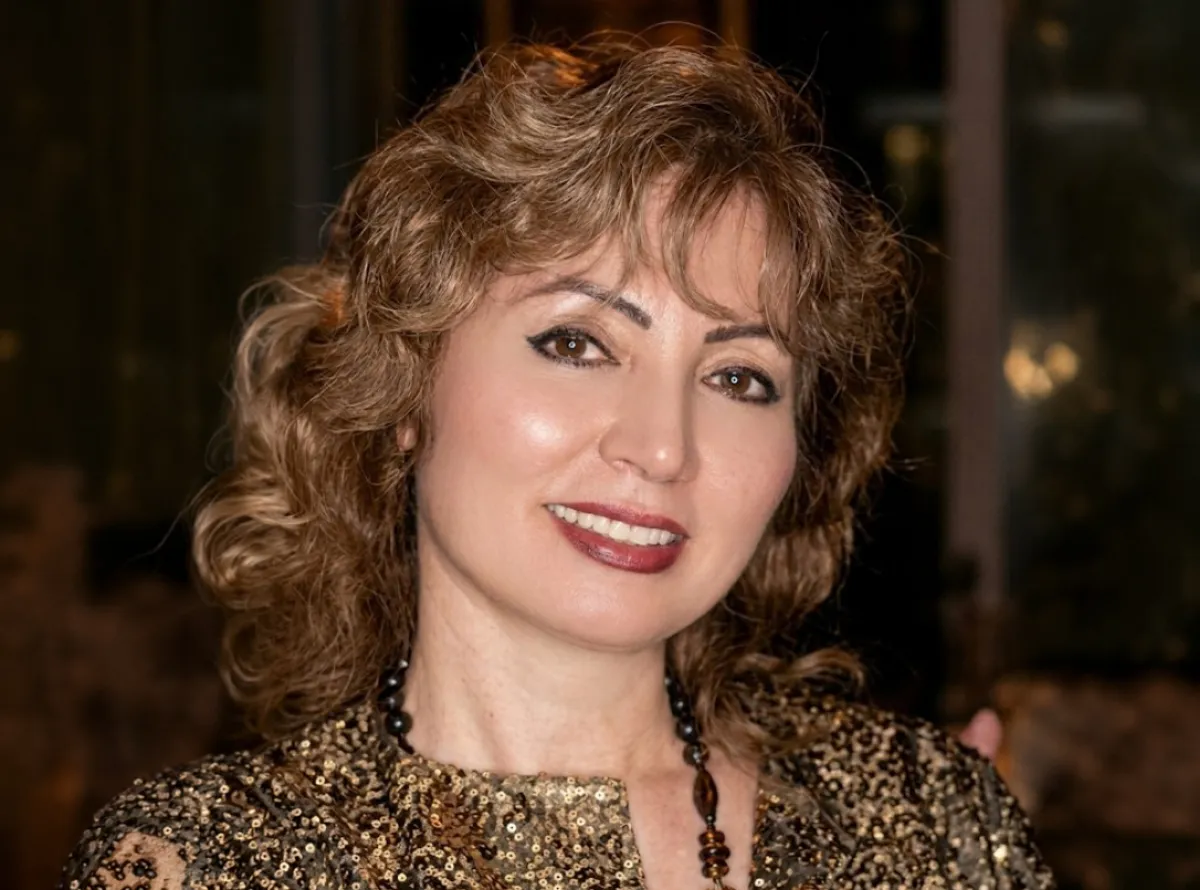
Badia Kashgari is one of the recognized voices in contemporary Saudi and Arab poetry. Her writing is sincere and controlled, and it carries a depth that does not rely on exaggeration. She draws the reader into the text quietly. One does not simply read her poems; one moves through them and gradually discovers their emotional weight.
The first time I read Coffins of Silence, part of her collection Rituals of a Woman, I was sitting with friends, distracted by conversation and noise. I read the poem on my phone and did not fully understand it. Some images felt distant. Yet what reached me clearly was the presence of pain. The poem carried a wound that was impossible to ignore.
In this text, the wound is not decorative language. It is central. The homeland is not an abstract slogan but a daily reality, and death is not a dramatic event but something repeated in ordinary scenes.
The poem suggests that many of the ideas we think are stable – homeland, belonging, dignity – are more fragile than we assume.
The homeland in Coffins of Silence is lived experience. It is something that remains present even in distance. When she writes:
I am from here.
I am from there.
She expresses a divided yet continuous identity. Physical distance does not erase belonging. Exile may change circumstances, but it does not cancel memory or attachment. This feeling becomes clearer when she says:
For I am here,
since the vast unknowns that burdened our shoulders.
The connection to place precedes geography. It exists before departure and continues after it.
Pain in the poem does not lead to surrender. Even when she writes:
My own song has slain me
she follows it with refusal:
Yet no, I shall not die.
The song becomes a symbol of memory and homeland. It wounds her, yet it is also what keeps her alive. The contradiction is intentional. What hurts is also what sustains.
At the end of the poem, she writes:
You and I, O Homeland of wounds,
two faces wandering the night of questions.
Never shall the dawn reach us.
These lines may sound like despair, but they also reveal persistence. To speak of dawn, even while denying its arrival, is to acknowledge its possibility. The night is long, and morning does not come easily. Still, the desire for it remains.
Coffins of Silence was written in 2005 during her stay in Canada and dedicated to the late poet Ali Al-Domaini. May Allah rest his soul in paradise. The dedication adds another layer to the poem’s tone, linking personal grief with collective memory.
+++
Coffins of Silence
This is what the wound has harvested
in the exile of time.
This is what my intuition has done to me
while I have done nothing to betray a Homeland already crucified by fate.
A silver requiem
foretells my approaching extinction,
chants the hymns of a lifetime long evaporated.
The daily spectacle
a third death unfolding
between the flank of the pavement
and the tempests of autumn.
I am a palm tree shaking its own trunk,
and down fall the illusions,
the omens cast like cursed dice.
Yet sorrow
refuses to recede.
Our blood is confiscated or declared permissible—
it makes no difference.
Whether the birds of love dare to sing,
or dawn itself is strangled in its cradle.
I am from here.
I am from there.
I am—you are—we are all one fracture.
All of us displaced.
All of us drained dry.
All the shores
are draped in mourning,
cloaked in the robes of bereavement.
Every song bends its head
there is no ink left
to script our lament.
The House of Mawwāl
that once echoed with longing,
now wails on the far horizon.
Our blood is made lawful
how long must this verdict stand?
Sword and steed
weep the sins of ancestors and borrowed glories
paraded through a humiliated age.
No clang of steel.
No thunder of hooves.
No promise left
for the spears to keep.
The Coffins of Silence
have lowered their blade upon us.
My own song has slain me
yet no, I shall not die.
I have no time
to surrender to wounds.
For I am here,
since the vast unknowns that burdened our shoulders.
I am here.
I am there
to storm the impossible,
to shatter its fortified citadels.
You and I, O Homeland of wounds,
two faces wandering the night of questions.
Never shall the dawn reach us
never
shall it find
its way
to our horizon.
+++
This sensitivity did not appear suddenly. Kashgari was born in Taif and grew up in a calm, elevated environment that shaped her early awareness. She studied literature and English, worked in teaching and translation, and lived in different cultural contexts in the United States, Canada, Britain, and Spain. These experiences broadened her perspective without making her poetry obscure.
On the contrary, they often made her language more precise and more attentive to essential questions: existence, belonging, exile, and the tension between hope and reality.
Her professional experience in education and later at Saudi Aramco, particularly in editing and translation, is reflected in her careful choice of words. She knows when to be direct and when to leave space for silence. This balance gives her poetry clarity without stripping it of depth.
What distinguishes her writing is restraint. Symbols such as the sword and the horse appear, but without theatrical excess. Heritage is present, yet quietly integrated. Even hope is measured. Morning does not arrive triumphantly; it remains distant, sometimes uncertain.
This approach is not limited to Coffins of Silence. In her collections such as When the Sand Blossoms, The Letters That Are Me, and The Woman’s Rhythms, one can observe a gradual development. Her sentences become more direct over time, and her focus shifts increasingly toward lived human experience. The variation in tone across these works shows that she writes from experience rather than from a fixed stylistic formula.
Kashgari does not claim to speak on behalf of women or the homeland. She writes from her own position. She places her wound in the text without explanation and without asking for sympathy. As a result, each reader encounters the poem differently.
At first, I considered her poetry difficult. Later, I understood that what seemed like ambiguity was part of its depth. Her work invites return. It rewards patience. It is sincere and clear in intention, yet it leaves space for reflection. In a literary landscape filled with easily consumed texts, this quality is what makes her poetry stand apart.
Did you enjoy this text? If so, please support our work by making a one-off donation via PayPal, or by taking out a monthly or annual subscription.
Want to make sure you never miss an article from Literatur.Review again? Sign up for our newsletter here.