



"Hitler was a leftist"

 Klett-Cotta
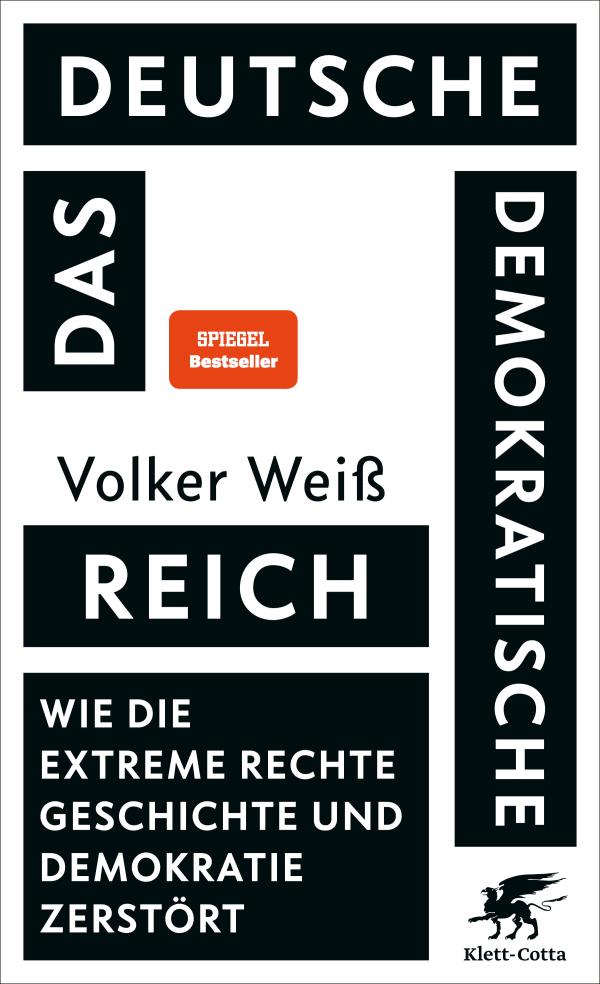
Volker Weiß | Das Deutsche Demokratische Reich | Klett-Cotta | 288 pages | 25 EUR
If you don't know the song Kleine weiße Friedenstaube (Small white dove of peace), then you certainly didn't spend your childhood or youth in the GDR. Legend has it that the song was spontaneously written in 1949 by kindergarten teacher Erika Schirmer after she saw Pablo Picasso's poster for the Paris World Peace Congress in a shop window in the Thuringian town of Nordhausen. The song, with its simple melody, quickly found its way into the state songbooks and was considered one of the most popular kindergarten hits until the dissolution of the GDR. This was all the more astonishing because children and young people found themselves constantly harassed with military education measures - first playfully disguised as "Operation Snowflake", later as an official school subject, "Military Education".
In his meticulously researched non-fiction book Das Deutsche Demokratische Reich (The German Democratic Reich), Volker Weiß presents compelling examples to describe how the far right makes concrete policy by "rewriting and reinterpreting the historical". In the case of the classic East German nursery rhyme, this rewriting initially seems innocuous. After the start of the Russian war against Ukraine, the song appeared at AfD-affiliated demonstrations against EU sanctions - protests in support of the Kremlin narrative that their 'special military operation' is to protect against Ukrainian fascism. In addition to the rally, this song also opened up a "cultural memory space" for East German participants, as the social scientist David Begrich noted in an interview with the German weekly newspaper DIE ZEIT. The emotional power of the simple song does not seem to have missed its mark. It is now part of the popular repertoire at AfD election rallies and "cross-front peace demonstrations".
This song is, of course, just one small building block in the construction of a culture of remembrance of a GDR that never existed. The self-proclaimed "peace state" was in fact entirely militarised, and conscientious objection to military service was generally severely sanctioned until the fall of the Wall. Most children could sing the song Soldaten sind vorbeimarschiert (Soldiers marched past), composed by Hans Naumilkat with lyrics by Hans-Georg Beyer, by heart even before they started school. It culminated in the refrain: "Good friends, good friends, good friends in the People's Army - they protect our homeland on land, in the air and at sea, hurrah".
Elements of the GDR's repressive history are today being positively reinterpreted by the new right-wing orchestrators. The country, which collapsed for good reason in 1989, is idealised retrospectively as a functioning "Prussian state of order" and declared to be the home of "lost German virtues". At the same time, however, opposition to the coercive state is also being co-opted for the purpose of identity politics. The surprisingly simple slogan of 1989 "We are the people", which the Socialist Unity Party ultimately had no counter-argument for, was appropriated 30 years later by opponents of the state's coronavirus measures. With their "Monday walks" deliberately mirroring the once emancipatory idea of the "Monday demonstrations", they portrayed themselves as victims of a state they deem profoundly repressive. Under such conditions, it is no longer difficult to rehabilitate the former Russian occupying power and position its supposed imperial strength against the liberal and effeminate West. Weiß writes somewhat resignedly with regard to the AfD: "When a party that has dedicated itself to radical anti-communism plays with Soviet nostalgia and an East German audience, which otherwise compares all evil with the GDR, fights with tears of emotion, instances beyond reason are addressed."
The rewriting and reinterpretation of history are part of the basic toolkit of all demagogues. Alice Weidel used this technique when, in a conversation with Elon Musk on his platform X (formerly Twitter) in early 2025, she claimed that Adolf Hitler was actually a leftist, a socialist. This theory has long been circulating in right-wing alternative media. An alleged quote from National Socialist propaganda minister Joseph Goebbels was cited as a key witness: "In accordance with the idea of the NSDAP, we are the German left. Nothing is more hateful to us than the right-wing national bloc of propertied citizens." Weiß devotes a long chapter of his book to exploring the sources of such quotes, and establishes that this quote, or similar from Goebbels, never existed. He shows that it can most likely be traced back to an editorial in the National Socialist newspaper Niedersächsische Tageszeitung from September 6, 1931, probably written by the then editor Joachim Haupt, a now forgotten early NSDAP member.
It is the conciseness of this fake quote that has given it such popularity among nationalist and right-wing circles. Coming allegedly from the Nazi ideologue-in-chief, in reality it simply shifts the blame for one of the central tragedies of German history to the political opponent: "If the Nazis were 'actually' leftists, then the political right has been completely rehabilitated. The hated anti-fascism has changed sides and can finally be disposed of," says Weiß, describing the motives.
The right is currently enjoying some political success thanks to the old trick of reassigning established terms and reinterpreting history to suit its own agenda. Weiß calls this strategy "subversive resignification". However, his explanation of the reasons for this success only goes so far. After all, the right is basically using methods that have already failed the left: it is turning its back on tangible social and material issues and engaging in a verbal battle that is primarily fought over concepts and symbols.
Did you enjoy this text? If so, please support our work by making a one-off donation via PayPal, or by taking out a monthly or annual subscription.
Want to make sure you never miss an article from Literatur.Review again? Sign up for our newsletter here.