



Here I stand, and I cannot do otherwise
 Fischer Verlage
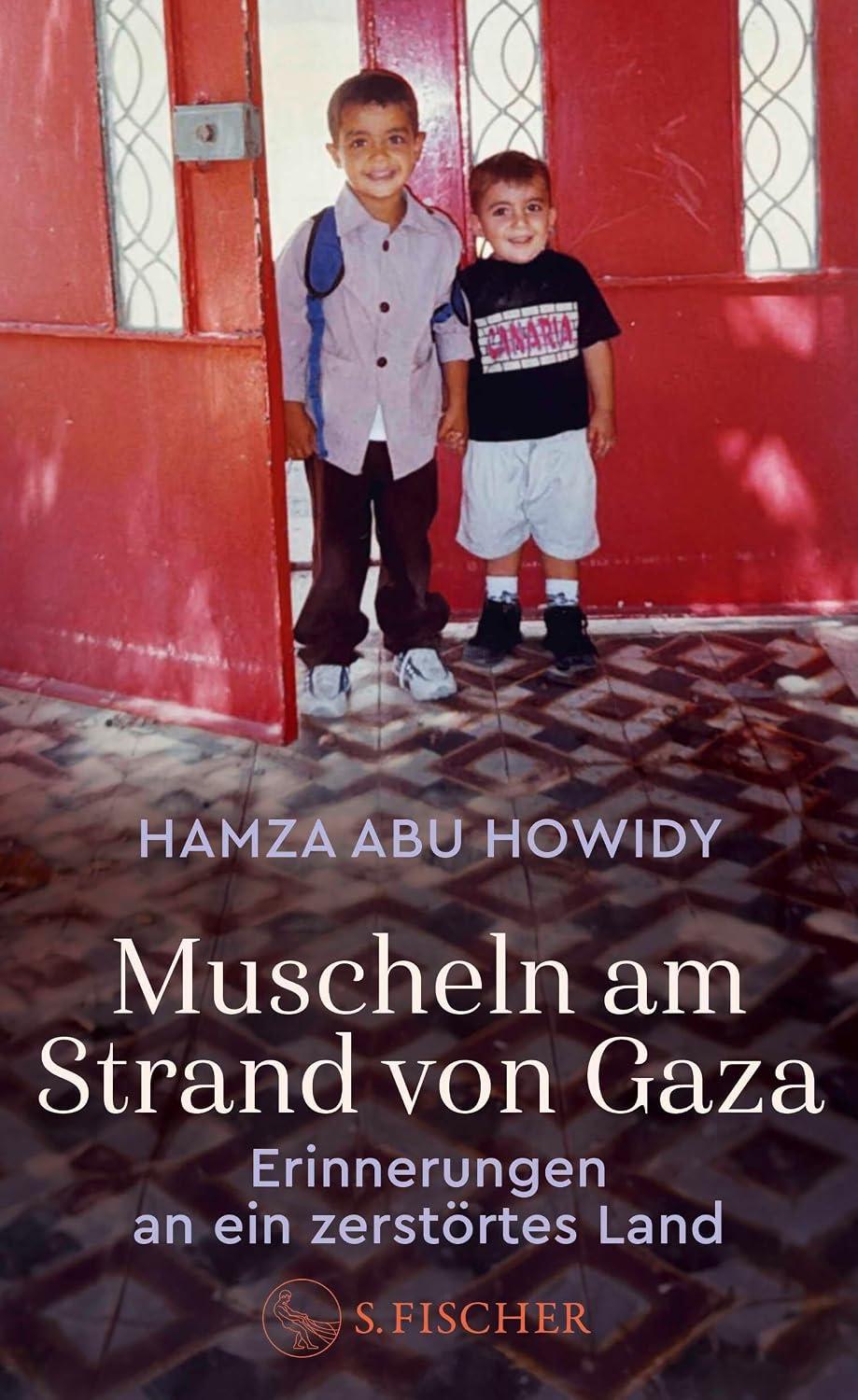
Hamza Abu Howidy | Muscheln am Strand von Gaza | Fischer Verlage | 240 pages | 24 EUR
Hamas’s war against Israel and Israel’s war against Hamas in particular, as well as against the Palestinians in general, briefly returned to the public consciousness at the end of September due to the UN General Assembly. French President Emmanuel Macron delivered a philippic directed primarily against Israel’s policy in the West Bank, where the country not only tolerates murderous settlers but even appears to encourage them. In his typically vehement manner, Israeli Prime Minister Benjamin Netanyahu defended himself against all the accusations, a defence that fell on deaf ears for certain delegations.
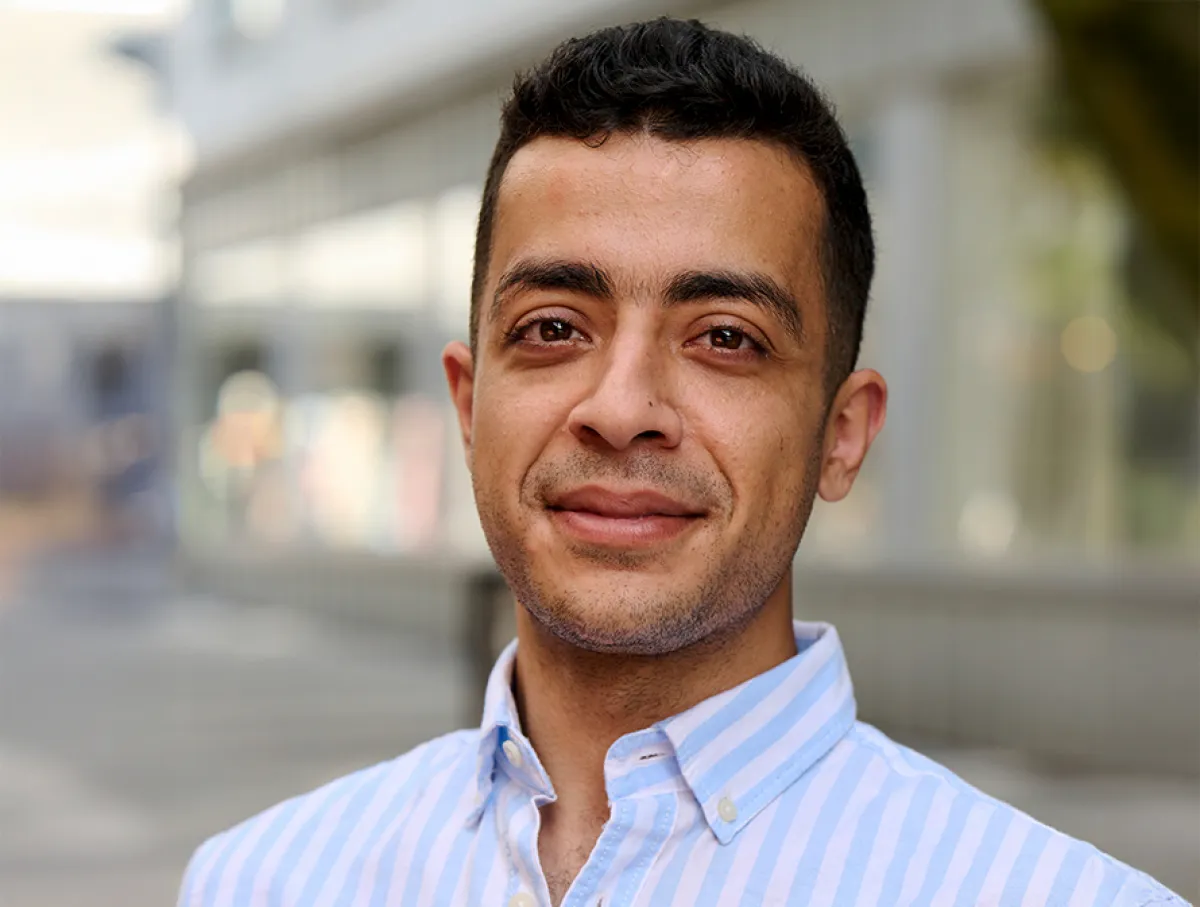
At a time like this, when the Palestinians' situation is at its most parlous since the founding of the State of Israel, Hamza Abu Howidy’s book is a gift. Given the religiously charged nature of the conflict, some might say a gift from God. The author sometimes feels as though he is a lone voice among Palestinians, advocating as he does for peace between the two nations. The German journalist and author Judith Poppe has been a great help to him in reflecting on his own past and in writing this book. Published on 29 April this year by S. Fischer, the book was already on its third print run by July. It deserves to be mentioned here with its full title and dedication: Shells on the Beach of Gaza / Memories of a Destroyed Land / For the Victims of 7 October and the War in Gaza.
The first chapter does not begin in Gaza, where Hamza Abu Howidy grew up. The author is sitting in a refugee camp in Greece, watching live as “Hamas fighters stormed Israeli kibbutzim, shot civilians and filmed themselves in blood-stained living rooms. I watched in stunned disbelief – but not because it was unimaginable. I had seen similar images before. Not in Israel. But in Gaza. In my Gaza. In my neighbourhood, Al Rimal. Back then, in 2007, I was just ten years old.”
Hamas fought in 2007, against Fatah members in the Gaza Strip, with the same inhumanity as in the Israeli massacre of October 7th. As a ten-year-old, Hamza witnessed many brutal killings perpetrated by Hamas.
“Within a few hours, they [the preachers] issued fatwas justifying every bullet, every mutilation, every execution in the street. They told the fighters not to hesitate and not to ask questions. It was permissible, indeed their duty, to kill fellow Palestinians who belonged to Fatah and were considered ‘traitors’ or ‘infidels’. They declared all of this to be sacred. Hamas turned Gaza into a place of fear and used religion to justify its actions.”
Hamza Abu Howidy is not the child of poor parents. His father, an engineer, had studied in Birmingham and worked for the Palestinian Authority, first under Fatah, then under Hamas. Although he often beat his son, he nevertheless instilled in him the importance, even the necessity, of independent thought. He taught him English and encouraged his son to read books. As Hamza grew up, this passion would open the door to a world beyond the Gaza Strip.
His father, a devout Muslim, was convinced that a theocracy could bring about nothing good. He told his teenage son that Europe had only become great after the omnipotence of the Church had been broken. He told him about the Catholic Church’s sale of indulgences and how, in the Middle Ages, priests had equated themselves with God. But because a religious upbringing was important to him, he sent his son to a Koranic school, where the child became a devout follower of Hamas’s teachings. ‘Shells on the Beach in Gaza’ attempts to answer the following question:
‘How could the boy who grew up in Gaza become someone who stands up for peace alongside Israelis?’
At school, beatings were the norm. For example, when the teacher explains that in paradise you can have anything you want, and Hamza spontaneously interjects, saying how boring that would be. The songs the children sing every day glorify martyrdom. In 2008, Hamza witnesses an Israeli tank attack and begins to hate Israel. He firmly believes what is drummed into him by the teachers, who are affiliated with Hamas. Following the tank attack, Hamza is taken out of the Koranic school because it is situated too close to the border and to Hamas training camps. He becomes a pupil at a UNRWA school, run by the United Nations Relief and Works Agency for Palestine Refugees in the Near East. Israel does not appear on the maps used in lessons. “From the River to the Sea” is sacrosanct. “The idea of a two-state solution or the recognition of a Jewish state were out of the question.” Hamza is becoming increasingly nationalistic. “My hatred of Israel continued to grow.”
In Year 10, he changes schools once more, this time to a state school. Military training is part of the curriculum. His father renews his criticism of Hamas. He gives up his job because when he receives no response to his proposals to lay electrical cables underground, he realises that Hamas does not want its sprawling tunnel system discovered. After high school, Hamza first studied engineering but gave it up because the lessons focused almost exclusively on tunnel construction and the design of rockets. He turned his attention to business administration and accountancy. He has long since distanced himself from Hamas, which evolved from the Muslim Brotherhood (see also: Florence Bergeaud-Backler – Le Frérisme et ses réseaux).
As a young adult, he lost his faith and became an agnostic, neither affirming nor denying the existence of God. In 2019, he took part in a demonstration at the Jabalia refugee camp. The slogan was: “We want to live. – For a life of dignity.” Hamza is arrested and tortured daily. His captors pressure him to confess that he works for Israel, which is not the case. Thanks to his father’s connections, he is released after two weeks. Hamza wonders:
“If they could do something like that to us Palestinians, did Israel perhaps actually have reason to fear them, to not want them as neighbours? The experience of torture shook my faith in the stories we kept telling ourselves about who we were and what we stood for.”
Hamza reads and reads, and reads some more. He finds books online and secretly downloads them as PDFs onto his computer. In 2021, through his presence on social media, he comes into contact with a young Israeli, thus getting to know someone from the other side for the first time, someone with a different perspective on the history of Palestine and Israel. In the spring of that same year, war breaks out once more between Hamas and Israel. Hamza’s family home is nearly destroyed because it is close to a command post in a tunnel that nobody knew about.
In the spring of 2023, protests against Hamas break out once more. Hamza is arrested and tortured again. Once more, his father manages to secure his release two weeks later, through his connections and a large sum of money. Afterwards, his family urges him to flee to Europe as his life is in danger. With a great deal of luck, he makes it to Greece via Turkey. There, on 7 October 2023, he witnesses the Hamas massacre live in a camp and sees how the male immigrants from the Middle East dance for joy at Hamas’s supposed victory over Israel, whilst the women sit nearby, looking on grimly. The broadcaster Al Jazeera and Egyptian media outlets also openly celebrate the slaughter of more than 1,200 people. On the very same day, Hamza manages to speak to his father on the phone, who tells him that this massacre means the end of the Gaza Strip.
Hamza begins posting his thoughts and opinions on X, first in Arabic, then also in English. In the camp, he receives death threats. The international press takes notice of him, and he is invited to write articles. He travels from Greece to Germany, where he campaigns for peace between Israel and Palestine. He criticises both Hamas and Israel’s brutal response to the attack. He is able to save his family through GoFundMe, which enables him to pay the high bribes that Egyptian border officials extort from Palestinians. His mother and siblings cross the border into Egypt just a few days before the Rafah crossing is closed by Israel. His father had already managed to leave the Gaza Strip a short time earlier.
This book is poignant and very powerful. Hamza's language is often poetic, leaving no one unmoved. The slow process of growing up, the beginnings of independent thought, and the rebellion against a system that is hostile to humanity are deeply moving. The author’s unwavering resolve, this position he takes: ‘I stand here and cannot do otherwise’, despite the dangers to life and limb, is impressive. His status in Germany is uncertain. May his future path be blessed. Inshallah.
+++
Further reading on Literatur.Review:
Now here I am, a fool for sure!
Gilles Kepel, perhaps the most renowned French expert on the Middle East, published an updated edition of his book on the Hamas massacre of over 1,200 Israelis on October 7, 2023 and its aftermath
When a Wall enters a Children’s Story
Reality and Imagination in Palestinian and Israeli Children’s Literature
The Exile of the Gaze
In 'Leila & Khaled', Nyla Matuk tells not only of a return to Palestine, but also of the impossibility of escaping the images shaped by her own Western socialisation
Did you enjoy this text? If so, please support our work by making a one-off donation via PayPal, or by taking out a monthly or annual subscription.
Want to make sure you never miss an article from Literatur.Review again? Sign up for our newsletter here.