



The scene of horror and tenderness

 Sujet
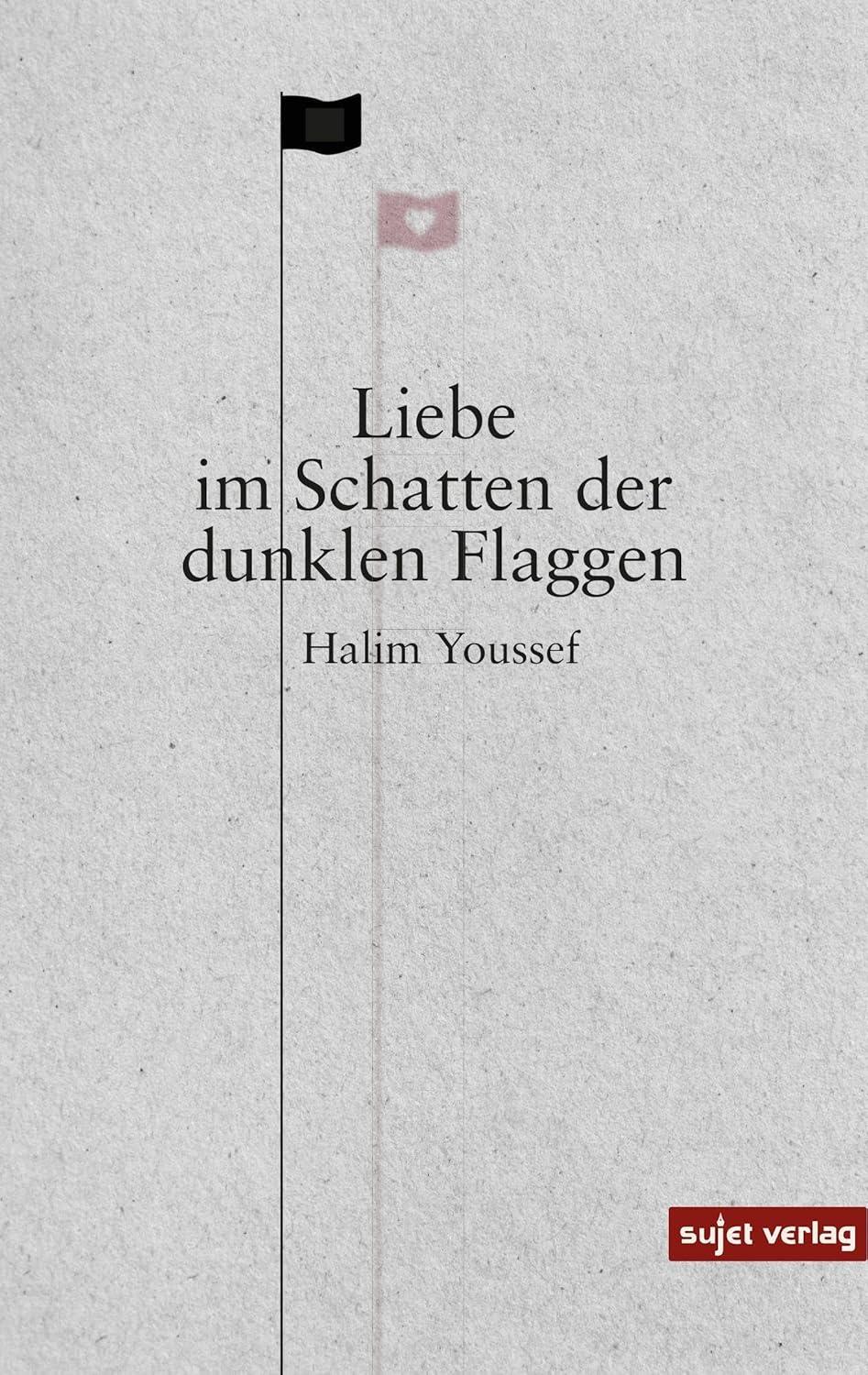
SujetHalim Youssef | Liebe im Schatten der dunklen Flaggen | Sujet Verlag | 233 pages | 19,80 EUR
"In the midst of death, sometimes something blooms that is stronger than any flag." – Halim Youssef
Halim Youssef, a Kurdish visionary from the rugged depths of Syria, anchored in Germany's silent expanses since the turn of the millennium, weaves a tapestry of thunderous shock and gossamer intimacy in Liebe im Schatten der dunklen Flaggen (Love in the Shadow of Dark Flags). His novel fuses the night-black labyrinth of war with the shy flickering of love - an ember that glows inextinguishably even within the shell of violence. Written in Kurdish, already a triumphant beacon, this opus rises far above the threshold of mere romance: it is a literary thunderbolt, an indestructible statue of resistance, dignity and invincible womanhood.
The stage opens in the Syrian-Iraqi border region, where the black flags of the so-called Islamic State (IS) shroud the ether like a sail of death. Between tattered walls, golden sand and breathtaking silence, the fates of Rodi, a Kurdish freedom fighter, and Perwin, a YPJ fighter whose courage is cast from the same unbreakable ore as her hidden pain, become entwined. Their love, born in the crevices of fear, blossoms into ephemeral pearls of beauty: a stolen glance, a whispered secret, a night under the starry, diamond-studded desert sky.
Youssef sketches this world with a blade-like tongue, cutting like a scimitar and yet deeply poetic. His sentences, short and choppy, as if dipped in dust and gunpowder, plunge into lyrical abysses - moments when the text itself freezes, holding its breath to capture the unnameable in words. The translator Elisabeth Ruetz preserves this vibration like a sacred shrine: she conveys not just syllables, but the heartbeats of endurance, the leaps in silence, the flickering between hope and the abyss.
Perwin emerges as the hidden centre of this cosmos. Not an idealised victim, but a woman of pulsating flesh, flowing blood and tattered memories. She is the crystallisation of Youssef's ability to breath life into his characters: the alchemy of forging sparks from ashes. Her love for Rodi is no soothing balm, but an act of self-expression - as fragile as glass, as contradictory as a storm, tinged with guilt and fear, and precisely because of this, with overwhelming authenticity.
At times, the sheer intensity of the narrative can feel overwhelming: the meticulous depictions of IS propaganda and the inferno of war weigh like lead plates, barely allowing a breath of air. Yet Youssef's moral foundation is built on this intransigence. It compels us to hold our gaze. His literature is not an refuge of escapism, but a relentless battlefield.
Liebe im Schatten der dunklen Flaggen reverberates, continues to vibrate - in images that blaze, voices that whisper and silences that roar. Halim Youssef writes against forgetting, against silencing. His prose is both indictment and hymn, chronicle and liturgy. For those who can discern the nuanced undertones in the symphonies of Hisham Matar or Khaled Hosseini, this work is a jewel - and a bitter ordeal in the most sublime guise.
+++
Did you enjoy this text? If so, please support our work by making a one-off donation via PayPal, or by taking out a monthly or annual subscription.
Want to make sure you never miss an article from Literatur.Review again? Sign up for our newsletter here.
The Kurdish original can be downloaded here: