


On the radio

 Gallimard
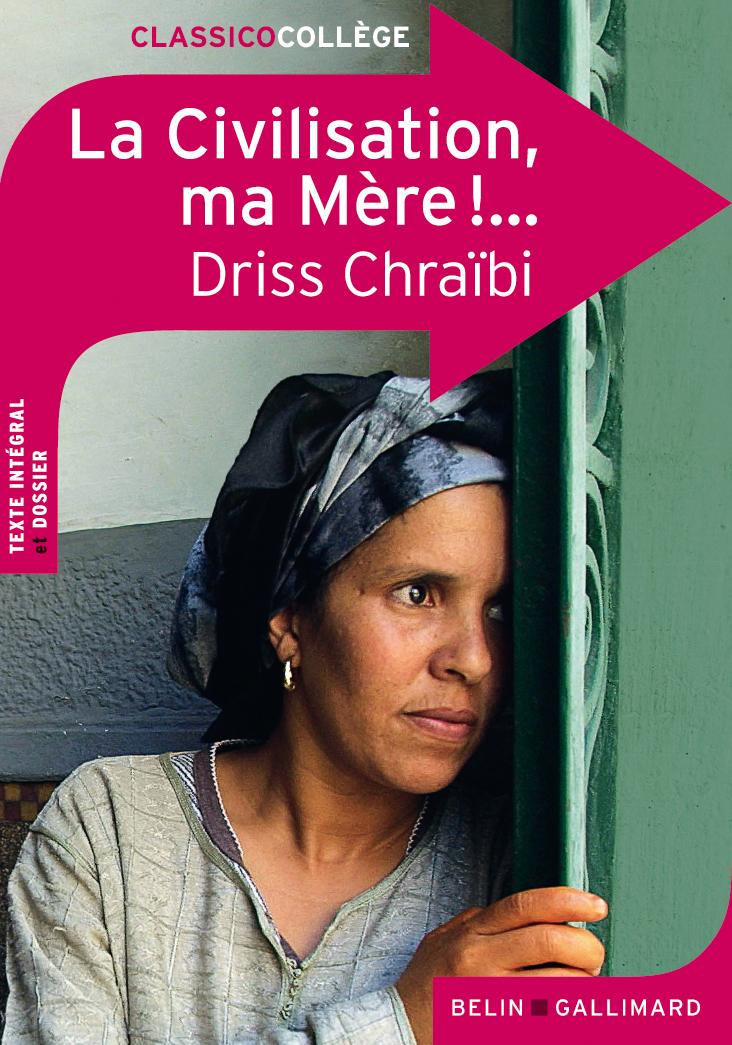
Driss Chraïbi | La Civilisation, ma Mère! | Gallimard | 224 pages | 6,40 EUR
The story of this extraordinary work, originally published in French in 1972 under the title La Civilisation, ma Mère! and now, fortunately, available once more in a carefully edited German version, sounds at first glance almost like a modern fairy tale. Yet behind the narrative lightness lies a deeply rooted truth, precise in both historic and social terms. At the heart of the story is an un-named Moroccan mother who until this point has lived in complete isolation, cut off from the outside world and bound by the confines of her home and the strict conventions of the times. Her two adolescent sons, who embody the social upheaval and dynamism of a new generation, decide, one day, to free her from her stagnant existence. They install a new radio – which at first seems almost magical to their mother – a revolutionary act that opens a direct window onto the modern, Western world for her.
Nagib and I looked into each other’s eyes and spoke as brothers, in one and the same voice: ‘It's a box that talks.’ ‘ Talks? A box that speaks? Do you take me for a woman from the Dark Ages, or a turnip? Do you dare make fun of your mother? Just wait until I undo my belt.
What develops from this seemingly insignificant novelty is not a mere, superficial adaptation to modernity, but an explosive and unstoppable emancipation. Driven by an irrepressible thirst for knowledge, the mother learns to read, rapidly acquires intellectual freedom and, little by little, with remarkable tenacity, breaks free from the archaic shackles of a deeply patriarchal society. She soon moves beyond the role of learner, becoming a driving, politically active force for change in her own right.
In this portrayal, Chraïbi achieves the rare literary feat of recounting such a fundamental and potentially painful social upheaval with a sparkling lightness and a subtle humour that inevitably captivate the reader from the start. The scenes in which technological modernity and everyday Western objects such as the iron or the telephone make their way into traditional Moroccan daily life are characterised by a delightful, at times slapstick, humour. Yet beneath this humorous, shimmering surface lies an intelligent, deeply poetic study of identity and alienation. Chraïbi enthusiastically celebrates inexorable progress and the rise of feminism, while also providing a subtle, melancholic critique of the darker sides of this process. With great insight, he questions what we may be leaving behind, perhaps unthinkingly and irretrievably, on our rapid journey towards a thoroughly rationalised and hyper-modern civilisation: human warmth, lived spirituality and valuable cultural traditions.
To fully grasp the visionary genius and complexity of this novel, however, it is worth exploring the life of the author himself. Driss Chraïbi, who lived from 1926 to 2007, is quite rightly regarded in literary studies as one of the most significant, courageous and influential pioneers of 20th century North African literature. Throughout his life, he was a fascinating figure who straddled worlds and cultures. Born in El Jadida, Morocco, he later moved to France, where he first studied chemistry, then literature. He chose the language of the former colonial power, French, as his primary literary tool to radically expose the internal contradictions of his homeland. Chraïbi was an uncompromising rebel against all rigid dogmas and a contrarian spirit who never succumbed to corruption. Already, in1954, his brilliant debut novel Le passé simple, had shocked both the French colonial administration and traditional, bourgeois Moroccan society alike, with its unvarnished, razor-sharp critique of the prevailing patriarchal power structures.
As a pioneer of women’s rights, he created an immortal literary monument to the women of his homeland with La Civilisation, ma Mère! ('Mother comes of Age'), at a time when feminist discourse in the Arab world was virtually non-existent, or was considered taboo. Chraïbi never viewed women as passive, pitiable victims of their circumstances, but rather as the true, dynamic driving force behind all social progress. His inimitable style continues to fascinate to this day through a unique blend of French linguistic elegance, the vivid imagery of North African narrative traditions and an ever-present, often sarcastic irony. As he consistently refused to resort to simplistic black-and-white portrayals and facile stereotypes, he scrutinised the Eurocentric arrogance of the West and the paralysing backwardness of the East in equal measure.
My mother passed all her exams – even her driving test. She had her hair cut off and gave it to me, a fluffy heap in a basket. ' A memento of the past,’ she told me. She entrusted the certificates, wrapped in a ribbon, to Pa’s care. And she announced her departure to both of us. Yes, she had made up her mind to do so, quite suddenly, whilst wearing a hairnet at the hairdresser’s.
In this context, this meticulously crafted new edition, published by Unionsverlag, is a genuine, invaluable gift to today’s literary scene and fills a painful gap in our awareness of world literature. La Civilisation, ma Mère! proves, on reading it today, to be a deeply empathetic, timeless declaration of love for the women of Morocco and a passionate, universal plea for education, enlightenment and the inalienable right to self-determination. In this slim yet substantively monumental novel, Driss Chraïbi shows us that true civilisation never arises solely through the building of walls, the accumulation of wealth or the use of technology, but must first and foremost take root in the heart and mind of the individual. For all these reasons, this book is highly recommended reading for anyone seeking literary discoveries beyond the Eurocentric canon.
+++
On the present state of Moroccan literature
On canon formation, linguistic diversity and literature beyond the centre
Did you enjoy this article? If so, please support our work a one-off donation or a monthly subscription via one of our subscription options. We’d be delighted!
Don’t want to miss any more articles on Literatur.Review? Then sign up for our newsletter free of charge!