



On the present state of Moroccan literature
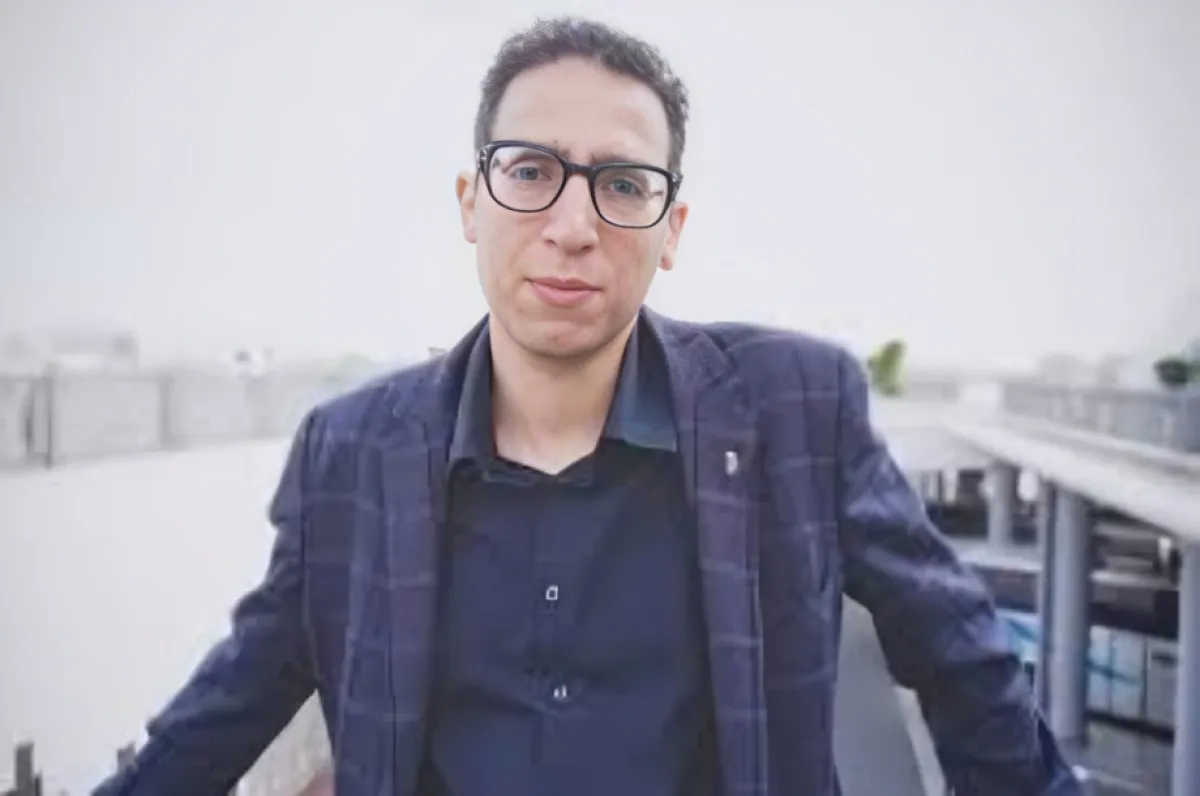
Mohamed Khalfouf is a Moroccan short story writer, poet and translator born in Khouribga in 1997.
He studied at the Faculty of Arts at the Department of Arabic Language, Sidi Mohamed Ben Abdellah University, Fez, and for the Master of Women's Writing in Morocco at the Faculty of Arts, Abdelmalek Essaadi University, Tetouan.
His stories and poems have been published and translated on numerous Arabic and international cultural platforms.
In comparison to other trends in Arabic literature, Moroccan literature - geographically and culturally located between the Maghreb, Europe and the Middle East - is still considered marginal. This is less an expression of literary weakness than the result of historical, political and linguistic shifts. However, it is precisely this peripheral location that has given rise to a literary landscape characterised by diversity, openness to form and a remarkable thematic range.
Moroccan authors write poetry, novels, short stories and plays, while also working as critics, essayists, intellectuals, filmmakers and media figures. In addition, there are key voices in the humanities - such as sociologist Fatima Mernissi, with her autobiographical analyses of social power relations, and historian Abdellah Aroui, whose trilogy of novels Al-Ghurbah, Al-Yatim and Al-Fariq are among the most intellectually significant works of self-reflection in Moroccan literature.
The close connection between literature, politics and public discourse is also evident in the fact that numerous writers have held political office: Abdelkrim Ghalab and Ahmed Toufiq as ministers for foundations and Islamic affairs, Mohamed Al-Ashari and Bensalem Hmich as ministers of culture, and Hassan Oured as royal advisor. In Morocco, literature has never been a purely aesthetic project but always, too, a form of social intervention.
From classical tradition to literary modernism
Before the colonial period, the Moroccan literary scene was strongly influenced by classical traditions. The focus was on poetry, religious texts and legal treatises, which were closely linked to Eastern Arabic scholarship. It was only with colonisation that the literary field gradually opened up to new forms, genres and aesthetic approaches. Translations of European literature - particularly from French - and influences from Eastern Arabic modernism were equally formative.
A decisive turning point came in the 1930s and 1940s: in 1937, the first Moroccan collection of short stories was published, Mustapha al-Gharbawi’s The Wonders of Fate, followed in 1949 by the first Moroccan novel, Touhami al-Wazani’s The Corner. This autobiographically based work is still considered the starting point of the modern Moroccan novel. Subsequently, authors such as Al-Mukhtar Al-Susi, Abdelhadi Boutaleb, Malika Al-Fassi and Abdelmajid Ben Jelloun established a literature that combined national, religious and romantic themes.
Novel, rupture and anchoring of self
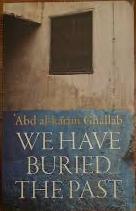
Abdelkrim Ghalab’s novel We Buried the Past (1951) marked the beginning of a new phase: the novel became the central medium of literary self-reflection. The so-called ‘Qantara generation’ – including Mohamed Aziz Al-Hababi, Khnatha Benouna, Mohamed Zafzaf and Mohamed Choukri – increasingly broke away from Eastern Arab narrative patterns without, however, completely negating their traditions. The focus was now on the question of a specifically Moroccan identity.
An experimental generation followed, deliberately pushing boundaries of form and experimenting with new narrative techniques: Mohamed Ezzedine Tazi, Ahmed Madini, Youssef Fadel and Mohamed Berrada are examples of this phase. Finally, since the 1990s, a pluralised literary scene has emerged, allowing different styles of writing, media and languages to coexist in parallel.
Poetry, short stories, theatre
Since the 1960s, it is poetry in particular that has become a laboratory for literary renewal. Names such as Muhammad Bennis, Abdelah Zriqa, Hassan Najmi, Yassin Adnan and Abdelrahim Al-Khasar have shaped a modern, reflective poetry that has had both aesthetic and political impact.
The short story also has an exceptionally strong tradition in Morocco. Authors such as Latifa Baka and Malika Mustadraf have radically renewed the genre, addressing themes such as the body, violence, marginalisation and female experience with an unprecedented directness. Theatre, on the other hand, has been developing since the 1970s within the context of avant-garde groups, and is now a fully-fledged independent political and aesthetic space.
Language, translation, belonging
A defining feature of Moroccan literature is its linguistic diversity. Besides Arabic, works are written in Darija, Amazigh and European languages. Francophone literature in particular – represented by authors such as Ahmed Safrioui, Driss Chraibi, Edmond Amran El Maleh, Mahi Binebine, Leila Slimani and Abdallah Taïa – has met with great international acclaim.
At the same time, it raises fundamental questions: are these Moroccan writers writing in French, or French writers of Moroccan origin? This ambivalence becomes productive precisely when social criticism, religion, body politics or postcolonial identity are discussed - as writing from the perspective of the other.
Ten voices – an excerpt
The following ten authors are representative of different generations, genres and aesthetic positions in Moroccan literature. Many of them are still insufficiently recognised in Western and even Arab discourse. They do not constitute a canon, but rather a conscious selection – and at the same time point to the immense richness of a literature that deserves to be reread, retranslated and reclassified.
 xyz
xyz
 xyz
xyz
 xyz
xyz
 xyz
xyz
 xyz
xyz
 xyz
xyz
 xyz
xyz
 xyz
xyz
 xyz
xyz
 xyz
xyz
 xyz
xyz
+++
1. Abdelkarim Ghalab
Abdelkarim Ghalab is considered one of the central pioneers of the Arabic-language novel and short story in Morocco. Born in Fez in 1919, he died in 2017, and is often referred to as the ‘dean of Moroccan literature’. His literary work was always closely linked to political and intellectual engagement. Ghalab belonged to the conservative-nationalist movement and held prominent positions within the Istiqlal Party, whose reformist ideology was heavily influenced by Islamic references.
His style is characterised by a clear, realistic narrative and a restrained, classically grounded language. At the heart of his texts is the moral and intellectual development of his characters, embedded within processes of historical and social transformation. Thematically, his works revolve around national identity, colonialism, social upheaval, the conflict between tradition and modernity, and the construction of the post-colonial state.
From 1968 to 1976, Ghalab was president of the Moroccan Writers Association, and a member of the Royal Academy of Morocco and editor-in-chief of the newspaper Al-Alam. Among his most important works are the novel We Buried the Past (1957), considered a key text in Moroccan fiction, as well as Teacher Ali, Seven Doors, The Final Decision, The Dead Eye and The Land, My Love.
2. Driss Chraibi
Driss Chraibi is one of Morocco’s best-known and most controversial Francophone writers. Born in El Jadida in 1926, he died in France in 2007, and epitomises the tensions of postcolonial identity. After emigrating to France, he studied chemistry, worked in various professions and finally devoted himself entirely to writing.
His literary style is satirical, rebellious and decidedly critical. Al-Shraibi deconstructs social, cultural and religious norms with sharp, symbolically charged language that combines irony with philosophical depth. His debut novel The Simple Past (1954) marks a turning point in Francophone Moroccan literature: his radical critique of conservative Moroccan society caused a literary and political shock.
In his novels, he deals with colonialism, tyranny, social oppression, identity crises and the conflict between East and West. His criticism of patriarchal structures and religious institutions is particularly sharp. His most important works include The Simple Past, Heirs of the Earth, Mother of Spring, Civilisation, The Goats, Inspector Ali and The Man of the Book. His books have been translated into numerous languages and have won several awards.
3. Mohamed Zafzaf
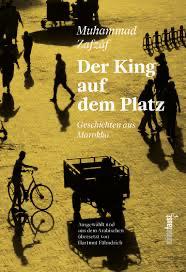
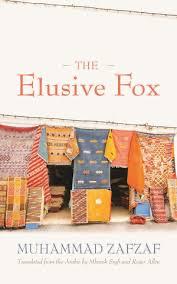
Mohamed Zafzaf is one of the most important authors of modern Moroccan literature. Born in 1945, he died in 2001, and his life was marked early on by loss and social insecurity. He studied philosophy and later worked as a professor of Arabic language. His literary career began in the 1960s with poetry, translations and journalistic texts, before he turned to prose in the 1970s.
With his first novel, The Woman and the Rose (1972), Zafzaf elicited strong reactions. His blatant depiction of sexuality, drugs, crime and social marginalisation was groundbreaking and made him a key figure in literary renewal. His texts combine realism with poetic concision and philosophical reflection.
Zafzaf published eight novels and numerous collections of short stories, including Gräber im Wasser (Graves in the Water), Die Schlange und das Meer (The Snake and the Sea) and Das Ei des Hahns (The Rooster’s Egg). His works have been received internationally, included in university curricula and honoured with a literary prize named after him in 2015.
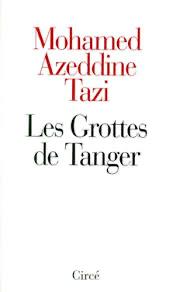
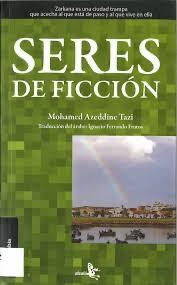
4. Mohamed Ezzeddine Tazi
Mohamed Ezzeddine Tazi, born in Fez in 1948, is considered a leading figure of the experimental generation and one of Morocco’s most prolific authors. Since the publication of his first collection of short stories, The Branches of the Felled Tree (1975), he has produced an extensive body of work comprising more than twenty novels and collections of short stories.
His writing is characterised by formal innovation, linguistic experimentation and a pronounced affinity for historical material. The Kafkaesque novel Towers of the City (1978) established early on his aesthetic position. In many of his works, Moroccan cities – especially Fez – function not only as settings, but as narrative spaces of memory.
Tazi’s texts have been translated into several European languages and are considered benchmarks of a literature that deliberately departs from linear narrative patterns.
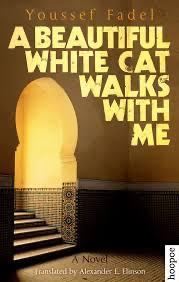
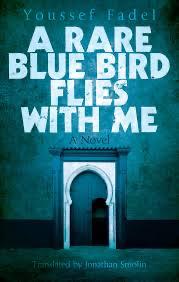
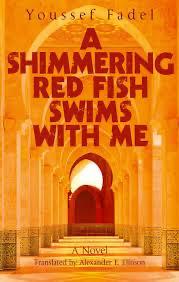
5. Youssef Fadel
Youssef Fadel is a key figure in contemporary Moroccan theatre and also an important novelist and screenwriter. Born in Casablanca in 1949, he became involved in the theatre movement at an early age and was a member of several avant-garde groups. His political imprisonment in the 1970s profoundly shaped his artistic self-image.
His play Halaq Darb al-Fuqara was adapted for film in 1982 and gained widespread recognition. In addition to numerous plays for theatre, Fadel has published novels such as The Pigs, Agmat and A Rare Blue Bird Flies with Me. He has also written influential screenplays for Moroccan television and cinema.
6. Latifa Baqa
Latifa Baka is one of the most important voices in Moroccan short prose. Born in Salé in 1964, she taught sociology and modern literature in Rabat. Her debut collection What Shall We Do? won an award in 1992 and marked the beginning of a literary career characterised by a keen observation of social realities.
Her texts combine narrative sophistication with a decidedly feminist perspective. Themes such as freedom, female self-determination and existential experience are central to her work. Several of her works have received international acclaim and rewards.
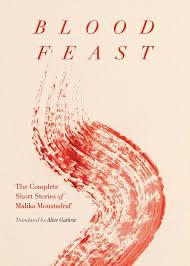
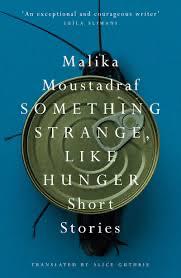
7. Malika Mustadraf
Malika Mustadraf is one of the most radical voices in contemporary Moroccan literature. Born in Casablanca in 1969, she died in 2006. Despite her short life, she left behind a literary oeuvre of great intensity.
Her texts address themes such as the body, violence, social marginalisation and female suffering with extraordinary frankness. The autobiographical novel Wounds of the Soul and Body (1999) and the stories from 36 are considered a break with traditional discourses and early testimonies of an uncompromising female voice.
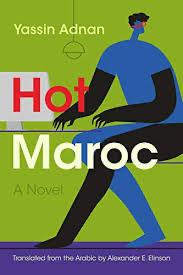
8. Yassin Adnan
Yassin Adnan, born in Marrakesh in 1970, combines literary production with media presence. He writes poetry, prose and essays and is also known as a presenter of cultural television programmes.
His style is characterised by irony, satirical sharpness and an aesthetic sensitivity to urban and marginalised environments. The novel Hot Marok attracted widespread attention and established him as a critical chronicler of contemporary Morocco.
9. Abdelrahim Al-Khasar
Abdelrahim Al-Khasar, born in Safi in 1975, is one of the most distinctive poetic voices of his generation. His poems are characterised by linguistic reduction, contemplative calm and existential depth.
In addition to several volumes of poetry, he has published a travel book and a novel. His work revolves around time, memory, isolation and the fragile relationship between the individual and the world.
10. Fadwa Al-Zayani
Fadwa Al-Zayani, born in Zagora in 1988, is one of the most impressive poetic voices of the younger generation. Self-taught, she has developed a dense, symbolically charged language that transforms personal experience into existential poetry.
Her poems address identity, the body, loneliness and violence against women with great emotional intensity. With four volumes of poetry, she has firmly established herself in contemporary Moroccan poetry.
+++
These ten portraits are not to be understood as a canon or a definitive inventory. Rather, they mark paths through a literary landscape that consistently eludes simplification. What connects them is less a common aesthetic than a shared experience of transition, rupture and multilingualism: between colonial history and the present, between local roots and global circulation, between classical tradition and formal renewal. Moroccan literature does not appear here as a marginal phenomenon of the Arab world, but as an independent, productive place of literary self-negotiation, marked by political upheavals, linguistic tensions and the persistent attempt to find narrative forms for a complex reality. In this sense, the authors presented here are exemples of a literature that poses questions rather than provides answers – and it is precisely in this that its international relevance lies.
Did you enjoy this text? If so, please support our work by making a one-off donation via PayPal, or by taking out a monthly or annual subscription.
Want to make sure you never miss an article from Literatur.Review again? Sign up for our newsletter here.