


Measuring the colour line
 Walther König
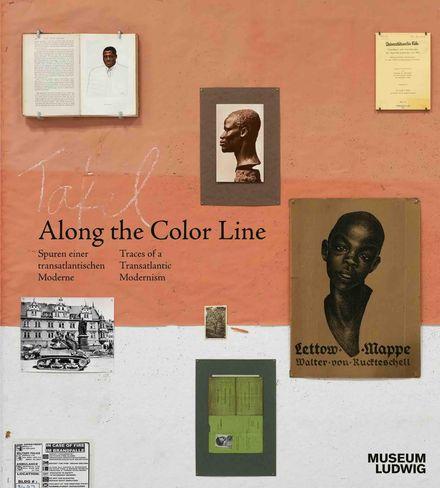
Along the Colour Line – Traces of a Transatlantic Modernity | Edited by Eboa Itondo | Buchhandlung Walther König | 248 pages | 38 EUR
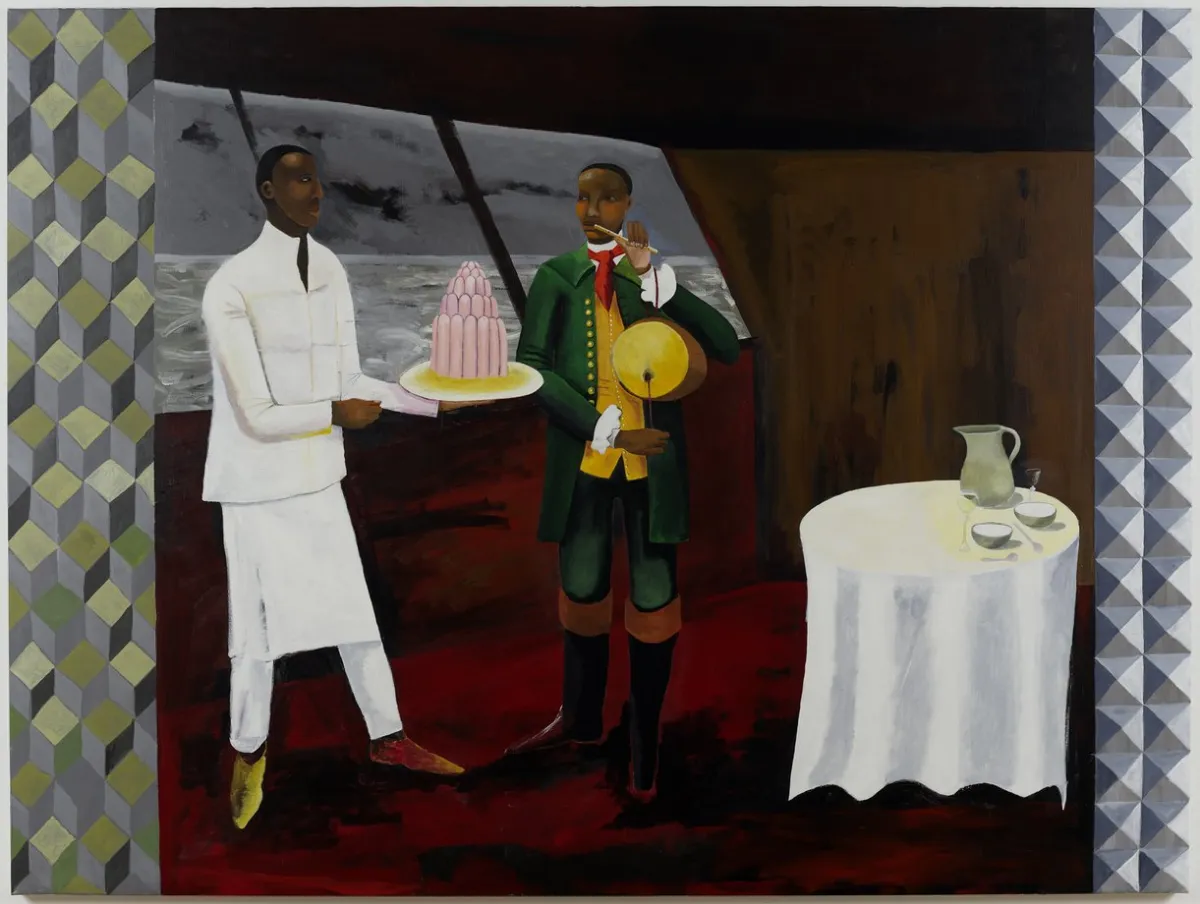
“The problem of the twentieth century is the problem of the colour line” – this visionary yet bitter statement, made in 1900 by the African-American sociologist, historian and civil rights activist William Edward Burghardt Du Bois, remains justifiable today, well into the 21st century. First articulated on a panel accompanying his groundbreaking presentation The Exhibit of American Negroes at the Paris Exposition, the ‘colour line’ described the deep social, political and cultural divide between being white and not being white. To mark its 50th anniversary, the Ludwig Museum in Cologne is revisiting this far-reaching concept with ‘Along the Color Line – Traces of a Transatlantic Modernity’ , a monumental and multidisciplinary survey exhibition. This ambitious project is far more than a celebratory retrospective by a renowned institution; it is a critical, painful and long-overdue revision of both the museum’s own collection history and the Western, Eurocentric concept of modernism.
The immediate institutional impetus for this exhibition came from a discovery that glaringly exposed the structural gaps in the museum’s collection. As part of the last major anniversary exhibition ‘Wir nennen es Ludwig’ in 2016, the feminist artists’ collective Guerrilla Girls had carried out a survey of the collection. The result was sobering: artists of colour were massively under-represented in the Cologne collection. Worse still was a complete lack of representation in the Classical Modernism section. Whilst the museum is celebrated for its significant Expressionist and avant-garde collections, contemporary Afro-diasporic influences and their historical forerunners were simply not evident. This systematic invisibility is not unique to Cologne, but is symptomatic of most European museums. It points to deeply rooted colonial and social power structures that continue to have an impact to this day.
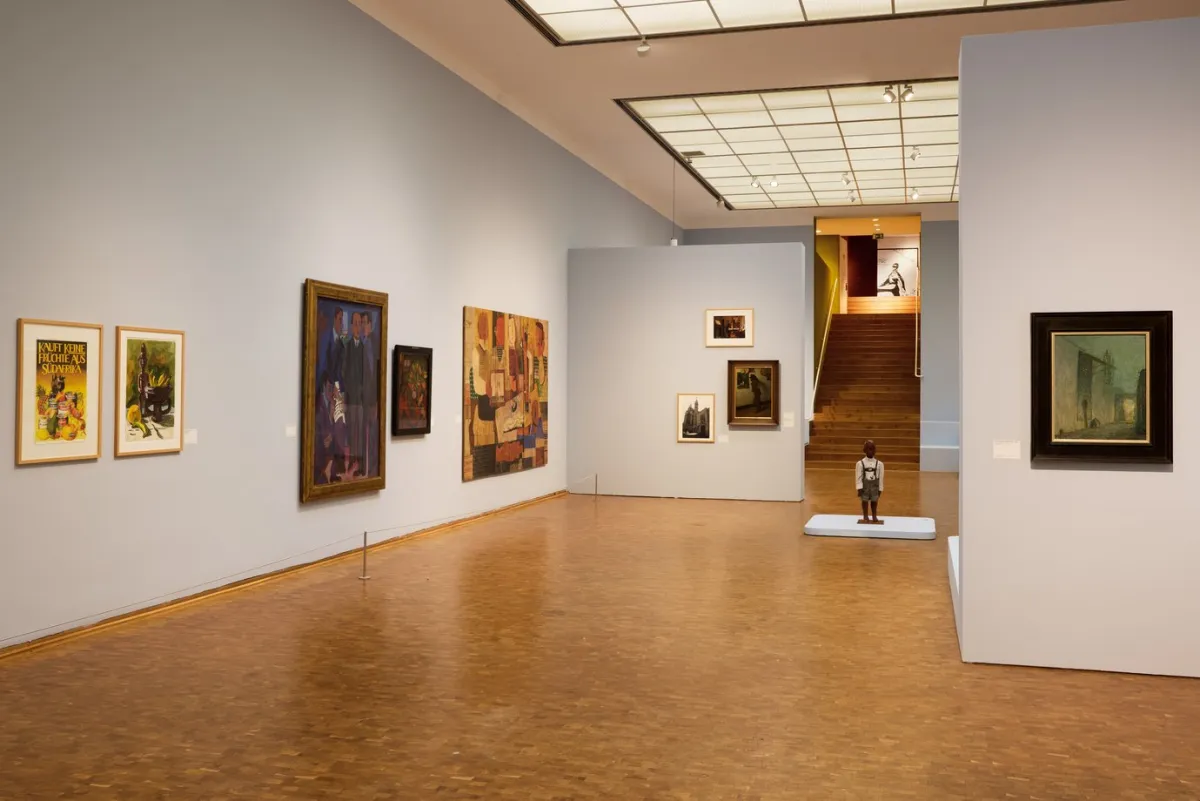
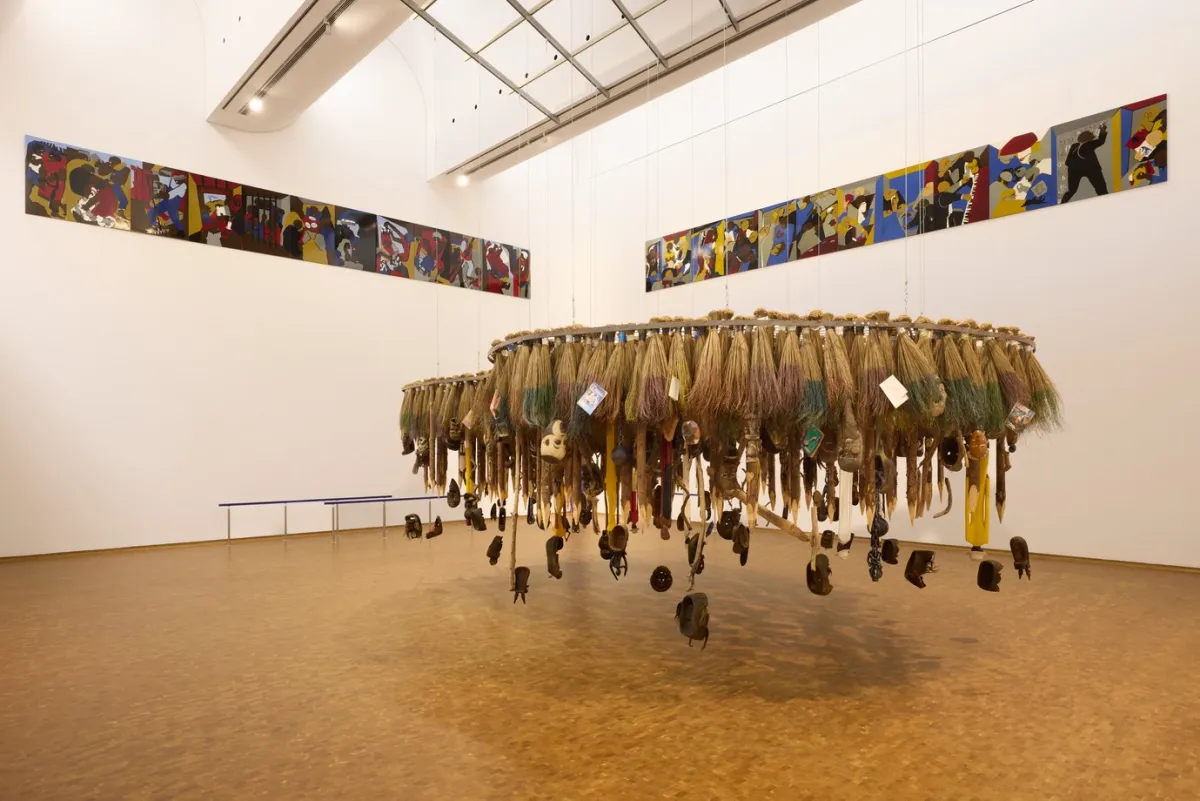
‘Along the Color Line’ addresses precisely this sensitive issue. The exhibition poses a radical question: how did Black artists create, through their work, new narratives that challenge and deconstruct Western ways of seeing? The exhibition is not merely a gallery of paintings. Eboa Itondo has curated a rich, interdisciplinary dialogue, facilitated by a wealth of international loans – foremost among them from the historically African-American Howard University in Washington, which to this day safeguards the estates of significant intellectuals. Modern and contemporary paintings, sculptures and drawings engage in a dynamic interplay with the literature and music of the Black diaspora, challenging the museum’s traditional collections.
For an audience with an interest in literature and cultural studies, the exhibition’s particular strength lies in its documentary and biographical depth. The project traces the transatlantic connections between two formative emancipation movements: the Harlem Renaissance in the USA and the Négritude movement in Europe. Through written contemporary accounts, the intensity of the intellectual exchange at the beginning of the 20th century becomes tangible.
Du Bois himself spent formative years as a student in Berlin between 1892 and 1894. When he returned to Germany in 1936, as a journalist for the Pittsburgh Courier, he travelled to Cologne, Hamburg and Stuttgart, and attended the Bayreuth Festival and the Olympic Games in Berlin. His incisive reports from a country in the grip of National Socialism form the intellectual backbone of the exhibition. Du Bois’s texts sharpen our understanding of the global interconnections between racism and totalitarian exclusion. These documents are complemented by the writings of the philosopher Alain Locke (1885–1954), who also studied in Berlin and later taught at Howard University. Locke and Du Bois regarded their travels and encounters with European culture as a fundamental part of their education, yet recognised with analytical clarity the paradoxes of a Western modernity that preached universal freedom whilst practising colonial oppression.
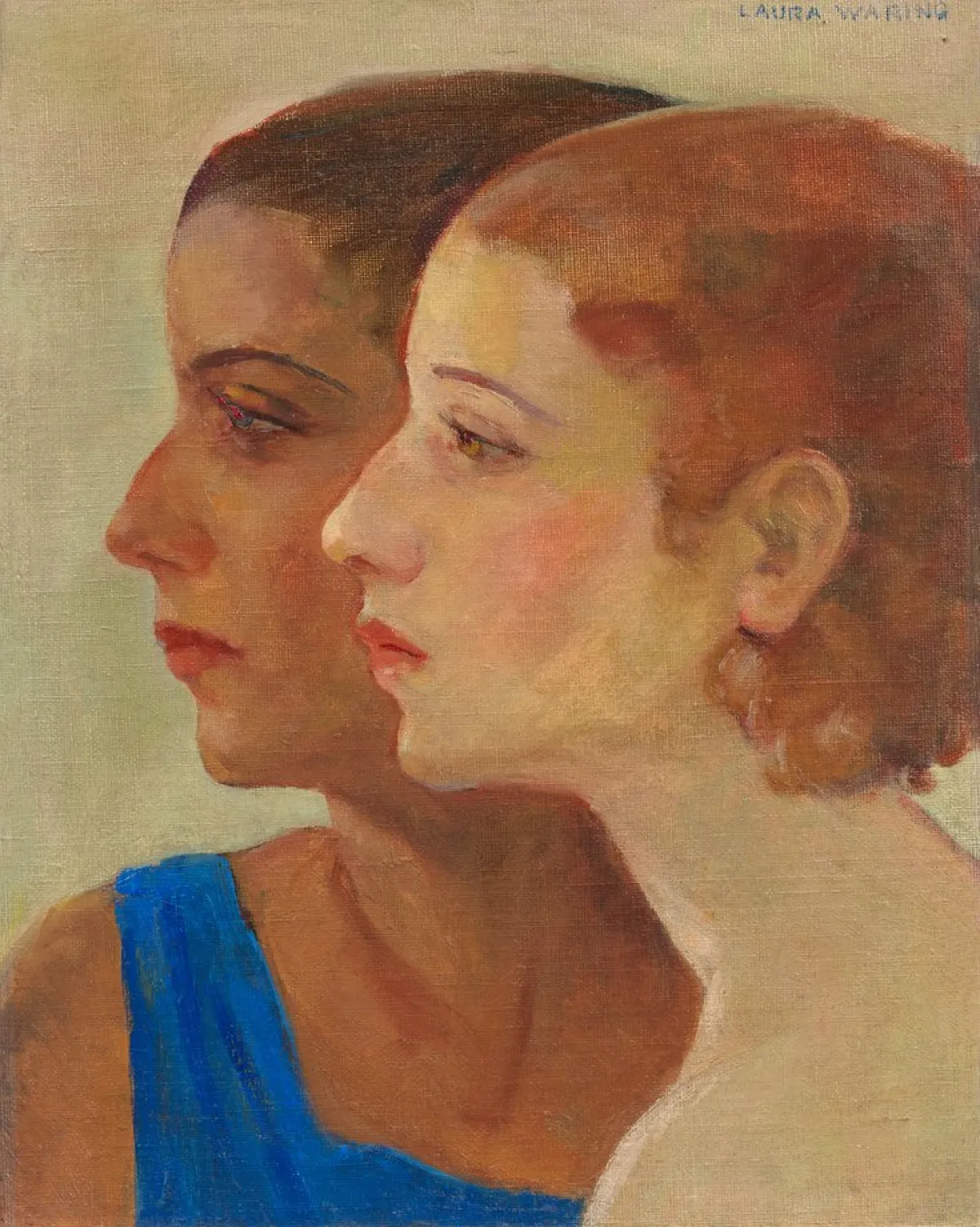
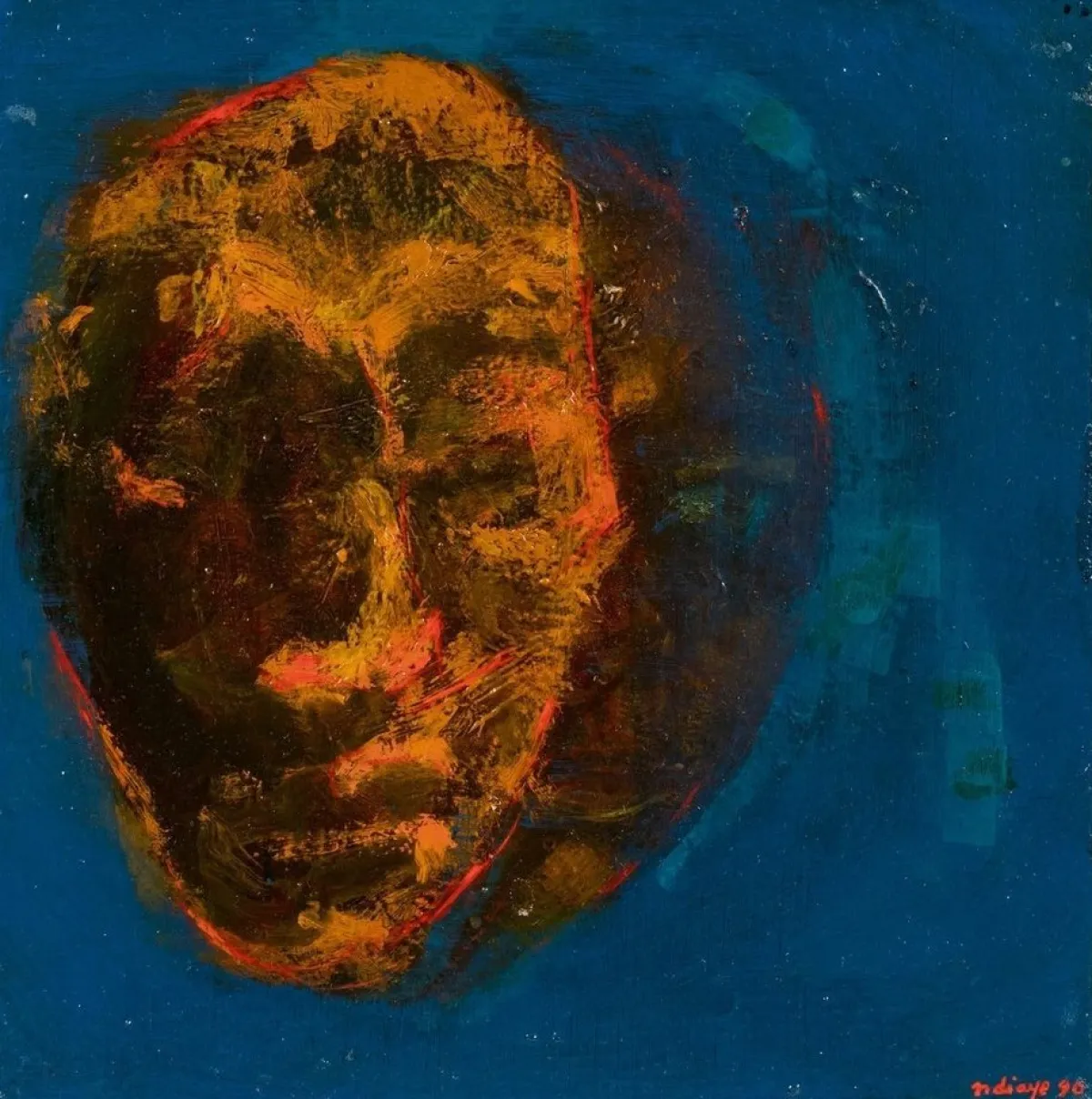
In the final third of the exhibition, it becomes clear that these diasporic movements were not abstract phenomena on the distant world stage, but in fact had very concrete, local roots. The exhibition sheds light on the historical stays of Afro-diasporic artists in the Rhineland. Particularly noteworthy here is the work of Mildred Thompson, who studied at Howard University and lived and worked in nearby Düren in the 1960s. To permanently anchor these connections within the institution, the Museum Ludwig specifically acquired works by Thompson as well as transnational works by Herbert Gentry (1919–2003) and Iba Ndiaye (1928–2008). These new acquisitions challenge the monolithic narrative of European modernism and demonstrate that intercultural interconnections have long been part of regional art history – they were simply overlooked for decades.
Finally, the contemporary work of the German-American artist James Gregory Atkinson provides a bridge to the immediate present. His non-linear archive of images, objects, texts and oral history documents, created specifically for the exhibition, forms the emotional and conceptual centrepiece of the show. Atkinson draws a direct, tangible line from the historical struggles of the early 20th century to the realities of life for today’s diasporic community in Germany. His archive defies a chronological, Eurocentric order, thereby reflecting the disunity and fragmentation of diasporic identity.
More than a century after Du Bois and Locke’s stays in Europe, this special exhibition invites visitors to renegotiate the social significance of cultural identity, belonging and community. With ‘Along the Color Line’, the Ludwig Museum has taken a bold, self-critical step. The exhibition no longer merely curates the canon inherited from the colonial era, but opens the institution up to a polyphonic, transatlantic narrative of modernity. It is an intellectual and visual endeavour that demonstrates how coming to terms with the past is essential to understanding the creative and social challenges of our present. A must-see for the eye and the mind.
+++
‘Along the Color Line – Traces of a Transatlantic Modernism’, Museum Ludwig, 3 October 2026 to 7 March 2027. An outstanding, bilingual catalogue accompanying the exhibition has been published by Verlag der Buchhandlung Walther und Franz König: ‘Along the Color Line. Spuren einer transatlantischen Moderne”, edited by Eboa Itondo. The volume comprises 248 pages with 170 illustrations and features in-depth essays by renowned authors such as Oliver Lubrich, Eric Otieno Sumba and Yilmaz Dziewior. The catalogue is available at the museum price of 35 euros (retail price: 38 euros) and brilliantly continues the literary and theoretical discourses of the exhibition.
Did you enjoy this article? If so, please support our work a one-off donation or a monthly subscription via one of our subscription options. We’d be delighted!
Don’t want to miss any more articles on Literatur.Review? Then sign up for our newsletter free of charge!