



Behind the glasses
It's summer in the southern hemisphere and winter in the northern, and in February, Literatur.Review brings them together and publishes stories from the north and south of our globe that have yet to be translated or published.
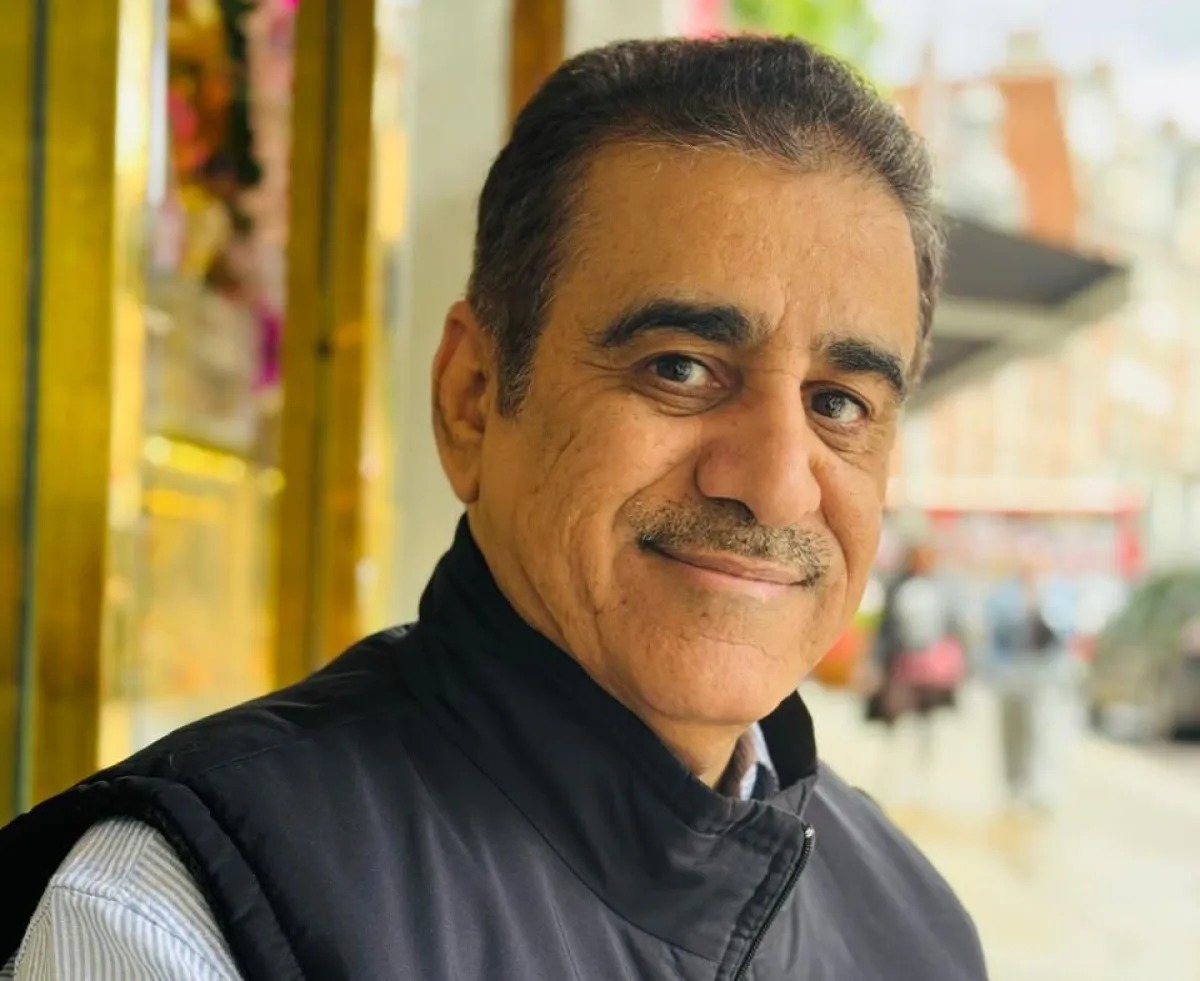
Yousef Al-Mohaimeed is a Saudi novelist and journalist, born in Riyadh in 1964. He is the author of several novels and a collection of short stories in Arabic. Some of his works have been translated into several languages, including English, Russian, German, Italian and Spanish.
Only memories remained
As the automatic glass door opened and he emerged into the open-air market square, a bag in his hand containing a pair of sunglasses, he smiled, lightly. A soft, almost tender summer breeze brushed his face. He suddenly saw himself as a Hollywood star, dark glasses, improbable hairstyle. He smiled again, with the realisation that this was the very first pair of sunglasses he'd ever worn - and what a bewitching pair, with their sky-blue frames, pale as a clear morning.
He ordered a chocolate ice cream and stopped by the fountain, with its broken, splintered water. Wishing he had a cigar held between his fingers, he turned his face towards the sun, head slightly tilted, like Brad Pitt. A bird landed on a nearby lamppost; he followed it with his eyes for a moment, before it flew away. Under the shade of a tree, he found a long wooden bench, sat down and enjoyed his ice cream. When he had finished, he took the glasses out of the bag, opened the case and put them on. The world was suddenly beautiful. He imagined that the next scene was about to start, that the director was about to call out his name. He laughed to himself.
An old woman sitting next to him turned, frowned, stared at him, surprised.
She whispered that her daughter, in Miami, wore this brand of glasses - Prada.
Momentarily taken aback, he ventured: "It's a good brand - the designs are unusual and beautiful."
"Are they your girlfriend's?" she asked.
He stammered before answering, "No."
Then added, in an awkward voice: "They're mine."
A silence passed between them. The old woman resumed, "But these are ladies' glasses. Are you...?"
Her phone rang abruptly. The screen lit up with her granddaughter's smile.
He excused himself and left in a hurry, talking as he walked. The old woman shouted behind him, brandishing the Nordstrom case and bag. He retraced his steps, smiling, took them with thanks, removed the glasses from his eyes and slipped them into the bag. He wondered why the saleswoman hadn't told him they were woman's glasses, having watched him try them on, at length, in front of the mirror.
He thought of returning to the shop to exchange them.
He walked towards the shop. It no longer existed.
He stopped, bewildered, looked around. The neighbouring shops were there: the Apple Store, Anthropologie, the Blue Ribbon Japanese restaurant, the cinema. Everything was in its place, except his shop. He called out to the waiter at the entrance to the café:
"Wasn't there a Nordstrom here?"
"No."
"There was" he replied, annoyed. "I'm sure there was."
He raised the bag:
"Look, I just bought it here."
A man in his sixties approached:
"I'm the café owner. The shop you're talking about closed down years ago"
"That's not true" he shouted. "You're having me on!"
The owner leaned toward him and whispered:
"If you don't leave immediately, I'll call the police."
He retreated, like a panicked rat, and returned to the fountain. He sat down on the ledge, right where he'd been sitting earlier. The old woman had disappeared. In her place, a young girl was smiling.
"Only memories remained," he murmured.
"Did you say something?" asked the young girl.
"No"
+++
Glasses that see nothing
I would never have imagined, even fleetingly, that one day, so many years after his death, I would use my father's prescription glasses. I'd inherited them from him, at the end of our three-way quarrel over his estate: his prayer mat, his pair of round prescription glasses that looked like Sartre's, and his satchel of (silent) records, over which I'd had a violent argument with my older brother. We fell out, then drifted apart for several years.
(1) Hijab ibn Nahit / Khalaf ibn Hethal / Alfiyya: Poets and emblematic works of Arabic oral and classical poetry.
My only sister used to say she could still smell our father every time she prostrated herself to pray, and she would cry. My brother, on the other hand, listened on his record player to the songs of Hijab ibn Nahit, Khalaf ibn Hethal, and Ibn Ammar's Alfiyya (1). But years later, when tape recorders had spread everywhere, he sold the satchel of records at Ibn Qassim's auction market, for a paltry sum, barely enough to buy him two days supply of cigarettes.
As for me, I had hidden the pair of thick glasses in my wardrobe and forgotten about them for years, until my eyesight deteriorated badly. Then I remembered and said to myself: why not try them on? After all, I couldn't even afford a visit to the ophthalmologist, let alone buy a new pair.
The next morning, I was walking along a deserted pavement, my chest open to the cold, soft air. I could barely make out what was a few metres ahead of me, and I thought that if I adjusted the glasses on my nose, I'd be able to see twenty, even thirty metres. But suddenly I saw my mother, dishevelled, running across the street, as if crying, screaming, or throwing dirt on her hair. Panic-stricken, I tried to cross, and was seized with dread when the horn of a speeding bus sounded: it had almost run me over.
Confused, I took refuge in a popular café. As I caught my breath, the young waiter planted himself in front of me, smiling. At first, he just grinned, but then burst out laughing. Bewildered, I stared at him from behind my bulbous lenses:
"What's the matter?"
Through his laughter, I managed to catch his question:
"Why are you wearing your father's glasses?"
Damn! How did that idiot know they belonged to my father and not to me?
"Who told you they were my father's glasses? I mean...how did you know?"
He mockingly replied:
"My grandfather had the same ones. We threw them away after his death."
"Why?" I asked.
"Because they're useless. If my grandfather had seen through them, if he'd known what was in store for him, his future - and ours too - I wouldn't be here serving in a café!"
I laughed.
"By the way, what did your father do for a living?" he asked.
I burst out laughing in turn and left the café without ordering anything.
I took to the pavement again, observing the signs and neon lights. I adjusted my glasses and read, while the lights reflected off their convex lenses. I caught sight of a sign on which was written: Stop. I stopped. A voice shouted:
"Hey, kid! Over here!"
(2) Foul: popular bean dish, widespread in the Middle East
It was an old man who had set up a small round metal table in front of a foul (2) stall.
I approached and sat down on an iron chair. He brought me an ornate ceramic teapot, poured the tea into a badly washed clear glass, then smiled at me. I returned his smile from behind my glasses.
"What do you see?" he asked.
"I see you," I replied.
Then he reached out his rough hand, grabbed the frame and placed the glasses on the table.
"And now?"
" Now too, I see you."
He burst out laughing, as if to say: then what's the point of wearing a pair of thick glasses over your eyes, you idiot, since what you see doesn't change?
(3) Ghutra: traditional men's headdress worn in the Arabian Peninsula
"What, you want me to see a river, for example, when I put them on?" I spluttered, annoyed.
He asked me about their history. I told him they belonged to my father; that he wore them when he read the Sura of Youssouf from a large Koran. Whenever his eyes filled with tears, he would remove them and wipe his face with the end of his ghutra (3). And when we found him dead in his room, he lay peacefully on his cotton bed, glasses over his eyes, smiling.
Suddenly, a boy passed us by on his bicycle. With a quick, practiced gesture, he ripped off the glasses, accelerated and ran off. I shouted after him, but he was riding like a maniac, glasses on his nose. Suddenly he swerved into the street and a small van hit him, throwing him several metres.
The world spun through a pair of thick prescription glasses.
+++
Did you enjoy this text? If so, please support our work by making a one-off donation via PayPal, or by taking out a monthly or annual subscription.
Want to make sure you never miss an article from Literatur.Review again? Sign up for our newsletter here.
The English adaptation is based on the French translation from Arabic by Rita Barrota.