



I'm not a traitor!
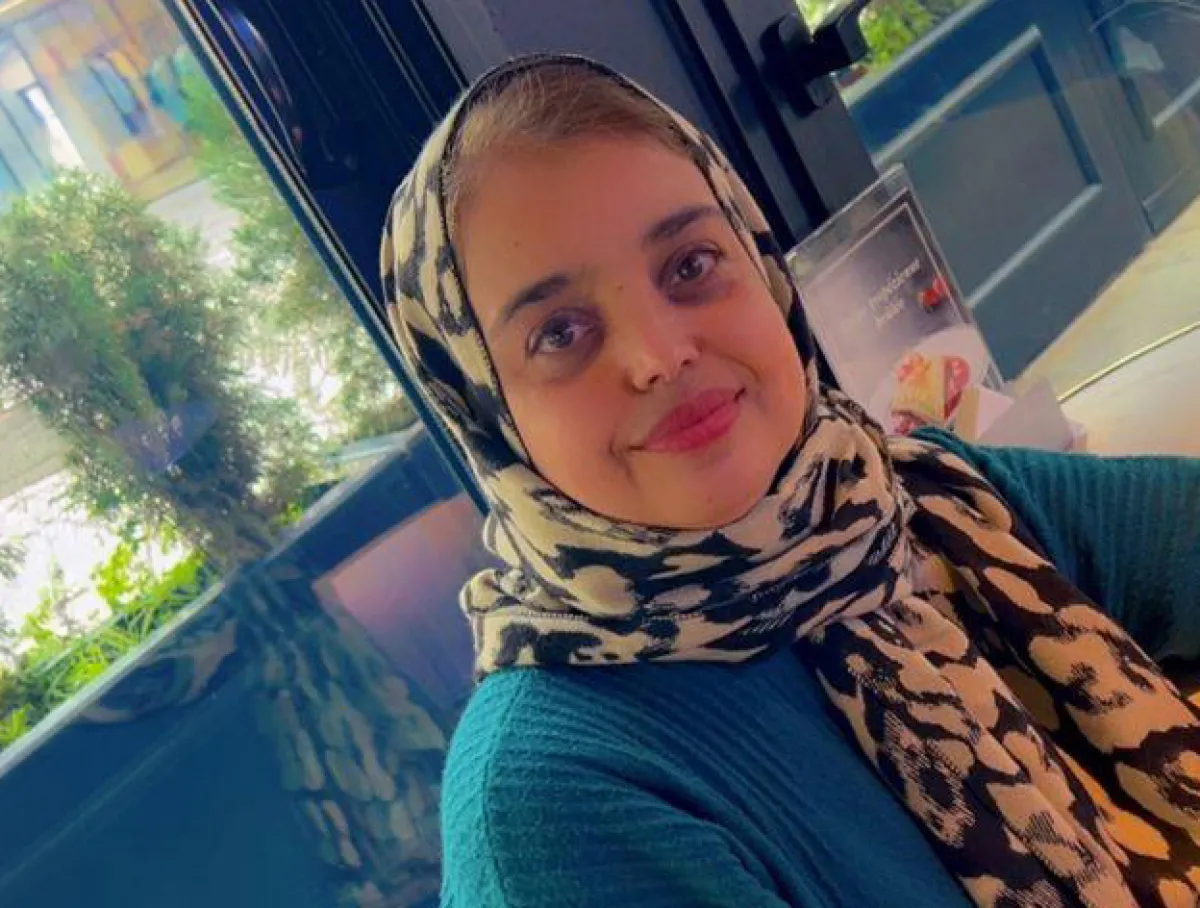
Radhia Toumi is an Algerian poet, short-story writer, and academic. She teaches translation at the University of Batna 2.
She writes in Arabic and French. To date, she has published two collections of poetry, Tasalluqu ḥurr munfarid and Zerda, as well as a collection of short stories titled Limādhā ismuhā Fāṭima?. She is one of the leading voices in the contemporary Algerian literary scene.
No! I am not a traitor, no matter what my detractors say! Nor am I a Judas. True, I sometimes change things a little, but only under duress. Sometimes I add sentences or words; other times, I delete a passage or two… But believe me, I do it because I have to!
You give me a message to deliver that you’ve put in a linguistic envelope, let's say grey, and I pass it on to the recipient in a different envelope, let's say pink. Does that make me a liar, or worse still, a fraud?
Readers, and critics especially, are always on my case. They place extremely high demands on my work. No matter how hard I try, if the finished product contains even the slightest flaw, I’m branded a traitor! This is too much! I’m just doing my job: I'm translating.
The supposedly Italian adage labels us traitors: “Traduttore, traditore”—the translator is a traitor. No, that’s not true! This facile and unfair judgment reflects a misunderstanding of our task, the task of translators.
Translators are cultural mediators, a bridge between languages and cultures. They open windows onto countries and villages in this vast world. They offer a free trip, carried by the translated word, to unknown lands.
The profession of translation is difficult, because transforming an original text written in a source language into a translated text written in a target language is no easy task, especially when it comes to literary texts. The language of a text serves as the linguistic framework that surrounds its meaning. In order to properly convey the meaning of the original text within the new linguistic framework of the target text, one must pay attention to several elements, including the spirit of the original, the characteristics of each language, and the purpose of the translation.
Between the two schools of thought vying for the best method of translating a literary text, target-oriented and source-oriented, the debate is far from over. Translating for the target reader by smoothing out any cultural traces and linguistic peculiarities of the original text so that it conforms to the target culture and language is, broadly speaking, the target-oriented approach. Preserving the cultural and linguistic elements of the source text in the translation to highlight existing cultural diversity and introduce the reader to the 'other' in the target language, on the other hand, is the task of the source-oriented translator.
When translating a literary text using either method, there will always be readers and critics who are either in favour or opposed. Each of these methods has specific objectives and inevitably neglects other aspects that do not align with its translational goal.
It is important to understand that whatever text is to be translated represents a union between the letter and the spirit. The letter is the physical aspect of the text, the language. The spirit is the meaning conveyed by that same language. Translating and conveying these two aspects simultaneously is the greatest challenge facing any literary translator. History has shown that there is always, with every literary translation process, some kind of loss, hence the accusation of betrayal often levelled at the translator.
Translators do not always choose to betray the texts they translate. That said, it cannot be denied that the history of translation has singled out certain translators who were accused of betraying their people. Here, other factors came into play: the translators were put in a position where conflicting interests clashed.
The best-known example is that of an indigenous woman nicknamed La Malinche. As an interpreter, she was crucial during the Spanish conquest of the Aztec Empire in the 16th century. She was also known as Doña Marina. To this day, La Malinche is accused by some Mexicans of having betrayed her people.
Setting aside war situations between two or more countries, where the translator’s or interpreter’s allegiance and loyalty are put to the test, let's return to more or less routine daily life. Translators play a vital role in shaping the culture of every country - national culture needs the bridges built by translation to connect it to foreign cultures.
It is the translator who becomes the architect and builder of these cultural bridges that enrich national culture. Without this openness guaranteed by translation, national culture would succumb to isolation and risk cutting itself off from the knowledge and creativity developed and created elsewhere, becoming a veritable prison.
Translation breaks down language barriers and brings the knowledge every nation needs. In the age of globalisation, this role seems more indispensable than ever to meet today’s challenges. Translators carry the banner of cultural and linguistic diversity. They work behind the scenes, conveying the world’s knowledge and literature. The accusation of betrayal of the original text in their translation, often levelled at translators, is unfounded if the translator is competent. Since competence is a prerequisite for practicing this profession, it is important to emphasise that there are as many translations as there are translators. Each translation is like a new-born, unable to escape the socio-cultural and historical impact of the era in which it comes into the world. Thus, one cannot judge the translation in isolation from its context of origin. Any perceived 'betrayal' would merely be a personal interpretation by a reader or critic at a given moment. An interpretation shaped by its historical context. Not to mention that during the translation process, the translator makes numerous decisions for each segment, unit, or word being translated. The translator’s subjectivity and intuition play a role in this decision-making process, whilst respecting the constraints of the language and the cultural significance of the text.
I am not a traitor, no! I am a translator who is part of a whole, made up of all the elements involved in the translation process. I work solely on the text I am translating. How it is received is in the hands of the readers. They may judge, but need neither pillory translators nor condemn them to the scaffold!
+++
Did you enjoy this text? If so, please support our work by making a one-off donation via PayPal, or by taking out a monthly or annual subscription.
Want to make sure you never miss an article from Literatur.Review again? Sign up for our newsletter here.
English adaptation from the French original by Tamsin Symons.