



The Voice of the Arab Renaissance
Vicdan – the Azerbaijani word for “conscience” — serves as the starting point for this column by Abil Hasanov. His writings interpret literature and philosophy as forms of self-affirmation and resistance: against dogma, against power, and against intellectual complacency. The focus is on thinkers and poets whose work affirms the unity of conviction and existence. Criticism appears here as a precise form of judgment—and as a practice of intellectual freedom.
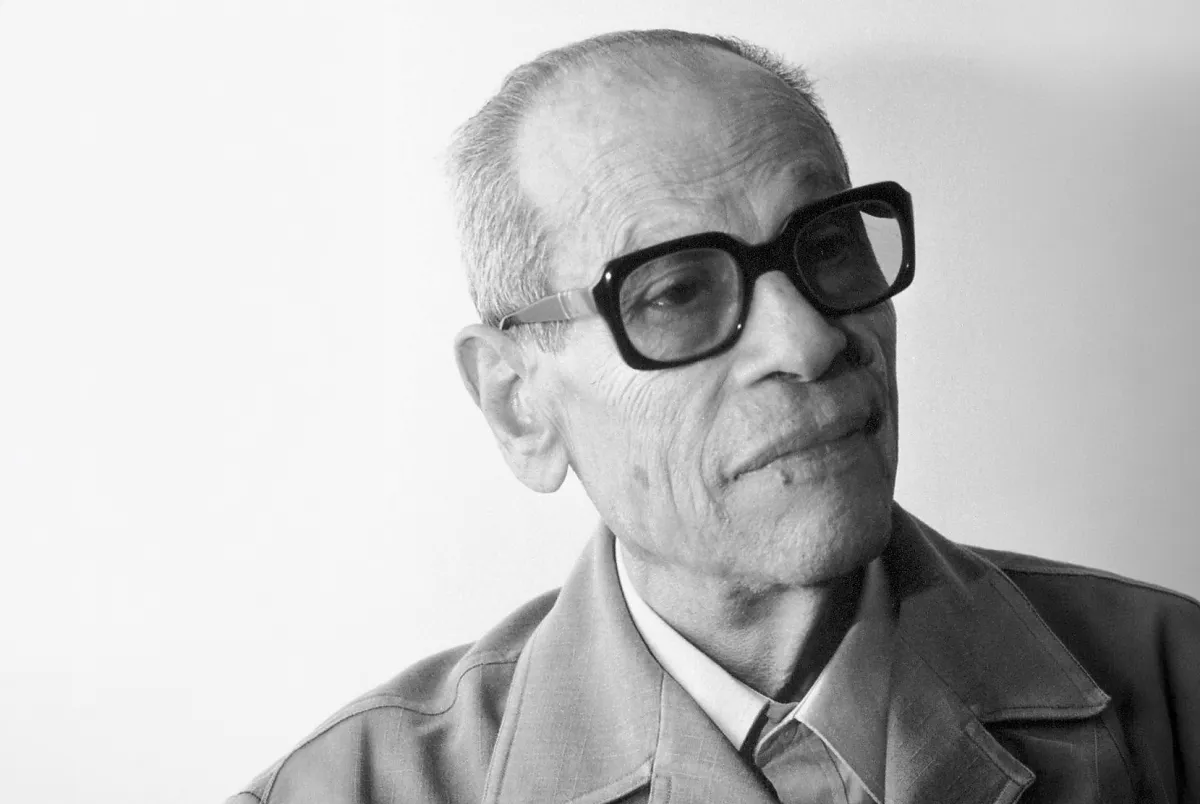
Literature is more than a mere retelling of the history of a people—it illuminates the deepest layers of their souls, their moral upheavals and hidden hopes, in order to entrust them to future generations. When discussing 20th-century Arabic literature, it is undoubtedly Naguib Mahfouz who carried this noble mission to its pinnacle. As the first—and to date, only—Egyptian writer to be awarded the Nobel Prize in Literature in 1988, Mahfouz did more than simply transcend national borders: he made the Arabic novel an integral part of world literature.
Cairo: A Living Space and Mirror of the Soul
There is a symbiotic relationship between Nagib Mahfouz’s work and the city of Cairo. In his pages, the city is not a silent backdrop to events, but a living entity with its own breath, wounds, and heartbeat. The alleys speak, the narrow corners harbour secrets, and behind the doors of the houses, the fate of entire generations unfolds.
His immortal masterpiece, the Cairo Trilogy (Palace Walk, Palace of Desire, Sugar Street), traces the great upheavals of Egyptian society, through the fates of three generations, with astonishing sociological depth—the clash between tradition and modernity, between patriarchal omnipotence and individual freedom. This is not merely the chronicle of a family, but the poetic chronicle of a society in flux.
From Realism to Existentialism: An Archaeology of Philosophical Layers
At first glance, Mahfouz’s style appears simple and fluid, yet beneath this simplicity lie rich psychological and philosophical layers:
– Symbolism and religious allegory: The Children of the Alley is a powerful allegory of the history of human prophecy and the eternal tension between religion and science. A work that sparked fierce controversy in its day, it nevertheless represents the clearest expression of Mahfouz’s intellectual courage.
– Existential Crisis and the Search for Justice: In novels such as The Thief and the Dogs or Adrift on the Nile, loneliness, the bitterness of betrayal, remorse, and the unbridgeable chasm between the individual and society emerge with piercing clarity.
By blending realism and symbolism, Mahfouz created his own realistic-philosophical world in search of answers to the questions of fate and freedom—and, while remaining true to his roots, imbued the inner drama of the East with universal significance.
Unbroken Will and an Eternal Legacy
Nagib Mahfouz’s life is marked not only by creative triumphs but also by unshakable spiritual fortitude. The knife attack by religious extremists in 1994 caused severe nerve damage to his right hand and compromised his ability to write—yet it failed to break his loyalty to the written word. Although writing became vastly more difficult for him in the final years of his life, he continued to share his thoughts in shorter texts, yet with the same inner fire. Therein lies this writer’s greatest lesson: The body may break, but the word does not.
Between Pride and Suffering
Naguib Mahfouz—a great thinker who introduced the world to the inner universe of the East, its contradictions, its pride, and its suffering. His literary journey began in the narrow alleys of Cairo. Yet his work transcends the boundaries of time and space, for it touches on universal truths about humanity, justice, and conscience. Mahfouz showed us that even the most local story, when told with the deepest truth, can become the story of all humanity.
Did you enjoy this text? If so, please support our work by making a one-off donation via PayPal, or by taking out a monthly or annual subscription.
Want to make sure you never miss an article from Literatur.Review again? Sign up for our newsletter here.