



The Silence of the Prelude in C major
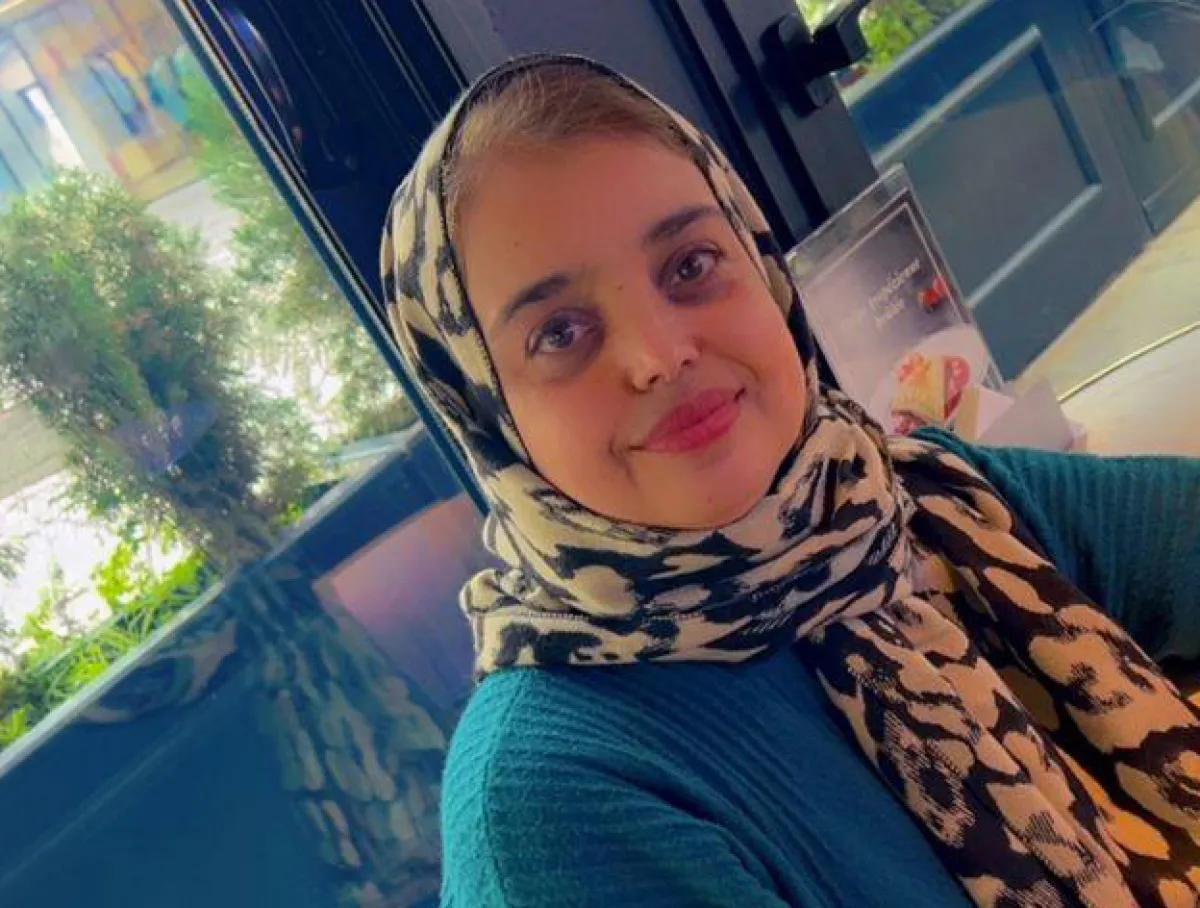
Radhia Toumi is an Algerian poet, short story writer and academic. She teaches translation at Batna 2 University.
She writes in Arabic and French. To date, she has published two collections of poetry, Tasalluqu ḥurr munfarid and Zerda, as well as a collection of short stories, Limādhā ismuhā Fāṭima?. She is among the leading voices on the contemporary Algerian literary scene.
Does God hear prayer?
We were there assigned to this place.
Our footsteps left their mark,
and our shoes, which carried us,
had etched on their worn leather
every road, every path, every street.
We were there,
the homeland shrunk into the palm of a hand
and expanded in the heart.
And here we are, today, here,
in a homeland overflowing with existence.
We were dreaming.
The dream persists,
without cease.
Do dreams die?
We have not forgotten the path
when it spoke
to our exhausted feet,
to the crutches of hope,
to the carts laden with angels.
We looked, unseeing.
ash and bodies,
a suffocation in the loving eye.
Oh besieged city,
Judas and his kind delivered, sold out.
Don't spill your secret to a soul.
Truncated city,
raise your head.
Yesterday, you were there.
Today, you are here,
offered to fire, to ruin.
Your misty eyes.
And I ask you:
Does God hear prayer?
One death is not enough
The wound, eternally gaping,
has forced you
to uproot your feelings
and bury them in a cold wineskin.
Who would want to die twice, three times, five times,
or more?
And yet we die twice, three times, and more,
and then get up,
only to die again.
Death is a many-headed hydra.
You have to drink from many deaths,
and, between one and the next, live a tiny life,
like a breath of air filling your chest before the plunge.
The body becomes a docile beast,
carrying the first death, the second, the third,
and, at each trembling rendezvous,
the body rips out its own corpse
to carry the second, the third, the fourth.
Heavenly are those
who died and then felt, in their veins, the sap of life rising.
On their bodies,
the traces of death's sting,
seen by them alone.
Their eyes are open doors:
if you linger there,
a dull sea current sucks you in,
and no one will hear the cry of your naked soul
as it clips your wings at the root.
There, you'll see the dead,
their breaths and brokenness
gathered into a mat, the wind ruffling its frayed edges.
One death is not enough
to leap to the summit of pain,
to bury the memory of their betrayal,
to wipe away your spilled blood,
to mend your torn heart.
One death is not enough.
It takes countless deaths
to look life in the eye
from the shoulder of the many-headed hydra.
The parting ones
All those parting
leave their pores open
for the living to breathe
the wedding scent of earth and rain.
They leave
their vessels empty
so that we may fill them, with water and birds.
They leave a rope between their shore,
troubled in our nightly dreams,
and ours, scorched by the sun,
a rope that trembles
every time we weep,
every time we wage war
and devour the flesh of our brothers.
All the departed have left
the threads of an unfinished narrative,
and laid their fingers at its edges
to feel its body
at the point of connection.
Are they really gone,
or are we the ones who are gone?
This empty chair,
this cold bed,
this suit inhabited by air,
this dress swinging in the wardrobe,
and this perfume, stuck like skin
to the wall of memory,
and this kiss on the cheek,
and this gaze casting itself on you
and gasping,
for it was you who cut the rope.
All those who leave, remain
in a dark room
in the depths of us.
Will we close the door
so the lips are silent?
The departing renounce everything
and, before leaving,
give each a fortress of shadows
For us to wander in
And knock on the heart's door a thousand times
*Prelude in C major is a piece composed by Johann Sebastian Bach
Silence of the Prelude in C major*
In a noon
that loosened the arms,
bees' legs fell
into the lap of a piece by Bach,
where jasmine bows
to fingers that graze,
from time to time,
the skin of the keys
of a piano accustomed to dances.
Then the notes shook like vapour,
shaken by the echo of a darkened cry.
Murmured footsteps approach,
then come to a standstill
in a faceless well.
There, breaths drape themselves
in black ink, entwining the ears of her night
to deaden the sound of collapsing ceilings,
and hide from sight the vanishing walls,
wings torn off by the storm.
The houses wear no coats.
They are naked,
admitting their fragility,
exposing their intimacy in spite of themselves.
In the living room that said goodbye to the walls,
in the city whose roof flew off,
lies a stricken piano,
with severed fingers,
and leaves clutching
the melody that struggles
for its joy to remain.
The torn door
reveals a bed riddled with holes
that swallowed all the cries.
The apartment has no door.
It shelters neither husband nor wife nor children.
All that remains are the shadows of an extinguished heat,
and kisses that an M16 held, barrel to the temple.
The piano tries not to give in.
It leans on its dignity,
remembering its dance to peaceful chords,
a prelude in C major,
to resist.
The language I need
I need a language
that bares the legs,
each time it descends to the river,
a language that, when it sinks
into the sea of its faults,
breathes like a whale.
I need words like water,
the solitude of ice,
the lightness of steam,
the dance of waves on the open sea.
I need a language
that speaks all taboos
in a violin solo,
that dances, gypsy inhabited by snake eyes,
and prays like a recluse
in the breadth of night.
This language that speaks in silence,
laden with the wheat of love,
and whose earth is the sweetness of light
reflected on the wall
at first light.
I need a language that clothes me,
like a melody,
and inhabits me
like a siren song
at dusk.
+++
Did you enjoy this text? If so, please support our work by making a one-off donation via PayPal, or by taking out a monthly or annual subscription.
Want to make sure you never miss an article from Literatur.Review again? Sign up for our newsletter here.
The English adaptation is based on the French translation from the Arabic original by Rita Barotta.