


Glass splinters in the throat
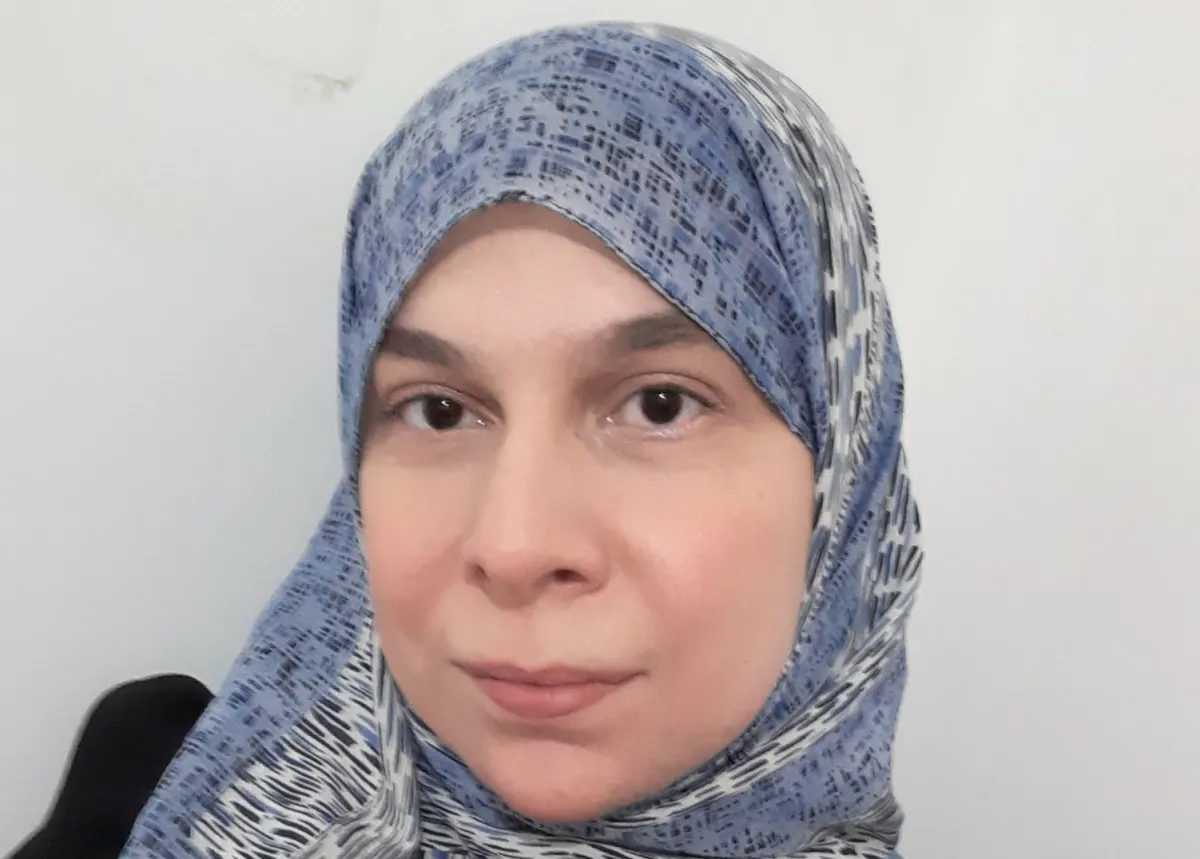
Tunisian poet born in 1997, Hajer Requiq writes in Arabic and English. She was recently a finalist in the American Lucky Jefferson poetry competition (2025), and shortlisted for the Foster Poetry Prize in Canada (2025). She was also nominated for the Pushcart Prize (2025) by DMQ Review.
In addition, she won second place internationally in The Capilano Review's Autumn 2025 writing competition, and achieved a distinguished placing at the Cúirt International Festival of Literature (Ireland, 2026).
Stuck in my throat for thirty years
a shard of glass.
It's called my father.
Sometimes, while eating, I choke onto the edge of his djellaba*,
on a handful of his beard.
His death rattle rises up in me,
dry, recognisable.
It would take more than pats on the back
to expel a whole life from my guts,
rejecting it all at once,
like spit held back too long.
When we were children,
we only saw him at the table.
I recognised him by the sound of plates,
the clash of spoons,
and I recognised my heart
by the way it broke
between his teeth.
*The djellaba is a traditional floor-length, hooded cloak with long sleeves worn in the Maghreb countries, which largely conceals the contours of the body.
My mother would watch me spread my bread with glass
without saying a word.
But every night, I'd catch her,
her throat open,
digging inside herself with the scalpel of hatred,
looking for a single shard
of my father.
The two of us lived like that,
like two adjoining windows
after an earthquake:
neither sees the other
except at the moment of shattering.
She became pregnant with me
a year after her marriage.
He'd hit her, push her away with his foot.
For months, she'd say,
a sound of breaking
went through her belly.
She'd swallow butter, olive oil,
anoint her cracked marriage
with creams picked up at the market.
But nothing soothes a house
swollen with family pain.
Even when he was silent,
I recognised his voice
coming from my body,
shrill,
every time I fell.
I long dreamed that he would change,
or that God would give us another father.
But dreams are but low windows
in a house too narrow;
I walk through them, head bowed,
on my guard.
I grew up this way,
without trusting the days
that passed by my window.
I told myself: they want to break me too.
At puberty,
I was no longer allowed to play
with the neighbourhood boys,
for fear of God's wrath.
I imagined myself as a ball
thrown from the grass of childhood
against the wall of womanhood,
stretching, retracting each month,
then letting splinters flow
as the father turns away.
When my pain took shape,
my mother covered it with a long veil
to conceal
the curves of my thirteen years.
He taught me the Koran and hadiths.
I never found God in his mouth.
But once, I saw an angel
hanging from his lips,
chewed, moist,
like a bread crumb.
My mother would tuck herself behind him in prayer,
like the train of his cloak,
and we'd all stumble against her.
She could have been a little taller
so we wouldn't bump into her
every time we stepped out of childhood.
The local men envied his height.
I never understood
what's the point of banging the sky with your forehead
if nothing falls.
Because we were poor,
he never filled our cups
with anything but his own dignity.
*The Basmala is an Arabic invocation that appears at the beginning of every surah in the Qur’an, with the exception of Surah 9, and plays an important role in Muslim worship and daily life. It reads: بسم الله الرحمن الرحيم / bismi ʾllāhi ʾr-raḥmāni ʾr-raḥīmi / ‘In the name of God, the Most Gracious, the Most Merciful’.
So we would gather
around our ruins,
in the early morning, in the evening,
saying: Bismillah.*
And sometimes,
I reach out my hand,
extend my tongue to him
and I am illuminated
by emptiness.
+++
Did you enjoy this text? If so, please support our work by making a one-off donation via PayPal, or by taking out a monthly or annual subscription.
Want to make sure you never miss an article from Literatur.Review again? Sign up for our newsletter here.
The English adaptation is based on the French translation from Arabic by Rita Barotta.